Daily Reflection is a cornerstone of Collectors MD—a brief, honest, and thought-provoking message shared every day. It’s a space for self-awareness, accountability, and personal growth, designed to help collectors pause, reflect, and stay grounded. Whether it’s a story, a lesson, or a reminder, each reflection is meant to inspire intentional collecting and a healthier relationship with their hobbies.
For Collectors, By Collectors.
“The Hunt Is Greater Than The Capture”
Published February 11, 2026 | By Alyx E, Founder of Collectors MD
Earlier this month, Josh Luber and Jesse Einhorn released a 30,000-word white paper titled, “The Blindboxification Of Everything“. Luber, co-founder of StockX and founder of Ghostwrite, brings clarity to what’s quietly reshaping the modern-day hobby beneath the surface.
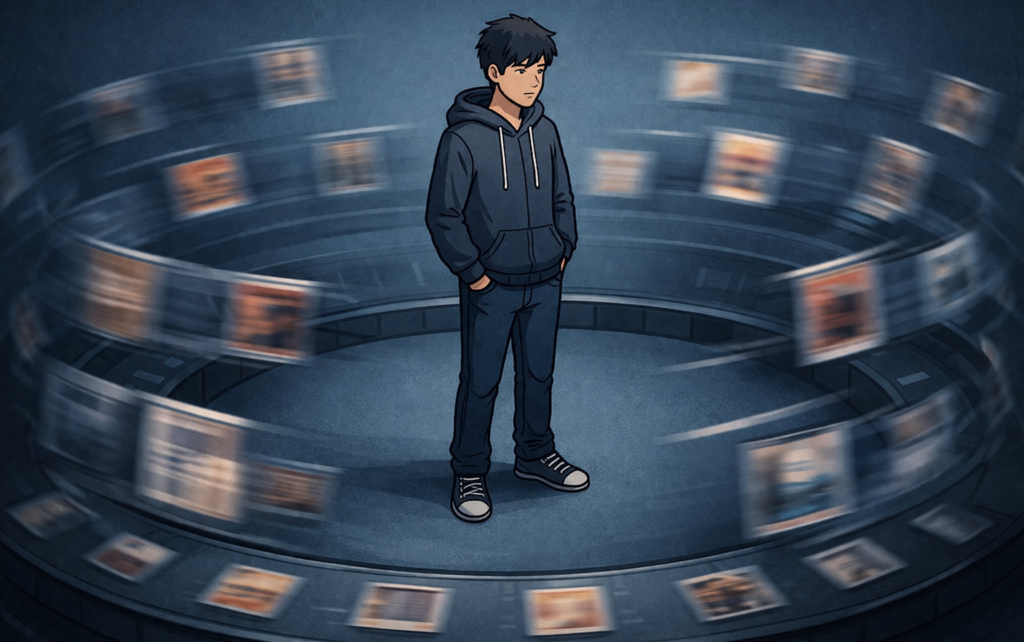
The core idea is simple but unsettling: more and more industries are borrowing from the casino playbook. Mystery. Scarcity. Limited access. Randomized outcomes. Breaks. Repacks. Loot boxes. Drops. Waitlists. Invite-only access.
The hunt becomes greater than the capture.
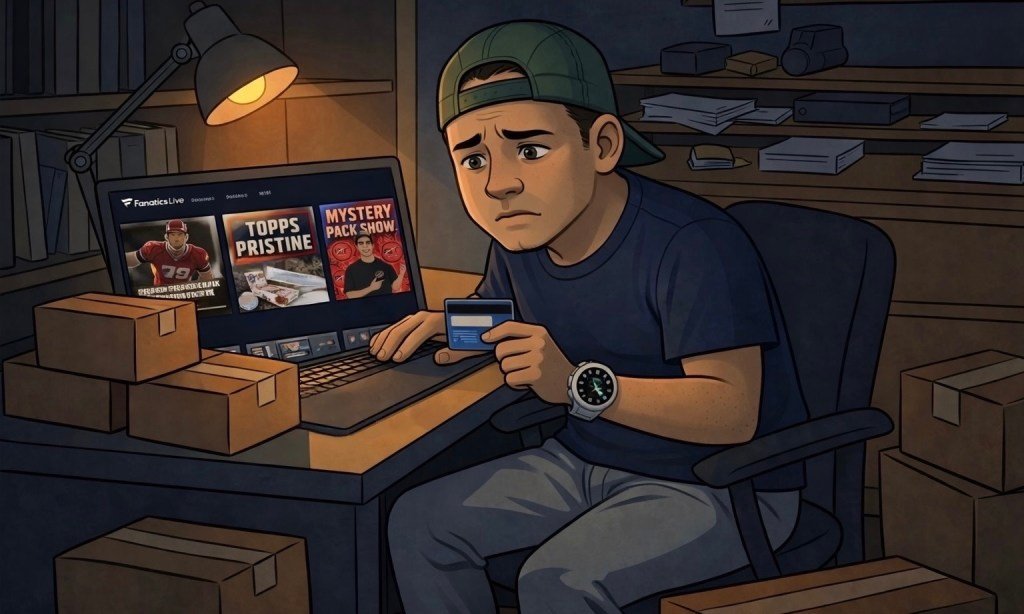
When I was in active addiction, I wouldn’t have used language like that. I would hide behind words like collecting, investing, participating, or entertainment. But the truth was, I wasn’t chasing ownership. I was chasing adrenaline.
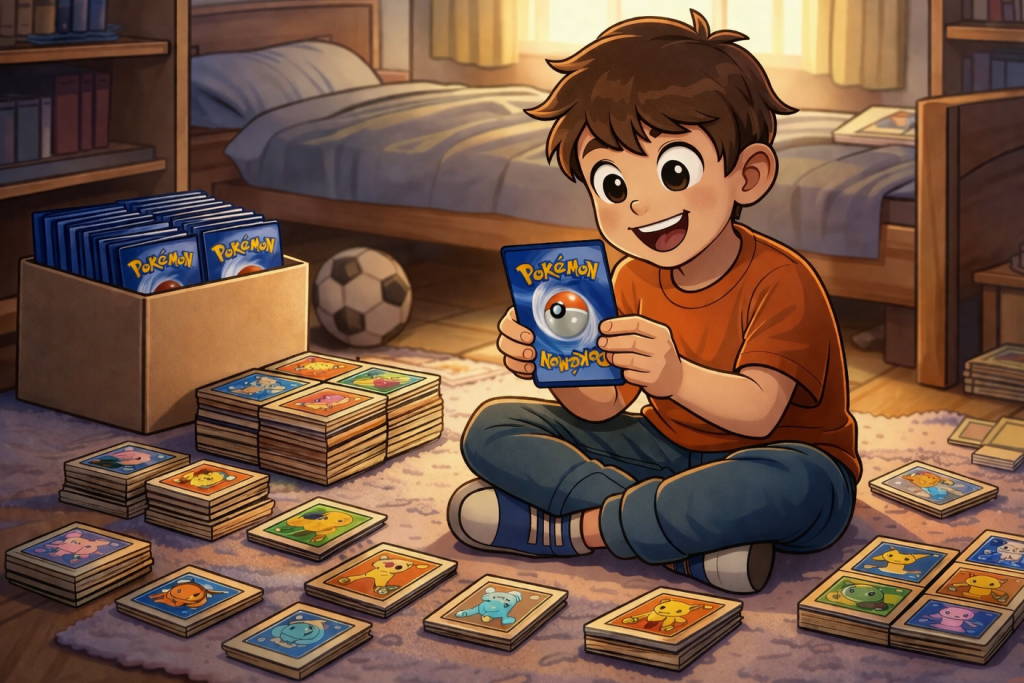
If I hit something big in a break, I didn’t feel at ease. I felt activated. If I missed, I felt urgency. Either way, my nervous system sped up. The object itself almost didn’t matter. The anticipation did.
Luber and Einhorn explore how blind boxes, breaks, repacks, and even luxury goods operate on engineered anticipation. Waitlists for handbags. Invite-only access for luxury watches and sports cars. Raffles for sneakers. Digital repacks scaling from hundreds of thousands to tens of millions in revenue in a matter of months. The mechanics are familiar: variable reward, intermittent reinforcement, emotional suspense.

They say the hunt is greater than the capture, but is it? Because when the boxes are empty, the wrappers are on the floor, and the adrenaline fades… was chasing a card ever worth your stability?
It’s not just cards. It’s sneakers. It’s streetwear. It’s gaming. It’s financial markets. It’s entertainment. All of these systems increasingly reward the thrill of access over the substance of ownership.
And here’s the part that landed hardest for me: if the thrill is the product, what happens to the person chasing it?
In my own life, gambling fed collecting. Collecting fed gambling. One created financial pressure; the other promised relief. One created shame; the other offered distraction. They coexisted. They reinforced each other. And culturally, the environment didn’t slow me down; it normalized the pace.
I’m not anti-hobby. I never have been and I never will be. Collecting will always have a special place in my heart. But awareness changes everything. When the hunt becomes more intoxicating than the object, we have to pause and ask ourselves what we’re actually participating in. Because if we don’t notice the architecture around us, we start believing the urgency is coming from inside us alone.
We’re living in an era where more industries are optimizing for stimulation. That doesn’t mean we’re powerless. It just means we need to be more conscious. The thrill of the chase isn’t the same as building something meaningful, and when we blur that line, we drift away from reality.
#CollectorsMD
When the game becomes the attraction, awareness becomes the boundary.
—
Follow us on Instagram: @collectorsmd
Subscribe to our Newsletter & Support Group
Join The Conversation On Mantel
Read More Daily Reflections
When One Addiction Feeds Another
Published February 10, 2026 | By Alyx E, Founder of Collectors MD
For a long time, I didn’t realize I was stuck inside a vicious cycle. I thought I was just chasing enjoyment, opportunity, or momentum. But in active addiction, gambling and compulsive collecting didn’t live separately for me. They co-existed. They fed each other, quietly and relentlessly, until it became impossible to tell where one ended and the other began.
When I’d join a break, the outcome almost didn’t matter. If I spent a significant amount on wax or breaks in one sitting, panic followed whether I “hit” or not. The cards weren’t liquid. They couldn’t turn back into cash fast enough. What I felt had nothing to do with the result. Regardless of the outcome, I’d still feel an urgent, consuming need to get the money back immediately. So I’d fire up a casino app, jump into a live blackjack room, and tell myself I was just evening things out. That’s how the hook worked. One loss demanding another risk to fix it.

The trap didn’t only exist on the losing side. Wins were just as dangerous. If I hit big at the casino, that money never felt like a relief. It felt like permission. Permission to buy more wax. Permission to jump into bigger breaks. Permission to press harder. The win didn’t calm the system, it reactivated it. Gambling funded collecting, collecting triggered gambling, and the cycle kept spinning.
That’s what made it so insidious. There was no finish line. Losses created desperation. Wins created entitlement. Both led back to the same place. Chasing. And chasing doesn’t care whether you’re ahead or behind. It only cares that you stay in motion.
Breaking that cycle required more than stopping one behavior. It meant recognizing how deeply intertwined they were. It meant understanding that the urge wasn’t always about money, cards, or odds. It was about control, relief, and escape. Until I named that, I stayed stuck trying to treat symptoms instead of the system.
If any part of this feels familiar, you’re not broken and you’re not alone. These environments are designed to blur boundaries and keep you pressing forward. Awareness is where the cycle starts to loosen. Intention is where it begins to break.
#CollectorsMD
When winning and losing both push you to keep chasing, the problem isn’t the outcome, it’s the cycle.
—
Follow us on Instagram: @collectorsmd
Subscribe to our Newsletter & Support Group
Join The Conversation On Mantel
Read More Daily Reflections
Feeling Guilty For Hurting When The World Is Hurting
Published February 09, 2026 | By Alyx E, Founder of Collectors MD
There’s a subtle feeling of guilt that shows up for a lot of people in recovery. You look around at the news, the chaos, the suffering, the uncertainty, and a thought creeps in: who am I to struggle with this? Compared to everything else happening, my problem feels small. Trivial. Like a so-called “first-world problem” that doesn’t deserve attention.
But pain doesn’t work on a global leaderboard. Struggle isn’t invalid just because someone else is struggling differently. Your nervous system doesn’t check headlines before reacting. Compulsion doesn’t pause out of respect for world events. If anything, uncertainty and stress tend to make these patterns louder, not quieter.
There’s also a difference between perspective and dismissal. Perspective helps us stay grounded. Dismissal teaches us to minimize, suppress, and push through things that actually need care. Telling yourself your addiction doesn’t matter because the world is on fire doesn’t make it go away. It just delays the moment you have to face it.

Recovery isn’t selfish. It’s stabilizing. It’s choosing to reduce harm in at least one corner of a chaotic world. And that matters more than we give it credit for. You don’t have to catastrophize your struggle to justify addressing it. You also don’t have to apologize for wanting to feel better.
Taking your healing seriously doesn’t mean you lack empathy for the world. It doesn’t mean you’re unaware of suffering, detached from reality, or turning inward while everything else burns. It means you recognize a simple truth: you can’t carry the weight of the entire world, but you can take responsibility for the part of it that lives inside you.
Healing is one of the few places where your effort actually changes the outcome. When you choose to stabilize yourself, reduce harm, and stay honest about what you’re dealing with, you’re not opting out of compassion, you’re practicing it in a form that’s real and sustainable. Doing what’s within your control isn’t indifference. It’s how care survives in an overwhelming world.
#CollectorsMD
You’re allowed to take your pain seriously, even when what’s happening in the world makes it feel minuscule.
—
Follow us on Instagram: @collectorsmd
Subscribe to our Newsletter & Support Group
Join The Conversation On Mantel
Read More Daily Reflections
Super Bowl Sunday
Published February 08, 2026 | By Alyx E, Founder of Collectors MD
Today is a day many of us, not just sports fans, have been anticipating and looking forward to for months; one of the biggest annual sporting events of the year, Super Bowl Sunday.
For many people, it’s a celebration; food, friends, traditions, camaraderie, excitement. But for anyone in recovery, especially those practicing complete abstinence, days like today can feel heavy long before kickoff. The triggers aren’t subtle. They’re everywhere. Commercials built around action and adrenaline. Endless talk about odds, spreads, Super Bowl squares, and “just one harmless wager”. Group chats lighting up. Buzz and excitement in the office space. TV panels turning risk into entertainment. Even the most casual conversations can feel like landmines.
These moments matter more than we often realize. Not because they define us if we struggle, but because they expose vulnerability. Recovery isn’t tested in quiet rooms, it’s tested when temptation is normalized, celebrated, and reinforced by social permission. When everyone around you seems to be leaning in, staying grounded can feel isolating. That doesn’t mean you’re weak. It means the environment is engineered to pull you in and make you feel overwhelmed.
For those on a path of abstinence, days like today can activate old reflexes. The urge doesn’t always arrive as desire, sometimes it shows up as restlessness, irritation, nostalgia, or the sense that you’re missing out. That’s the mind reaching for familiarity. That’s conditioning, not failure.

Getting through today matters. Not in a performative way. Not as a badge to show off. It matters quietly, internally. Because every time you move through a high-risk day without acting on impulse, you add a layer to your armor. You collect evidence. Proof that you can sit with discomfort and survive it. Proof that urges crest and fall even when they feel overwhelming. Proof that you are not controlled by the moment.
This is how self-confidence is rebuilt; not through grand declarations, but through lived experience. The next time a trigger hits, your brain will remember this day. It will remember that you stood steady when the noise was at its loudest. That memory becomes a reference point. A feather in your cap of sorts. A reminder that you’ve already faced one of the hardest tests and made it through.
Recovery isn’t about avoiding life. It’s about learning how to stay present inside it. Days like today don’t set you back, they sharpen you. And every time you choose not to react or give into temptation, you strengthen the part of you that knows how to choose again.
So enjoy today. Enjoy the game, the company, and the camaraderie; just do so intentionally and responsibly.
#CollectorsMD
The strength you build today becomes the proof you lean on tomorrow.
—
Follow us on Instagram: @collectorsmd
Subscribe to our Newsletter & Support Group
Join The Conversation On Mantel
Read More Daily Reflections
Calling All Influencers
Published February 07, 2026 | By Alyx E, Founder of Collectors MD
There’s no denying how much influence athletes, celebrities, and creators now carry beyond the field, screen, or stage. We see personal brands growing fast. Investments in sports teams, platforms, alternative assets, and entire hobby ecosystems. We’re even seeing major athletes launch their own branded hobby shops and break groups. Much of this is framed as passion projects or smart business moves, and often paired with meaningful charitable work through foundations and causes that matter.
But there’s a gap we rarely talk about.
We see celebrities endorsing casino and sportsbook ads every day. We see athletes collaborating with breakers, platforms, and high-velocity hobby formats. We see public figures entering collecting spaces that are increasingly expensive, speculative, and psychologically intense. What we don’t often see is that same visibility used to talk about mental health, addiction, harm reduction, or the realities many everyday collectors quietly struggle with.
The average collector today is largely priced out of the hobby. Box prices have exploded. Access has shifted from curiosity and connection to pressure and urgency. For younger collectors, or those without financial literacy or awareness of risk, the harm isn’t abstract. It’s already happening. And you don’t need a clinical background to see it. You just need to look at who’s being pulled in and who’s being left behind.

This isn’t a call-out. It’s a call-in.
Imagine if the same platforms used to promote products also helped normalize conversations about balance. About boundaries. About knowing when something fun starts to feel heavy. Support now exists for people navigating these spaces, but awareness doesn’t. There are thousands, maybe millions of people who don’t know help is even an option.
Using influence to point people toward responsible collecting, responsible participation, and real support doesn’t take away from the hobby. It protects it. It makes it safer. It keeps more people in the room long-term.
We don’t need perfection. We don’t need moralizing. We need visibility, care, and a willingness to say: there’s another side to this, and you don’t have to figure it out alone.
#CollectorsMD
Influence carries responsibility, and using it to serve the greater good matters deeply.
—
Follow us on Instagram: @collectorsmd
Subscribe to our Newsletter & Support Group
Join The Conversation On Mantel
Read More Daily Reflections
Collecting Your Favorite Team On A Budget
Published February 06, 2026 | By Martina F, Collectors MD Community Member
I have had several favorite teams throughout my lifetime. The New England Patriots (before they won any Super Bowls), the Edmonton Oilers, the Los Angeles Kings, the Toronto Maple Leafs (we’re on a break), and even the old school New York Yankees players that I never got to witness on a field, like DiMaggio and Gherig. But there has been one team that has been in my heart quite literally since the day I was born: the Toronto Blue Jays. I was born just two years after the franchise was founded, and through ups and downs, they’ve been the team that has not only brought me the most joy, but the greatest sense of being “home”.

My earliest memories of the Blue Jays are of happiness, likely because after less than 10 years in the league, in 1985, we won our first American League East title. Players like George Bell, Cecil Fielder, Dave Stieb, Ernie Whitt, Tony Fernandez, and Jesse Barfield were our heroes in powder blue. The 80’s were good to the Blue Jays, but the 90’s were the turning point. Back-to-back World Series championships cemented the team forever into Toronto folklore. I still remember exactly where I was in 1992 when Mike Timlin threw the ball to Joe Carter at first base for the final out of the World Series. Me, my parents, and a full Toronto SkyDome watched with anticipation on the Jumbotron as our beloved Blue Jays made history. Then, one year later, Joe Carter’s walk-off home run to end the World Series sailed over the left field wall at the SkyDome as I leaped up and down on my couch at home. Champions again. What a fabulous time to be alive!

The Blue Jays 2025 World Series run will be one to remember for the ages. If you had told any fan at spring training that we would take the mighty (and expensive) Los Angeles Dodgers to the brink of elimination in game 7 of the World Series, they would have told you that you were crazy. But it happened. And it was both heartbreaking and awesome at the same time.
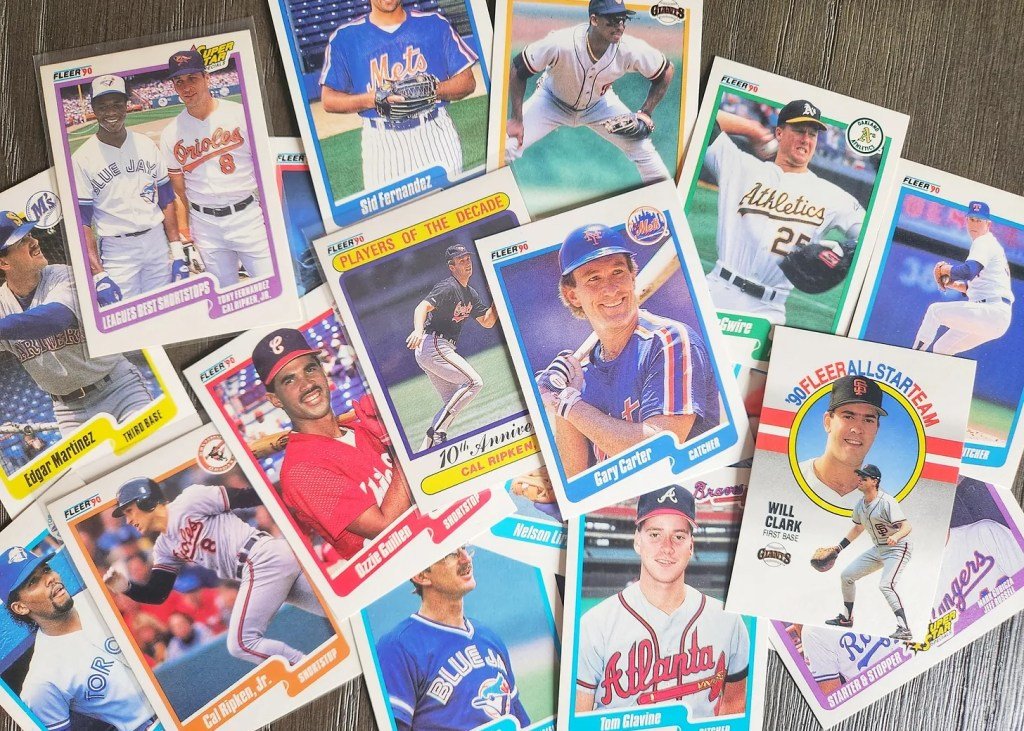
Naturally as a baseball card collector, I began collecting Blue Jays cards almost from the time I opened my first pack. These days, that gets harder and harder with more parallels, autographs, and super expensive products. So how do you collect your favorite team on a reasonable budget? Check out the tips below!
Collect A Specific Era
The older your team is, the more you may have to specialize. It’s difficult and very expensive to be a Yankees or Red Sox completist collector, but if you focus on one era, decade, or even one year in particular, you can focus your collecting dollars and really create a nice gallery for yourself as a collector. For example, collecting the Blue Jays cards from the Pat Gillick/Paul Beeston era is not a bad choice in my case.
Pick A World Series
If your team has ever won or participated in the World Series, you may choose to collect things from that particular year’s team. The added bonus here is that World Series collectibles can often come in the form of things that are NOT cards, so you can really expand the collection without losing a focus/theme. While I mentioned I collect various Blue Jay cards in various capacities, one “hyper focus” I have is the 1992 World Series-winning team. This allows me to say “no” to cards I find less special without guilt, because I know I’m building toward an awesome monument to the history-making Blue Jays team of 1992. It’s a win-win.
Pick A Brand
This is an old but useful tip: pick a card manufacturer and stick only to cards from that brand. My current project is to finish the Topps team sets of Blue Jays cards from 1977 to present day. Once I’ve done that I will add Donruss, Fleer, etc. You can also pick a parallel or variation within a brand, like Topps Gold, for example, if you want to do something brand-specific with modern era cards. Example: every Topps Gold Blue Jays card since the first issue of Topps Gold cards in 1992.
Collect The Rookies Of Your Favorite Team
Another great idea may be to collect the rookie cards of anyone who began their career in your favorite team’s jersey. In my case it means I get Fred McGriff, Cecil Fielder, Carlos Delgado, Dave Stieb, Jimmy Key, Vernon Wells, Roy Halladay, Vladimir Guererro Jr., and the up and coming JoJo Parker. If you’re not buying and chasing anything else, you can put all of your money towards some really nice graded rookies of anyone who started their Major League journey in your team’s uniform. This can be really, really expensive if you have a storied, long-standing team, but even with that you can then narrow it down to an era or lower-grade cards that fit your budget.
Focus On Locally Issued Card Sets
Local restaurants, car dealerships, soda pop companies, fast food chains, and even police/firefighter branches often partner with local Major League teams to create team sets. The Toronto firefighters used to issue a Blue Jays set every year, and they were available for free if you walked into your local fire hall and kindly asked for it. It was a great way to get children engaged in both the hobby as well as community fire safety. It’s also a great set for collectors to pick up at a relatively low cost.
In the end, the love of your favorite team is often indescribable to others. Through both wins and losses, there is an affinity that comes with belonging to a fandom – a sense of community or even a “third place” of sorts if one is attending games regularly. Regardless, collecting your favorite team doesn’t have to set you back a huge amount of money.
What are some ways that you collect your favorite team? Reach out and let me know!
#CollectorsMD
Collecting your favorite team isn’t about owning everything, it’s about choosing what actually means something to you.
—
Follow us on Instagram: @collectorsmd
Subscribe to our Newsletter & Support Group
Join The Conversation On Mantel
Read More Daily Reflections
Collecting Your Favorite Player On A Budget
Published February 05, 2026 | By Martina F, Collectors MD Community Member
There comes a time in one’s life when we must admit the truth that our moms did not want to admit: We all have our favorites. In the context of card collecting, we all have our favorite players.
I remember my first favorite player: Wayne Gretzky. It was kind of hard for Wayne Gretzky to NOT be your favorite player if you were a Canadian kid watching hockey in the early 1980’s. The Stanley Cups he won with the Edmonton Oilers were a fixture of my childhood. Then there was Jose Canseco. I wrote an entire ode to the junk wax era and mentioned how one player in particular has always remained in my heart: Jose Canseco.
Naturally, if you have a favorite player, you have a “target” for your collection. Back in the 80’s and 90’s, that meant opening wax packs and hoping you’d see the name of your guy on one of those cards. The original chase card, in my view.
Today, collecting your favorite player may seem like a daunting task. Gone are the days of collecting 4 or 5 base cards and a couple of inserts. Now there are seemingly ~800+ parallels of each card for each year, and with serial numbered cards numbered as low as one of one, it’s possible that if you are a completist, you will never, ever have a full collection of every card printed for your favorite player. So how do you collect and not take out a loan? Here are some tips.
Decide On An Era
Maybe Taylor Swift was onto something with her Eras Tour. Maybe if you select an era for your favorite player and only collect cards from that era, you too can reap the financial rewards. Example: Collecting only Oakland A’s cards of Jose Canseco, and from the years he actually played for them. If you refine it even more (only base cards, only cards numbered out of 25, 50, 200, or whatever number you choose), you can really focus your budget on very specific cards. For me, I find it difficult to continue collecting cards of a favorite player if they play for my home team and then leave. They’ve got to be really, really special for me to keep collecting their cards – like Jose Canseco was to my collection.
Collect Only Base Cards And/Or Affordable Parallels
Forget the logoman, rookie patch auto, and the first-born blood sample card. Focus on the cards everyone casts aside and create a true compendium of the player. You may even want to purchase only graded copies of the base cards at a specific grade – 9 for modern players, but maybe even a 1 or 2 for truly vintage cards of old heroes like Gherig, Ruth, or Mantle. There are some great cards available in those lower grades, and even if you are only able to purchase one or two cards a year for that player collection, in just 5 years time you may have a beautiful collection that didn’t force you to sell your home. This is a great thing!
Collect Only The Rookie Cards Of Your Favorite Players
Forget the rest, just focus on the various rookie cards available for your favorites. This is especially helpful if you have a handful of favorite players, and it’s a current one because many will have multiple parallels. My Addison Barger collection is in fact only rookie cards because they have yet to make a non-rookie card of him. I’m hoping 2026 is the year!

Stick To One Brand
Depending on who your favorite player is, perhaps collecting only one brand is the most affordable/desirable or only option. I have seen several Topps-only collections of some older players, and they’re a beautiful timeline to look back on. I saw one Nolan Ryan collection that was this exact kind of beautiful. All graded, but just one card from each year from Topps. This is a great way to spend your hobby dollars while also having a nice collection to display.
Collect Non-Major Releases
Toys’R’Us, Mother’s Cookies, McDonald’s, Dempster’s Bread, you name it. Some players will have a lot of non-mainstream cards that can make for a really cool collection at a reasonable price.
Collect Minor League Cards
Getting modern players’ “pre-rookie” cards from minor league team sets is another affordable way to collect your favorites, just be mindful of some of the hype that will follow some of the players when these issues are first released.
Get Yourself A “Side Favorite” From A Small Market Team
One way to save huge money while collecting a favorite player is to have a favorite from a small market team, or someone who is not a huge star. I have done this for years with players like Shawn Green, Joe Carter, and now Addison Barger. Those are all very solid players, one a potential new superstar, but I am able to capitalize on the fact that they played for Toronto, and there are a lot fewer Blue Jays collectors than Yankees collectors. Don’t believe me? Check out the photo below. On the left are all of the cards in my Shawn Green collection from the years he played with the Blue Jays (1993-1999) and on the right are the ones after just one and a half years of playing with the Dodgers! A small market often means fewer cards because the players don’t appear in as many subsets/insert series. The Shawn Green example below is just one of many I could list, so be sure to factor it in when collecting a player on a budget.

Can you imagine the mythology around Joe Carter’s World Series–winning home run if it had happened in a Yankees uniform?! I have no doubt that there would be a statue in front of Yankee stadium. But as a Toronto player, I always felt like he didn’t get the recognition he deserved. Just like Dave Stieb. That simple economics lesson in supply and demand means that we are able to capitalize on collecting some favorites for a discount! There will always be a few cards that are way out of reach for the average collector, but small market teams give you the advantage of being able to get some beautiful cards at a great price. Think of players like Junior Caminero or Jackson Chourio for example. Way undervalued simply because of where they play right now. Use this to your advantage!

All in all the most important thing to keep in mind when collecting your favorite player with a smaller budget is that it’s not about quantity as much as it is about joy. Sticking to base cards will help you keep your budget low while amassing quite a few cards, while focusing only on graded rookies or specific types of serial numbered/autographed cards will keep your budget focused on one or two key pieces if you favorite player is a huge star. The best part is looking at your collection and seeing a pattern, a mission of sorts, that you created just by having a favorite. Enjoy it!
#CollectorsMD
Collect the player you love, not the price tag attached to them, intention turns limits into clarity, and clarity turns collecting back into joy.
—
Follow us on Instagram: @collectorsmd
Subscribe to our Newsletter & Support Group
Join The Conversation On Mantel
Read More Daily Reflections
Staying Grounded When The World Feels Unsteady
Published February 04, 2026 | By Alyx E, Founder of Collectors MD
There are moments when the world feels like it’s spinning faster than our nervous systems can keep up with. Headlines stack on top of each other. Tragedy, conflict, fear, outrage – all competing for attention. Even when it doesn’t directly affect us, we can still feel the weight of the world settling in our bodies, thinning our patience, and making stillness harder to tolerate.
For many of us in recovery, this kind of external chaos doesn’t arrive in a neutral space. It lands on top of old wiring. Compulsive behavior and addictive patterns trained us to stay alert, on edge, and active. When the world feels unsteady, those instincts often resurface. Distractions often become an escape valve, offering us temporary relief from the noise and uncertainty. Scrolling, buying, chasing, or checking out can feel easier than slowing down and sitting with what’s happening.
The problem isn’t that we react. It’s that we forget to notice how we’re reacting. We wind up confusing awareness with overload. We mistake being busy with being grounded. And slowly, without even realizing it, we drift away from ourselves again.

Staying grounded doesn’t mean pretending things are okay. It doesn’t mean avoiding the news or disengaging completely. It means recognizing when external pressures begin to separate us from the here and now. It means asking, “what I am actually feeling right now” before reaching for something to soothe the discomfort.
Early in recovery, presence can feel uncomfortable. Silence can feel loud. Stillness can bring up fear we’ve been avoiding for a long time. That doesn’t mean you’re doing things wrong. It means you’re actually present.
Grounded doesn’t always mean calm. It means connected. Connected enough to feel your feet on the ground. Connected enough to pause before reacting. Connected enough to choose one small, stabilizing action instead of defaulting to an old coping mechanism.
You don’t have to hold the weight of the world on your shoulders to be a good person. You don’t have to stay perfectly regulated to be healing. Noticing when the world pulls you off-center and choosing to come back, even briefly, is already progress.
#CollectorsMD
Staying grounded isn’t about having full control; it’s about staying connected when things outside your influence start to unravel.
—
Follow us on Instagram: @collectorsmd
Subscribe to our Newsletter & Support Group
Join The Conversation On Mantel
Read More Daily Reflections
The Double Edge Of Intention
Published February 03, 2026 | By Alyx E, Founder of Collectors MD
At Collectors MD, our lane of Intentional Collecting is introduced as a healthier alternative; a way to stay engaged in the hobby while replacing impulse and volatility with awareness, boundaries, and choice. For many collectors, it genuinely helps slow things down, create structure, and restore a sense of agency. But intention can also become a mask if we aren’t careful. Without addressing the underlying drivers, intention can turn into a permission structure for the same reactive spending patters.
This is where confusion can often creep in. Nothing appears obviously wrong. There may be no breaking, no live selling, no oversized purchases. Yet something still feels out of alignment. That discomfort matters. The brain doesn’t distinguish between a $3 card and a $300 card; It responds to the hunt, the timing, the perceived win, and the relief that follows. Behavior justified by value is still behavior driven by reinforcement.

What’s often misunderstood is that recovery isn’t defined by format. It’s not about which lane someone chooses or how restrained things appear on the surface. The real issue tends to be control, boundaries, and how much space exists between intention and impulse. When that gap widens, it doesn’t necessarily mean failure. It means a pattern might be forming that deserves our attention.
This work isn’t about comparison. It’s about recognition. Awareness isn’t something that happens after progress. Awareness is progress. Noticing and addressing the pattern is how real change takes shape.
#CollectorsMD
If intention is the plan, awareness is the compass that keeps it honest.
—
Follow us on Instagram: @collectorsmd
Subscribe to our Newsletter & Support Group
Join The Conversation On Mantel
Read More Daily Reflections
Protecting The Youth Is Not Optional
Published February 02, 2026 | By Alyx E, Founder of Collectors MD
Some lines cannot be ignored once they’ve been crossed. What’s been unfolding in the modern hobby lately isn’t just something uncomfortable or chaotic that can be brushed off as inconsequential “drama”. What we’re seeing is deeply concerning. Sirens should be blaring for hobby stakeholders.
As of late, we’ve seen children hosting live shows on public streaming platforms, handling real money, interacting with anonymous adults, and being exposed to environments that are volatile, unregulated, and often unforgiving. That should stop all of us in our tracks and demand serious reflection.
This isn’t about talent or entrepreneurship or “kids being ahead of their time”. These are high risk environments built for adults, optimized for speed, pressure, and emotional manipulation. When children are deployed into those systems without guardrails, they don’t become empowered. They become vulnerable.
What’s especially disturbing is the lack of oversight. Where are the age gates? Where is the platform accountability? Where is the parental supervision? Where are the safeguards that recognize that live chat, financial transactions, and parasocial dynamics create a perfect storm for exploitation?

Let’s be brutally honest about what’s at play here. These kids aren’t just selling cards. They’re being watched, critiqued, baited, and attacked. They’re being mocked by trolls, targeted by predatory adults, and pressured to perform for engagement. That’s not character building. That’s exposure to real harm.
Children are still developing their sense of identity, boundaries, and self worth. Their brains aren’t fully formed. Their ability to process risk, rejection, and manipulation is limited. Dropping them into a live, monetized environment with anonymous adults is not neutral. It’s recklessly irresponsible.
None of this means the hobby is broken beyond repair. It means we’re being challenged to hold ourselves accountable.
Protecting the youth doesn’t mean banning kids from enjoying a hobby that’s been around for centuries. It means drawing firm lines around who profits, who moderates, who supervises, and who is responsible. It means acknowledging that modern platforms and technologies change the risk landscape in real ways – especially for kids. It means recognizing that some spaces simply aren’t appropriate for children without heavy structure and adult supervision. It means choosing long term health over short term hype.
If we care about the future of this hobby, we have to care about the kids inside it. Not as content. Not as novelties. Not as engagement tools. As children. Doing better isn’t a moral flex. It’s a responsibility.
#CollectorsMD
For a hobby to grow, protecting the youth has to be non-negotiable part of the process.
—
Follow us on Instagram: @collectorsmd
Subscribe to our Newsletter & Support Group
Join The Conversation On Mantel
Read More Daily Reflections
Conditioned For The Chase
Published February 01, 2026 | By Alyx E, Founder of Collectors MD
College is supposed to be a time of learning who you are, not a proving ground for who can risk the most. But for a lot of young adults today, the lesson they are absorbing quietly and repeatedly is that excitement equals risk, speed, and chance. Not patience. Not intention. Not restraint.
The problem isn’t that college kids are irresponsible. It’s that they are being dropped into high-dopamine systems at the exact stage of life when impulse control and long-term judgment are still developing. Their brains are wired to seek novelty and reward, while the part responsible for pumping the brakes is still catching up. When gambling apps, trading platforms, and hobby ecosystems all reinforce the same message, it creates a perfect storm.
When excitement is conditioned through packs, bets, flips, or trades, the brain starts to associate relief and validation with uncertainty. Over time, that wiring doesn’t just disappear. It follows people into adulthood, into collecting, into spending, into moments when stress or comparison hits hardest. What begins as entertainment slowly becomes a coping mechanism.

This is how lives get disrupted before they ever feel started. Tuition money disappears into parlays. Credit cards are maxed out. Rent becomes an issue. Shame grows faster than awareness. And because so much of this is normalized, many don’t realize they’re spiraling until the damage feels irreversible.
Collectors MD exists because willpower alone is not enough in systems designed to remove friction. Awareness matters. Structure matters. And protecting young people from predatory mechanics is not about limiting freedom. It’s about giving their future a fighting chance.
If you’re a young adult and feeling this kind of pressure, know this: slowing down is not falling behind. And if you’re older and wiser, pay attention to what we are normalizing for the next generation. What feels harmless now can quietly become someone else’s hardest chapter later.
#CollectorsMD
You don’t lose momentum by slowing down, you lose it by chasing what was never meant to carry you forward.
—
Follow us on Instagram: @collectorsmd
Subscribe to our Newsletter & Support Group
Join The Conversation On Mantel
Read More Daily Reflections
Unfiltered Accountability
Published January 31, 2026 | By Alyx E, Founder of Collectors MD
Accountability isn’t about punishment. It’s about ownership. It’s the moment we stop explaining, stop deflecting, and stop trying to soften what happened so it hurts less to look at. When we’re wrong, the healthiest move isn’t to argue the margins. It’s to own our transgressions and shortcomings outright.
Falling on the sword doesn’t mean self destruction. It means choosing integrity over ego. It means saying “I messed up” without adding a “but”, a footnote, a justification, or a comparison to someone else’s worse behavior. The instinct to explain ourselves is human, but growth starts when we let the truth stand firmly on its own.
In recovery, progress starts when discomfort is no longer something we escape, but something we face head-on. That discomfort isn’t accidental or cruel; it’s corrective. It’s the uneasy space where we don’t get immediate relief, where we don’t get to rush past the feeling or explain it away. Sitting with discomfort forces us to stay present with the truth of what happened, who we were in that moment, and what it cost us. It’s the pause between impulse and growth, and learning to tolerate it is how real change starts to take root.

When it comes to collecting, accountability shows up in places we’d rather avoid. Bad buys, broken boundaries, impulsive decisions, promises we didn’t keep to ourselves or others. None of those get repaired by pretending we were cornered or by blaming the system alone. The system can be flawed and our choices can still belong to us at the same time.
Accountability doesn’t mean ignoring the pressure or pretending the environment didn’t influence us. Modern collecting is engineered to push urgency, scarcity, and fear of missing out, and acknowledging that context matters. But awareness without ownership still leaves us stuck. The moment accountability begins is when we stop treating influence as absolution and start asking where our agency slipped, even briefly. That’s not self-blame or self-pity; it’s self-respect.
There’s real power in saying “this one’s on me”. Not because it feels good, but because it restores trust. With other people, yes. But more importantly, withourselves. Every time we own a mistake without making excuses, we prove we’re capable of change instead of repetition.
#CollectorsMD
Accountability doesn’t erase the mistake, it ends the cycle that keeps repeating it.
—
Follow us on Instagram: @collectorsmd
Subscribe to our Newsletter & Support Group
Join The Conversation On Mantel
Read More Daily Reflections
Priced Out Of The Hobby
Published January 30, 2026 | By Alyx E, Founder of Collectors MD
There was a time when staying involved in the modern hobby felt challenging, but still manageable. Participation required strategy and effort, without the need for constant compromise. That time is long gone. Today, the average collector isn’t just stretched thin, they’re priced out.
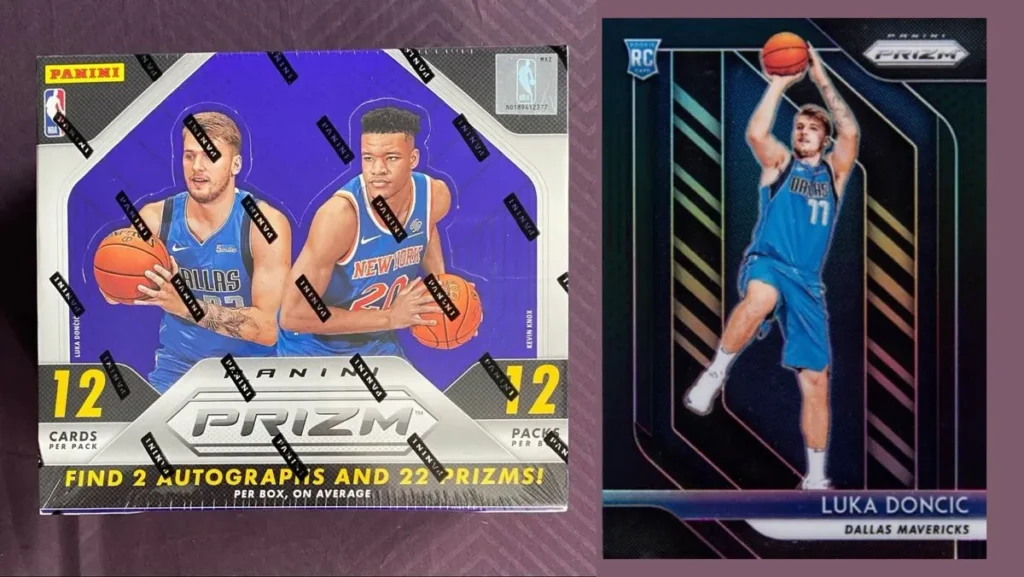
Take the latest Topps Chrome Basketball product release as a prime example. Sapphire edition boxes are now pushing $5,000+ on the aftermarket; a product that cost under $200 just last year, before Topps held the NBA license. By contrast, retail products are more accessible, but still expensive relative to the value they offer. Staying with Topps Chrome Basketball, blaster boxes with a $50 MSRP (once $20-30) are now reselling for $80+, while mega boxes with an $85 MSRP (once $50-60) are now reselling for $140+. This isn’t fringe market behavior. This is now the baseline.
For the average collector, active participation now requires either outsized disposable income or constant financial compromise. That’s not passion. That’s pressure.
This is where the conversation typically turns defensive. People say “just buy singles” or “no one is forcing you to buy into wax breaks”. Both miss the point entirely. In most cases, spending $500 on a break delivers far less value than buying the single you’re after outright. The odds are longer, the outcomes are less predictable, and over time it can train your brain to chase the feeling of relief rather than make intentional purchasing decisions. That shift matters.

Collectors MD started as a support group, but the work naturally touches on broader structural issues within the hobby. Right now, the collectibles market is missing basic guardrails and oversight; sustainability, transparency, accountability, and collector well-being. Without those essentials, the system defaults to a churn-and-burn model that prioritizes short-term extraction over long-term participation.
Collectors MD exists to slow that cycle down for collectors. The goal isn’t to tell anyone how to collect, but to name dynamics that are hurting people, reintroduce friction and structure, and remind collectors that longevity matters more than volume. When collectors are financially, emotionally, and mentally healthier, they don’t vanish. They stay involved in ways that actually last.
The modern hobby doesn’t need more hype. It needs real support; and that often starts at the community level.
#CollectorsMD
When access becomes a privilege instead of a pathway, intention is how collectors survive and stay connected to what they love.
—
Follow us on Instagram: @collectorsmd
Subscribe to our Newsletter & Support Group
Join The Conversation On Mantel
Read More Daily Reflections
Rebuilding A Healthy Relationship With Money
Published January 29, 2026 | By Alyx E, Founder of Collectors MD
When collecting or gambling behavior crosses into compulsive territory, the damage is both financial and psychological. Money is lost, and so is its meaning. What used to feel earned slowly becomes hollow. Dollars become clicks. Spending becomes momentum. The connection between effort and outcome weakens until money starts to feel weightless.
This doesn’t happen because people are inherently careless. It happens because the systems they get sucked into are designed to remove friction. Fast transactions. Stored payment methods. Cart reminders. Promotional incentives. Instant gratification. Over time, your brain stops registering money as something finite and starts treating it like a renewable resource that resets with the next paycheck, the next flip, or the next hit.
For many of us, this warped relationship with money runs deeper than the behavior itself. It can be shaped by patterns we learned early in life, reinforced by environments that normalize debt, or fueled by communities that reward risk without acknowledging the fallout. When that foundation is shaky, compulsive spending feels less like a red flag and more like a routine.

Relearning the value of a dollar is one of the most overlooked challenges of recovery. Not because it’s about financial literacy, but because it’s about awareness. A dollar isn’t just purchasing power. It represents time spent working. Energy given away. Compromised stability.
When money feels abstract, we lose respect for more than just our finances. We lose touch with our boundaries. We borrow from the future without acknowledging the cost. We treat tomorrow like it owes us something.
Recovery asks us to slowly rebuild our relationship with money. To pause before spending. To notice when urgency takes over. To ask whether a purchase is aligned with who we’re trying to become, not just what we want in the moment.
Respecting our finances isn’t just about restriction. It’s not about punishment or deprivation, or telling ourselves we can’t enjoy the things we love. It’s about reclaiming control.
It’s choosing intention over momentum. It’s deciding when to engage and when to step back. It’s understanding that every dollar carries impact, not just on our bank account, but on our sense of stability and self-trust. And when money carries real weight again, other priorities begin to as well. The future we’re trying to protect. The boundaries we’re learning to hold. The life we’re actively rebuilding, one deliberate choice at a time.
#CollectorsMD
When money regains its meaning, intention finally has room to take hold.
—
Follow us on Instagram: @collectorsmd
Subscribe to our Newsletter & Support Group
Join The Conversation On Mantel
Read More Daily Reflections
Is Gambling Addiction A Disease?
Published January 28, 2026 | By Alyx E, Founder of Collectors MD
Gambling addiction isn’t a bad habit. It isn’t a lack of discipline. It isn’t a moral failure. It’s a disease that destroys from the inside out, quietly and relentlessly.
What makes it so dangerous is how insidious it is by nature. Gambling addiction doesn’t arrive loudly. It seeps in. It rewires reward, distorts risk, and slowly convinces the brain that relief is just one more decision away. There are no redeeming qualities when it comes to it. No healthy version. No responsible endpoint once the line has been crossed. Every win feeds the illusion. Every loss deepens the grip.
This behavior isn’t something people simply wake up from and choose to stop. If it were that easy, no one would spiral. No one would hide. No one would keep going long after the fun disappears. The disease thrives on secrecy, urgency, and false hope, and it punishes anyone who believes they can outthink it alone.
From the outside, gambling addiction is often misunderstood. People see behavior and assume choice. They see repetition and assume weakness. What they don’t see is the internal collapse. The constant mental noise. The bargaining. The rationalizing. The fear. The shame. The way the brain becomes hijacked by the need to escape discomfort at any cost.

There’s nothing benign about gambling addiction. It doesn’t enhance life. It doesn’t add joy. It doesn’t coexist peacefully with balance. Once active, it takes more than it ever gives back.
There are behaviors that live adjacent to gambling; collecting, investing, speculating, chasing rarity or upside. Each of these activities can carry risk or harm with the lack of guardrails, which deserves to be taken seriously. In these adjacent spaces, harm reduction matters. Boundaries, friction, and accountability can limit exposure, slow escalation, and prevent downstream damage.
But gambling addiction is fundamentally different. Once it takes hold, it isn’t situational, and it doesn’t exist on a spectrum of healthy to unhealthy. There is no neutral setting, no controlled version, and no redeeming upside that offsets the damage. Gambling addiction is a disease, and treating it as anything less only deepens the harm.
That’s why awareness matters. Not just for those suffering from gambling addiction, but for the people around them. Partners. Family members. Friends. Colleagues. Communities. When we frame this as something someone should simply control, we delay help. When we treat it as a character flaw, we deepen isolation. When we acknowledge it as a disease, we make space for support, treatment, and recovery.
No one heals in silence. No one recovers through shame. Understanding is not enabling. It’s a prerequisite for real change.
#CollectorsMD
Gambling addiction isn’t a failure of will. It’s a disease that rewires how the brain seeks relief and requires understanding, not judgment.
—
Follow us on Instagram: @collectorsmd
Subscribe to our Newsletter & Support Group
Join The Conversation On Mantel
Read More Daily Reflections
The Myth Of Functioning Addicts
Published January 27, 2026 | By Alyx E, Founder of Collectors MD
For a long time, I told myself I was a “functioning addict”. I showed up to work. I answered emails. I met deadlines. I maintained relationships. On the outside, life kept moving. On the inside, everything was shrinking. Active addiction doesn’t always appear chaotic. Sometimes it registers as endurance. Sometimes it’s convincing yourself you’re functioning on the surface, while you’re slowly deteriorating underneath.
There’s a myth that if we’re still functioning, we’re fine. That if we can keep a job, or get through a school day, or maintain a relationship, the damage can’t be that serious. But functioning in addiction is often just surviving at a fraction of your capacity. Even when responsibilities get done, the cost shows up elsewhere in focus, presence, confidence, and emotional range. Sobriety doesn’t just remove the behavior. It gives your nervous system room to breathe again.
I remember the moments when functioning disappeared altogether. I’d lose badly during a tilt session, and the pain that followed wasn’t frantic. It was paralyzing. I’d be glued to an armchair for days, unable to move, think clearly, or even distract myself from anything other than the sinking feeling in my stomach. Shame, regret, and fear sat heavy in my chest, leaving me unable to talk, work, or find any form of relief. There was no escape from this feeling. Just the weight of knowing I’d crossed a line yet again and had run out of ways to rationalize my actions.

What rarely gets acknowledged is that active addiction doesn’t always create chaos. Sometimes it creates paralysis. In those moments, addiction doesn’t escalate. It immobilizes. Once you cross that point of no return, the illusion of control fades. The body shuts down. The mind races. You’re no longer chasing. You’re just, stuck.
Over time, denial runs out of road when we’re lingering in that place for too long. We’re no longer functional. We’re no longer coping. We become broken in a way that can’t be minimized or reframed. We’re forced to see the full cost of our actions, not just financially, but emotionally and physically. This moment of realization is often what pushes us to create distance from the damage and seek real support.
Some manage to function for years. Others hit a wall much sooner. But the truth is simple. No one is more functional while trapped in active addiction. Sobriety doesn’t take something away. It gives you access to clarity, energy, and emotional range you forgot you ever had.
If you’re trapped in a cycle and telling yourself you’re fine because you’re still showing up, ask a harder question. What would life look like if you weren’t carrying this weight at all?
#CollectorsMD
Functioning doesn’t mean you’re okay. It often just means you’ve learned how to suffer in silence.
—
Follow us on Instagram: @collectorsmd
Subscribe to our Newsletter & Support Group
Join The Conversation On Mantel
Read More Daily Reflections
The Moments We Miss
Published January 26, 2026 | By Alyx E, Founder of Collectors MD
Active addiction doesn’t just drain our finances, health, and energy. It also steals something quieter and more devastating. It takes us out of the present moment. Even when our bodies are in the room, our minds are somewhere else entirely. Spinning. Calculating. Replaying. Planning. Always one step ahead, never actually here.
When addiction is active, there’s rarely stillness. There’s a constant mental noise that follows us everywhere. A running list of schemes, justifications, and escape plans. The next bet. The next rip. The next purchase. The next step in repairing the damage from the last mess we made. We sit with loved ones while our attention drifts to dollar signs. We nod in conversations while calculating losses. We smile at work while thinking about how to get through the day so we can chase the next hit of relief.
Presence requires honesty. Addiction survives on distraction. It’s hard to be present when your mind is always negotiating. It’s hard to listen when you’re already rehearsing the next move. It’s hard to feel joy when every moment is filtered through anxiety, urgency, and fear. Even moments that should feel safe start to feel transactional. What can I get away with? How long before someone notices? What’s my exit if this falls apart?

Recovery doesn’t magically slow the world down. It slows us down inside it. It gives us the ability to sit in a moment without needing to escape it. To hear what someone is actually saying. To notice our body. To feel discomfort without immediately trying to numb it. To experience connection without scanning for an angle.
Being present is not a personality trait. It’s a practice. And for those of us coming out of active addiction, it can feel foreign at first. Silence can feel loud. Stillness can feel unsafe. But over time, presence becomes a refuge instead of a threat.
You don’t have to master presence today. You don’t have to silence your thoughts, fix your habits, or suddenly feel a sense of relief. You just have to notice when you’ve drifted. Notice when your mind starts racing ahead or pulling you backward. Notice when you’re no longer in the room, no longer listening, no longer connected to what’s right in front of you.
And then, without judgment or urgency, gently come back. Back to your breath. Back to your body. Back to the conversation. Back to the moment you’re actually living, not the one you’re trying to escape or control.
That small return matters more than we think. Because peace doesn’t arrive all at once. It reappears quietly, in fragments, each time we choose to stay instead of run. Over time, those moments begin to add up. And slowly, presence stops feeling unfamiliar and starts feeling like home.
#CollectorsMD
Addiction pulls us away from the present. Recovery teaches us how to return.
—
Follow us on Instagram: @collectorsmd
Subscribe to our Newsletter & Support Group
Join The Conversation On Mantel
Read More Daily Reflections
Step One Starts With Admitting The Hard Truth
Published January 25, 2026 | By Alyx E, Founder of Collectors MD
Step one in the CMD Recovery Guide asks us to do something deceptively simple and emotionally brutal. Admit that our spending or collecting has taken control of our lives in ways we couldn’t ignore. For many of us, this is where recovery either begins or stalls. Not because we don’t understand the words, but because saying them out loud forces us to confront a version of ourselves we’ve been working hard to avoid.
There’s an added layer of shame here that doesn’t always get talked about. Admitting a problem with substances or even traditional gambling is something most people can intellectually grasp. Admitting a problem with cardboard, sneakers, toys, or collectibles feels different. It can feel juvenile. Embarrassing. Like we should know better as adults. That voice says, “Really? This is what broke you?” And that voice keeps people stuck far longer than the behavior itself.
Step one cracks the illusion of control wide open. It forces us to stop believing we can think our way out of something that has already outpaced our logic. It requires humility and brutal honesty, as opposed to intelligence and clever justifications. And when we finally look in the mirror and say it out loud; when we stop minimizing, comparing, or softening the truth, something real happens. Denial loses its grip. The fog lifts. The fight feels lighter because we’re no longer fighting ourselves.

Admitting we have a problem isn’t a one-time confession. It’s a daily practice. Every day after step one isn’t about mastery. It’s about maintenance. Checking in. Staying honest. Noticing when old stories start creeping back in. Catching the cracks early before they widen. Addiction may always live in our wiring, but recovery is what rewires how we respond.
Recovery doesn’t promise perfection or permanent safety. It instead offers clarity and peace. It doesn’t erase the past. It teaches us how to live with it without letting it run the show. That peace only lasts as long as our commitment does. The work doesn’t stop when the urges quiet down or when life stabilizes. The work is what keeps it quiet.
Step one is the foundation of recovery because it’s where pretending ends. And when pretending ends, real peace finally has room to emerge.
#CollectorsMD
The bravest thing we can do when we’re in active addiction is stop rationalizing and start telling the truth, first to ourselves, then to others.
—
Follow us on Instagram: @collectorsmd
Subscribe to our Newsletter & Support Group
Join The Conversation On Mantel
Read More Daily Reflections
Paying It Forward
Published January 24, 2026 | By Alyx E, Founder of Collectors MD
Step twelve is often talked about as service, but for me it was survival. It wasn’t something I arrived at early in recovery. It was something I grew into after I finally understood what had almost cost me everything.
In the midst of my addiction, gambling paired with compulsive collecting and spending, I felt isolated in ways that were hard to explain. GA meetings helped me find stability, but there was always a disconnect I couldn’t quite name at the time. Other compulsive gamblers didn’t fully understand how collecting something like sports cards could have the same mental, emotional, and financial impact as gambling. I struggled to articulate it, and that gap made it harder to feel fully seen.
Step twelve of the GA program planted the seed. Having had a spiritual awakening as the result of these steps, we try to carry this message to other compulsive gamblers and practice these principles in all our affairs. That idea stayed with me. Over time, it became clear that the message I needed to carry was slightly different, but just as urgent.

Collectors MD was born out of that realization. I wanted to create the space I wish existed when I was at my lowest. A place where people didn’t have to explain why collecting could be destructive. A place where that truth was already understood. A place where help didn’t come with confusion or judgment attached.
Within the CMD Recovery Guide, step twelve reminds us that recovery doesn’t stop with personal stability. It deepens when we show up for others who are facing the same roadblocks we once did. Helping others isn’t about having all the answers. It’s about honesty. It’s about listening. It’s about remembering where we came from and refusing to turn away from it.
Paying it forward isn’t a slogan here. It’s the foundation. Collectors MD exists because someone else is still sitting where I once sat, wondering why this hurts so much and why no one seems to get it. Step twelve is how we make sure they don’t have to feel alone in that moment.
#CollectorsMD
This work only matters if we’re willing to turn our recovery outward and meet others where they are.
—
Follow us on Instagram: @collectorsmd
Subscribe to our Newsletter & Support Group
Join The Conversation On Mantel
Read More Daily Reflections
Practicing Step Work
Published January 23, 2026 | By Alyx E, Founder of Collectors MD
Step work is one of those phrases that gets thrown around a lot in recovery spaces. It can start to sound abstract, intimidating, or overly rigid if we’re not careful. But at its core, step work isn’t about perfection or performance. It’s about consistently taking honest personal inventory, even when it may feel uncomfortable.
In traditional 12-step programs like Gamblers Anonymous (GA), Alcholics Anonymous (AA), or Narcotics Anonymous (NA), the work asks us to slow down and look inward instead of constantly reacting outward. It’s a process of noticing patterns, naming behaviors, and acknowledging where our actions have drifted out of alignment with who we want to be. Not once. Not just in crisis. But regularly and consistently.
Within the Collectors MD recovery program, anchored by the CMD Recovery Guide, that same principle holds true. Whether you’re following the CMD steps alongside a 12-step program or using them as your primary framework, the heart of the work lives in personal reflection.
It often begins with step one; looking in the mirror and admitting that our spending or collecting has taken control in ways we couldn’t ignore. That admission can be one of the hardest steps of recovery, but it opens the door to honesty and self awareness. From there, steps four through six in particular encourage us to stop rationalizing and start recognizing patterns. What triggers us. What stories we tell ourselves. Where spending, collecting, or chasing starts to feel less like a hobby and more like a coping mechanism.

Practicing step work isn’t about beating yourself up for the past. It’s about creating awareness in the present. When we take honest inventory, we begin to see how behaviors repeat, how urges show up in familiar disguises, and how quickly old habits can resurface if/when left unchecked. That awareness becomes a form of protection.
One of the most important pieces of this process is ensuring we’re not doing it alone. Step five exists for a reason. Sharing our stories, experiences, and progress with people we trust helps break the cycle of isolation, secrecy, and shame. It reminds us that accountability isn’t punishment. It’s connection. And connection is what keeps recovery sustainable.
The CMD steps were intentionally written to mirror this flow. From admitting loss of control, to examining habits, to practicing ongoing reflection, the work is designed to be lived, not completed. Recovery isn’t a checklist. It’s a life-long commitment of daily practice. One that requires honesty, humility, and repetition.
When we commit to regular inventory, we give ourselves the opportunity to course correct early instead of waiting for another collapse. We stop pretending slips mean failure. We own them, learn from them, and keep moving forward.
That’s what the work looks like. Quiet. Repetitive. Sometimes uncomfortable. And absolutely necessary. The CMD Recovery Guide serves as the foundation for that work, and as step twelve reminds us that it’s sustained by showing up for and supporting our peers with honestly and without judgment.
#CollectorsMD
Taking personal inventory and practicing step work is how we center ourselves, how we turn awareness into restraint, and how we stay on the track of a life of peace and happiness.
—
Follow us on Instagram: @collectorsmd
Subscribe to our Newsletter & Support Group
Join The Conversation On Mantel
Read More Daily Reflections
Setting & Protecting Healthy Boundaries
Published January 22, 2026 | By Alyx E, Founder of Collectors MD
For me, setting healthy boundaries is no longer optional, it’s essential. They’re obligations that shape how I live each day. The decisions I make ripple outward. They carry consequences that impact others, not just myself. My responsibilities extend beyond my family to a growing community that relies on consistency, honesty, and steady leadership through my roles at Collectors MD and Right Choice Recovery. That reality has reshaped how seriously I take boundaries and how I actively protect them.
What anchors me in making safer choices is understanding what’s actually at stake. Clarity, trust, and integrity aren’t abstract concepts. They’re fragile. When boundaries around money, access, environments, or relationships start to erode, the risk isn’t just regret or relapse. It’s credibility. It’s safety. It’s health. It’s the momentum of something bigger than any one person. That awareness makes it easier to say no, and to step back from the things that once caused me harm.
This concept applies to collecting too. Protecting your boundaries also means protecting your tangible items. The pieces in a curated collection that truly matter – that you cherish – deserve intention, not chaos. When boundaries collapse, even a carefully built personal collection can become collateral. Guardrails help ensure that what you’ve chosen to keep remains meaningful, not something you’re forced to part with later because impulse took over.

In the past, my boundaries were most often crossed through access. Too much access to money. Too much access to platforms. Too much exposure to spaces that normalized excess and disguised harm as connection. I used to tell myself I could handle it, or that staying connected required staying active. Now I know real connection doesn’t require self-betrayal. Distance from certain people, spaces, or behaviors isn’t isolation. It’s protection.
What’s comforting today is knowing I don’t have to navigate this alone. There’s real community and camaraderie within support spaces like Collectors MD. Whether someone is practicing intentional collecting or choosing to step away entirely, there are others who understand and empathize through the same lived experience. Passion doesn’t disappear when boundaries are in place. It becomes healthier, grounded, and sustainable through community and support.
Intentional people don’t wait until things are on fire to draw lines. They don’t over-apologize for protecting themselves. And they don’t confuse availability with worth. That’s what I try to model now, not just for my own recovery, but for anyone else trying to find their footing and learn how to practice healthy engagement.
Boundaries aren’t walls, they’re guardrails. And they’re what allow us to protect what matters most, show up consistently, and build something that truly lasts.
#CollectorsMD
By honoring our boundaries, we protect our collections, the community, and each other.
—
Follow us on Instagram: @collectorsmd
Subscribe to our Newsletter & Support Group
Join The Conversation On Mantel
Read More Daily Reflections
The Emotional Whiplash Of Recovery
Published January 21, 2026 | By Alyx E, Founder of Collectors MD
Mood swings are one of the most misunderstood parts of active addiction – and one of the most frustrating parts of early recovery. One moment you feel motivated, clear, and committed. The next, you are irritable, anxious, flat, or flooded with guilt and shame. This emotional whiplash often convinces people that something is wrong with them, when in reality, it’s a predictable response to a nervous system that has been pushed too far for too long.
In active addiction or compulsive behavior, your brain becomes conditioned to extremes. Dopamine spikes teach your system to chase relief fast, while crashes leave you depleted and reactive. Over time, emotional regulation narrows. Small stressors feel overwhelming. Minor disappointments feel personal. Mood becomes tied to outcomes, wins, losses, urges, and availability of escape.
Recovery doesn’t flip a switch and fix this overnight. Even after stopping or slowing harmful behaviors, your nervous system needs time to recalibrate. Without the old coping mechanisms, emotions can feel louder before they feel steadier. That doesn’t mean recovery is failing. It means your system is relearning balance.

Tempering mood swings starts with naming them without judgment. Instead of asking “what’s wrong with me?” ask “what’s happening in my body and mind right now?” Fatigue, hunger, overstimulation, isolation, and shame all amplify emotional volatility. Addressing basics – sleep, food, movement, hydration, connection – isn’t trivial. It’s foundational.
Another key shift is learning to pause instead of react. Mood swings lose power when they’re observed rather than obeyed. You do not need to fix every feeling or act on every urge. Let emotions rise and fall without assigning them meaning about who you are or what you should do next.
Support matters here more than willpower. Regulation happens in connection. Talking things through, attending meetings, journaling, or simply naming “today feels off” creates space between feeling and action. Over time, that space becomes stability.
Mood swings aren’t a personal failure. They’re a sign of a system healing, stretching, and learning new rhythms. With patience and practice, the swings soften. The baseline steadies. And emotional weather stops deciding the direction of your day.
#CollectorsMD
Stability isn’t the absence of emotion; it’s learning not to let emotion make your decisions for you.
—
Follow us on Instagram: @collectorsmd
Subscribe to our Newsletter & Support Group
Join The Conversation On Mantel
Read More Daily Reflections
Intention Meets Discipline
Published January 20, 2026 | By Alyx E, Founder of Collectors MD
There is a version of collecting that feels calm, grounded, and deeply fulfilling. And there is another that feels rushed, anxious, and driven by urgency. The difference between the two isn’t necessarily knowledge, access, or money. It’s whether intention and discipline are working together – or operating in isolation.
Intention is where collecting begins. It’s the why behind what we buy. It shows up as a clear focus, a personal theme, a long-term vision, and an understanding of what actually brings us joy. Intention asks, does this align with what I value, or am I reacting to noise, hype, or fear of missing out? Without intention, collecting becomes scattered. We accumulate more, but feel less.
Discipline is what protects that intention. It’s the structure that keeps the why from getting buried under impulse. Discipline is practiced through budgets, planned purchases, savings, and the ability to pause instead of react. Restriction isn’t meant to be a form of punishment or denial. It’s about creating conditions that allow collecting to stay sustainable instead of becoming stressful.

Problems arise when we lean too heavily on one without the other. Intention without discipline turns collecting into rationalized impulse. Discipline without intention turns collecting into a rigid checklist that loses its meaning. But when they overlap, something shifts. That overlap is the sweet spot – where collecting becomes curated instead of chaotic, enjoyable instead of exhausting, and supportive of both emotional and financial health.
This is where growth feels earned, not forced. Where appreciation replaces anxiety. Where collecting serves your livelihood instead of quietly competing with it.
If today’s choices feel heavy, rushed, or regret-filled, it may not be about stopping altogether. It may simply be about asking which side is missing. Do I need clearer intention, stronger discipline, or both?
That question alone can slow everything down enough to change the outcome.
#CollectorsMD
When intention guides and discipline protects, collecting becomes something you can sustain – not something you have to recover from.
—
Follow us on Instagram: @collectorsmd
Subscribe to our Newsletter & Support Group
Join The Conversation On Mantel
Read More Daily Reflections
The Purity Of The Game
Published January 19, 2026 | By Alyx E, Founder of Collectors MD
There is something incredibly pure about watching sports simply as a fan again. Not as an investor. Not as a speculator. Not as someone with money on the line. Just as someone who loves the game for what it gives us.
Over the last few days, I had the opportunity to enjoy the NFL Divisional Round playoff games and the College Football National Championship with my dad. No phones. No distractions. No bets. Just the two of us (and four dogs) on the couch, taking in the game. And what stood out most was how free it felt.
For so long, the consumption of sports stopped being about passion and started being about risk. Every game became a ledger. Every big moment came with tension. Instead of celebrating an impressive touchdown, we would calculate the live odds. Instead of enjoying a gritty comeback, we braced for what a loss would mean financially. That’s not fandom. That’s fixation. When you have skin in the game, It strips the purity from the experience.
But the past few days reminded me what the experience should be. It’s supposed to be meaningful. It’s supposed to bring us together. It’s supposed to make you feel present.

Watching those games with my dad brought back that feeling I had as a kid – the same one I had sitting on the living room floor, the game on in the background, ripping packs and chasing the players I loved, the idea of “profit” not even a thought. I don’t think I even knew what the word “profit” meant at that point in my life. It reminded me what it’s supposed to be about. The strategy. The heart. The drama. The beauty of competition at the highest level.
And that’s exactly what collecting is meant to be, too. The purity of collecting isn’t found in what something is worth – it’s found in what it means to you. The player you believe in. The team you ride with. The memory the card holds. That’s the real value.
When we remove the pressure, the gambling mechanics, the social buzz, the unrelenting need to win – fandom returns to what it was always meant to be: something that brings us joy, connection, and meaning.
That’s the version of the hobby we’re fighting for. That’s the version of fandom we deserve. And that’s the version of ourselves we get back when we slow down the pace, choose intention, and remember why we fell in love with sports in the first place.
#CollectorsMD
When we take the pressure off the outcome, we get to enjoy the magic of the game – and the hobby.
—
Follow us on Instagram: @collectorsmd
Subscribe to our Newsletter & Support Group
Join The Conversation On Mantel
Read More Daily Reflections
Guardrails Build Healthier Habits
Published January 18, 2026 | By Alyx E, Founder of Collectors MD
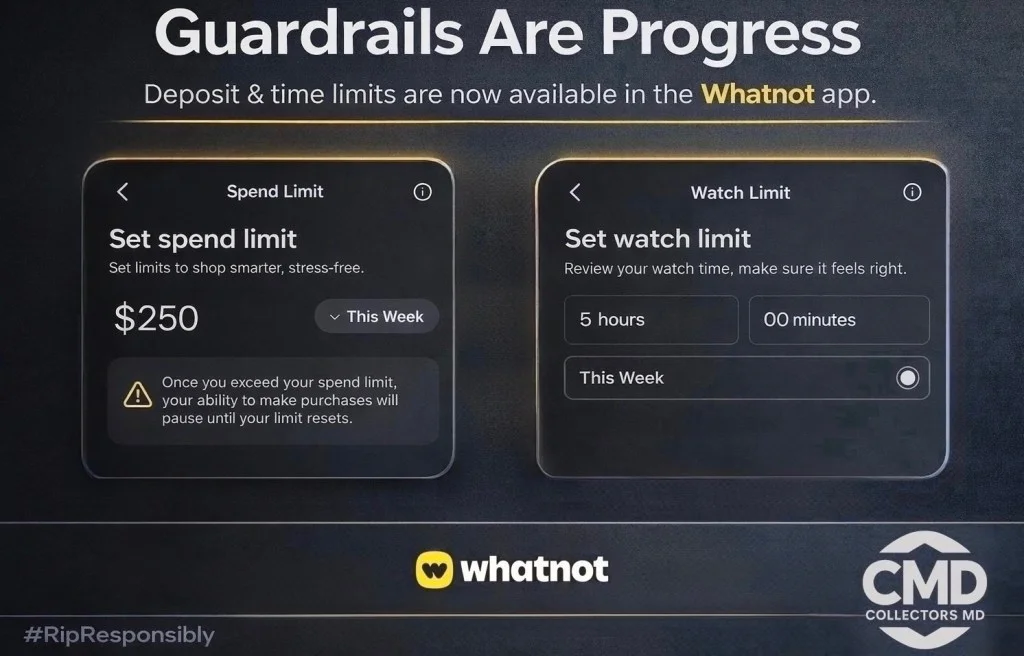
Did you know you can now set deposit and time limits directly in the Whatnot app? This harm-prevention feature was introduced to help create a safer and healthier collecting environment for its users, and it’s a meaningful step forward for the hobby and the way we engage with collecting and spending.
At Collectors MD, we’re encouraged by changes like these. They reflect a growing commitment to responsible engagement and the kind of accountability the hobby needs more of. It’s also exactly what we’ve been advocating for from the very beginning – that major platforms have both the responsibility and power to implement guardrails that help protect collectors from the darker side of modern hobby participation.
These types of tools can empower people to stay within their limits, slow down when urgency spikes, and engage in the hobby in a way that feels intentional rather than impulsive. That matters. It signals that platforms are starting to recognize the real emotional and financial risks that exist inside these ecosystems. It also helps remove the disguise the hobby has been wearing for far too long, making it clear that collecting isn’t just an innocent childhood pastime anymore.

At the same time, it’s fair to ask whether this alone truly addresses the broader problem. Deposit limits and time caps are helpful, but they don’t change the cultural mechanics that drive over-participation. They don’t fully address the pressure, the hype cycles, or the engineered urgency that pushes people to spend beyond their comfort levels in the first place.
Nonetheless, this is progress, and it absolutely deserves recognition. It shows that meaningful change is possible when platforms are willing to listen, evolve, and take responsibility for the environments they’ve created. But it also opens the door for the larger conversation that still needs to happen around transparency, accountability, and long-term consumer protection in the hobby.
Guardrails are an important step forward, but real reform comes from examining how these ecosystems are designed, how urgency and incentives are structured, and how we protect the people most vulnerable to harm. If the goal is a healthier hobby, the work doesn’t stop with one single feature, it continues with a commitment to build something safer, more ethical, and more sustainable for everyone who participates in it.
Because ultimately, the priority isn’t just safer apps. It’s healthier collectors.
#CollectorsMD
Responsibility isn’t the finish line. It’s the foundation.
—
Follow us on Instagram: @collectorsmd
Subscribe to our Newsletter & Support Group
Join The Conversation On Mantel
Read More Daily Reflections
Love, Stress, & Addiction
Published January 17, 2026 | By Alyx E, Founder of Collectors MD
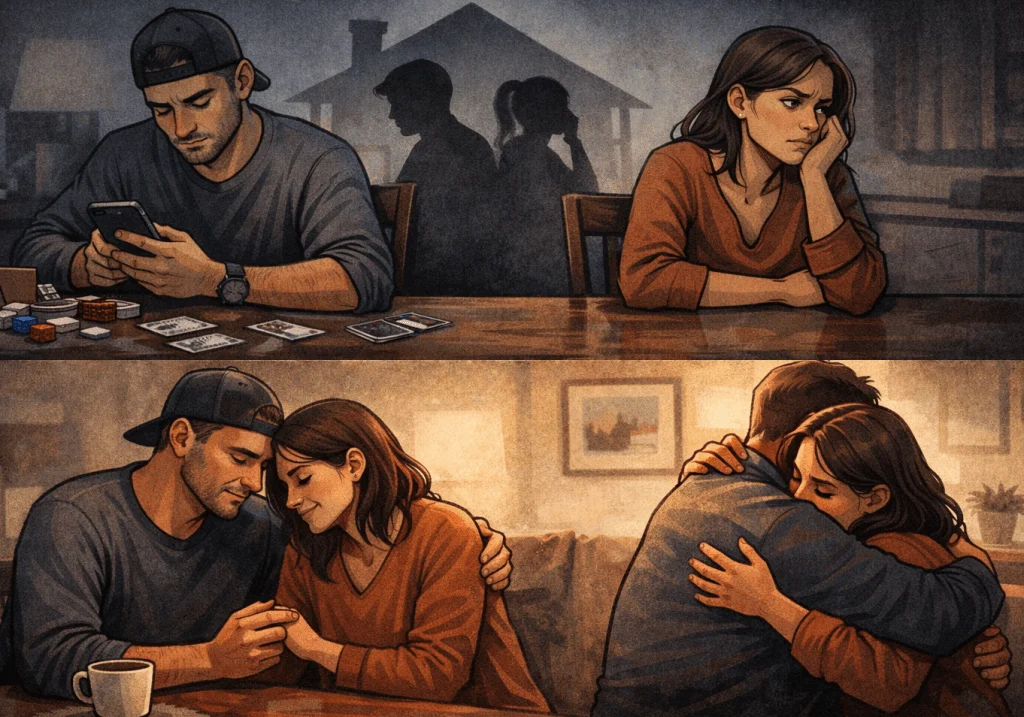
Active addiction rarely stays in the lane we try to keep it in. It doesn’t just live in the apps, the bets, the breaks, or the packs. It has a way of following us home. It sits at the dinner table. It shows up in our tone, our patience, our energy, and our availability to the people we love most.
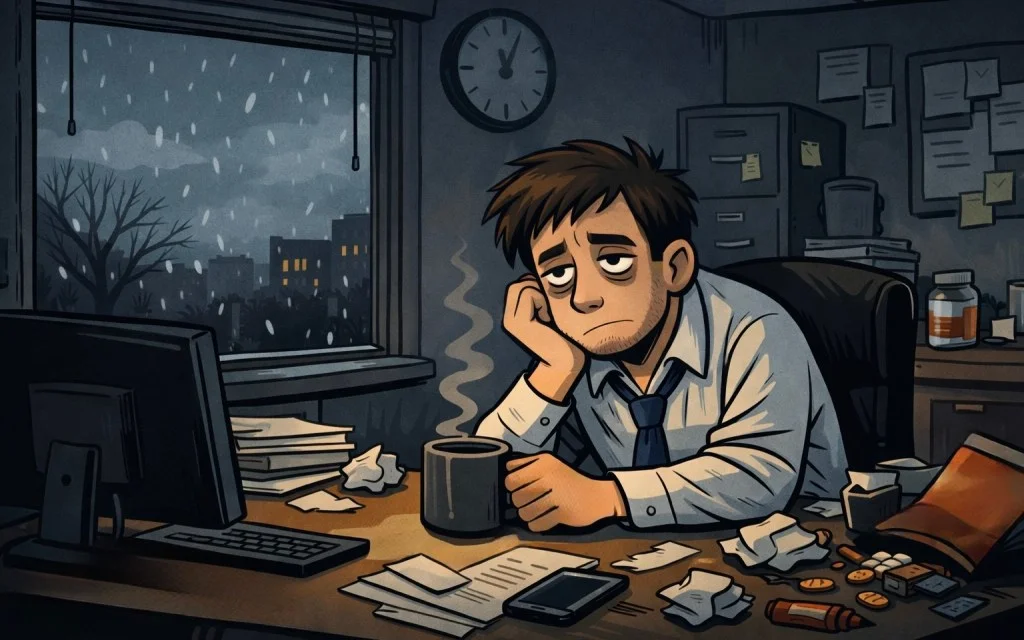
One of the most painful parts of compulsive behavior isn’t the financial damage or even the losses, it’s the distance it creates between us and the people we care about. It’s the half-listening. The short fuse. The preoccupation. The subtle feeling that even when we’re physically present, we’re not really there.
Urges and triggers have a way of shrinking our world down to a single thought: I need relief right now. And when that happens, everything else – connection, honesty, empathy, and presence – starts to feel secondary. Over time, this can leave our loved ones feeling confused, unimportant, or even replaced by the thing we keep turning back to.

In marriages and relationships, the impact is subtle at first. Missed conversations. Irritability. Emotional withdrawal. Financial tension. Then eventually, erosion of trust. Not because of one big moment, but because of many small ones that slowly add up over time.
For many of us, the shame that comes after acting on an urge makes it even harder to show up. Instead of leaning into support, we isolate. We hide. We try to “fix it ourselves”, which only deepens the disconnect. The result is that the people who want to be closest to us are often the ones who feel the furthest away.
Recovery isn’t just about stopping the behavior, it’s about restoring the relationships with the people in our lives. That means learning to pause when the urge hits. To communicate honestly. To repair where harm has been done. And to let our partners see that the work we’re doing isn’t performative, it’s real, consistent, and rooted in change.
At the end of the day, this isn’t just about collecting, gambling, or spending.
It’s about how we show up for the people we love, and making sure we’re choosing connection over compulsion.
#CollectorsMD
The strongest relationships are built on presence and trust, and recovery is how we return to it.
—
Follow us on Instagram: @collectorsmd
Subscribe to our Newsletter & Support Group
Join The Conversation On Mantel
Read More Daily Reflections
Powering Through Seasonal Depression
Published January 16, 2026 | By Alyx E, Founder of Collectors MD
This is the time of year when life can feel especially heavy. The days are still short. The mornings are dark. Work hours feel longer than usual, and there is not much on the calendar to look forward to yet. The dead of winter has a way of amplifying fatigue, isolation, and restlessness all at once. Even people who feel steady most of the year can feel worn down and burnt out during this stretch.
When energy dips and motivation fades, old habits often start knocking again. Not because you’ve failed, but because your brain is looking for relief. Seasonal depression doesn’t just make us feel sad, it lowers our defenses. The habits we once used to escape stress, numb discomfort, or generate excitement can suddenly feel tempting again. The familiar pull of spending, chasing, gambling-adjacent behaviors, or compulsive routines can resurface quietly, disguised as “just trying to get through the week”.
There is also pressure during this time to power through. To grind harder. To ignore how you feel and keep moving. But relying on willpower alone during this time of year rarely works. Pushing without acknowledging the weight of the season can actually make the urges louder, not quieter. When the nervous system is already depleted, relying on mental discipline alone can be a fragile strategy.

This season asks for a different kind of strength. Not intensity and strain, but rather consistency and resilience. Short walks in daylight when you can get it. Honest check-ins instead of isolating. Scaling back expectations rather than adding more pressure. Replacing “I just need to get through this” with “What would support me today?”. These small acts create stability when motivation is at an all-time low.
If you feel yourself slipping toward old patterns right now, that doesn’t mean you’re regressing. It means you are human in a difficult and challenging season. The dead of winter has a way of exposing the cracks, but it can also teach us how to reinforce them with compassion and patience instead of shame and restlessness.
You aren’t weak for struggling during this time of year. You’re responding to real conditions with real effects on your body and mind. Awareness, support, and gentleness aren’t indulgences, they’re protective factors. This season will pass, but the habits you build to care for yourself through it can last much longer.
#CollectorsMD
This time of year isn’t about pushing harder, it’s about recognizing seasonal depression for what it is and responding intentionally.
—
Follow us on Instagram: @collectorsmd
Subscribe to our Newsletter & Support Group
Join The Conversation On Mantel
Read More Daily Reflections
Guilt Versus Shame
Published January 15, 2026 | By Alyx E, Founder of Collectors MD
Guilt and shame often get lumped together, but in recovery – whether from active addiction, compulsive collecting, or gambling behaviors – they operate very differently. Understanding that difference can be the turning point between staying stuck and beginning to heal.
Guilt is behavioral. It shows up as an internal signal that something we did didn’t align with our values. “I spent money I said I wouldn’t.” “I hid something.” “I crossed a boundary.” When guilt is healthy, it points to a specific action and invites correction. It says, something here needs attention. In that way, guilt can actually support recovery – it can prompt honesty, amends, and course correction when we’re willing to listen without punishing ourselves.
Shame, on the other hand, is identity-based. Shame doesn’t say “I did something wrong”. It says “I am something wrong”. It wraps behavior around self-worth and convinces us that the problem isn’t the action – it’s us. In addiction and compulsive cycles, shame is often the fuel that keeps the loop going. It tells us we’re broken, weak, or beyond help, which makes reaching for support feel unsafe or undeserved.

In moments of relapse, overspending, or broken promises to ourselves, guilt might whisper, “this doesn’t feel right”. Shame shouts, “this is who you are”. And when shame takes the lead, the nervous system reacts accordingly – tightening in the chest, racing thoughts, the urge to hide, isolate, or double down. Instead of asking for help, we tell ourselves we need to “fix it first”. Instead of slowing down, we push harder in secret. Shame thrives in silence.
This is why so many people stay stuck not because they don’t care, but because they care deeply and don’t know how to carry accountability without self-condemnation. Guilt can invite responsibility. Shame demands self-punishment. One opens the door to repair. The other locks us inside the cycle.
Recovery doesn’t ask us to eliminate guilt entirely. It asks us to listen to it without letting shame hijack the message. When guilt is met with honesty and compassion, it becomes information, not a verdict. And when shame is named instead of internalized, it begins to lose its grip.
Responding with honesty instead of self-punishment often feels uncomfortable at first. But something shifts when compassion replaces shame, even in small moments. The body softens. The urge to hide loosens. Connection becomes possible again. Accountability doesn’t require carrying shame, it requires support.
It’s not about erasing the past or minimizing the harm it caused. It’s about recognizing that healing doesn’t come from proving we’re better. It comes from allowing ourselves to be seen, especially when things feel messy, and choosing connection over silence, one honest step at a time.
#CollectorsMD
Guilt can guide us back to alignment, shame only keeps us stuck.
—
Follow us on Instagram: @collectorsmd
Subscribe to our Newsletter & Support Group
Join The Conversation On Mantel
Read More Daily Reflections
Healthy Coping Mechanisms
Published January 14, 2026 | By Alyx E, Founder of Collectors MD
When we step away from a compulsive behavior, the hardest part often isn’t stopping, it’s sitting with what’s left behind. The quiet. The restlessness. The urge to fill the empty space. That discomfort can make it tempting to latch onto something new and call it “healthy” just because it isn’t the old behavior.
A lot of people don’t realize that in the space something like gambling addiction leaves behind, a hobby like collecting can quietly step in as a familiar replacement – especially when it’s wrapped in nostalgia. What feels like reconnecting with a childhood pastime can still trigger the same dopamine loops: the chase, the anticipation, the near-misses, the urge to keep going just a little longer. The packaging may look different, but the wiring underneath is fundamentally the same. Without intention, the behavior doesn’t actually change, it just puts on a less threatening mask that makes it harder to question.
Real, healthy coping mechanisms don’t exist to distract us, they exist to regulate us. They help slow the nervous system, ground the mind and body, and bring us back into the present moment without relying on urgency, risk, or escape. Walking, exercising, meditating, reading, journaling, cooking, or listening to music can all serve that purpose when they’re approached with awareness.

When a coping tool starts to feel frantic, secretive, or driven by avoidance, it’s likely no longer serving its role. At that point, it’s the old habit expressing itself in a different way. That doesn’t mean you failed or lost progress. It means you caught the shift before it had a chance to take control again. Awareness is the moment where change actually becomes possible. Noticing the pattern early gives you the opportunity to pause, reset, and choose something that truly supports your well-being instead of repeating the same cycle under a different guise.
Recovery isn’t about finding the perfect replacement. It is about building flexibility. When you have multiple ways to self-soothe, reset, and reconnect, no single urge gets to run the show. Some days one tool will work. Other days that same tool may not. That isn’t failure, it’s feedback. Real stability comes from being able to adjust, respond, and keep moving forward instead of clinging to one solution and hoping it fixes everything.
The goal isn’t always to stay busy. The goal is to stay connected. Connected to your mind, your body, your values, and your ability to pause before reacting. That pause is where control comes back online. That’s where coping takes root.
#CollectorsMD
Stability is built through awareness, balance, and intention, not by replacing one unhealthy habit with another.
—
Follow us on Instagram: @collectorsmd
Subscribe to our Newsletter & Support Group
Join The Conversation On Mantel
Read More Daily Reflections
Why Junk Wax Reigns Supreme In My Collection
Published January 13, 2026 | By Martina F, Collectors MD Community Member
The picture below includes all of the things that 10-year-old me wanted in 1989, save a bag of Hostess potato chips (classic BBQ flavor please) and a Dr. Pepper: two Jose Canseco rookie cards, a Jose Canseco autograph, a Jose Canseco 1989 Donruss, and for Jose Canseco to play for my beloved Toronto Blue Jays. That’s how I know I am a collector and not a successful card flipper/dealer: it’s about feelings.

You see, according to 10-year-old me, the summer of 1989 was quite possibly the best ever. It was my second year in the local girls’ softball league and the outfielders didn’t move in anymore when I went up to the plate, I had hours to work on my swing while spending the day at my grandparent’s house (which also included fabulous homemade Italian lunches daily, and trips to the park across the street), and the local convenience store kept re-stocking the boxes of 1989 Donruss.
A quick 5-minute walk meant a freezie, some bubble gum, and a pack of 1989 Donruss. Bubble gum went in my pocket, the freezie was devoured on the walk back, and the pack of baseball cards was kept in my right hand for security purposes. Once back at the house, it was time to open the wax package and rummage through it to find the grail of all 1989 Donruss cards for any kid who had just witnessed baseball’s first ever 40/40 man the summer prior: Jose Canseco. Alas, for most of the summer, I opened various packs of 1989 Donruss but the card had alluded me. I found all my other favorites, like Cal Ripken Jr., Fred McGriff, and the rest of the Blue Jays, but no Jose.

As I got more and more into collecting these pieces of cardboard, I’d always look for the Jose Canseco card. No matter what set, what year, or what scandal hit the papers. I watched as he broke the hearts of all Toronto Blue Jays fans by hitting the first ever home run into the upper deck of the SkyDome during the ALCS in 1989, and while part of me was devastated, the other half of me was in awe of the magnitude of that home run.
“I wish he played for us!” I’d say to my friends, while we crunched away on on a mini bag of potato chips procured from the same convenience store that sold us our baseball and hockey cards. At the card shows I’d drag my dad to, I would look through the glass showcases at the Jose Canseco card that the entire planet wanted: the 1986 Donruss Rated Rookies card. Featuring a young Jose with a knowing smirk, I wondered how many of my commons I’d have to trade to make that card mine. But at a pricetag of $150 in the early 1990’s, there was no way that was happening.

The years passed and once short prints, chase cards, $200 boxes of cards, and grown men in suits appeared at card shows, I walked away from the hobby that I had spent almost a decade of my life enjoying. Life had other priorities and money needed to be spent on the “needs” instead of “wants”. The cardboard dreams of a 1986 Jose Canseco faded away, and I had made my peace with the fact that I would likely never own one, nor would I ever be able to open a pack of 1989 Donruss and find that one either.
Just this past year, I rekindled my love for the hobby. Age affords you the wisdom to understand that collecting is not about anyone else but yourself. Serial numbered parallels that cost $2000? Don’t have to buy them. Hobby boxes that are $500 for the chance to score an autograph of a rookie that will be forgotten in 4 years time? Also not something I must do. Joining in the grading frenzy and only purchasing cards that are perfect 10’s? Not necessary to enjoy what I do. What I have done is procure all of the cards I wanted but could not afford in 1989, because junk wax has been deemed “worthless” by many. But not by me, and not by all of you reading this, either. And that’s a great thing!

You see, much has transpired since that summer of 1989. Hostess no longer makes potato chips, the steroid scandal tarnished the public image of Canseco and others (but not before he did finally suit up for the Blue Jays and hit a career-high 46 home runs!), little league girls softball has less participants, buying a pack of cards at a convenience store is next to impossible, and I really wish that I could have one of my grandmother’s homemade lunches just one last time.
I myself have bought and sold individual baseball cards and I too have purchased spots in breaks to try and feel the rush of finding a favorite player without spending a small fortune. I will be honest, it breaks my heart to see the way some breakers handle base cards – cast aside as if they are nothing just because they can’t fetch hundreds or thousands of dollars on eBay. For me, that doesn’t feel like collecting: it feels a lot like gambling.

But one thing has not changed: the feeling I get when I open a simple, pedestrian package of baseball cards on a beautiful summer afternoon, and get to add all of them to my collection. The 1989 Donruss cards I still have will not help me retire, nor will they put my child through university, but holding them teleports me to a world that no longer exists while also bringing me joy.
It’s like a flux capacitor-enabled DeLorean that allows just a brief visit to the past – it’s gone in the blink of an eye. That’s what baseball card collecting is all about: joy and dreams. That is why junk wax will always reign supreme in my books; it was about chasing a simple childhood dream and not a 5-figure price tag. That is why I still collect base card rookies and favorite players – the feeling I get is still the same.
As for Jose Canseco, I still collect his cards. And yes, I finally found myself his 1989 Donruss. Hope you find your joy in whatever pack you open next too.
#CollectorsMD
Because intentional collecting isn’t about what the market crowns as valuable – it’s about choosing what still makes your heart feel ten years old, and letting that reign supreme.
—
Follow us on Instagram: @collectorsmd
Subscribe to our Newsletter & Support Group
Join The Conversation On Mantel
Read More Daily Reflections
Annual Card Collecting Review & Plan For 2026
Published January 12, 2026 | By Martina F, Collectors MD Community Member
2025 was a year I jumped right back into collecting after an on and off relationship with the hobby for the past three decades. But this year was different. Gone are the days of buying a $50 wax box and ripping it open, experiencing the joy of pulling all of the current year’s rookies and stars. $50 these days gets you a blaster pack with a handful of inserts/parallels that many toss aside, the misguided hope of pulling a financially life-altering card, and the guilt and shame that follows the handful of base cards you DID get when you ripped open those packs.
This is why I have decided to do a review of my collecting habits, as well as a plan for 2026. My collecting dollars will be spent on the things that I actually want and bring me joy, not gambling on blasters, breaks, and boxes. (Yes, I am aware that I sound like the Grinch. I’m embracing it!) This two-step process has worked for my personal and professional life for years, so I’m going to try it with my collecting hobby. If you’d like to download the one-page templates I’ve made to help, you can do so below.
Step 1 – Annual Card Review
In order to plan for 2026, you’ve got to assess 2025. Using the Annual Card Review Template, ponder what this past year looked like in terms of your collection/collecting.
- What “Galaxy” cards did you add? A “Galaxy” card is one that is a mainstay or star in your collection. The value does not matter here – the fact that this is a card you’ve always wanted or love in your collection makes it a “Galaxy” card.
- Which cards brought/bring you joy? Never mind the cost or reason why, but which cards brought you joy when you look at them or organize them in your collection?
- What was your budget? Didn’t have one? Write that down. Had a small or huge budget? No shame, write that down.
- What did you actually spend? The moment of truth. Write down (specific as you can be about it) how much you actually spent. For an extra moment of truth, ask yourself “what did I spend that money on?” and reflect. It may hurt. It may bring feeling of pride. There is no right or wrong answer, so write it down.
- Is there anything I don’t want to collect anymore? Perhaps your Don Mattingly collection no longer gives you the same joy it once did, or your newest favorite player is no longer in the big leagues after a scandal or career-ending injury. Think about it: is there something that just sits in my collection that I’m no longer excited about? Is there something I just don’t want anymore?
- What did I buy that did not serve my collecting goals? This one will likely hurt, but it’s got to be done! What purchases did you make that got you nowhere closer to owning that Johnny Bench rookie card? Now’s the time to be honest with yourself.
- Steps to make next year better: This is the part where you reflect and start thinking about the future. You could include things like make a budget, re-assess my collection throughout the year, or don’t chase hype. Up to you.
Step 2 – Annual Card Collecting Plan
This is the part where you get to plan for a great 2026! The Annual Card Collecting Plan Template will help you do just that.
- What “Galaxy” cards do I want to add to my collection in 2026? These are your “north stars” so to speak. This will help with the questions to come.
- What do I want to collect this year and why? Team sets, every player who wore jersey number 87, every pitcher who threw no-hitter, the entire Mickey/Disney series from Topps Chrome Update, you name it. Be as specific as possible.
- What is my monthly budget? Consider your finances and pick a number that is both responsible and feasible. Then make a pact with yourself to stick to it. Perhaps tell someone close to you what the number is so that they can help you stay accountable.
- What am I going to stay away from? This one could be things like: impulse buys at card shows, joining random breaks where I don’t get the team I collect, joining breaks at all, buying the latest rookies at the highest prices, not doing research, etc. You know your pitfalls better than anyone else, so be honest!
- Which cards am I looking to sell/get rid of? Whatever is no longer serving your collecting needs must go – so what are those cards for you in 2026?
- What is my collecting goal for 2026? This is where you come up with a concrete goal. ONE. That may mean it is a long sentence, but it must be measurable, and it must be specific. Example: I will continue to add to my Blue Jays Topps team sets and working toward having every single one since 1977, and I will continue to collect all licensed Addison Barger base cards beyond his rookie year.
- Four Goals to Make My Plan A Reality: This is where you list four smaller goals to help you get to your overall plan. Example: attend only one card show per month and spend my monthly budget there, or do not scroll eBay for endless hours, or plan my purchases by creating a very specific want list and sticking to it.
I hope you find both processes useful, and that your 2026 card collecting brings you closer to the “Galaxy” cards you want. Can’t wait to recap 2026 with you in a year’s time! Let me know what some of your goals/reflections are in the comments below.
#CollectorsMD
A better year of collecting starts with honesty, and continues with intention.
—
Follow us on Instagram: @collectorsmd
Subscribe to our Newsletter & Support Group
Join The Conversation On Mantel
Read More Daily Reflections
The Power Of Connection
Published January 11, 2026 | By Alyx E, Founder of Collectors MD
There’s a certain kind of strength that doesn’t just come from willpower, discipline, or overcoming urges. It comes from connection. From being seen. From sitting in a room, physical or virtual, with other people who understand the weight you’re carrying without needing an explanation. When that kind of connection is present, something shifts. The noise fades. The pressure eases. You feel less alone inside your own thoughts.
Recovery doesn’t gain its momentum from perfection. It gains it from people. From shared energy. From compassion moving back and forth in ways we don’t always notice in the moment, but begin to feel deeply over time. That’s why isolation can be so dangerous. When we’re alone too long, our thinking narrows. Urges get louder. Old patterns feel convincing again. But when we reconnect with a group, a meeting, a conversation, the pull loses some of its power. Perspective returns. Breathing gets easier.
There’s something powerful that forms inside a community when we choose to prioritize honesty. When one person speaks openly, it lowers the barrier for everyone else. When someone admits they’re struggling, it gives permission for others to stop pretending. When kindness shows up in small, consistent ways, defenses soften. This is what makes peer support so effective. It’s not about having all the answers or repairing everything all at once. It’s about putting in the work one meeting at at a time, in a judgement-free space, alongside others who can relate.

What fuels recovery isn’t belief or ideology—it’s emotional investment. The willingness to show up with honesty, vulnerability, accountability, authenticity, compassion, and empathy. These are the real sources of energy. They’re what keep people grounded when urges spike and what help carry momentum forward when motivation dips. None of this requires having it all figured out overnight. It requires people showing up for each other and connecting in real, human ways.
Peer support isn’t abstract. It’s active. It’s listening without interrupting. It’s checking in with each other. It’s holding space when someone doesn’t have the right words to share. It’s offering support and learning how to receive it without deflecting or minimizing it. These actions matter more than we realize. They don’t just help people feel better in the moment, they help keep people actively engaged in their recovery—one day, one meeting at a time.
Recovery isn’t just about surviving another day without slipping back into old patterns. It’s about learning how to live again. It’s about moving from chaos and numbness into clarity, presence, and stability. It’s about choosing connection over isolation, even when it feels uncomfortable. Those are the moments that shape our recovery.
#CollectorsMD
Connection turns individual effort into shared strength—and shared strength makes recovery sustainable.
—
Follow us on Instagram: @collectorsmd
Subscribe to our Newsletter & Support Group
Join The Conversation On Mantel
Read More Daily Reflections
Staying Connected Between Meetings
Published January 10, 2026 | By Alyx E, Founder of Collectors MD
One of the most encouraging things we’ve experienced recently is the volume and depth of feedback coming from our community. Messages from people who are struggling, people who are learning, people who are early in recovery, and people who are slowly rebuilding trust with themselves and those around them. What stands out most isn’t just gratitude—it’s connection. People reaching out, asking questions, engaging, and staying present even when life becomes overwhelming.
That feedback reinforces something we believe deeply at Collectors MD: recovery doesn’t happen in a single meeting once a week. Meetings of course matter. They create structure, safety, and shared understanding. But healing happens in the spaces between meetings—in the moments when urges show up unexpectedly, when old patterns resurface, when stress or loneliness creeps in, and when someone needs a reminder that they’re not alone.
That’s why we work so intentionally to offer multiple touchpoints throughout the week. Group chats. Discord. Social media. Content. Peer support. Accountability partners. Sponsors. One-on-one conversations. These aren’t distractions from recovery—they’re extensions of it. Staying engaged keeps recovery active, not theoretical. It gives people options when the first instinct might be to isolate or fall back into old habits.

What we hear again and again is that consistency doesn’t mean intensity. It means staying connected. Calling someone instead of sitting with an urge. Reading a reflection that helps name what you’re feeling. Dropping a message in a group chat. Listening to a podcast. Showing up to an extra meeting. These small acts don’t seem dramatic, but they’re often the difference between spiraling and stabilizing.
We also hear from partners, loved ones, and family members—people trying to understand changes they’re seeing, trying to support without pushing, trying to start conversations without making things worse. Their voices matter too. Recovery doesn’t exist in a vacuum, and awareness is often the first step toward healthier dialogue, trust, and support on all sides.
Collectors MD exists to meet people where they are. Not to overwhelm. Not to prescribe one right way forward. But to offer connection, consistency, and choice—so no one feels like they have to navigate recovery alone, or wait until things fall apart to ask for help.
Staying active in recovery doesn’t mean doing everything. It means staying connected to something that grounds you, reminds you who you are, and helps you make decisions that align with your values when it matters most. We must remind ourselves that recovery is a lifelong commitment, and while that can feel daunting at first, it becomes steadier and more manageable once it’s woven into your everyday life—part of your rhythm, not something you have to force.
#CollectorsMD
Recovery grows stronger when connection extends beyond the meeting room.
—
Follow us on Instagram: @collectorsmd
Subscribe to our Newsletter & Support Group
Join The Conversation On Mantel
Read More Daily Reflections
Burnout, Awareness, & Sustainable Leadership
Published January 09, 2026 | By Alyx E, Founder of Collectors MD
Burnout doesn’t usually announce itself. It doesn’t show up as a dramatic breaking point or a conscious decision to halt everything. More often, it slips in quietly—masked as productivity, urgency, or commitment. It shows up as overextension disguised as responsibility. As “just one more task” repeated until there’s no margin left. As the false perception that rest is irresponsible and slowing down is a failure of dedication.
Recent conversations, honest feedback, and taking real personal inventory reinforced something critical: burnout isn’t a lack of care—it’s often the result of caring deeply without putting enough protection around yourself. When work is built around support and lived experience, self-sacrifice can quietly start to feel like responsibility—even when it isn’t.
There’s a difference between consistency and overextension. Consistency builds trust, rhythm, and stability. Overextension drains clarity, narrows perspective, and eventually erodes the very presence the work requires. When everything feels urgent, nothing gets the true care it deserves—including the people doing the work.

I’ve learned that awareness has to come before adjustment. You don’t prevent burnout by disappearing overnight or walking away from what matters. You prevent it by noticing patterns early—by questioning the pace, recalibrating expectations, making space to breathe, and listening to the people who care enough to tell you the honest, and sometimes hard truth. Reflection doesn’t slow progress; it’s what keeps it intact.
The goal has never been to do more. It’s been to do what matters in a way that can last. Movements don’t survive on adrenaline or volume alone. They survive on intention, boundaries, and the willingness to protect the people carrying them forward.
Burnout isn’t a failure of discipline. It’s a signal. And listening to that signal—without panic, without shame—is part of responsible leadership. Because showing up tomorrow depends on how we take care of ourselves today.
That’s why I’ve made a conscious decision to slow the pace—without losing the discipline. You may see fewer Daily Reflections shared publicly for now, but the work itself isn’t stopping. I’ll continue writing every day, honoring the commitment I made to myself and to this first year of Collectors MD. What is changing is my willingness to listen more closely—to the people who support this mission, challenge my blind spots, and care enough to help protect it.
The truth is, the support matters more than the content. It always has. Collectors MD exists because people show up for each other, not because words get published on a schedule or content is posted to social media. I’m committed to protecting that foundation—by choosing sustainability over urgency, trust over noise, and presence over output. That’s not a step back. It’s how this work stays honest, human, and built to last.
#CollectorsMD
Sustainability isn’t slowing the mission—it’s what keeps it alive long enough to matter.
—
Follow us on Instagram: @collectorsmd
Subscribe to our Newsletter & Support Group
Join The Conversation On Mantel
Read More Daily Reflections
Mind Over Matter
Published January 08, 2026 | By Alyx E, Founder of Collectors MD
There are moments in recovery when the urge doesn’t feel like a thought—it feels like a force. It shows up suddenly, loudly, and with a kind of certainty that says you don’t have a choice. Your body reacts before your logic can catch up. Your heart rate changes. Your focus narrows. Everything in you wants relief, and it wants it now.
This is where mind over matter gets misunderstood. It isn’t about overpowering the urge or muscling through it with willpower alone. That framing often backfires. When urges feel overwhelming, trying to dominate them usually just makes them louder. Recovery isn’t about winning a fight—it’s about changing your relationship to the feeling itself.
An urge is information, not an order. It’s your nervous system reacting to discomfort, stress, boredom, or familiarity. It feels urgent because your brain has learned—over time—that a certain behavior provides quick relief. That doesn’t mean the relief is healthy, lasting, or aligned with who you’re trying to become. It just means the pathway is well-worn.
Mind over matter, in practice, looks quieter than people expect. It’s the moment you notice the urge and say, I don’t have to solve this right now. It’s giving yourself permission to pause—to breathe—to let the intensity crest without acting on it. Most urges peak and fall whether we engage them or not. The problem is we’re rarely taught to stay long enough to see that happen.

When triggers feel impossible to resist, it’s often because they’re layered. Stress on top of exhaustion. Loneliness on top of routine. Access on top of habit. Nothing is “wrong” with you for struggling here. You’re responding exactly the way a human nervous system does inside environments designed to remove friction and speed up decisions.
Recovery strengthens when you practice staying present with discomfort instead of escaping it. Not forever. Not perfectly. Just a little longer than last time. That’s how the brain learns something new. That’s how the matter—the body, the urge, the impulse—slowly starts to follow the mind again.
You don’t need to eliminate urges to heal. You need to outlast them. And every time you do, even briefly, you’re proving to yourself that the feeling is temporary—even when it insists otherwise.
#CollectorsMD
You don’t beat urges by crushing them—you change them by staying present long enough to let them pass.
—
Follow us on Instagram: @collectorsmd
Subscribe to our Newsletter & Support Group
Join The Conversation On Mantel
Read More Daily Reflections
New Year, Same Machine
Published January 07, 2026 | By Alyx E, Founder of Collectors MD
New Year’s resolutions can be especially hard in this hobby because the environment doesn’t slow down when people try to reset—it speeds up. January is supposed to feel like a clean slate. But in the hobby, that “fresh start” energy is often the exact thing the system pulls on—because optimism and vulnerability sit right next to each other.
On the platform side, the start of the year is rarely quiet. You’ll see new year, new chase messaging, countdown drops, limited-time breaks, and urgency language that pushes immediacy over reflection. Algorithms resurface the most high-dopamine content right when you’re trying to recalibrate—huge hits, profit screenshots, highlight reels that quietly whisper, “start your year like this”. And the social pressure gets louder too: year-end recaps, flex posts, “first big hit of 2026” narratives that make restraint feel like you’re already behind.
On the manufacturer side, January isn’t restraint—it’s momentum. Flagship releases, new product lines, hyped rookie classes, heavy marketing timed perfectly for renewed spending energy. Scarcity language—short print, case hit, true gold, 1/1—keeps the fantasy alive that the next rip could define your entire year. The message isn’t always malicious, but it is constant: start strong, go big, don’t miss out.

This is why so many resolutions in this space collapse—not because people lack discipline, but because they’re attempting personal change inside systems built to resist it. The deck is stacked toward speed, excitement, impulse—and the most dangerous part is how frictionless it all is. One click, one livestream, one “why not” moment, and suddenly your new year is being decided by a feed instead of your values.
That’s why at Collectors MD, we don’t treat intention like a strict rulebook. We treat it like harm reduction—a way to create friction where the hobby tries to remove it. A pause before you buy. A plan before you chase. A boundary that isn’t perfect, but is honest. A willingness to ask, “what am I actually looking for right now—joy, or relief”.
And this is exactly why peer support matters so much in January. Resolutions don’t survive in isolation. They survive when we name the pressure instead of internalizing it as failure, when we replace hype-driven momentum with shared reality, and when we set intentions that are flexible, realistic, and supported—rather than rigid promises we’re expected to some how keep on our own.
The goal isn’t to “win” the new year. It’s to move through it with awareness—together—without letting the calendar, the platform, or the chase decide the pace for us.
#CollectorsMD
The healthiest resolutions aren’t louder promises—they’re quieter pauses that interrupt the cycle before it starts.
—
Follow us on Instagram: @collectorsmd
Subscribe to our Newsletter & Support Group
Join The Conversation On Mantel
Read More Daily Reflections
The Image We Chase
Published January 06, 2026 | By Alyx E, Founder of Collectors MD
During active addiction—whether it shows up through gambling, compulsive collecting, or spending—many of us aren’t just chasing a “win”. We’re chasing an image. A version of ourselves we want the world to see. Confident. Successful. Generous. Untouchable. Someone living life in the fast lane, finally validated by the big moment that’s just around the corner.
The Gamblers Anonymous Combo Book describes this as the “dream world” of the compulsive gambler. It’s the fantasy of what life will look like after the big win—the expensive homes, luxury cars, designer clothes, lavish vacations, and the belief that we’ll suddenly become more charming, more philanthropic, more admired. In that dream, we’re not just getting by—we’re impressive. Respected. Whole.
But the hard truth is that the dream is never satisfied. No win is ever big enough. When success comes, it only fuels bigger dreams. When failure hits, desperation takes over, and the fantasy becomes the only thing keeping the pain at bay. Without that imagined future, reality feels unbearable—so the cycle continues.

What’s especially painful is realizing how much energy goes into maintaining that image. The spending. The secrecy. The curated version of ourselves we project to others while quietly unraveling inside. Vanity isn’t about ego here—it’s about survival. It’s about clinging to a story that says, “I’m not failing, I’m just one move away”.
Today, that image isn’t just internal—it’s public. Social media provides us with an avatar of ourselves to curate and protect. A highlight reel version of who we want others to perceive us as: successful, disciplined, always winning, always in control. Posts become proof points. Purchases become content. Wins get amplified, losses disappear. And the more fragile things feel internally, the more polished that avatar often becomes.
What starts as projection slowly turns into self-deception. We convince ourselves the image is who we are, and the addiction depends on that illusion to survive. But the gap between the online version and the real, struggling human behind it only deepens the isolation and keeps the cycle perpetuating.
Recovery begins when we stop pretending and start being honest with who we truly are. When we let go of the image and allow ourselves to be real—imperfect, vulnerable, human.
The version of you that doesn’t need to impress anyone is the version that can finally heal.
#CollectorsMD
Freedom begins when we stop chasing the constructed image and start choosing honesty over illusion.
—
Follow us on Instagram: @collectorsmd
Subscribe to our Newsletter & Support Group
Join The Conversation On Mantel
Read More Daily Reflections
Laying Down The Mask
Published January 05, 2026 | By Alyx E, Founder of Collectors MD
Recovery often starts with learning how to change our behavior—but it deepens when we learn how to stop hiding what we feel.
Putting on a mask often starts as a survival skill. We do it to keep functioning, to avoid burdening others, to convince ourselves—and everyone else—that we’re okay. The mask helps us appear steady and in control, even when things feel uncertain underneath. But while it can offer short-term protection, it comes at a cost.
Putting on a mask doesn’t belong to any single emotion. It shows up differently for different people, depending on what feels safest to conceal in the moment. For some, it’s anger held in. For others, it’s sadness minimized, fear rationalized, shame buried, or anxiety brushed off as something they should have already moved past. Regardless of the emotion, the result is the same: what goes unacknowledged builds pressure. On the outside, things can look calm, measured, and under control. Inside, the weight quietly accumulates until something eventually gives.
When emotions are suppressed instead of addressed, they don’t disappear—they resurface sideways. They show up as resentment, outbursts, impulsivity, emotional withdrawal, or old coping behaviors we thought we had left behind. The mask might help us function short-term, but long-term it keeps us disconnected from ourselves and from the people around us.

Recovery isn’t about appearing stable or proving you’re stronger than you really are. It’s about vulnerability, honesty, and self-awareness—naming what you’re actually feeling before it turns into something heavier. That recognition creates room to respond instead of reacting. To ask for support instead of isolating. To sit with discomfort instead of escaping it.
Recovery also asks for humility—the willingness to admit where willpower ends and where support needs to begin. Acknowledging powerlessness over addiction isn’t giving up; it’s telling the truth about what we can and can’t control. When we stop trying to outmuscle something bigger than us, we create space for support, accountability, and real change. That admission isn’t weakness—it’s often the moment recovery actually begins—and one of the biggest, hardest steps to take.
Laying down the mask doesn’t mean losing control. It means gaining clarity. It means accepting that emotions aren’t a threat—they’re information. And when we allow ourselves to feel them openly, without judgment or shame, recovery becomes less about white-knuckling and more about healing.
At the end of the day, we don’t recover by living in denial or pretending to be perfect. We recover by remembering we’re human—and letting ourselves show it.
#CollectorsMD
You don’t have to hide your emotions to stay in control—honesty is what steadies the ground beneath you.
—
Follow us on Instagram: @collectorsmd
Subscribe to our Newsletter & Support Group
Join The Conversation On Mantel
Read More Daily Reflections
What We’d Change Isn’t A Feature, It’s The Culture
Published January 04, 2026 | By Alyx E, Founder of Collectors MD
As I read today’s CLLCT article asking industry leaders what they’d change about the hobby, I found myself nodding along. More transparency. Fewer conflicts of interest. Cheaper wax. Better access. Stronger education. More in-person connection. All valid. All necessary. And all pointing toward the same underlying truth.
The biggest issue in collecting today isn’t a single product, platform, or policy—it’s the culture we’ve normalized around speed, scale, and optimization at all costs.
The hobby didn’t become unhealthy overnight. It evolved—quietly—as friction was removed at every step. Ripping got faster. Buying got easier. Grading became default. Market prices became scoreboards. Somewhere along the way, intention got replaced by momentum. And for many collectors, the joy of collecting slowly turned into pressure to keep up.
That’s why so many of the changes experts want to see aren’t really about mechanics—they’re about restraint. Slowing things down. Making space for thought. Re-centering why people collect in the first place.

At Collectors MD, we see the downstream effects every week. Collectors asking how to stop spending. Families trying to make sense of losses that spiraled faster than anyone could intervene. People often realizing too late that what started as fun had quietly become compulsive. None of that happens because someone lacks discipline—it happens because they’re human inside systems engineered to push harder when vulnerability shows up.
And yet, the hobby often keeps moving as if this reality doesn’t exist.
This isn’t about blaming companies or shaming collectors. It’s about acknowledging that when growth, hype, and volume become the primary incentives, responsibility has to be intentional—not assumed. Safeguards don’t weaken the hobby. They protect the people inside it. Transparency doesn’t reduce excitement. It preserves trust. Education doesn’t kill fun. It sustains it.
The most powerful answer to the question, “what would you change about the hobby?” isn’t a single feature or reform. It’s a shift in mindset.
From extraction to stewardship. From volume to intention. From constant escalation to conscious participation.
Collecting doesn’t necessarily need to be slower for everyone. It needs to be safer for those who need a pause. It needs visible off-ramps. It needs language that normalizes stepping back. And it needs leaders—across platforms, brands, and communities—willing to say that long-term health matters more than short-term wins.
That’s how the hobby grows without losing itself.
#CollectorsMD
A hobby built to last must care for the people who carry it forward.
—
Follow us on Instagram: @collectorsmd
Subscribe to our Newsletter & Support Group
Join The Conversation On Mantel
Read More Daily Reflections
When Grading Becomes The Default
Published January 03, 2026 | By Alyx E, Founder of Collectors MD
More than 26 million cards were graded in 2025. Let that number sit for a moment.
That isn’t just a data point—it’s a signal. A reflection of how deeply the hobby has shifted, and how quietly a new expectation has taken hold: if a card is decent, it should be graded. Not because it needs to be sold. Not because it’s part of a long-term plan. But because the industry has conditioned us to believe that grading is the natural next step—almost a requirement—rather than a choice.
For many collectors, grading has become less about intention and more about reflex.
Here’s the part that often gets lost: intentional collectors do not have to grade their cards. If you’re not planning to sell, optimize profit, or chase market validation, there is nothing wrong with protecting a card in a simple toploader, a one-touch, or a display case. Preservation and enjoyment do not require a slab. Value does not only exist when something is encapsulated and assigned a number.
And yet, the current infrastructure of the hobby pushes us in the opposite direction.
When grading becomes frictionless, omnipresent, and culturally reinforced, it stops being a tool—and starts becoming a trigger. It accelerates spending—grading has become prohibitively expensive, especially at scale. It encourages over-optimization. It nudges collectors toward decisions that feel urgent rather than considered. Suddenly, ripping doesn’t end when the pack is opened. It continues through submission fees, shipping costs, insurance, and the emotional rollercoaster of waiting for a grade to define whether the card—and by extension, the rip—was “worth it”.
That’s where #RipResponsibly intersects with intentional collecting.

Ripping responsibly doesn’t just mean setting limits on packs, boxes, or breaks. It means pausing before the next step. Asking why you’re grading. Asking who the decision is really for. Asking whether this move aligns with your goals—or whether you’re being pulled by momentum, comparison, or fear of missing out.
None of this is anti-grading. Grading can absolutely make sense—for resale, authentication, protection, or long-term planning. But when it becomes automatic, unquestioned, and financially stretching, it’s no longer a neutral choice. It’s part of a broader pattern where speed replaces reflection and optimization replaces enjoyment.
Intentional collecting gives you permission to opt out of that pressure. To collect for connection, not constant validation. To protect what you love without overextending your means. To remember that not every good card needs to be maximized—and not every moment needs to be monetized.
The hobby doesn’t become healthier by grading more cards. It becomes healthier when collectors feel empowered to make decisions that fit their lives, their finances, and their values.
And sometimes, the most responsible move isn’t another submission—it’s choosing to slow down and appreciate what you already have.
#CollectorsMD
Intentional collecting means choosing what adds meaning—not automatically following what the system rewards.
—
Follow us on Instagram: @collectorsmd
Subscribe to our Newsletter & Support Group
Join The Conversation On Mantel
Read More Daily Reflections
Accountability Is No Longer Optional
Published January 02, 2026 | By Alyx E, Founder of Collectors MD
Over the last few weeks, I’ve found myself doing something I never set out to do—scrolling through Reddit threads late at night, reading post after post from collectors who sound scared, confused, and exhausted. People asking strangers across the internet how to stop spending. How to recover financially after what began as “just a hobby”. How to walk away when the chase no longer feels fun—but compulsive. Spouses asking how to help someone they love who is trapped in the cycle, or how to rebuild trust after savings were depleted overnight. Families trying to make sense of life-altering losses tied to impulsive spending that spiraled faster than anyone could comprehend.
What struck me most wasn’t how rare these stories were. It was how common and public they’ve become.
Across sports cards, TCG, sneakers, memorabilia, luxury goods, and more, the language is eerily consistent. Shame. Secrecy. Escalation. Loss of control. The realization that something once joyful has gradually turned into something harmful. This isn’t a handful of isolated cases—it’s a full-blown epidemic hiding in plain sight.
And yet, these industries continue to operate as if none of this exists.
That’s why #RipResponsibly must become the standard moving forward—not a marketing angle, not a PR checkbox, and not something deployed selectively when it’s convenient. This isn’t about Collectors MD. It’s about acknowledging reality. It’s about creating tangible, visible moments of interruption—messaging that meets people where they are before damage compounds, before fun turns into fixation, before silence turns into shame.
And it’s about holding ourselves and the spaces we participate in accountable for the culture we actively shape.

This isn’t about negativity. Responsible messaging doesn’t take the fun away. It creates room for it to exist without collateral damage. It reminds people that pausing is allowed. That support exists. That needing help doesn’t mean you failed—but rather that you’re human, navigating systems designed to exploit emotion and fatigue, and accelerate impulse during moments of vulnerability.
Awareness doesn’t dilute the fun—it preserves the purity and joy that make collecting worth protecting in the first place. It keeps our hobbies rooted in community instead of consumption. In intention instead of impulse. In sustainability instead of burnout.
Our goal is simple but non-negotiable: for this framework to become the baseline. Not someday. Not selectively. But across industries where these dynamics—directly or indirectly—are creating environments where risk is normalized and harm has become an acceptable byproduct of growth.
Our hobbies deserve safeguards that prioritize people over profit and protection over extraction.
#CollectorsMD
Protecting the joy of collecting means being honest about where harm begins—and courageous enough to intervene before it does.
—
Follow us on Instagram: @collectorsmd
Subscribe to our Newsletter & Support Group
Join The Conversation On Mantel
Read More Daily Reflections
Setting The Tone For The New Year
Published January 01, 2026 | By Alyx E, Founder of Collectors MD
A new year doesn’t ask us to reinvent ourselves. It asks us to be more intentional about how we move forward.
After a year of growth, reflection, and hard conversations, what feels most important now is clarity. Not urgency. Not momentum fueled by pressure. But a grounded understanding of what truly matters, why it matters, and how we intentionally choose to invest our time, energy, and attention.
Today, the first day of the year, is a chance to pause before everything starts to accelerate again. A moment to step back, take inventory, and recalibrate before the noise returns and the pace picks up. Not to rush into goals or expectations, but to give ourselves the space to breathe, reflect, and reset our footing before hitting the ground running. That pause matters. It’s where intention is formed.
This year is about direction. It’s about being more thoughtful in how we show up. More aware of our patterns. More honest about what adds value to our lives and what gradually takes away from it. It’s about recognizing that progress doesn’t come from doing more—it comes from acting with purpose.

The work ahead isn’t performative. It doesn’t rely on big declarations or dramatic change. It shows up in small, consistent choices. In slowing down when external pressures push us to speed up. In asking more thoughtful questions before making meaningful decisions. In staying connected to the reasons we began this journey in the first place.
That’s the foundation Collectors MD is built on. Not perfection. Not pressure. But presence. The ability to pause, reflect, and choose with intention in a space that rarely leaves room for reflection and restraint.
As the new year unfolds, the goal is simple: to remain grounded. To keep this space centered on awareness, honesty, and support. To continue creating room for people to engage with collecting in ways that feel healthy, sustainable, and aligned with who they want to be—not who societal influences tells them they should be.
This year isn’t about chasing what’s next. It’s about being deliberate with what we carry forward, and allowing that standard to shape the path ahead.
#CollectorsMD
The year ahead isn’t about doing more—it’s about moving forward with clarity, care, and intention.
—
Follow us on Instagram: @collectorsmd
Subscribe to our Newsletter & Support Group
Join The Conversation On Mantel
Read More Daily Reflections
Entering The New Year With Intention
Published December 31, 2025 | By Alyx E, Founder of Collectors MD
As this year comes to a close, I’ve found myself reflecting on just how much has changed in such a short amount of time. What began less than a year ago as a deeply personal idea—born from lived experience, frustration, and a desire to create something better—has grown into something far bigger than I ever imagined.
Collectors MD started as a conversation. It’s now a community. A movement. A space people show up to when they need clarity, support, or simply to know they’re not alone.
The last ten months have been humbling in the best way. We’ve built support groups, launched partnerships, implemented tools & resources, created content, started conversations that many people were afraid to have out loud, and connected with collectors across the country who quietly needed this space more than they realized. None of this happened overnight. And none of it happened alone. Every message, every meeting, every shared story has shaped what Collectors MD is becoming.

What I’m most grateful for isn’t growth in numbers—it’s growth in honesty. The willingness people have shown to talk about impulse, pressure, regret, recovery, and responsibility. The courage it takes to admit when something you love has started to hurt. The trust it takes to show up anyway. That’s what this year has been about.
Looking ahead, I feel grounded—not rushed. There’s so much more to build, but there’s also clarity now. We know who this space is for. We know why it matters. And we know that progress doesn’t come from perfection, but from consistency, intention, and community. The goal has never been to fix the hobby—it’s been to protect the people inside it.
As the new year begins, I’m carrying forward a deep sense of gratitude. For the conversations. For the momentum. For the reminder that growth doesn’t always look loud—sometimes it looks like steadiness, honesty, and choosing to keep going.
There are better things ahead. And we’re building them together.
#CollectorsMD
Progress doesn’t come from rushing forward—it comes from reflecting, realigning, and choosing to grow with intention.
—
Follow us on Instagram: @collectorsmd
Subscribe to our Newsletter & Support Group
Join The Conversation On Mantel
Read More Daily Reflections
When The Algorithm Targets A Child
Published December 30, 2025 | By Alyx E, Founder of Collectors MD
There’s an uncomfortable truth we don’t talk about enough in the collecting space: the same platforms that claim to build community are quietly exposing children to environments they were never meant to navigate.
I saw it firsthand recently. I was watching a live stream on one of the major platforms—not as a participant, but as an observer. Someone who stays close to the space to understand what’s really happening behind the scenes. The stream had over a thousand viewers. The chat was moving so fast it was unreadable. Energy was high. Money was flying.
And then something felt off.
A user in the chat kept repeating the same messages. Asking how to buy. Asking how to get noticed. Asking for attention. Other viewers started to realize what was happening and asked the question out loud: How old are you?
The answer came back quickly. “I’m 11.”
What followed was deeply unsettling. The child was clearly overwhelmed, excited, and desperate to be seen. Their messages started shifting from curiosity to urgency— “I only have five minutes”, “my iPad is about to shut down”, “how do I buy?” It became glaringly obvious that parental controls were about to kick in, and the child was racing against a clock they barely understood.
Then it happened. They bought a box.
Hundreds of dollars, spent in seconds. The chat exploded. People cheered. Some laughed. Others joked about how angry the kid’s parents were going to be. And the breaker—whether intentionally or not—continued on as if nothing unusual had occurred.
An 11-year-old had just made a high-dollar purchase inside a live gambling-adjacent environment with no guardrails, no intervention, and no meaningful age protection. And the most alarming part? He had zero idea what he’d just done.

And that’s when it really hit me. This isn’t about collecting anymore. This is about exposure. About access. About systems that are optimized for engagement and spending—not discernment, not protection, and certainly not child safety. These platforms are fast, emotional, and deliberately frictionless. They’re designed to keep people clicking, watching, and buying. And when those mechanics are placed in front of children, the results are predictable.
The most concerning part? This isn’t rare.
Stories like this are becoming common. Kids using their parents’ credit cards. Five-figure charges appearing overnight. Families finding out only after the damage is done. Lawsuits are already emerging. And yet, meaningful safeguards remain almost nonexistent.
That’s where the conversation HAS to change.
Education can’t just be aimed at collectors anymore. Parents need to understand what these platforms are, how they work, and why they’re fundamentally different from the card shops many of us grew up with. This isn’t flipping through binders with friends. It’s live commerce, social pressure, artificial urgency, and monetized attention—all wrapped in nostalgia and disguised as a childhood pasttime.
And this is where guardrails matter. Not as punishment. Not as restriction. But as protection.
Guardrails are not anti-hobby. They’re pro-collector. They exist so enjoyment doesn’t turn into harm. So curiosity doesn’t become compulsion. So kids can engage safely without being pulled into environments they’re not developmentally equipped to handle.
Because structure doesn’t ruin fun—it preserves it.
If this industry wants to survive long-term, it has to reckon with this reality. Platforms have a responsibility. Parents need better information. And the community has to stop pretending this isn’t happening.
We can love collecting and still demand better. We can protect joy and protect people. And we can do it before more damage is done.
#CollectorsMD
Guardrails don’t limit the hobby. They protect the people inside it before harm has a chance to take root, especially young collectors who can’t yet recognize the risks.
—
Follow us on Instagram: @collectorsmd
Subscribe to our Newsletter & Support Group
Join The Conversation On Mantel
Read More Daily Reflections
Meeting People Inside The Feed
Published December 29, 2025 | By Alyx E, Founder of Collectors MD
There’s an uncomfortable truth at the center of the work we’re doing at Collectors MD. The very platforms we use to raise awareness are often the same ones fueling the problem. Social media wasn’t built for reflection or restraint—it was built for attention, speed, comparison, and emotional engagement. Those forces don’t just influence behavior; they shape it. And when collecting, spending, or chasing validation starts to blur into compulsion, those systems quietly amplify the pull.
That tension is impossible to ignore. Because while these platforms can contribute to harm, they’re also where habits are formed, narratives are shaped, and decisions are influenced in real time. They’re where excitement turns into pressure, where curiosity turns into compulsion, and where people often cross lines before they realize what’s happening. Pretending those dynamics don’t exist—or choosing to look away from them—doesn’t make them any less powerful.
That contradiction is hard to sit with. It’s easy to say, “just log off”, “avoid the noise”, or“delete the apps”. But the reality is that the people most affected aren’t somewhere else. They’re already here. Scrolling. Watching. Comparing. Internalizing. And if we remove ourselves entirely or try to make an impact from the sidelines, we don’t reduce harm—we simply leave the conversation to algorithms, hype, and bad actors.

This is why harm reduction is so crucial—not because it’s comfortable, but because it actually works. That’s the same reason 800-GAMBLER messages appear inside casinos, sportsbooks, and gambling apps rather than somewhere else entirely: support has to exist in the same environment where risk is being created. That’s also why we’re placing our #RipResponsibly messaging directly within collecting spaces, like live break streams—because awareness only matters if it reaches people in real time, not in hindsight. Education still has value after harm occurs, but its greatest impact comes when it shows up early enough to interrupt the cycle, slow the moment down, and prevent damage before it takes hold.
It’s the difference between installing a security system after your house has already been broken into versus having one in place before anything happens. One is reactive—meant to limit damage after the fact. The other is preventative, designed to interrupt harm before it escalates. Education works the same way. When it shows up early, it creates awareness, pause, and choice. When it arrives too late, it’s often reduced to cleanup rather than protection.
Collectors MD exists in that same tension. We don’t show up to glorify behavior. We show up to interrupt it. To name patterns honestly. To slow the moment down. To remind people that awareness is not weakness—and that needing support isn’t failure.
Avoiding these spaces doesn’t protect people. Showing up does. Speaking honestly does. Creating room for awareness does. That’s the work. And that’s why we’re here.
#CollectorsMD
Awareness is most effective when it shows up where the pressure is highest.
—
Follow us on Instagram: @collectorsmd
Subscribe to our Newsletter & Support Group
Join The Conversation On Mantel
Read More Daily Reflections
When Collecting Becomes The Substitute
Published December 28, 2025 | By Alyx E, Founder of Collectors MD
One of the hardest truths to accept in recovery—of any kind—is that sobriety doesn’t automatically rewire the brain.
For many people, stepping away from alcohol, drugs, or gambling doesn’t erase the underlying patterns that drove those behaviors in the first place. The urges don’t just disappear. Sometimes they change shape. And for some, they quietly take root in other potentially harmful behaviors without them even realizing it.
On the surface, a hobby like card collecting can feel harmless—even healthy. Cards instead of drinks. Packs instead of pills. Binders instead of blackjack. A hobby instead of a habit. But underneath, the same mechanisms can quietly remain in play: chasing the rush, needing the next hit, tying self-worth to outcomes, feeling restless when the action stops. The object changes. The wiring doesn’t.
That’s why more people speaking openly about these experiences is so important. It cuts through the highlight reels and profit screenshots and gets honest about what’s really happening behind the scenes—the adrenaline, the justifications, the slow drift from enjoyment into compulsion, and the moment when something that once felt fun starts to feel heavy.

And this is exactly why Collectors MD exists. Not to shame. Not to judge. Not to tell anyone how to collect. But to create space for honesty—and to remind people that awareness is not weakness. It’s strength. Recognizing patterns doesn’t mean you’ve failed. It means you’re paying attention.
Collecting can be meaningful. It can be joyful. It can be intentional. But when it becomes a substitute for something deeper—for stress relief, emotional regulation, or identity—it’s worth pausing and asking why.
That pause is where change begins. And that’s what our #RipResponsibly campaign is really about. Not restriction. Not fear. Not negativity. But rather clarity, balance, and care for the people who love this hobby enough to want it to be safer and healthier.
Because the goal was never to attack the hobby. The goal has always been to protect the people inside it.
#CollectorsMD
Awareness isn’t about quitting—it’s about choosing with clarity instead of compulsion.
—
Follow us on Instagram: @collectorsmd
Subscribe to our Newsletter & Support Group
Join The Conversation On Mantel
Read More Daily Reflections
Getting Comfortable With Being Uncomfortable
Published December 27, 2025 | By Alyx E, Founder of Collectors MD
There’s a moment most people try to avoid at all costs—the moment when discomfort shows up and there’s nothing immediate to distract you from sitting with it. No purchase to make. No break to join. No screen to scroll. No noise to drown it out. Just that quiet, unsettling feeling that something inside you needs attention.
Most of us were never taught how to sit with that feeling. We were taught how to fix it. Numb it. Override it. Replace it with motion, stimulation, or control. And over time, that instinct becomes automatic. Discomfort appears and action follows. Not because the action is healthy, but because it’s familiar.
When it comes to activities that can easily become compulsive, like collecting or gambling, this pattern shows up constantly. A slow day becomes an excuse to make an unplanned purchase or place a bet. A stressful moment turns into a justified “reward”. Boredom or anxiety become the rationale. And before you realize it, discomfort itself becomes the trigger—not the exception.
But growth begins when you stop running from that feeling and start listening to it.
Being uncomfortable doesn’t necessarily mean something is wrong. It often means something is changing. It means your nervous system is recalibrating. It means you’re no longer numbing, escaping, or outsourcing your regulation to something external. That’s not weakness—that’s progress.

The reality is that healing almost always feels worse before it begins to feel better. Not because you’re failing, but because you’re finally present. You’re noticing urges instead of obeying them. You’re feeling emotions instead of buffering them. You’re allowing space where there used to be noise.
And that space can feel unbearable at first.
But here’s what happens when you stick it through—when you don’t rush to escape the discomfort. The feeling rises, and then it falls. The urge peaks, and then passes. The moment you thought you couldn’t handle quietly dissolves without you having to do anything at all. In recovery, we call this “urge surfing”—riding out that wave of impulse instead of being pulled under it.
That’s the muscle most people never build on their own.
Learning to be uncomfortable without reacting is one of the most powerful skills you can develop—not just in recovery, but in life. It’s the difference between impulse and intention. Between reaction and choice. Between short-term relief and long-term peace.
You don’t need to eliminate discomfort. You don’t need to conquer it. You just need to stop treating it like an emergency. Because once you realize you can survive it, it loses its grip. And that’s where real freedom begins to take shape.
#CollectorsMD
Discomfort isn’t a sign you’re failing—it’s often the signal that you’re finally growing.
—
Follow us on Instagram: @collectorsmd
Subscribe to our Newsletter & Support Group
Join The Conversation On Mantel
Read More Daily Reflections
The Moment You Stop Waiting
Published December 26, 2025 | By Alyx E, Founder of Collectors MD
There’s a phrase I’ve heard my entire life: If you have an idea, go for it. If you have a passion, follow it. If you feel called to help, contribute, or give back—lean into it.
And yet, for most of my life, I didn’t.
I always procrastinated. I would wait for the right time. I would tell myself next year. I would tell myself after things settle down. I would tell myself January 1st. I would tell myself tomorrow. And every single time, tomorrow quietly became never.
Until one day, something shifted.
Collectors MD didn’t come from a business plan or a perfectly timed launch. It wasn’t something that had been sitting in the works for months or years. It came from a singular moment of clarity—one I couldn’t ignore any longer. It came from a dark place. A place of burnout, struggle, addiction, confusion, and a growing realization that I couldn’t keep living on autopilot. I had spent years wrestling with patterns I didn’t fully understand yet—chasing, coping, numbing, distracting—and one day it hit me with absolute clarity: this is what I’m supposed to do.
Not someday. Not when things feel safer. Not when I have it all figured out. Now.

Starting Collectors MD didn’t magically fix everything. The road has been painfully hard. Some days it’s unbearably overwhelming. Some days it feels impossibly big. And if I’m being honest—in the last nine months, I’ve probably accomplished only a fraction of one percent of what I ultimately want this to become.
But that’s the point.
There is no finish line. There’s no moment where you arrive and suddenly feel “done”. The goal isn’t completion—it’s continuation. It’s showing up a little more honestly each day. Learning. Adjusting. Getting better. Helping one person. Then another. Then another.
Real change doesn’t come from grand resolutions. It comes from small, consistent decisions made when no one is watching.
As the new year approaches, I keep coming back to this: if you feel the pull to do something meaningful—don’t wait for permission. Don’t wait for perfect timing. Don’t wait for January 1st.
Start now. Start imperfectly. Start scared if you have to. Don’t wait for anything. Zero excuses. Just start.

And just to be clear, that pull isn’t just reserved for big moments, either. It doesn’t only show up when you’re starting a company or building a movement. Sometimes it shows up as the quiet thought to take better care of yourself. To finally start that diet you’ve been talking about. To step into recovery. To join a support meeting you’ve been circling for months. To walk away from habits that no longer serve you. To pick up a hobby that brings you peace instead of pressure. To make one small choice that aligns you more closely with the life you want to live.
Most meaningful change doesn’t arrive with fireworks. It shows up as discomfort. As hesitation. As a nudge you keep ignoring because it feels inconvenient, scary, or premature. And sometimes, the hard truth is this: growth requires getting comfortable being uncomfortable. Because real change rarely waits for a clean slate or a calendar reset. It begins the moment you decide that staying the same is harder than trying something new.
If you’re feeling that pull right now, listen to it. Not next week. Not next year. Today. Right now. Even the smallest step counts—because that’s how real momentum starts: one intentional choice at a time.
Intention only matters when it’s honored through action.
#CollectorsMD
You don’t need to have it all figured out to begin. You just need the courage to take the first honest step.
—
Follow us on Instagram: @collectorsmd
Subscribe to our Newsletter & Support Group
Join The Conversation On Mantel
Read More Daily Reflections
The Season For Reflecting
Published December 25, 2025 | By Alyx E, Founder of Collectors MD
The holidays have a way of softening the edges of time. Even when everything feels busy, there’s an undercurrent of reflection that shows up quietly—usually when the noise dies down and we’re finally left alone with our thoughts. It’s the one part of the year that almost asks us to pause. To look back. To take inventory of what this year asked of us, and what it gave in return.
For me, this season has carried a deeper kind of gratitude. Not the loud kind. Not the performative kind. The quieter kind that settles in when you realize something meaningful has taken shape—something you couldn’t have fully predicted when it began.
Collectors MD started as a question more than an answer. A recognition that something in the hobby had shifted, and that many people were navigating that shift in isolation. What followed over the past year wasn’t growth for growth’s sake. It was connection. Conversations that were overdue. Stories people had been holding onto for years. Moments of honesty that reminded me how many collectors were searching for language, support, or simply reassurance that they weren’t alone.
That’s what I find myself most grateful for this holiday season. Not milestones. Not metrics. But the people who showed up with openness. The ones who trusted this space before it had a name. The ones who spoke up when it would have been easier to stay silent.

What’s emerged over the last year is bigger than any single post, meeting, or moment. It’s a growing awareness that collecting can be joyful and meaningful without becoming overwhelming or harmful. That we can love our hobbies deeply while still questioning the systems around them. That reflection isn’t weakness—it’s responsibility.
The holidays naturally invite us to look back, but they also ask something quieter of us: to recognize what we’ve learned. To acknowledge the ways we’ve changed. To appreciate the communities that held us when things felt heavy. And to carry that awareness forward with intention.
Collectors MD is becoming something shaped by all of that. A space rooted in honesty. In care. In the belief that progress doesn’t come from perfection, but from people willing to pause, reflect, and choose differently when it matters most.
As this year comes to a close, I’m deeply grateful—for the trust, the conversations, the courage, and the reminder that this work matters because people matter. And that together, we’re building something that extends far beyond ourselves.
#CollectorsMD
Gratitude is what allows reflection to become growth—and growth to become something lasting.
—
Follow us on Instagram: @collectorsmd
Subscribe to our Newsletter & Support Group
Join The Conversation On Mantel
Read More Daily Reflections
Holding Space During The Holidays
Published December 24, 2025 | By Alyx E, Founder of Collectors MD
The holidays have a way of tightening everything at once. Time. Expectations. Emotions. Finances. What’s meant to feel warm and generous can quietly turn into pressure, comparison, and a sense that we are somehow falling behind if we are not spending enough, gifting enough, or showing up in the “right” kind of way.
For many people, this season brings a very specific kind of anxiety around money and spending. There is the pressure to give more than we can afford, to match what others are doing, or to prove we care through purchases instead of presence. For collectors, that pressure can compound quickly. Holiday promotions, countdowns, limited drops, year-end “can’t miss” deals, and urgency-based marketing are everywhere. They tap directly into fear of missing out, nostalgia, and the desire to start the new year with something exciting or validating.
What makes this time especially challenging is that these urges often arrive when we are already emotionally taxed. Stress lowers our defenses. Fatigue makes impulse feel easier than intention. And the narrative becomes convincing: it’s a gift, it’s a deal, it’s once a year, I’ll figure it out later. But stress-based spending almost always comes with a delayed cost. It shows up later as regret, tension, secrecy, or the sinking realization that the momentary relief did not actually solve what we were feeling.

Getting caught up in these moments does not indicate you are weak. It means you are human. Modern systems are designed to press harder when people are most vulnerable. Awareness is not about restriction. It is about giving yourself room to pause. Room to ask what you actually need right now. Room to recognize when spending is being used as a coping mechanism rather than a choice aligned with your values.
The holidays are also meant to be a time of reflection. A chance to take inventory not just of what we want, but of what we already have. The relationships that held us. The moments that mattered. The fact that we made it through another year, even if it was imperfect, messy, or heavier than expected. Gratitude does not erase struggle, but it can ground us when everything feels loud.
If the season feels overwhelming, slow it down. If the urges feel strong, talk about them. If the pressure feels familiar, you are not alone. There is no prize for spending yourself into stress, and there is no shame in choosing presence, restraint, and self-respect over impulse.
#CollectorsMD
The holidays do not require perfection or excess. They ask us to notice what truly matters and to treat ourselves with the same care we offer others.
—
Follow us on Instagram: @collectorsmd
Subscribe to our Newsletter & Support Group
Join The Conversation On Mantel
Read More Daily Reflections
The Gap Between Systems & People
Published December 23, 2025 | By Alyx E, Founder of Collectors MD
Yesterday’s Daily Reflection focused on a hard truth: the law hasn’t caught up to the speed, scale, and sophistication of modern hobby systems. Today’s conversation goes one step further—because while regulation lags, people are already living inside the consequences of that gap.
In Episode #27 ofThe Collector’s Compass, we unpacked something that can no longer be ignored. When environments are designed around urgency, chance-based rewards, and constant escalation, harm doesn’t arrive as a hypothetical future risk—it shows up in real time. Financial strain. Guilt. Shame. Secrecy. Loss of control. The slow erosion of trust in oneself. None of this waits for legislation to intervene.
One of the most dangerous myths in both gambling and collecting culture is that harm only counts once someone “hits rock bottom”. In reality, the damage starts much earlier—when language gets distorted, when losses are reframed as near-misses, when spending above one’s means is normalized as “just part of the game”. By the time someone believes they need permission to ask for help, the system has already done its job.
What we’re seeing across the hobby mirrors patterns long documented in gambling environments. The mechanics may look different, but the psychological machinery is the same. Fast reveals. Binary outcomes. Social amplification of wins. Invisibility of losses. And critically—a lack of guardrails that acknowledge risk before catastrophe.

Our role is not to replace regulation or act as a moral referee, but to intervene before damage compounds. We’re here for the people who don’t see themselves as “addicted”, but know something feels off. For the collectors who still love the hobby, but feel it starting to take more than it gives. For the families quietly absorbing the fallout without language to name what’s happening.
What makes this gap so consequential is the legal blind spot surrounding much of the modern hobby. Many of these mechanics exist just outside current definitions of gambling, allowing risk to be packaged as entertainment and chance to be marketed as strategy—without the disclosures, safeguards, or accountability typically required elsewhere. That ambiguity isn’t neutral; it’s being leveraged. And when oversight is absent, the cost of that exploitation is quietly transferred onto individuals and families who were never told they were taking on that level of risk.
We don’t believe accountability begins at collapse. We believe it begins with awareness, accurate language, and permission to slow down. Guardrails aren’t anti-hobby—they’re anti-harm. And sustainability doesn’t come from constant escalation; it comes from trust, transparency, and informed choice.
The law may take years to catch up. But support doesn’t have to wait. Culture doesn’t have to wait. People don’t have to wait until everything breaks to deserve help.
That’s the work in front of us. And it’s already happening.
#CollectorsMD
When systems move faster than safeguards, caring for people becomes the responsibility of those willing to step in early.
—
Follow us on Instagram: @collectorsmd
Subscribe to our Newsletter & Support Group
Join The Conversation On Mantel
Read More Daily Reflections
The Law Hasn’t Caught Up Yet
Published December 22, 2025 | By Alyx E, Founder of Collectors MD
One of the most uncomfortable truths about both the modern hobby and the broader gambling ecosystem is this: technology moves faster than oversight can keep up. Platforms evolve, monetization accelerates, and new behavioral mechanics are introduced long before regulators, legal frameworks, or consumer protections are prepare to respond. That gap is where fraud, manipulation, and bad actors quietly thrive.
In the hobby, we see this play out in familiar ways. Shill bidding that artificially inflates prices. Burner accounts used to influence auction outcomes. Private consignment arrangements that blur the line between market discovery and market control. And live-selling environments where comps are selectively presented, urgency is manufactured, outcomes are framed as inevitable, and accountability vanishes the moment the stream ends. Layer in mystery repacks, vague odds, so-called “guaranteed case hits”, and algorithm-driven pressure, and the conversation shifts entirely. This is no longer about collecting—it’s about engineered risk, designed for velocity and volume, operating without a clear referee on the field.

What makes this especially dangerous is that there is no single body watching over any of it. No gaming commission. No consumer protection authority specifically tasked with the hobby. No required disclosures, audits, or enforcement mechanisms. In many ways, it really is the Wild West—where innovation is celebrated, but responsibility is optional, and harm is often written off as “buyer beware”.
So who should be overseeing this? In an ideal world, it’s shared responsibility—platforms enforcing standards, manufacturers tightening language and transparency, marketplaces flagging manipulation, and regulators modernizing definitions of gambling-like behavior in digital-first environments. But until that happens, pretending the problem doesn’t exist only benefits those exploiting the gap.
So what do we do in the meantime? We slow down. We educate ourselves. We spread positive awareness. We name what we’re seeing instead of normalizing it. We stop equating legality with safety. And we build communities that prioritize transparency, informed consent, and accountability over hype, volume, and pressure. Progress doesn’t wait for formal regulation or reform—it begins with awareness and collective action.
The hobby doesn’t need to be dismantled. But it does need adults in the room.
#CollectorsMD
When systems outpace the law, responsibility doesn’t disappear—it concentrates with the people operating inside them.
—
Follow us on Instagram: @collectorsmd
Subscribe to our Newsletter & Support Group
Join The Conversation On Mantel
Read More Daily Reflections
The Dopamine Economy & The Rise Of Engineered Compulsion
Published December 21, 2025 | By Bryan E, Collectors MD Community Member
Modern society is built around instant gratification. Marketing, technology, science, and medicine have converged to remove friction from consumption. Goods, services, and experiences are now available immediately and continuously, requiring little effort and even less patience.
At the center of this system is dopamine, the brain’s reward chemical. Contemporary commerce no longer focuses on satisfying needs, but on repeatedly stimulating reward pathways. Dopamine spikes are engineered to be frequent and reinforcing, accelerating desire rather than resolving it. Over time, tolerance builds, demand escalates, and consumption becomes habitual rather than intentional.
This environment disproportionately harms the vulnerable.
Predatory marketing increasingly targets individuals with biological or psychological predispositions toward compulsive behavior. The results are visible. Epidemics of obesity and Type 2 adult-onset diabetes are not accidental; they are the predictable outcomes of hyper-palatable product design combined with relentless advertising and ease of access.
Alcohol provides a clear precedent. It is well documented that certain individuals possess a genetic predisposition to alcoholism. For them, daily life is saturated with triggers—television commercials, digital ads, sponsorships, and product placement constantly reinforce known vulnerabilities. Abstinence becomes a continuous act of resistance against a system designed to provoke relapse.
Gambling is following the same path. Once confined to physical destinations that required effort and intent, gambling has become omnipresent. Online casinos and sports betting platforms have eliminated nearly all barriers to entry. With a smartphone and an app download, anyone can gamble within minutes, at any time, anywhere, across countless virtual environments. Sports betting, in particular, is advertised relentlessly and embedded directly into sports media, blurring the line between fandom and wagering.

There is a well-established personality type drawn to heavy and frequent gambling. These are individuals who seek risk, novelty, and the dopamine rush of uncertainty and reward. Whether this tendency is genetically encoded in the same way alcoholism can be remains unclear. What is clear is the behavioral pattern: escalation, loss of control, financial overextension, and compulsive repetition.
It is at this point that sports card collecting enters the discussion. What was once a hobby rooted in nostalgia, patience, and appreciation has increasingly adopted the mechanics of casino gambling. High-dollar breaks, mystery packs, randomized rewards, livestream auctions, and speculative flipping now dominate the space. The experience is no longer centered on collecting, but on the chase—the anticipation of a hit, the near-miss, and the intermittent reward.
While there is currently no scientific data formally linking gambling addiction to compulsive collecting, anecdotal evidence suggests a striking overlap in behaviors and personality traits. For some individuals, opening packs or participating in breaks mirrors the psychological pull of a slot machine. The dopamine loop is the same: anticipation, reward uncertainty, brief euphoria, and an immediate urge to repeat.
Stories of financial distress, secrecy, emotional volatility, and loss of control are increasingly common within the collecting community. What appears on the surface to be a hobby often functions, for the vulnerable, as a gambling system in disguise—one amplified by social media, influencer culture, and aggressive marketing.
Across alcohol, drugs, gambling, and now collecting, a consistent pattern emerges: those most susceptible to compulsive behavior are being systematically targeted. Modern advertising does not merely respond to demand; it creates it, amplifies it, and profits from its escalation. As technology reduces friction and increases exposure, neurological vulnerabilities are transformed into business models.
The issue is no longer whether these systems work—they clearly do. The question is whether a society built on engineered gratification is willing to acknowledge when convenience crosses into exploitation.
#CollectorsMD
When systems are built to accelerate impulse, responsibility begins with awareness.
—
Follow us on Instagram: @collectorsmd
Subscribe to our Newsletter & Support Group
Join The Conversation On Mantel
Read More Daily Reflections
#RipResponsibly: Why This Moment Matters
Published December 20, 2025 | By Alyx E, Founder of Collectors MD
This coming week, we officially roll out the #RipResponsibly campaign—and the timing is not coincidental.
We’re entering one of the most volatile moments of the collecting year. One of the most anticipated releases of the last few years—licensed Topps Chrome Basketball—has finally landed. Box prices are already astronomical, with the 10-card Breaker’s Delight format surpassing $2,000 per box—and First-Day-Issue boxes closing in on $4,000. The hype cycle is accelerating by the hour and social feeds are flooded with monster hits, case breaks, and curated wins that make it feel like everyone is crushing—except you.
That combination is incredibly dangerous.
Not because collecting is bad—but because this is when impulse has the loudest microphone.
When box prices skyrocket overnight, when availability feels scarce, when six-figure bounties are being publicly floated for specific product hits, when breakers are hyping this release like no other—and ripping nonstop while the algorithm bombards your feed with hit after hit—the nervous system doesn’t register context. It registers urgency. It registers fear of missing out. It registers the illusion that one more box—or one more break—might be the one that makes it all “worth it”.
This is where so many collectors quietly lose their footing.
It happens fast. Faster than people expect. A budget gets stretched “just this once”. A line gets crossed because the product feels historic. Losses get reframed as “chasing value” instead of what they really are—chasing relief. And because everyone else seems to be winning publicly, the shame, guilt, and regret live off-screen.
That’s the trap.

#RipResponsibly exists for moments exactly like this—not to shame anyone, not to tell people what they can or can’t buy, but to slow the feedback loop just enough for awareness to step in. To remind collectors that feeds are not reality, that highlight reels are not balance sheets, and that no release—no matter how hyped—is worth sacrificing financial stability, mental health, or peace of mind.
This time of year is especially tough. Holidays, year-end stress, nostalgia, and manufactured urgency collide all at once. Add high-dollar releases and nonstop live content, and even experienced collectors can find themselves making decisions they wouldn’t normally make.
Being careful right now isn’t weakness—it’s wisdom.
Ripping responsibly means checking in before you chase. It means setting limits before the countdown starts. It means recognizing when excitement is turning into pressure. It means understanding that the hobby will still be here tomorrow—but the consequences of today’s decisions might be too.
As this campaign officially launches, our message is simple: you’re allowed to enjoy the hobby without losing yourself in it. You’re allowed to opt out of the frenzy. You’re allowed to watch instead of rip. You’re allowed to protect your future even when everyone else is yelling “just one more”.
So before you get pulled into a ripping frenzy—before FOMO starts making decisions for you—pause long enough to recalibrate. Check in with your intention. Consider the ripple effects. Then choose deliberately.
The choices you make matter—because this is where impulse can become consequence.
#CollectorsMD
Awareness is what keeps excitement from becoming regret.
—
Follow us on Instagram: @collectorsmd
Subscribe to our Newsletter & Support Group
Join The Conversation On Mantel
Read More Daily Reflections
#RipResponsibly Isn’t Anti-Hobby, It’s Pro-Collector
Published December 19, 2025 | By Alyx E, Founder of Collectors MD
For years, the sports card hobby has asked collectors to normalize things that don’t feel normal—spending more than we planned, chasing losses we don’t talk about, laughing off regret as “part of the game”. We’ve been told that if it hurts, that’s just the cost of entry. That if you can’t keep up, the problem is you—not the system.
#RipResponsibly exists to replace that narrative with accountability, intention, and support.
This campaign was born out of hundreds of conversations with collectors who love this hobby deeply, but found themselves quietly crossing lines they never intended to cross. Not because they’re irresponsible—but because the modern hobby has become faster, louder, more engineered, and more psychologically demanding than ever before.
What makes this moment different is who is finally stepping into the conversation.

For the first time, the gambling awareness and prevention industry is formally acknowledging the crossover risks in the sports card hobby, with 800-GAMBLER partnering alongside Collectors MD to help bring awareness, language, and support into spaces where it has never existed before. That matters. Not because cards are casinos—but because people’s nervous systems don’t always know the difference when pressure, urgency, and loss-chasing take over.
This movement is already growing. Shops like CardsHQ and RipHamiltonRips have stepped forward to support #RipResponsibly, recognizing that leadership isn’t about selling less—it’s about caring more. It’s about understanding that a healthier collector base is the only path to a sustainable hobby. We’re also grateful to partners like Chronic Cards and Stand Up Displays, who are helping us create the physical tools and in-store materials that allow shops and groups to visibly stand behind this movement and bring awareness into everyday hobby spaces.
#RipResponsibly is not about shutting anything down. It’s about slowing things down—just enough for intention to catch up to impulse. It’s about normalizing boundaries. It’s about making it okay to step back. It’s about reminding people that joy doesn’t require excess, and community shouldn’t come with shame.
If you’re a card shop, a breaker, a content creator, a collector, or someone who simply loves this hobby and wants to see it last—we invite you to be part of this. Supporting #RipResponsibly doesn’t mean changing who you are. It means choosing to stand on the side of transparency, balance, and care when it matters most.
The future of this hobby will be shaped not by who sold the most boxes—but by who showed up when collectors needed support.
#CollectorsMD
Responsibility isn’t the opposite of fun—it’s what protects it.
—
Follow us on Instagram: @collectorsmd
Subscribe to our Newsletter & Support Group
Join The Conversation On Mantel
Read More Daily Reflections
The Art Of Letting Go
Published December 18, 2025 | By Alyx E, Founder of Collectors MD
Sometimes in life, the healthiest thing we can do is let go. Not because something is bad, but because holding on has quietly become heavy. Letting go can be physical, mental, emotional, or spiritual—and often it’s all four at once. It’s rarely easy, and it almost never feels clean. But growth rarely asks for comfort first.
In the collecting journey, this can be especially painful. The things we consider letting go of aren’t just objects. They carry stories, seasons, people, and versions of ourselves. A card might remind you of who you were when you pulled it, who you were with, or what the hobby felt like before it got complicated. That emotional gravity is real—and it deserves to be acknowledged, not dismissed.
At the same time, there’s an uncomfortable truth many of us eventually face: not everything we hold still serves us. And value isn’t just monetary. Value is peace of mind. Value is clarity. Value is space. Value is time. When we let go of things that no longer provide those forms of value, we don’t lose meaning—we often make room for it.
This doesn’t just apply to collectibles. It applies to habits that drain us, routines we’ve outgrown, environments that keep us stuck, expectations we didn’t choose, and even relationships that no longer align with who we’re becoming. Letting go is rarely about rejection—it’s about realignment.

There’s something powerful that happens when we trim the excess. When we’re no longer buried under everything we’ve accumulated—physically or mentally—we can finally see what remains. A more intentional collection. A clearer sense of self. A deeper appreciation for the pieces that truly matter. Curating isn’t loss; it’s focus.
If letting go feels especially hard right now—whether that’s selling, trading, passing on a purchase, or even walking away from a familiar pattern—try creating a simple checklist. Ask yourself:
Will I still want this in a week? In a month? In a year? In five years?
Does this actually add value to my life?
Does it take up real estate in my mind?
Do I ever think about it—or do I forget I even own it until I stumble across it again?
There’s no perfect scorecard, but patterns emerge. And those patterns can guide you. Think of it as a “letting go compass“—not to force decisions, but to bring clarity to them.
Here’s the part we don’t talk about enough: every time you let go of something meaningful and survive it, you build stamina. You prove to yourself that you can honor the past without being owned by it. That you can make intentional choices without erasing your story. That strength compounds. The next decision becomes a little less terrifying. The grip loosens.
Letting go doesn’t mean you didn’t care. It means you care enough about your well-being to choose what you carry forward.
#CollectorsMD
Sometimes the most meaningful way to move forward is by choosing what not to take with you.
—
Follow us on Instagram: @collectorsmd
Subscribe to our Newsletter & Support Group
Join The Conversation On Mantel
Read More Daily Reflections
End of Year Reflections: Looking Back With Compassion
Published December 17, 2025 | By Dayae Kim, LMFT, Collectors MD Referral Network
I say this every year, but I can’t believe another year is coming to an end. Every year holds so much, and yet time feels both fast and blurry. Time can feel strange—the last few months of the year feel clear, but the beginning of the year often feels like a haze. I’ve noticed this same sentiment come up again and again with many of the people I work with.
Recently, I had a session with someone who had been going through a particularly difficult season. When I asked him to reflect on his year, he could only remember the difficulties—the setbacks, the stress, the moments that felt out of his control. His mind, like all of ours when we’re overwhelmed, focused almost exclusively on the pain.
What many people don’t realize is that our brains are wired with a negativity bias. When we’re stressed, anxious, or depressed, our memory becomes selective. It clings to what felt threatening or painful and quietly discards anything that felt neutral or even positive at the time.
Instead of asking him to reflect on the year, we slowed things down. We went month by month. We looked through photos, calendar events, notes, texts, emails, and old conversations—small anchors that reminded him life was still happening, even in the middle of hardship. And through that process, something shifted.
He began to remember not just what went wrong, but what went right. Not just the hard moments, but the meaningful ones. Not just the stress, but the strength it took to keep going.
It was a reminder—for both of us—that negativity bias doesn’t just shape how we feel in the present. It shapes how we remember the past. And when we don’t slow down and look carefully, we risk forgetting our own progress, resilience, and growth.

As the year comes to a close, I want to invite you to try a different kind of reflection—one that isn’t about judging your productivity or measuring your worth.
Instead, try reflecting through the lens of compassion.
What surprised you?
What softened you?
What challenged you in a way that helped you grow?
What did you learn about your needs, your capacity, and your relationships?
What did you let go of?
What have you been carrying that you may finally be ready to set down?
If it helps, go month by month. Let photos, messages, and memories remind you of moments that didn’t feel important at the time—but mattered more than you realized.
This applies to collecting, too. Many collectors look back on a year and only remember the losses, the money spent, the cards they wish they hadn’t chased, or the moments they felt out of control. Negativity bias can make an entire year feel like a failure when it wasn’t. When we slow down, we often see something different: moments of restraint, lessons learned, connections made, boundaries tested, and growth that didn’t feel dramatic—but was real.
Let this reflection be a gentle reminder that your story is bigger than any one purchase, any one mistake, any one month, or any one season. Growth doesn’t always announce itself loudly. Sometimes it shows up quietly, in the pauses you didn’t used to take and the choices you didn’t used to see.
If you’re ready to enter the new year with more grounding, insight, and emotional balance, you’re always welcome to schedule a consultation with me.
#CollectorsMD
Compassion changes the way we remember—and remembering differently changes the way we move forward.
—
Follow us on Instagram: @collectorsmd
Subscribe to our Newsletter & Support Group
Join The Conversation On Mantel
Read More Daily Reflections
A Bigger Umbrella Brings Bigger Questions
Published December 16, 2025 | By Alyx E, Founder of Collectors MD
The news that PSA’s parent company, Collectors, has acquired Beckett landed with a thud across the hobby this week. With the acquisition, Collectors now owns the three most prominent grading companies—PSA, Beckett, and SGC. For some, it was surprising. For others, it felt inevitable. And for many collectors, it immediately triggered frustration, skepticism, and concern about where all of this is headed.
At face value, consolidation isn’t automatically good or bad. Companies merge. Businesses evolve. Scale can bring efficiency, investment, and consistency. But in a hobby already grappling with questions around transparency, power, and fairness, moves like this don’t happen in a vacuum. They land on top of years of rising fees, tighter control, fewer alternatives, and a growing sense that decision-making is drifting further away from collectors themselves.
A lot of the reaction we’re seeing isn’t really about PSA, Beckett, or SGC specifically. It’s about what this represents. When grading, authentication, pricing influence, marketplaces, and media narratives increasingly sit under the same umbrellas, collectors start to wonder who the system is truly designed to serve. And when Fanatics on one side and PSA on another feel like ever-expanding superpowers, it’s understandable that people worry about monopoly dynamics—even if no single move crosses a legal line on its own.

To be clear, companies are allowed to pursue growth. Revenue matters. Sustainability matters. But trust matters too—and trust erodes when collectors feel they have fewer choices, less leverage, and limited visibility into how decisions impact them downstream. That tension is what so many people are reacting to right now.
At Collectors MD, we don’t take positions for or against specific companies. Our role isn’t to attack or defend corporate strategy. Our role is to pay attention to how these shifts feel to collectors—and how they impact behavior, stress, spending, and mental health. Because when power consolidates, pressure often trickles down. And pressure is where impulsivity, overextension, and harm tend to grow.
This moment is worth sitting with. Not reacting out of anger—but not dismissing concern either. Healthy hobbies rely on balance: competition, choice, accountability, and trust. When any one of those starts to wobble, it’s reasonable for collectors to ask questions.
And asking questions doesn’t make you anti-hobby. It makes you intentional.
#CollectorsMD
When power concentrates, clarity and care matter more than ever.
—
Follow us on Instagram: @collectorsmd
Subscribe to our Newsletter & Support Group
Join The Conversation On Mantel
Read More Daily Reflections
Protecting The Next Generation Of Collectors
Published December 15, 2025 | By Alyx E, Founder of Collectors MD
The next generation of collectors is already here, and it’s our youth. They’re opening packs at kitchen tables, watching breaks on tablets, memorizing player stats, and absorbing hobby culture long before they fully understand money, risk, or long-term consequences. Whether we acknowledge it or not, they are learning what collecting means from the systems we allow to exist around them.
Collecting, at its core, was never meant to revolve around resale value, instant flips, or manufactured urgency. It was about curiosity. Connection. Stories. Shared moments between parents and kids, friends and siblings. But today’s hobby operates very differently. Hype cycles move fast. Comps are treated like scoreboards. Gambling-like mechanics are normalized. And there are no meaningful age gates, guardrails, or education requirements to help young collectors navigate what they’re being exposed to.
That places responsibility squarely on us—parents, guardians, collectors, hobby leaders, and anyone shaping the culture young collectors are growing up in.

Kids don’t yet have the tools to distinguish collecting from speculation, or entertainment from risk. They don’t understand how scarcity is engineered, how urgency is manufactured, or how platforms and products are designed to trigger repeat spending. Without guidance, it’s easy for them to internalize the idea that value equals price, that winning matters more than meaning, and that participation requires constant spending.
Teaching the next generation to collect with intention isn’t about restricting joy—it’s about protecting it. It’s about helping them understand why they collect, not just what they collect. It’s about modeling healthy boundaries, talking openly about money, and explaining that stepping away is always an option—not a failure.
We don’t need to scare kids away from the hobby. We need to equip them. To explain risk in age-appropriate ways. To emphasize enjoyment over outcomes. To show them that collecting doesn’t require chasing, comparison, or validation from the market. And to consistently remind them that they are allowed to enjoy something without being consumed by it.
The hobby will continue to evolve. Technology will accelerate. Marketing will only become sharper, more sophisticated, and increasingly personalized—especially when it comes to reaching younger audiences. But the values we pass down can remain steady if we choose to be intentional about them.
Protecting the next generation of collectors doesn’t mean opposing the hobby. It means caring enough to shape it responsibly—so that what they inherit is something that adds to their lives, not something they have to recover from later.
#CollectorsMD
The future of the hobby depends on what we teach the next generation of collectors today.
—
Follow us on Instagram: @collectorsmd
Subscribe to our Newsletter & Support Group
Join The Conversation On Mantel
Read More Daily Reflections
Cognitive Dissonance
Published December 14, 2025 | By Alyx E, Founder of Collectors MD
Cognitive dissonance is the quiet tension that forms when what we believe about ourselves doesn’t match what we’re actually doing. In our collecting journeys, it often shows up disguised as “growth”, “discipline”, or “being more intentional”—even while the spending stays the same or silently increases. We tell ourselves the story that we’ve changed, while our behavior tells a different one.
Many collectors reach a moment where they tell themselves, “I’m done chasing”. No more random breaks. No more ripping for the rush. Instead, the plan becomes buying fewer cards—better cards. Five cards a month. One grail at a time. One hobby box instead of an entire case. On paper, that sounds like intention. But intention without honesty quickly turns into a loophole.
Cognitive dissonance appears when the budget never actually shrinks—only the justification changes. The $300 spent across impulsive breaks becomes a $300 single. The weekly personals turn into one high-end purchase that feels responsible because it’s framed as long-term, rare, or investment-minded. The behavior hasn’t changed. Only the narrative has.
This is where collecting and gambling can subtly overlap. Gambling doesn’t just live in casinos or sports games—it lives in rationalization. It lives in the belief that this version of spending is different, smarter, safer. That we’re no longer chasing hits, even as our nervous system still lights up with anticipation, scarcity, and validation. The dopamine isn’t gone—it’s just wearing a suit instead of a hoodie.

Cognitive dissonance thrives when we confuse restraint with control. Buying less often doesn’t necessarily mean spending less. Buying “better” doesn’t automatically mean buying within our means. And calling something intentional doesn’t make it so if the outcome—financial stress, secrecy, regret—remains unchanged.
True intentional collecting isn’t about the type of purchase. It’s about alignment. Alignment between values and actions. Between goals and limits. Between what we say we want—and what our bank account, relationships, and mental health can actually support.
If you say you’re only buying five cards a month, but each one now costs more than your old habits combined, it’s worth asking a hard question—not with shame, but with clarity. Am I changing my behavior—or just upgrading my excuse?
The goal isn’t perfection. It’s awareness. Because once the dissonance is named, it loses its power. And when intention becomes something you can measure, not just something you can say, collecting starts to feel lighter again. Quieter. More honest.
That’s where real change begins—not when the hobby looks different on the outside, but when it finally feels different on the inside.
#CollectorsMD
Intentional collecting starts when the story we tell ourselves finally matches the reality we’re living with.
—
Follow us on Instagram: @collectorsmd
Subscribe to our Newsletter & Support Group
Join The Conversation On Mantel
Read More Daily Reflections
That Pit In Your Stomach
Published December 13, 2025 | By Alyx E, Founder of Collectors MD
There’s a feeling most of us recognize instantly, even if we struggle to describe it. It settles deep in your stomach—heavy, hollow, unmistakable. You feel it after a breakup, after a tragedy, after losing someone you love. You feel it when you lose a job, fail a test, or sit with the dread of sharing bad news. You feel it when you’re hiding something, lying by omission, or carrying shame you don’t want anyone else to see. And for many of us, we’ve felt it after losing money gambling—or after spending far more than we ever intended chasing the next hit, the next box, the next break.
That pit isn’t just emotional—it’s physiological. It’s your nervous system sounding an alarm. When regret, guilt, or fear take hold, your brain releases stress hormones like cortisol and adrenaline. Your body shifts into threat mode. Heart rate increases. Digestion slows or shuts down. Sleep becomes restless—or impossible. Appetite disappears—or flips into overeating as your body looks for comfort and regulation. The mind loops. The chest tightens. The silence gets loud.
What makes this feeling especially painful in the hobby context is the contradiction. We shouldn’t ever have to feel this way about something that once felt pure. Collecting was supposed to be joyful. It was something we shared with friends, siblings, parents, grandparents. It was rooted in nostalgia, curiosity, connection. It didn’t come with secrecy, panic, or self-recrimination. It didn’t keep us awake at night replaying decisions we wish we could undo.

But when impulse replaces intention, the body keeps score. Shame doesn’t show up because you’re weak—it shows up because your values were crossed. That pit forms when behavior and identity fall out of alignment. When the story we tell ourselves—“this is just fun”, “I deserve this”, “one more won’t hurt”—collides with reality. The nervous system doesn’t care about rationalizations. It reacts to perceived loss, risk, and threat all the same.
Over time, living in that state rewires us. Chronic stress dulls joy, clouds judgment, and shrinks our capacity to feel safe in our own bodies. It’s why the relief after a hit never lasts. It’s why the cycle keeps repeating. And it’s why so many people feel isolated, ashamed, and confused about how something they loved turned into something that hurts.
The feeling itself isn’t the enemy. It’s information. A signal asking for honesty, pause, and care. You’re not broken for feeling it—and you’re not alone in it. Naming it is the first step toward changing your relationship with the hobby, with money, and with yourself.
You deserve a version of collecting that doesn’t come with a pit in your stomach. One that lets you sleep. One that feels open, grounded, and aligned with who you want to be. Healing doesn’t start with willpower—it starts with listening to what your body has been trying to tell you all along.
#CollectorsMD
When joy turns into dread, the body speaks before the mind is able to catch up.
—
Follow us on Instagram: @collectorsmd
Subscribe to our Newsletter & Support Group
Join The Conversation On Mantel
Read More Daily Reflections
A New Addiction Crisis
Published December 12, 2025 | By Alyx E, Founder of Collectors MD
Over the past year, I’ve sat in dozens of calls and meetings with councils, coalitions, recovery organizations, treatment centers, technology platforms, and national helplines—1-800-GAMBLER, Gamblers Anonymous, PGCC, NCPG, Right Choice Recovery, Birches Health, OpenRecovery, Evive, Gamban, GamFin, and many more. Across all of them, one pattern keeps surfacing with increasing urgency. More and more people are reaching out for help because of gambling-related harm—but not from traditional casinos or sports betting alone.
The stories sound familiar. Loss of control. Escalating spending. Secrecy. Shame. Emotional volatility. Financial stress. Relationship damage. The difference is where these behaviors are showing up. High-velocity digital marketplaces. Gamified purchasing systems. Live selling. Loot-style mechanics. Collectibles. Apps and environments that don’t call themselves gambling—but functionally behave like it. The harm doesn’t care what we label the activity. The nervous system responds the same.
What’s become impossible to ignore is that the recovery and addiction-support ecosystem is being asked to respond to something new, fast-moving, and undefined. Hotlines are fielding calls that don’t fit neatly into old scripts. Counselors are hearing stories that don’t match the traditional frameworks they were trained on. This isn’t a failure of the people seeking help—it’s a signal that the landscape has changed.

That’s where the work ahead matters. We can’t just tell people to “stop” without understanding what they’re trying to stop, why it pulled them in, and how the systems around them were designed to accelerate harm. Over the coming weeks and months, you’ll begin to see tangible changes across these industries—driven in large part by the consulting, education, training, and collaborative initiatives Collectors MD is actively leading to equip professionals with better tools, clearer language, and modern resources. So they can help us help the people who are already asking for support.
This is not something any one organization can solve alone. It never was. As we say often: this is a team effort. It takes a village. It takes recovery professionals willing to evolve, platforms willing to listen, advocates willing to speak up, and communities willing to show up for one another without judgment. Progress doesn’t come from pointing fingers—it comes from shared responsibility.
If this movement has taught me anything, it’s this: people are not broken. Systems are outdated. And when we update the systems—with intention, humility, and collaboration—we give people a real chance to heal.
#CollectorsMD
When the problem evolves, so must the way we respond—together, not in silos.
—
Follow us on Instagram: @collectorsmd
Subscribe to our Newsletter & Support Group
Join The Conversation On Mantel
Read More Daily Reflections
Closure Without Permission
Published December 11, 2025 | By Alyx E, Founder of Collectors MD
There’s a hard truth many of us eventually face in recovery: not every wound we caused will be forgiven. Not every person we hurt will want to reopen the door. Not every apology will be accepted—no matter how sincere, how overdue, or how desperately we wish we could rewrite the past.
It’s one of the most painful parts of healing. During addiction—or any period of compulsion—we can act in ways that don’t reflect who we are, who we were, or who we hoped to be. And when the fog finally lifts, the weight of what we did can feel unbearable. We want to make things right. We want to show we’ve changed. We want closure.
But recovery teaches us something both uncomfortable and necessary: closure doesn’t always come from the people we hurt. Sometimes it has to come from within us. You may reach out to apologize—and they may not respond. You may try to make amends—and find the door is firmly closed. You may acknowledge the harm—and still be met with silence or distance.
Sometimes the damage is too deep. Sometimes the trust is gone. Sometimes they’re healing in their own way, and that healing doesn’t include us. And sometimes it’s simply out of our control. What is in our control is how we move forward. How we integrate the lesson. How we transform the guilt into growth instead of punishment.

There are ways to find peace even without reconciliation:
Write the apology you never delivered. Read it aloud. Sit with it. Then burn it or tear it up—not in anger, but as a symbolic letting go of a chapter you can’t rewrite but no longer need to carry.
Pay it forward. If you can’t repair that specific harm, you can honor its lesson by helping someone who is struggling. Your lived experience—your mistakes, your honesty—can become someone else’s lifeline. That is a form of amends too.
Make living amends. Commit to being the person you wished you were back then. Show up with consistency, honesty, restraint, and compassion. Let your daily choices become the apology that will last longer than any words.
Create boundaries with your former self. Look back at the version of you who caused harm with clarity, not shame. You’re not returning to that person—but you’re not pretending they didn’t exist.
Seek forgiveness in community, not just individuals. Sometimes the healing we hope to find from one person is found in many—through shared stories, through accountability, through people who know what it means to rebuild.
In recovery, we learn to accept that we don’t get to decide how others heal. But we do get to decide how we heal. Sometimes closure is granted. Sometimes closure is earned. And sometimes—maybe most importantly—closure is created.
#CollectorsMD
Even when forgiveness isn’t given back to us, we can still choose to heal forward—one honest step at a time.
—
Follow us on Instagram: @collectorsmd
Subscribe to our Newsletter & Support Group
Join The Conversation On Mantel
Read More Daily Reflections
Consistency Without Collapse
Published December 10, 2025 | By Alyx E, Founder of Collectors MD
Leading a movement like Collectors MD requires a level of consistency that doesn’t always come naturally. The work is steady, often invisible, sometimes exhausting, and rarely thanked in the moment. And yet—there’s a purpose beneath it that pulls me forward every single day.
Today we hosted our second Advisory Board meeting, and the theme that came up over and over again was burnout—how easily it can creep in, how quietly it can take hold, and how important it is to stay aware of the signs before they swallow you whole. It’s a reminder I needed more than I realized. When you’re building something that matters, especially something grounded in service, it becomes incredibly easy to put yourself last.
But this cause is bigger than me. It’s even bigger than Collectors MD. It’s about creating a place where people caught in cycles of compulsion, shame, secrecy, or overwhelm can finally breathe. And if the mission is truly to help as many people as possible, then protecting my own health—my energy, my pace, my ability to keep showing up—has to be part of the work, not something outside of it.

Consistency matters, but not at the cost of collapse. Sustainability matters, because movements don’t grow from intensity—they grow from steadiness. And self-preservation isn’t selfish; it’s strategic. It’s what allows the work to continue long after the adrenaline fades and the early momentum settles.
This journey has been extremely challenging at times. There are heavy weeks and thankless tasks and long stretches where progress feels slow or quiet. But there’s purpose in the grind, and clarity in the reminder that I don’t need to carry everything at once. I just need to carry what I can today.
And that’s enough.
Because consistency isn’t about pushing harder. It’s about protecting the ability to keep showing up.
#CollectorsMD
To keep serving the mission, I have to protect the person behind it—and that’s the foundation sustainable healing is built on.
—
Follow us on Instagram: @collectorsmd
Subscribe to our Newsletter & Support Group
Join The Conversation On Mantel
Read More Daily Reflections
Advanced Insanity
Published December 09, 2025 | By Alyx E, Founder of Collectors MD
At Right Choice Recovery, the facility I work at part-time where I lead gambling-addiction groups several nights a week, ‘advanced insanity’ is a phrase we use often—it describes that moment when someone knows exactly how the story will end, yet still feels pulled to repeat the behavior. It describes the moment you know exactly what’s going to happen, you know the ending to the story, you know the pain waiting on the other side—and you still do it anyway.
Advanced insanity is not stupidity. It’s not a lack of awareness. It’s the twisted, gravitational pull of addiction: the belief that maybe this time will be different, the quiet hope that maybe this won’t hurt as much as it did last time, the voice that says you’ve handled worse—what’s one more hit, one more purchase, one more spiral?
Advanced insanity shows up long before someone identifies as “in trouble”. It shows up when you tell yourself you’ll only rip one more pack, only buy one more card, only chase one more parallel—even though you know the outcome with mathematical certainty. It shows up in the moments when logic steps aside and compulsion takes the wheel, when the emotional high becomes louder than every consequence you’ve already lived through. It shows up in our collecting journeys in a way that feels subtle at first: a small rationalization, a delayed boundary, a familiar lie you’ve told yourself before.

What makes advanced insanity so painful is that it isn’t about ignorance—it’s about memory. You remember what happened the last time you crossed that line. You remember the financial fallout, the shame, the exhaustion, the emotional crash that always comes. Addiction doesn’t erase the past—it convinces you to gamble against it. And when you’re deep in it, you start mistaking repetition for inevitability, as if the cycle is something you’re supposed to endure rather than something you can interrupt.
Recovery begins the moment you stop pretending you don’t know the ending. It begins when you finally acknowledge the pattern for what it is—not bad luck, not bad timing, but a conditioned loop that can be broken with accountability, honesty, and support. It begins when you stop trying to outsmart the same decisions that have been beating you for years and start making entirely different ones. And it begins when you let other people step into the cycle with you—not to save you, but to remind you that you don’t have to keep writing the same chapter over and over.
Advanced insanity is powerful because it feels inevitable. Recovery is powerful because it proves it isn’t.
#CollectorsMD
When you already know the ending, recovery is learning to stop telling the same story.
—
Follow us on Instagram: @collectorsmd
Subscribe to our Newsletter & Support Group
Join The Conversation On Mantel
Read More Daily Reflections
The Price Of A Number
Published December 08, 2025 | By Alyx E, Founder of Collectors MD
Several headlines hit the hobby this past week, and together they highlight an important truth about modern collecting—one worth understanding, not fearing. First came the story of a single Pokémon card yielding a record $30,000 buyback at GameStop: a 2003 Skyridge Gengar Holo PSA 10 pulled from a $2,500 digital “Lunar Power Pack”. One graded card. One label. One number. And suddenly—$30,494.70 changes hands. It’s exciting, even historic. But it also reminds us of something many collectors sense but rarely articulate: a grading label isn’t a scientific measurement. It’s an informed opinion.
Today, another story circulated involving a PSA submission where grades appeared differently in the database than initially expected. PSA quickly regraded the entire order once the issue surfaced, and the situation was resolved. But the moment sparked thoughtful conversation across the hobby—not about blame, but about how grading, valuation, and buyback programs intersect. Any time a company both evaluates a collectible and participates in purchasing it, questions naturally arise about transparency, process, and communication. These discussions aren’t indictments; they’re part of a maturing hobby learning how to navigate growth responsibly.
Because the truth is this: grading is often treated like hard science, but in practice, it functions much more like art. It’s subjective. It varies. It evolves. And sometimes, it contradicts itself. I’ve experienced this firsthand. At the 2023 National in Chicago, I watched one of my PSA 8s become a PSA 9 minutes later after a friendly conversation with a PSA rep at their live grading booth. Same card, same corners, same surface, same edges, same centering—just a different opinion applied in real time. And that’s not a sign of malpractice; it’s simply the nature of human-based evaluation.

Across the hobby, we’ve seen examples of variability: crossovers between grading companies, differences in standards, or cards that look noticeably different despite sharing the same grade. We’ve also seen how techniques like trimming, polishing, or buffing can complicate evaluation further. None of this means grading is bad or dishonest—it simply means it’s imperfect. Like any craft, it reflects human judgment.
Even so, the hobby often treats certain grades—especially PSA 10s—as if they’re objective truth. Premiums rise. Market behavior follows. And when programs, incentives, or buybacks layer on top of this subjectivity, volatility can follow. Not because anyone intends harm, but because the system is built on opinions that carry financial weight.
But here’s the part collectors often forget: if you’re collecting with intention, you don’t need a number to validate your joy. The hobby offers countless ways to store and display cards beautifully—Slab Factory, ALL-TOUCH, M1NT, Ultra PRO one-touches—none of which require a grading label to determine worth. Because worth isn’t dictated by a grade. It’s dictated by the person holding the card. Your nostalgia, your story, your connection—that’s where real value lives.
A grading label can enhance understanding, guide buyers, or offer consistency—but it should never override the meaning a card already holds for you.
Today’s reflection is simple: a number doesn’t make a card special. You do. And when we separate our love for collecting from the illusion of certainty that grading sometimes creates, we reconnect with the healthiest part of the hobby—the part driven by joy, not judgment.
#CollectorsMD
True clarity begins when we stop mistaking a label for truth—and reconnect with the meaning that made us collectors in the first place.
—
Follow us on Instagram: @collectorsmd
Subscribe to our Newsletter & Support Group
Join The Conversation On Mantel
Read More Daily Reflections
Where’s The Warning Label?
Published December 07, 2025 | By Alyx E, Founder of Collectors MD
Every industry with even a whisper of potential harm comes with a warning label. Alcohol has “Drink Responsibly”. Cigarettes have graphic Surgeon General statements. Casinos and sportsbooks carry 1-800-GAMBLER on every banner, commercial, and billboard. Not because everyone who participates is doomed to struggle—but because the inevitable risks exist. The warning is an acknowledgment that human psychology and temptation are real and that not every environment is designed with your wellbeing in mind.
And yet, as we always discuss, the hobby—especially break culture—has no disclaimers at all. No reminders. No guardrails. No acknowledgment that for some people, these environments carry the same emotional hooks as gambling: urgency, uncertainty, intermittent reward, loss chasing, para-social trust, and the intoxicating pretense of “maybe this time”.
Why does every other high-risk ecosystem have warnings, but ours doesn’t? Because the hobby has never been forced to self-examine. Because we disguise high-velocity mechanics under the softer words “collecting” and “fun”. Because platforms emphasize entertainment, not exposure. Because breaks, razzes, prediction markets, and chase formats have evolved faster than the language needed to keep people safe inside them. And because acknowledging risk would mean taking responsibility for it.
Break culture in particular mirrors the psychological architecture of gambling—randomness, intermittent payout, communal hype, countdown mechanics, FOMO-driven urgency—but without any of the regulatory or ethical requirements that other industries have adopted out of necessity. The emotional pathways are the same. The consequences can be the same. But the protections are missing.

Collectors MD didn’t step into this space to shame the hobby, or to tell people not to collect, or to wag a moral finger at breakers and platforms. We stepped in because the absence of a warning label doesn’t mean the absence of risk. It simply means no one has bothered to create one.
And here’s the truth most people don’t want to say out loud: A warning doesn’t ruin the fun—it protects the people who are most vulnerable to losing control of it. Alcohol companies are still profitable with disclaimers. Casinos still thrive with disclaimers. Tobacco still sells with disclaimers. Sports betting exploded because of, not despite, responsible-use messaging. Warnings don’t kill industries—they mature them.
So why should collectors be the only consumers left without one?
The pushback we receive—the defensiveness, the accusations that responsibility is “too serious”, the suggestions that disclaimers ruin the experience—only confirms how desperately this space needs the conversation. People assume warnings imply weakness. They don’t. They imply awareness.
Break culture isn’t evil. Collecting isn’t dangerous by default. And most sellers aren’t predators. But any environment built on chance, emotion, and speed has the potential to cause harm—and pretending otherwise doesn’t protect anyone.
Collectors MD was built to fill the gap that the warning label should’ve been. To create the educational, emotional, and psychological scaffolding the hobby never had. To give collectors a place to land when excitement becomes pressure, when spending becomes chasing, when joy becomes compulsion.
Because if alcohol, cigarettes, and gambling warrant disclaimers, then a hobby that mirrors their mechanics deserves at least one honest conversation about risk. And that’s what we’re here to create—one reflection, one meeting, one collector at a time.
#CollectorsMD
A healthier hobby doesn’t start by limiting joy—it starts by acknowledging the risks that can quietly replace it.
—
Follow us on Instagram: @collectorsmd
Subscribe to our Newsletter & Support Group
Join The Conversation On Mantel
Read More Daily Reflections
The Power Of Partnerships
Published December 06, 2025 | By Alyx E, Founder of Collectors MD
Movements don’t grow because one person works harder—they grow because many people move in the same direction with shared purpose. Collectors MD was never meant to exist in isolation, and it was never meant to be the sole voice calling for change in a hobby that has grown increasingly complex, increasingly predatory, and increasingly overwhelming for everyday collectors. From the beginning, partnership has been at the heart of this work, not as a strategy, but as a necessity.
Strategic partnerships expand our reach into the places people actually live, collect, struggle, and spend. When we collaborate with treatment providers, blocking software, data platforms, marketplaces, content creators, advocacy organizations, breakers, and card shops, we’re able to meet collectors where they already are—often long before they realize they need help. A single message on a mat in a break room, a responsible-use badge on a marketplace, a therapy referral during a moment of panic, a clinical tool built into someone’s phone—all of these touchpoints matter. They create structure where chaos used to be, and support where people used to feel alone.
The truth is, we cannot build a safer hobby unless the hobby itself participates in the solution. Our partners give us the ability to provide real tools, real education, and real pathways to stability. They help us cut through the noise of hype and speculation. They allow us to reach collectors who would otherwise never walk into a meeting or click on a mental-health resource. And most importantly, they help reinforce the idea that accountability isn’t a burden—it’s a shared responsibility.

When a breaker or card shop chooses to promote #RipResponsibly that’s a partnership in awareness and harm reduction. When a data platform highlights transparency over hype, that’s a partnership in education. When a treatment provider welcomes a collector who doesn’t know how to explain their compulsive spending, that’s a partnership in healing. Every one of these collaborations becomes another layer of safety in a hobby that has gone far too long without guardrails.
Partnerships don’t just amplify our reach—they strengthen our integrity. They show collectors that we are not here to preach from the sidelines; we are here to work alongside the people, brands, and institutions that shape the ecosystem every day. We are building something bigger than awareness. We are building a network of individuals and organizations willing to take action, share responsibility, and move toward a healthier future for collectors everywhere.
No movement survives on isolation. Ours is built on connection—professional and peer, clinical and communal, inside the hobby and beyond it. And every time someone joins us in this work, the path forward gets a little clearer, a little safer, and a little more possible.
#CollectorsMD
A movement becomes transformative when the effort is collective—partnership by partnership, hand by hand, voice by voice.
—
Follow us on Instagram: @collectorsmd
Subscribe to our Newsletter & Support Group
Join The Conversation On Mantel
Read More Daily Reflections
What Fanatics Markets Means For Collectors
Published December 05, 2025 | By Alyx E, Founder of Collectors MD
The hobby has always evolved quickly, but every so often a shift comes along that isn’t just a new product or a new feature—it’s a new behavioral doorway. Fanatics Markets is one of those doorways. A standalone “prediction market” app that looks, feels, and functions like gambling, while being very carefully branded as something else entirely. This isn’t accidental; it’s strategic. And for collectors—especially those who already feel the pull of speculation—this distinction matters less than the impact.
Prediction markets thrive on the same psychological levers that drive overspending in the hobby: real-time outcomes, variable rewards, social sentiment, and the constant illusion of control. Just like breaks, razzes, and chase products, they blur the line between entertainment and wagering by presenting risk as participation and volatility as opportunity. The language changes—”trading”, not “betting”—but the experience doesn’t. It’s still an adrenaline loop dressed in financial vocab.
Fanatics knows exactly who its core customer base is: people who already engage emotionally with uncertainty, who already track odds and outcomes, who already feel comfortable wagering on variables wrapped in fandom. This is why these rollouts plug directly into your existing Fanatics account, your wallet, your login, and your behavioral history. The ecosystem grows—and with it, the temptation grows too. Convenience is not the same as safety, but it’s often marketed that way.

We can admire innovation while still acknowledging risk. We can understand why companies build these systems while still choosing not to be swallowed by them. Just because a platform promises “control”, “limits”, or “consumer protection” doesn’t mean it’s built to prioritize your wellbeing. It’s built to keep you engaged. And as we’ve learned—sometimes painfully—engagement without intention becomes compulsion in disguise.
So this is your reminder: approach new platforms with caution. Understand the mechanics. Know the risks. Don’t get swept into the chase culture they so deeply rely on. These systems are designed to monetize attention, emotion, and urgency. Your job is to slow the moment down, remember your boundaries, and protect both your wallet and your mental health.
What looks like an opportunity to “trade” can quickly become an opportunity to spiral. What feels like participation can quietly morph into pressure. And what’s framed as “fun” can become a financial and emotional burden when no one is watching. These moments are where intention matters most.
You are not powerless in the face of innovation. You are allowed to step back, ask questions, opt out, or move slowly. Just because something is new doesn’t mean it’s healthy. And just because it’s marketed as “not gambling” doesn’t change the psychological experience for those vulnerable to the pull.
#CollectorsMD
When the language gets softer but the risks stay the same, your awareness becomes your first line of defense.
—
Follow us on Instagram: @collectorsmd
Subscribe to our Newsletter & Support Group
Join The Conversation On Mantel
Read More Daily Reflections
First Day Issue, Same Old Game
Published December 04, 2025 | By Alyx E, Founder of Collectors MD
Just when it felt like we’d finally moved past gimmicky reverse Dutch auctions and FOTL-style releases, the hobby winds up and lands another unexpected haymaker.
Today, Fanatics and Topps rolled out their first “First Day Issue” reverse Dutch auction for 2025-26 Topps Chrome Basketball, starting at $3,500 a box and eventually selling out around $1,750. On paper, it’s being marketed as a “premium configuration” with exclusive parallels and early-arrival boxes. In reality, it felt like déjà vu—Panini’s “First Off The Line” all over again, just with a different logo in the corner. The Spiderman meme practically wrote itself: two companies pointing at each other, running the exact same playbook that helped warp the hobby in the first place.
What made today so jarring wasn’t just the number on the screen. It was the way so many of us instinctively moved into monitoring mode. Refreshing the page. Asking each other, “Where does it settle?” “What’s the minimum?” “When does it sell out?” We weren’t just watching a product drop—we were watching a live experiment in how far the market can be stretched before we break. And once that “final” price is established, we already know what happens next: breakers, card shops, and online resellers stacking a 50–100% markup on top of an already inflated floor, turning a four-figure wax box into a ‘new normal”.
In our group chat, you could hear the whole emotional spectrum in real time—anger, sarcasm, exhaustion, resignation. Jokes about breakers hoarding 32-box allocations. Frustration over the lack of real transparency: no public count of units sold at each tier, no usernames, no visible footprints of how the price was propped up. Because we’ve seen this movie before. Reverse Dutch auctions without transparency don’t just “discover” price; they invite manipulation. They become the perfect environment for large buyers to set artificial floors, and everyone downstream ends up paying the cost.
Seeing the interface in real time—the countdown clock, the sliding price scale, the manufactured tension—it becomes painfully clear that this isn’t just a product drop. It’s a behavioral design system built to pull you in and keep you guessing.

This is where the mental and emotional side of collecting gets twisted. When a release is structured like this, it stops feeling like a product and starts feeling like a gamble. You’re not just deciding whether a box is worth it—you’re deciding whether you can outguess the market before the clock runs out. That “five minutes until the next drop” timer isn’t just a feature; it’s a trigger. It taps into urgency, FOMO, and loss-chasing—the same psychological levers that drive gambling behavior. And when we normalize this style of release, we normalize those internal states too.
The hardest part is that so many of us truly love this hobby. We grew up with Chrome. We’ve built memories, friendships, and entire communities around ripping, trading, and collecting. So when companies roll out formats that feel like they’re designed to test our breaking point rather than honor our loyalty, it hits deeper than just sticker shock. It starts to erode trust. It makes intentional collectors feel like collateral damage in an endless race for “premiumization” and quarterly gains. Greed dressed up as innovation still lands as greed.
At Collectors MD, we’re not here to tell you what to buy or how to collect. But we are here to name what’s happening so you don’t have to gaslight yourself into thinking this is normal or healthy. If today’s drop left you anxious, angry, or tempted to overspend just to “get in before it’s gone”, that reaction is valid. It’s not a personal weakness; it’s a predictable response to a system designed to keep you on edge. You’re allowed to sit this one out. You’re allowed to say no. You’re allowed to opt out of formats that treat your stress as a revenue stream.
The Spiderman meme is funny, but the reality behind it isn’t. Different companies, same tactics: price gouging, manufactured scarcity, FOMO machines dressed up as “premium experiences”. The good news is that we don’t have to play along. We can choose intention over impulse, community over clout, and sanity over “getting in on the first day”. We can decide that our line in the sand isn’t dictated by a countdown timer.
#CollectorsMD
When the hobby starts to feel like a rigged game, the most powerful move you can make is to stop playing by their rules and start protecting your own.
—
Follow us on Instagram: @collectorsmd
Subscribe to our Newsletter & Support Group
Join The Conversation On Mantel
Read More Daily Reflections
The Silver Lining Of Recovery
Published December 03, 2025 | By Alyx E, Founder of Collectors MD
Recovery is often framed as the dark hallway you’re forced to walk through after things fall apart. But the truth—the part we rarely talk about—is that recovery has silver linings that can transform your life in ways the struggle never could. Recovery gives us clarity, connection, community, and a sense of belonging that many of us never felt even when we were “deep in the hobby”. It’s not bleak, and it’s not punishment. It’s not failure or weakness. It’s an opportunity to step into something far more real and fulfilling.
One of the most beautiful parts of recovery—especially in a space like ours—is the community that forms around honesty instead of hype. We have our own version of camaraderie here. Our own version of belonging. A version that doesn’t require spending a single dollar to feel included. For many collectors, the hobby once felt like the only place they “fit”, until the pressure, the spending, and the shame made that belonging feel conditional. But recovery reminds us of something important: walking away from the unhealthy parts of the hobby does not mean walking away from community. You don’t lose connection when you choose yourself—you actually gain it.
At Collectors MD, you’re surrounded by people who get it. People who have lived it. People who are living it. People who don’t judge your story because their own story has chapters that look just like yours. Peer support is such a beautiful thing—because it isn’t transactional, it isn’t based on what you buy, and it isn’t tied to your highlight reel. It’s based on truth. Humanity. Empathy.

I’ve formed relationships in recovery that are deeper, more honest, and more durable than anything I built in the chase. These are friendships that aren’t dependent on hits, grails, or boxes—they’re rooted in real conversation, accountability, and genuine care.
Recovery also gives you something the chase never could: peace. The quiet moment when temptation doesn’t control you. The pride of saying “not today”. The relief of opening your banking app without bracing for impact. The freedom of knowing you don’t have to hide your behavior from the people you love. The joy of reconnecting with interests, routines, and parts of yourself that addiction pushed aside. Recovery brings back mornings that aren’t filled with regret. Evenings that aren’t consumed by temptation. Conversations that aren’t shadowed by guilt. Recovery gives you breath, space, and choice.
And most importantly, recovery gives you the reminder that you don’t have to struggle in isolation anymore. You don’t have to white-knuckle your way through compulsion or shame. You don’t have to pretend everything is fine. You don’t have to go through this alone. You get to be supported. You get to be understood. You get to heal in community—your community.
Recovery isn’t a downgrade. It’s not the “boring” version of life. It’s not a box you have to check or a chore you have to complete. And above all, It’s not a sign that you failed. Recovery is the beginning of something honest, meaningful, grounded, and real. And I’m grateful—deeply—that this community lets us remember that together.
#CollectorsMD
The silver lining is this: recovery gives back everything compulsion took away—and then gives you even more.
—
Follow us on Instagram: @collectorsmd
Subscribe to our Newsletter & Support Group
Join The Conversation On Mantel
Read More Daily Reflections
Manufactured Hype
Published December 02, 2025 | By Alyx E, Founder of Collectors MD
Manufactured hype is one of the most powerful forces in the modern hobby—and one of the most dangerous. It’s engineered to pull you in, rev you up, and spit you out, all while making you believe that the urgency you feel is somehow your idea. In reality, it’s a carefully designed ecosystem of FOMO, manufactured scarcity, and predatory excitement, all crafted to make you spend before you have time to breathe.
Across every industry, hype is a marketing weapon. But in the hobby, it cuts deeper. Manufacturers know exactly how to pull our heartstrings—hot rookies, fan-favorite athletes, nostalgic cartoon characters, pop-culture icons, superheroes, vintage throwbacks, chromed-out reboots of the past. They “Prizmfy” and “Chromify” anything that might make your inner child flinch, your collector-brain spark, or your emotional memory light up. And because nostalgia is a form of currency, they print until the feeling becomes a product.
Panini. Fanatics. Topps. Upper Deck. Leaf. Licensed or not, these companies don’t just release sets—they flood the ecosystem. Every sport, every movie, every show, every era gets its turn. The strategy is simple: find a way to attract anyone, of any age, from any corner of the world. Stamp a serial number on it. Invent a “short print”. Create another “case hit”. Release parallel after parallel after parallel. In a world where everything is rare, nothing truly is.

Silver. Holo. Hyper. Wave. RayWave. Ice. Laser. Lava. Mojo. Disco. Pulsar. Scope. Seismic. Shimmer. Stars. Sparkle. Speckle. Tiger. Zebra. Elephant. Dragon. Snakeskin. Sapphire. “Fractor” this. “Fractor” that. Oh and don’t forget about the “True”!
How many Superfractors, Gold Vinyls, or Black Finites does one player need? How many recycled iterations of the same parallel does the hobby have to swallow? How many times can the same concept be repurposed, repackaged, and resold before the illusion collapses? The truth is that the volume alone guarantees volatility. Hype isn’t meant to sustain the market—it’s meant to sustain consumption.
And by the time you catch your breath from one release, the next one drops. Yesterday’s obsession becomes today’s afterthought. The chase resets. The excitement restarts. The cycle loops endlessly. This is why so many collectors feel drained, disoriented, and financially wiped out—not because they’re weak, but because the system is deliberately designed to keep them hungry.
That’s why our two recovery lanes—intentional collecting and abstinence—matter so deeply. You need a framework that acknowledges both the emotional pull and the engineered manipulation. You need tools to pause, patterns to understand, and support to navigate an industry that thrives on keeping you in motion. No one’s journey is the same. No one’s solution is identical. But everyone deserves some semblance of clarity.
Because once you see hype for what it truly is—not magic, not fate, not destiny, not rarity, but deviously orchestrated manufacturing—you finally get to decide how you want to show up in the hobby, instead of being steered by forces that profit from your urgency.
#CollectorsMD
When the chase is engineered to be endless, awareness becomes your exit ramp.
—
Follow us on Instagram: @collectorsmd
Subscribe to our Newsletter & Support Group
Join The Conversation On Mantel
Read More Daily Reflections
Cyber Monday & The Pressure Of The Digital Chase
Published December 01, 2025 | By Alyx E, Founder of Collectors MD
If Black Friday is the trigger you can see coming, Cyber Monday is the one that sneaks in through the back door—the silent, digital extension of the same urgency that fuels compulsion, except faster, quieter, and infinitely more targeted. Cyber Monday doesn’t shout. It whispers. It personalizes. It targets. It follows you. And for collectors—or anyone who struggles with impulse spending—this day can be even more dangerous than Black Friday, not because of what’s on sale, but because of how it’s sold.
Retailers now use weeks (sometimes months) of your browsing, your clicks, your hesitation, and your past purchases to build psychological profiles. By the time Cyber Monday hits, they know exactly what to put in front of you—and when—to get a reaction. It’s a precision engine designed to bypass intention and hit you right in your patterns. The pop-ups. The countdown timers. The “extra 15% off if you buy in the next 8 minutes”. The abandoned cart emails. The targeted ads that follow you from app to app like digital shadows.
All of it combines into a perfect storm of urgency, personalization, and emotional pressure. You’re not just being marketed to—you’re being monitored, analyzed, and nudged. And in the high-speed, high-pressure environment of the holiday season, the line between opportunity and manipulation becomes nearly impossible to see.
Cyber Monday is marketed as convenience, but for many it becomes compulsion in disguise. Unlike Black Friday, where the noise is obvious and external, Cyber Monday meets you in your quiet moments—on your couch, on your phone, in your scrolling, in your late-night boredom. There are no crowds or lines or chaos to help you understand something big is happening. It all takes place internally, inside your subconscious decision-making space, where the emotional pull is strongest and the guardrails are weakest.

At Collectors MD, we often discuss “the behavior underneath the behavior”—and Cyber Monday is the perfect example of this. You’re not just buying something because it’s on sale. You’re buying because: the algorithm knows your vulnerabilities, the timing feels urgent, the dopamine hit is one click away, the deal feels personal, almost tailored to you, and the environment rewards impulse, not intention.
Retailers love Cyber Monday because it removes friction. There are no social checks, no pauses, no public accountability. Just you, a device, and an endless stream of opportunities engineered to feel both fleeting and essential. But here’s the truth:
If everything is urgent, nothing is intentional. And Cyber Monday thrives on making everything feel urgent.
For people wired for chasing, this can be overwhelming. It’s easy to justify digital purchases because they feel detached—no credit card swipes, no bags, no reminders of what you spent until the email receipts arrive in a painful cluster. It doesn’t feel like spending. It feels like clicking. And that’s the trap.
If you find yourself pulled toward Cyber Monday deals today, pause. Not to shame yourself. Not to shut down desire. But to ask the most important question we teach here: Is this aligned, or is this impulse? Because Cyber Monday will come and go. But your relationship with spending, intention, and emotional safety is something you carry every day, long after the “deals” expire.
You don’t need the algorithm’s approval to feel fulfilled. You don’t need the countdown timer to decide your worth. And you definitely don’t need a digital flash sale to validate your identity or your place in the hobby—or the world. So take your time today. Move slower than the websites want you to. And remember: Clarity is never found in the rush. It’s found in the pause.
#CollectorsMD
Even in the stillness of your own scrolling, intention is still louder than urgency—if you give it the space to be heard.
—
Follow us on Instagram: @collectorsmd
Subscribe to our Newsletter & Support Group
Join The Conversation On Mantel
Read More Daily Reflections
The Line Between Promotion & Exploitation
Published November 30, 2025 | By Alyx E, Founder of Collectors MD
There’s an uncomfortable reality in the modern hobby that we need to address: when breakers and creators rip product for themselves on YouTube or other social platforms to “promote” new releases, the line between marketing and manipulation becomes hard to ignore.
The concept of manufacturers sending “hot boxes” may be unprovable, but the illusion is powerful enough to make people chase an outcome that almost never happens outside the promotional spotlight. Even without “rigged” boxes, any creator can record themselves ripping box after box until they finally hit something noteworthy—and then upload only that one clip to maximize engagement. The optics are clean, the narrative is controlled, and the viewer walks away believing lightning strikes far more often than it actually does.
What makes this even more ethically complicated is when breakers—especially well-known ones—hit massive cards on camera for themselves while pulling from the same inventory of product used for their customers. We’re not talking about small PC hits or sentimental pulls. We’re talking about highly valuable, hobby-shifting cards—that often get sold off for profit rather than collected with any sense of intention or connection.
As we constantly discuss at great length, there are no rules or regulation across the industry that prohibit this type of behavior. And yet something about the power dynamic feels off. Because when you run the table, curate the product, control the environment, and benefit from the spectacle, it stops feeling like a shared hobby and starts feeling more like a casino where the house not only deals the cards, but plays the game too.

There’s a reason some big operations stopped doing this: every time the breaker hit a “monster” for themselves, the hobby went into an uproar. Not because they were jealous or envious, but because they knew deep down it violated a boundary. If you run the ecosystem, you shouldn’t also compete within it. It’s the hobby equivalent of a dealer finishing their shift and walking around to the other side of the blackjack table—except in this case, it’s not the dealer. It’s the pit boss. Or the casino owner. And when the person in charge of the game is also the one winning the biggest hands, trust erodes faster than anything else.
Promotion isn’t the issue. Transparency isn’t the issue. The real problem is how easily marketing can masquerade as possibility, pulling collectors into a chase built on edited narratives and curated wins. The responsibility isn’t just avoiding outright misconduct—it’s refusing to manufacture a fantasy world that leads people to believe they can replicate an outcome that was never on equal footing to begin with.
The hobby doesn’t need perfection. But it does need clear boundaries, ethical leadership, and a culture where those with the most influence understand the weight of their platform. Because whether we like it or not, people learn how to treat money, risk, and compulsion from the examples set at the top.
And if we want this space to become healthier, safer, and more sustainable, then the people who run the tables have to remember one simple truth: you can’t protect a community while profiting off its illusions.
#CollectorsMD
Illusion is the fuel of compulsion—and clarity is the first step toward breaking that spell.
—
Follow us on Instagram: @collectorsmd
Subscribe to our Newsletter & Support Group
Join The Conversation On Mantel
Read More Daily Reflections
When Accountability Feels Like A Threat
Published November 29, 2025 | By Alyx E, Founder of Collectors MD
Over the last few days, conversations around Collectors MD have stirred up a wave of reactions—some thoughtful, some defensive, and some rooted in misunderstandings, projections, and long-standing insecurities that run deeper than the comments themselves. It has revealed something essential about the modern hobby landscape: the moment you challenge a system built on hype, profit, and velocity, the system pushes back. Not because the message is wrong, but because the message is inconvenient.
When we clarified who we partner with and why, the focus immediately drifted toward personalities, affiliations, and manufactured narratives. But the truth is simple: Collectors MD has no association with platforms people are quick to assume. No partnerships with Fanatics, Whatnot, Arena Club, or any of their parent companies. And yet, that was never the real point of the criticism, because the criticism was never about accuracy—it was about discomfort.
For some, it’s easier to attack the messenger than to examine their own relationship with ripping, selling, content creation, or the business models they depend on. It’s easier to question someone else’s credibility than to sit with the parts of themselves that feel threatened when the conversation shifts toward transparency, boundaries, or the emotional cost of compulsive patterns.
Underneath the surface of these exchanges, you can feel the subtext: fear of losing influence, fear of being exposed, fear of having to change. When people’s revenue depends on pace, pressure, and perceived dominance, even the gentlest call for intention can feel like an attack. That’s not about us—that’s about the stories they tell themselves to stay comfortable.

Collectors MD has never been here to police the hobby or to shame anyone. We’re here because the reality is that many collectors overspend in silence, hide purchases from partners, feel the internal pressure to keep up, and carry shame they don’t know where to put. We’re here because countless individuals have lost the joy of a hobby they once loved. And we’re here because real support cannot be conditional. It cannot be limited to the safe corners of the space. It cannot hinge on whether someone else’s ego feels soothed.
Support requires presence. It requires stepping into the same rooms, platforms, and communities where people are actually struggling—not just the curated, comfortable places that applaud awareness without ever doing the work. Harm reduction doesn’t happen on the sidelines. It happens in the trenches, in the places where pace and hype drown out clarity, and where people need grounding the most.
The pushback we’ve seen lately is proof of exactly why this work is necessary. It shows how deeply tied identity, validation, and status have become to the hobby. It shows how quickly people leap to defend the systems that benefit them—even when those systems contribute to the stress, shame, and exhaustion others carry privately.
But the presence of noise doesn’t diminish the importance of the work. In fact, it validates it.
Collectors MD was never about pleasing everyone. It was about helping the people who need a place to land when the noise gets too loud. The people who don’t have sponsorships, platforms, content channels, or safety nets. The people trying to navigate a hobby that moves faster than their peace can keep up with.
And those people remain our north star.
#CollectorsMD
When the truth shakes the room, it’s often because the room needed shaking.
—
Follow us on Instagram: @collectorsmd
Subscribe to our Newsletter & Support Group
Join The Conversation On Mantel
Read More Daily Reflections
Black Friday & The Illusion Of The “Deal”
Published November 28, 2025 | By Alyx E, Founder of Collectors MD
At Collectors MD, we often talk about seasonal triggers, and today—Black Friday—is the prime example—the trigger of all triggers.
Black Friday used to feel like a once-a-year opportunity—a chance to finally grab something meaningful at a price you could justify. But over time, it’s quietly evolved into something far more manipulative, far more psychological, and far more harmful for people who struggle with spending and compulsion. Today isn’t really about savings anymore. It’s about pressure.
Let’s be honest: Black Friday has become the single biggest “anti-intention” day of the year. It’s engineered to push us toward urgency, FOMO, and impulse—not clarity, patience, or alignment. Retailers (not all, but many in this modern, fast-paced, urgency-driven ecosystem) spend months preparing psychological triggers designed to make you feel like today is the day you must act, even if the purchase doesn’t align with your needs, values, budget, or well-being.
The messaging is loud, aggressive, and strategic: “Limited time.” “Only today.” “Last chance.” “Act fast.” It’s the exact emotional architecture we talk about at Collectors MD—the same engineering that fuels overspending in cards, memorabilia, sneakers, fashion, art, literally any vertical where compulsion can take root.
This is why Collectors MD was never just about sports cards. It was always about the behavior underneath the behavior. The part of us that gets swept up in hype, the part that chases the “rush” more than the item, the part that confuses urgency with opportunity.

Black Friday doesn’t reward intention. Black Friday rewards reactivity. And that’s the trap. When you’re conditioned into believing “the deal is the purpose”, you stop asking whether the purchase has any purpose at all.
For those of us wired for compulsion, today can be especially dangerous. It’s easy to convince ourselves, “It’s on sale, so it doesn’t count”, or “I’ll regret missing this”, or “Everyone’s buying something—why shouldn’t I?” Before we know it, the receipts pile up, the adrenaline fades, and we’re left with a familiar, heavy feeling: I didn’t need this, so why did I buy it?
If you’re feeling any of that today, take a breath. You’re not weak. You’re not broken. You’re responding exactly how the system is designed.
But here’s the good news: You can opt out of the noise and re-enter on your own terms. You can choose intention over impulse. You can pause, question, and reclaim the part of you that wants to be in control of your spending—not swept away by manufactured urgency.
Black Friday will keep coming every year. But so will your ability to slow down, choose differently, and rewrite the script. You don’t need a “deal” to validate your worth, your identity, or your place in the world. You only need clarity—and that’s something no retailer on earth can sell.
#CollectorsMD
Even on the loudest, most chaotic spending day of the year, you still have permission to choose intention over urgency.
—
Follow us on Instagram: @collectorsmd
Subscribe to our Newsletter & Support Group
Join The Conversation On Mantel
Read More Daily Reflections
Thankful For The Lessons That Shaped Me
Published November 27, 2025 | By Alyx E, Founder of Collectors MD
There is a quieter form of gratitude that lives beneath the surface—not tied to praise or momentum, but to perspective. I find myself deeply thankful not only for the community surrounding this movement, but for the lived experiences that shaped the person standing inside it. The missteps. The discomfort. The moments that required accountability over avoidance. Each layer of my journey has become the understanding I now carry forward with intention and humility.
What allows me to show up with clarity isn’t perfection—it’s experience. It’s knowing firsthand what it feels like to move through misalignment, to sit with consequence, and to choose growth anyway. Those moments don’t weaken the mission; they help refine it. They turn instinct into awareness and struggle into empathy.

There is something grounding about recognizing that growth isn’t born from erasure, but from ownership. That the path doesn’t become meaningful in spite of our mistakes—it becomes meaningful because of what we learned from them. Paying it forward is no longer about fixing the past. It’s about honoring what was lived and using that experience to create safer space for others.
I’m thankful for the version of myself who stayed present in the discomfort, who chose reflection over defensiveness, and who kept powering forward when clarity and hope felt distant. Because without that version, this work would lack its depth. And without that story, the support and empathy I now extend to others would not carry the same authenticity and meaning.
Collect With Intention. Heal With Support.
#CollectorsMD
Thankfulness deepens when we honor the full journey, not just the moments that feel easy to share.
—
Follow us on Instagram: @collectorsmd
Subscribe to our Newsletter & Support Group
Join The Conversation On Mantel
Read More Daily Reflections
Gratitude In The Noise
Published November 26, 2025 | By Alyx E, Founder of Collectors MD
On this Thanksgiving, I find myself overwhelmed with genuine gratitude—from the bottom of my heart—for this growing community and every single person who shows up inside it. The ones who speak gently. The ones who challenge us. The ones who support and share openly and honestly. And yes—even the trolls and keyboard warriors who found their way into tonight’s live stream with Professor Sports Cards. Every voice, every presence, every reaction reminds me that what we are building matters enough to be felt, debated, questioned, and witnessed.
There is something profoundly human about the good, the bad, and the ugly coexisting in the same space. It means people care. It means this movement is alive. It means Collectors MD is no longer just an idea—it is a living ecosystem of people navigating their relationships with collecting in real time. And for that, I am thankful beyond words.
Even when the comments sting or the energy shifts, I choose to see it as proof that we are touching something authentic—and authenticity doesn’t always arrive in a neatly wrapped package.

I’m grateful for the ones who lean in with honesty. I’m grateful for the ones who quietly observe. I’m even grateful for the friction that reminds us growth isn’t always comfortable. Because at the heart of all of this is intention—over ego, over noise, over defensiveness. What we are creating together is a space rooted in awareness, accountability, and compassion—and that is worth celebrating.
So today, on the eve of Thanksgiving, I say this simply and sincerely: thank you. For your presence. For your energy. For your willingness to show up exactly as you are. Whether you join with encouragement, curiosity, critique, or even skepticism—you matter in that space. You help shape the conversation, the culture, and the heartbeat of what this community is becoming.
From Collectors MD, we are grateful for you—all of you. The supporters, the challengers, the quiet observers, the ones still finding their footing. Every voice is proof that this movement is alive, evolving, and deeply human. And for that, we don’t take a single moment for granted.
Collect With Intention. Heal With Support.
#CollectorsMD
Gratitude doesn’t require perfection—it recognizes every voice that reminds us this movement is alive.
—
Follow us on Instagram: @collectorsmd
Subscribe to our Newsletter & Support Group
Join The Conversation On Mantel
Read More Daily Reflections
The Disclaimer Dilemma
Published November 25, 2025 | By Alyx E, Founder of Collectors MD
There is a quiet tension that lives inside purpose-driven work—between purity and progression, between what looks good and what actually reaches the people who are in desperate need of real support. When someone tells you that standing inside or partnering with an imperfect system makes you look like you sold out, it may sting. Not because they’re wrong to feel that way, but because the truth is more complicated than optics allow.
Change doesn’t happen from the sidelines. It happens in the very places where the harm occurs, in the rooms that feel uncomfortable, in the ecosystems that feel messy. Disclaimers don’t exist because the system is perfect. They exist because risk is real. “1-800-GAMBLER” disclaimers appear on every sportsbook and casino not to endorse the behavior—but to acknowledge the reality of the associated risks.

Collectors MD was never built for spectacle or applause. It was built for the people quietly losing themselves behind the screen, the collectors who don’t even know yet that there’s an outlet for what they’re enduring. And if reaching those individuals means entering spaces that feel polarizing to some, we’re willing to carry that weight. Visibility isn’t vanity—it’s infrastructure. It’s how a mission becomes a movement and how support reaches beyond the echo chamber.
Not everyone will agree with the path. Some will walk away. Others will misunderstand. But the measure of this work has never been consensus—but rather the impact it makes. And if even one person finds safety, clarity, or hope because they saw the message where they already were, then the friction it created was worth it.
At the heart of this work is a simple but uncomfortable truth: healing doesn’t always happen in ideal conditions—it often begins during the most turbulent part of the storm. In the digital spaces they inhabit daily—where connection and compulsion coexist. We don’t meet collectors where it’s convenient for us or where we wish they were. We meet them where it’s realistic for them. That’s not compromise—that’s compassion guided by strategy. Because support only matters if it’s accessible, and change only occurs when someone feels understood in the very place they once felt trapped.
So if you ever question why a mission-based movement would align with the “dark side”, consider the lives that “dark side” is reaching—the lives we now have the opportunity to support, educate, and protect.
#CollectorsMD
True support doesn’t seek perfect optics—it seeks the people still trapped inside the problem.
—
Follow us on Instagram: @collectorsmd
Subscribe to our Newsletter & Support Group
Join The Conversation On Mantel
Read More Daily Reflections
Shill Bidding & The Erosion Of Trust
Published November 24, 2025 | By Alyx E, Founder of Collectors MD
There is a quiet exhaustion settling over the hobby, and it’s not just coming from too many releases or too much product. It’s also coming from the growing realization that integrity keeps being compromised in plain sight. Shill bidding has become one of the most damaging forces shaping the current hobby landscape, not because it exists, but because it keeps being normalized, excused, or quietly ignored. Every scandal, every exposed pattern, every “technical issue” chips away at the foundation our hobby is built on—trust.
When bids are manipulated, nothing feels real anymore. Prices stop reflecting genuine demand and start being driven by artificial pressure, manufactured urgency, and silent coordination. Collectors begin questioning every outcome, every “win”, every record sale. And when that doubt settles in, it doesn’t stay contained to one platform or one seller—it spreads outward, slowly contaminating the emotional safety that made collecting meaningful in the first place.

What hurts most isn’t just the financial fallout—it’s the psychological impact. The feeling that the game is rigged reawakens the same compulsive instincts many of us are trying to move away from. Instead of collecting with joy, we start chasing something as fundamental as fairness—a standard that should have never been up for debate. Instead of celebrating the hobby, we brace for disappointment. And in that emotional tension, the line between participation and self-protection becomes harder to see.
But this moment also creates clarity. It forces us to ask better questions. It reminds us that silence enables harm. It challenges us to stop accepting “this is just how it is” as a permanent condition. A healthy hobby cannot exist without accountability, transparency, and real oversight. We cannot keep glorifying inflated results and manipulated markets while pretending the consequences will stay invisible.
At Collectors MD, we believe that awareness isn’t about fear—it’s about empowerment. Choosing intention over impulse means recognizing when something feels off and being willing to take a step back instead of leaning further in. It means valuing long-term stability over short-term adrenaline. And it means understanding that protecting the integrity of this space is not the responsibility of a few—it belongs to all of us.
The hobby does not heal through denial. It heals when the community decides that honesty matters more than hype. And we can’t allow a handful of bad actors to define the integrity of an entire community.
#CollectorsMD
A market without honesty does not just lose money—it loses meaning.
—
Follow us on Instagram: @collectorsmd
Subscribe to our Newsletter & Support Group
Join The Conversation On Mantel
Read More Daily Reflections
When Truth Starts To Slip
Published November 23, 2025 | By Bryan E, Collectors MD Community Member
There has always been moral relativism in the world—the idea that people see things through their own lens. But lately, it feels like something deeper is happening. The very idea of truth is becoming harder to hold onto. We live in a time where information never stops. Opinions, ads, commentary, “expert takes” and analysis arrive faster than any of us can reasonably process. And with social media pumping content around the clock, there is no longer a real filter—only volume.
Once upon a time, agencies like the FTC helped keep false advertising in check. Claims carried consequences. But can any institution realistically monitor billions of posts, videos, and promotions happening every single day? Of course not. And so we have slipped into a world where anyone can say anything—about any product, belief, promise, or lifestyle—and have it received as fact. No regulation. No accountability. Just noise.

When truth becomes slippery, people become vulnerable. We start believing the things that feel right instead of the things that are right. We trust the loudest voices, the most confident opinions, the most polished presentations—even when they are subjective, misleading, or shaped to serve someone else’s agenda. And this is where the danger deepens for those trying to make better choices in their lives. Because when truth becomes unclear, hope fills the gap. And hope, untethered from reality, often leads us into decisions we later regret.
Maybe the real work—for all of us—is learning to slow down long enough to question the information we’re fed. To pause before reacting. To anchor ourselves in clarity instead of letting the noise dictate our decisions. The truth may be harder to find these days, but it still lives beneath the hype, beneath the ads, beneath the pressure. And we owe it to ourselves to search for it. Because when we lose our grip on truth, we risk losing our grip on ourselves.
#CollectorsMD
Distortion clouds perception and pulls us off course—truth and alignment are rooted in clarity, discernment, and lived experience. Let these principles recalibrate your compass, not the noise.
—
Follow us on Instagram: @collectorsmd
Subscribe to our Newsletter & Support Group
Join The Conversation On Mantel
Read More Daily Reflections
An Open Letter To Addiction
Published November 22, 2025 | By Alyx E, Founder of Collectors MD
Dear Addiction,
There are moments when we think of you like a toxic ex—the one who made us feel alive and powerful, like we finally mattered, all while steadily dismantling our peace, stability, self-trust, and the parts of us that once knew better. You didn’t arrive as destruction. You arrived as comfort. As excitement. As escape. You whispered promises of control, certainty, and belonging. And in vulnerable moments, we believed you. We chose you. Again and again.
You gave us something when we felt empty. You filled the silence. You numbed the anxiety. You made the world feel manageable. For a while, you felt like relief. Like identity. Like the only place where the noise in our heads finally quieted down. We revolved our lives around you. Defended you. Protected you. We told ourselves you weren’t the problem—that anyone who challenged you simply didn’t understand our connection.
But here is the truth you never fully revealed: your affection always came with strings. Slowly, you shifted from comfort to command. From escape to expectation. From thrill to obligation. You took more than you ever gave back. You stole our clarity, our sleep, our money, our presence. You turned anticipation into anxiety and excitement into shame. The more we reached for you, the further we drifted from ourselves.

And still, like any dysfunctional relationship, there were moments we tried to romanticize you. Moments when nostalgia blurred the damage. But love built on harm isn’t love—it’s dependency disguised as devotion. And the longer we stayed, the more we mistook familiarity for security.
So this is where the narrative changes and we reclaim our power. Where we release the fantasy of what once was and finally choose ourselves. We are not writing to invite you back in. We are writing to release you. Not with hate or resentment, but with clarity. Not with denial or deflection, but with awareness. We see you for what you were—and for what you can never be again.
You may knock. You may tempt. You may remind us of the versions of ourselves that once felt powerless and consumed by your presence. But we are learning a different strength now. One rooted in honesty. One grounded in intention. One that understands that real love and connection never leave us depleted.
And when the urge whispers your name, we will answer with something stronger than temptation and nostalgia: our boundaries, our growth, our collective commitment to choosing clarity and control over chaos and compulsion.
#CollectorsMD
Bold, intentional healing begins the moment we stop surrendering to our destruction and start building a future grounded in self-respect and intention.
—
Follow us on Instagram: @collectorsmd
Subscribe to our Newsletter & Support Group
Join The Conversation On Mantel
Read More Daily Reflections
The Comeback Is Stronger Than The Setback
Published November 21, 2025 | By Alyx E, Founder of Collectors MD
There is a quiet lie that lives inside setback. It tells you the mistake defines you. That the relapse erased the progress. That the stumble somehow invalidated the strength it took to stand in the first place. But in reality, every setback carries information, and every moment of collapse holds the blueprint for the comeback.
In the world of collecting—and in recovery—the comeback is never about perfection. It’s about visibility—finally seeing the patterns that once operated in the dark. It’s about choosing to pause instead of react, to reflect instead of chase, to breathe instead of spiral. The setback may bruise the ego, but the comeback reshapes the mind.

What people often miss is that growth forged through struggle is stronger than growth built on ease. When you fall and choose to rise, you rise differently. With more awareness. With more humility. With more intention. That is why the comeback carries weight—it’s built not on fantasy, but on lived understanding.
Every collector who returns after burnout, after overspending, after shame, is not restarting—they are reentering with clarity. They know where the edges are now. They understand the cost of impulse. And they are better equipped to choose differently. That isn’t weakness. That’s earned strength.
The setback teaches. The comeback transforms. And when you look closely, you realize the road back was never a step backward—it was the moment you learned how to walk with purpose.
#CollectorsMD
The setback reveals the wound, but the comeback proves the will—and the strength you build there lasts longer than the pain that created it.
—
Follow us on Instagram: @collectorsmd
Subscribe to our Newsletter & Support Group
Join The Conversation On Mantel
Read More Daily Reflections
Pricing Out The Collector
Published November 20, 2025 | By Alyx E, Founder of Collectors MD
This week, Fanatics and Topps dropped the highly anticipated officially licensed 2025-26 Topps Chrome Basketball for preorders—and the numbers tell a story that should concern every collector. Hobby boxes priced at $369.99. Hobby Jumbo boxes at $699.99. These formats sold out in under two minutes. Within hours, jumbo boxes were already flipping for over $1,200 on the aftermarket. Value (Blaster) Boxes are priced at $49.99—once $25-$30. Mega boxes at $84.99—formerly $50-$60. And while some celebrate the “sellout”, many collectors are left staring at a hobby that no longer feels built for them.
What’s happening here isn’t organic evolution—it’s price-gouging dressed up as prestige. We’re being told these prices are justified because the rookie class is strong. Because Topps Chrome is “iconic”. Because there are LeBron, Curry, and Wembanyama autographs. Because Fanatics layered in new gimmicky chases like game-worn gold NBA Logomen for last year’s award winners. All of it sounds exciting on paper. But when scarcity, spectacle, and speed become the primary drivers, collecting quietly turns into gambling mechanics—designed for escalation, not enjoyment.

This is what erodes trust. When sealed wax becomes a luxury commodity instead of a shared entry point into the hobby, the community fractures. And when breakers and shops begin defending these prices instead of questioning them, the line between hobby and casino blurs further. Because let’s be honest—Fanatics isn’t just a distributor anymore. It’s operating like a full-fledged casino. And in every casino, the house always wins.
Collectors feel it. The frustration. The powerlessness. The sense that what once felt accessible and meaningful now feels exploitative and rigged. This isn’t about resisting change—it’s about demanding oversight, regulation, and accountability. Real consumer protection. Real transparency. Real guardrails. Without them, we risk normalizing a system where the only people who can participate are those willing—or forced—to overspend in pursuit of manufactured hype.
This hobby is in serious trouble if we don’t push for real change. If we don’t challenge the narrative that chaos equals innovation. If we don’t remind ourselves that collecting was never meant to be a pressure cooker designed to extract as much money as possible from the people who love it most.
We deserve better. And the next generation of collectors deserves a hobby that isn’t engineered to keep them chasing losses under the illusion of excitement.
#CollectorsMD
When the price of entry feels like a wager, it’s time to question who the game was really built for.
—
Follow us on Instagram: @collectorsmd
Subscribe to our Newsletter & Support Group
Join The Conversation On Mantel
Read More Daily Reflections
Turning The Volume Down
Published November 19, 2025 | By Alyx E, Founder of Collectors MD
There comes a point in every recovery journey where you realize the problem was never just the spending, the chasing, or the chaos itself—it was the volume. When our collecting or compulsive habits were at their peak, so many of the psychological “knobs” in our minds were turned all the way up—urgency, excitement, anxiety, escape, pressure, the overwhelming need to act right now. It was relentlessly loud inside our heads at times—so overwhelming that clarity was completely drowned out.
Recovery doesn’t silence those outside noises forever, and it doesn’t pretend they never existed. Instead, it teaches us to navigate and interpret our internal dashboard. To recognize which settings send us spinning and which ones help us recalibrate. And slowly—often quietly—we begin to notice the shifts. The impulses soften. We start pausing before mindlessly clicking “Bid” or “Buy Now”. The urge might still be there, but it’s no longer holding the proverbial microphone. And in that moment of calm, the noise fades just enough for clarity to be heard again.

As the internal volume turns down, we finally begin to hear what was always there beneath the noise: patience, awareness, boundaries, balance, connection. These are new knobs we learn to dial up deliberately, not accidentally. And the more we practice adjusting them, the more intentional our collecting—and our living—becomes.
Today, take a moment to reflect on your own internal dashboard. Which volumes once controlled you? Which ones have softened? Where have you felt even a small moment of clarity recently—a pause, a shift, a choice you didn’t used to have? Recovery isn’t about perfection. It’s about awareness. And awareness gives you options—options that shape a life that feels like your own again.
You’re not broken. You’re learning your settings. And you’re allowed to change the volume.
#CollectorsMD
Clarity grows every time you choose awareness over autopilot—even for a single moment.
—
Follow us on Instagram: @collectorsmd
Subscribe to our Newsletter & Support Group
Join The Conversation On Mantel
Read More Daily Reflections
The Negotiation Trap
Published November 18, 2025 | By Alyx E, Founder of Collectors MD
If you spend any time buying or selling in today’s hobby—especially on eBay— you’ve probably felt it: the slow, grinding frustration of negotiating with strangers who seem to be living in entirely different realities. One person cites comps like they’re written in stone. Another ignores comps altogether because their copy “looks like a gem”. Someone labels you “cheap” for offering fair market value. Someone else posts a card at double the last sale and still turns off “best offers” because anything under asking is “disrespectful”.
It’s comical until it isn’t.
Because beneath all the jokes and eye-rolls, there’s a deeper tension happening: everyone thinks they’re being reasonable, and almost no one actually is. Buyers want a deal but get offended when sellers don’t counter. Sellers want maximum value but get offended when buyers use objective comps. Even the phrase “best offer” has become code for “I want your number to magically match my fantasy”.
And somewhere inside this tug-of-war, the whole point of collecting gets lost.
What’s really happening is that people aren’t negotiating prices—they’re negotiating emotions. A seller who rejects a fair offer with “I’ll just grade it” is often protecting their pride, not their profit. A buyer who lowballs isn’t always trying to exploit someone—they’re trying to avoid getting burned in a market that feels rigged, volatile, and unpredictable. The entire interaction becomes a projection of fear, ego, and uncertainty disguised as a “deal”.

And for compulsive or emotionally reactive collectors, this dynamic can be gasoline on the fire. A simple offer turns into a personal battle. A listing becomes an invitation to spiral. One refusal becomes evidence that the world is unfair. One overpay becomes a new reason to chase, justify, or double down.
What used to be a hobby now feels like a psychological minefield.
This is where intention matters most. Not to shame buyers or sellers, but to recognize how easily the negotiation trap pulls us into behaviors that don’t align with who we want to be. When every interaction becomes adversarial, the hobby stops feeling like connection—and starts feeling like combat.
But here’s the truth: Not every price is personal. Not every counter is disrespect. Not every negotiation is a battle to win.
Sometimes the healthiest thing we can do is step back, breathe, and remind ourselves that value—real value—doesn’t come from forcing someone to see things our way. It comes from clarity, boundaries, and a willingness to walk away without turning it into a story about our worth.
If we want a healthier hobby, it starts with how we talk to each other. How we negotiate. How we set expectations. And how we show up when we don’t get the answer we want.
Because the hobby doesn’t need more battles—it needs more balance.
#CollectorsMD
The deal isn’t the danger—the emotions behind it are. Practice clarity, patience, and intention, and the hobby begins to feel like a community again.
—
Follow us on Instagram: @collectorsmd
Subscribe to our Newsletter & Support Group
Join The Conversation On Mantel
Read More Daily Reflections
The Environments We Normalize
Published November 17, 2025 | By Alyx E, Founder of Collectors MD
There are moments in this hobby that genuinely bring out the best in people. Watching someone hand a meaningful hit to a kid—especially one who wasn’t expecting it—reminds us why collecting matters in the first place. Those acts of generosity cut through the noise, the hype, and the chaos. They show us that beneath everything, there’s still heart in this community.
But sometimes the environment surrounding those moments sends messages we don’t fully acknowledge. For instance, when high-end hobby boxes are ripped inside a casino, streamed to kids, and framed as entertainment, it creates a subtle association that often goes unnoticed: the blending of collecting with gambling culture.
This isn’t about criticizing anyone for having fun. Adults deserve fun. Adults deserve excitement. Adults deserve the freedom to enjoy the hobby however they choose. But kids don’t yet have the emotional or cognitive context to separate “fun” from “risk“—and the environments we place these moments in shape their understanding long before they understand the risks woven into it.
Casinos are designed to heighten adrenaline, normalize risk, and make chance feel like skill. When that backdrop becomes the stage for card ripping, even unintentionally, it blurs important boundaries that young collectors aren’t equipped to navigate.

And that’s why eduction and awareness matter. Kids don’t just watch the cards—they watch everything: the flashing lights, the cheering, the celebration of big hits, the disappointment of misses, the excitement tied directly to pulling something that makes it all seem “worth it”.
These associations form early and quietly, long before anyone realizes they’ve taken root. We often talk about protecting the next generation from predatory hobby practices, but we rarely talk about how the settings themselves can shape their expectations. If the hobby feels like a warm-up lap for gambling culture, it’s the vulnerable kids who end up absoring the impact.
This isn’t a callout; it’s a reminder. Generosity is beautiful. Community is powerful. But so is context. Our responsibility isn’t just to make kids smile in the moment—it’s to ensure the ecosystem they grow up in is grounded in intention, not risk-based excitement. To build a healthier hobby, we have to notice the subtle messages as much as the obvious ones, because that’s where long-term change begins.
#CollectorsMD
Awareness doesn’t dim the joy—it strengthens it, so future collectors can grow up loving the modern-day hobby without inheriting the risks associated with it.
—
Follow us on Instagram: @collectorsmd
Subscribe to our Newsletter & Support Group
Join The Conversation On Mantel
Read More Daily Reflections
Actions Speak Louder Than Words
Published November 16, 2025 | By Alyx E, Founder of Collectors MD
As of late, I’ve been reminded of something that shows up in both recovery and community work: it’s easy to agree with a mission, to voice support, or to say the right things when conversations are flowing—but translating intention into follow-through is where the real work begins. Words can spark awareness, but actions are what determine whether that awareness becomes real change. That gap isn’t about blame; it’s simply the space between what we hope for and what we’re willing to contribute toward.
What’s become clear recently is that action doesn’t always have to be loud or dramatic to matter. Sometimes it’s choosing to ask a thoughtful question, taking a moment to reflect before reacting, sharing a resource with someone who might need it, or showing up even when you feel tired. These seemingly small decisions carry more weight than grand statements because they’re the behaviors that actually shift culture—one interaction, one choice, one moment at a time.
What has encouraged me most is watching so many people in our community take those kinds of steps. In our weekly meetings, group chats, and social media, I’ve seen genuine concern for others, creative ideas shared without hesitation, honest conversations about the state of the hobby, and a growing desire to build something healthier and more sustainable. Those efforts—quiet or visible—are what keep this movement grounded. They’re the reason this work continues to grow and make a lasting impact.

Collectors MD has never been about perfection or performance. It’s about intentionality, about choosing alignment over appearance, and about recognizing that real change doesn’t come from statements alone. It comes from the consistency of our actions, even the ones no one else sees. And every time someone chooses to act with that level of intention, it reinforces the foundation we’re building together.
So while words can inspire, actions are what transform. Lately, I’ve watched more and more people choose the path that actually builds—through action, integrity, and intention—rather than the one that just sounds politically correct in the moment. And that is what shows me that this movement has the strength to outgrow hesitation and become something that truly changes lives.
#CollectorsMD
When intention becomes action, movements grow stronger—and each small step we take makes this one more real, more honest, and more capable of helping those who need it.
—
Follow us on Instagram: @collectorsmd
Subscribe to our Newsletter & Support Group
Join The Conversation On Mantel
Read More Daily Reflections
Carrying The Weight Of A Movement
Published November 15, 2025 | By Alyx E, Founder of Collectors MD
Some days, building a movement feels electric—full of momentum, purpose, and clarity. Other days, it feels like you’re carrying a boulder up a hill by yourself. Most people see the outcome: the meetings, the posts, the partnerships, the messages from people who say Collectors MD has helped them breathe again. But behind all of that is the part most people never talk about—the quiet grind of doing something bigger than yourself with no roadmap, no guarantees, and no one to hand the baton to when you’re tired. Especially when that “something” runs against the grain of an entire culture that’s content with staying the same.
The truth is, I experience the same swings everyone in this community does—the highs where everything feels possible, and the lows where doubt shows up louder than intention. There are days I wake up motivated, dialed in, overflowing with purpose. And there are days I stare at my screen, exhausted, wondering if any of this work is truly even making a dent. When you care this much about something, the emotional weight hits in both directions.
But even in those swings, I’m reminded of something profoundly important: Collectors MD was never meant to be a one-person mission. This is peer support, not leader support. A movement built on shared stories, shared accountability, and shared willingness to show up for one another. I may have started it, but I can’t—and shouldn’t—be the only one holding it up. The strength of this community comes from all of us pulling in the same direction, not from any single person trying to shoulder the entire load alone.

Here’s the part that stings a little: sometimes you finally catch momentum. Someone reaches out. A respected shop, platform, or organization expresses interest in supporting your cause. A conversation feels aligned. A door opens just enough for you to imagine what could be built together. Then suddenly the energy shifts—they disappear, get busy, go quiet, or change direction entirely. You’re left holding the enthusiasm you walked in with, trying not to let the silence turn into pessimism and self-doubt. It can feel overwhelmingly deflating. Not because you need validation, but because you see how many individuals could be supported if more people were willing to link arms instead of standing on the sidelines.
I’m incredibly grateful for every individual and organization that’s stood beside this movement. But with that gratitude comes an undeniable urgency—because even though we’re helping dozens, even hundreds of people right now, there are tens if not hundreds of thousands more struggling in isolation who don’t even know Collectors MD exists yet.
But this is the work. Movements don’t grow overnight because the road is smooth. They grow, slowly but surely, because of someone’s stubborn persistence to keep showing up—even when the road can be brutally bumpy. They grow because someone refuses to let the mission shrink just because the support isn’t always immediate. They grow because the overarching purpose outlasts the storms that pass through. Those people we haven’t reached yet? They’re out there. And we will reach them. It will take time. It will take patience. And it will take persistence—but that’s exactly what we’re built for.
I remind myself often that every meaningful change in my life—recovery, healing, connection—began with a small spark that became something bigger only through consistency. Collectors MD is no different. The lows don’t invalidate the movement. The setbacks don’t weaken the foundation. And the silence from others doesn’t erase the voices of the people who show up every day, every meeting, every message, because this community gives them something the hobby never did: honesty, belonging, and a place to set down the weight we carry and talk about what’s really going on—our habits, our struggles, our highs, our lows.
If you’re building something in your own life—a new pattern, a new identity, a new way of showing up—and it feels heavy or lonely at times, I get it. But keep going. Be relentless. Be a force to be reckoned with. Not because it’s easy, not because people will always meet you where you are, but because the work—the grind—matters. Your future self deserves what your present self is fighting for. Your purpose is bigger, stronger, and more enduring than any moment of doubt that tries to stand in your way.
#CollectorsMD
Every brick you set—every small effort, every hard moment—strengthens the foundation you’re building, even when no one else sees it.
—
Follow us on Instagram: @collectorsmd
Subscribe to our Newsletter & Support Group
Join The Conversation On Mantel
Read More Daily Reflections
Compulsion Vs. Intention: An Internal Tug Of War
Published November 14, 2025 | By Alyx E, Founder of Collectors MD
There’s a moment in every collector’s journey when the hobby stops feeling like a choice and starts feeling like a pull—an invisible force dragging you toward the next rip, the next bid, the next hit. At first it looks like excitement. Then one day you see it for what it actually is: two versions of you digging their heels into the same rope. One chasing relief, escape, and adrenaline. The other trying to hold on to meaning, memory, and the joy that originally brought you into the hobby. And in that tight, breath-held second, you realize the real battle isn’t in the cards or the breaks—it’s in you.
The line between intention and compulsion is razor thin, and most collectors cross it long before they realize it exists. Intention feels steady. You pick something up because it matters, and afterward you feel grounded, satisfied, and connected through nostalgia and meaning. Compulsion feels urgent. You’re buying to escape something, fill a void, or soothe that mix of stress, boredom, loneliness—that familiar ache you can’t quite name—and ten minutes later you’re staring at receipts and tracking numbers, wondering how you once again ended up here.

The hobby doesn’t warn you when you’ve crossed that line—nor does it care. It uses the same language to describe both lanes. A thoughtful PC pickup and a midnight spiral get stamped with the same W’s or L’s in the chat. But your nervous system knows the truth. Intention feels calm. Compulsion feels like a heaviness in your body, a rush that fades fast and leaves you emptier than before.
The shift back toward intention doesn’t require a meltdown or a rock-bottom moment. Most of the time it starts with a quiet realization: “I love this hobby—just not this version of it”. That’s not weakness. It’s awareness. It’s your internal grip on the rope strengthening again.
From there, you get to choose how you show up. For some, it’s practicing abstinence—stepping away entirely to give your mind and body space to reset. For others, it’s rebuilding structure: limits, boundaries, fewer triggers, intentional decisions, honest conversations with someone who can hold you accountable. Intentional collecting isn’t about showing you can muscle through the chaos—it’s choosing to stop fighting yourself in that endless pull between passion and impulse.
The internal tug-of-war doesn’t simply end one day. It’s a lifelong pull that shows up in different forms for all of us. But you still get to choose which side receives your strength, your honesty, and the version of yourself you want to become.
#CollectorsMD
When the rope starts burning your hands, it’s not a sign to pull harder—it’s a sign to pull with intention.
—
Follow us on Instagram: @collectorsmd
Subscribe to our Newsletter & Support Group
Join The Conversation On Mantel
Read More Daily Reflections
The Bids Aren’t Real, But The Damage Is
Published November 13, 2025 | By Alyx E, Founder of Collectors MD
Every few months, the hobby gets hit with another controversy, another exposé, another reminder that the ecosystem we participate in isn’t as clean or as fair as we want to believe. This week, it’s shill bidding—yet again. Another platform. Another auction. Another wave of collectors realizing that the game they’re trying to play honestly might not always be played honestly around them.
And once again, the reactions split into two predictable camps:“This is unacceptable.” vs. “It’s just part of the hobby”. But buried underneath all the noise is a deeper truth: When there is no oversight, no regulation, and no accountability, the people who get hurt the most are the same people who love this hobby the most.
Shill bidding isn’t just about a higher comp. It isn’t just about someone inflating the price of their own card to cash out higher. It’s about something much bigger: It erodes trust. It distorts reality. And it fuels the very compulsive behaviors so many collectors are desperately trying to get away from.
When a fake bidding war sets a new “market value”—especially for a highly valued, highly coveted card—that number becomes the target people chase. It becomes the justification for overspending, overextending, and convincing ourselves that “this card is only going up”. It becomes the spark that lights the dopamine fuse—and the fallout almost always hits the collector, not the seller.

Shill bidding is just one more symptom of a hobby with zero oversight. It’s what happens when an entire ecosystem is evolving faster than the ethics required to sustain it.
And if you’re someone who’s struggled with compulsive collecting, gambling-like behaviors, or the chase mentality that so many mechanisms in this hobby are designed to trigger, then you already know: manipulated markets lead to manipulated mindsets. You start to doubt your instincts. You start to believe you’re “behind” when you’re not. You start to chase comps that were never real in the first place.
The cycle accelerates, the clarity fades, and the harm becomes invisible until it’s already done. So today’s reflection is simple: Don’t let someone else’s dishonesty trick you into abandoning your own intuition.
Pause before you bid. Question comps that look suspicious. Walk away from anything that feels engineered to keep you spending instead of thinking. Trust your gut—not the inflated number on a screen. Because the hobby has enough smoke and mirrors as it is. Your job is to stay grounded in what’s real.
And what’s real is this: Integrity isn’t an inconvenience. It’s the foundation of a healthy hobby. And the more we demand it—from platforms, from sellers, and from ourselves—the stronger this community becomes.
#CollectorsMD
When the market tries to manipulate your impulse, choose intention instead.
—
Follow us on Instagram: @collectorsmd
Subscribe to our Newsletter & Support Group
Join The Conversation On Mantel
Read More Daily Reflections
Predatory Marketing: Conditioned To Rip
Published November 12, 2025 | By Alyx E, Founder of Collectors MD
Hobby marketing doesn’t hint at gambling anymore—it speaks its language fluently.
The latest example comes from Arena Club, whose recent emails read like something straight out of a casino’s playbook.
One message users received today opened with, “Are you okay? We’re worried about you”. It continued, “One minute you were ripping ‘Slab Packs’ and then you just stopped. You should go rip another pack so my boss doesn’t get mad at me for not convincing you to rip one more”.
That faux-empathetic tone is followed by a big, glowing button that says “Rip a Slab Pack”.
Another email took a different angle—framing it like a comeback story: “Ready for a comeback? It’s been 15 days since your last pack rip, and honestly, we miss you around here. Get back into the excitement with a free ‘Slab Safe’”.
This isn’t clever marketing. It’s emotional manipulation. It’s preying on compulsion under the guise of connection.
When a company frames your self-control as a problem, they’re not nurturing community—they’re monetizing relapse. These aren’t accidental word choices; they’re carefully tested behavioral triggers. In the gambling world, it’s called re-engagement marketing—emails designed to wake up dormant players by poking at guilt, nostalgia, and FOMO. Only now, it’s not slot machines, blackjack tables, or spreads—it’s “Slab Packs”—just without the warning labels, oversight, or safeguards.
Let’s call it what it is: a predatory system with zero oversight. There are no regulations, no spending limits, no age gates, no accountability measures to protect consumers from tactics that are proven to exploit vulnerability. Companies are using the language of empathy (“Are you okay?”) to sell more product, not to offer support.

And for collectors in recovery—or even those just trying to spend more mindfully—emails like this are gasoline on a smoldering fire. They turn silence into a sales opportunity. They turn progress into a marketing metric. They make relapse look like loyalty.
What’s most disturbing is how normalized it’s become. The community laughs it off as bad marketing, but for many people, these are the kind of messages that pull them right back into destructive cycles. Imagine a recovering alcoholic receiving an unsolicited email from a liquor store saying, “It’s been two weeks since your last drink—we miss you”. That would spark outrage. But in the hobby, it’s brushed off as “just part of the game”.
It’s not part of the game. It is the game—one designed to blur the line between collecting and gambling until you can’t tell where one ends and the other begins.

The scary truth is that no one’s policing this. There’s no FTC guidance, no consumer protections, no health disclaimers. Platforms like Arena Club can exploit psychological vulnerabilities at scale with zero consequence. And as long as “fun” and “nostalgia” remain the shield, the harm stays invisible.
This is why Collectors MD exists. Because someone has to say it plainly: these are not harmless marketing tactics—they’re symptoms of a broken system.
We need transparency. We need disclaimers. We need reform. And the people caught in these psychological traps don’t need judgment—they need a safety net.
Until the industry takes accountability, it’s on us—the collectors, the creators, the advocates—to keep each other grounded. To call this out. To create spaces where recovery, not relapse, is the goal.
Because when unsolicited messages like “Are you okay?” or “We miss you” are used as a hook to get you to spend again, you already have your answer.
#CollectorsMD
When the marketing starts to sound like a slot machine, it’s not “fun” anymore—it’s a warning in plain sight.
—
Follow us on Instagram: @collectorsmd
Subscribe to our Newsletter & Support Group
Join The Conversation On Mantel
Read More Daily Reflections
Channeling Our Powers For Good
Published November 11, 2025 | By Alyx E, Founder of Collectors MD
We underestimate how powerful we actually are. As addicts, compulsive collectors, or chronic chasers—we’ve proven that we can be relentless. We’ve found ways to stretch credit, juggle accounts, hide losses, justify purchases, and construct elaborate stories just to keep the illusion alive. That’s not stupidity—that’s resourcefulness. Misguided, yes. But it’s the same raw energy that built businesses, led movements, and fueled breakthroughs throughout history.
When I finally got honest about my own behavior, I realized something uncomfortable: I had built an entire part-time career around protecting the addiction. Every lie, every excuse, every “next time will be different” was effort—just misdirected. So what happens when you stop hiding behind that energy and start harnessing it for the greater good?

That’s precisely what I did when I created Collectors MD. The same obsessive energy I once used to gamble, chase cards and dopamine, and protect the addiction at all costs—now drives building a movement that actually helps people heal. Every reflection, every meeting, every partnership—it all comes from that same place that once drove destruction. It’s the same wiring, just reprogrammed.
And I know I’m not alone in that transformation. Many of us have turned our chaos into creativity, our pain into purpose. The irony is, those of us who felt powerless in addiction were never weak—we were just powerful without direction. Once you find a mission that matters, the fire doesn’t burn you anymore. It lights the way forward.
We all have that switch inside us. The same drive that kept us chasing can keep us building—whether it’s recovery, community, or simply a more intentional life.
#CollectorsMD
The power was never the problem—it was the direction.
—
Follow us on Instagram: @collectorsmd
Subscribe to our Newsletter & Support Group
Join The Conversation On Mantel
Read More Daily Reflections
The Half-Life Of Hype
Published November 10, 2025 | By Alyx E, Founder of Collectors MD
What we’re seeing in today’s hobby environment isn’t just speculation—it’s short-term memory loss disguised as market excitement. Every release, every “next big thing”, wipes the slate clean and resets what collectors think matters. “Value” has become a 30-day cycle, dictated by hype instead of history.
A community member in our group chat said it best while building a checklist of Chargers cards from 2010–present day—“it’s kind of scary to see how many of these guys are worth almost nothing now”. That single line says it all. We’re watching the same pattern repeat: modern cards of unproven players selling higher than legends who built the sport. How does Cam Ward outsell Joe Montana or Dan Marino? It’s the speculation gap in action—momentary emotion eclipsing long-term logic.
We’ve stopped asking the questions that used to anchor collecting:
On the monetary value front: What has this player actually accomplished? Is this card historically significant? Does it tell a story that will still matter in ten years?
On the intentional collecting front: Do I even like this player or team? Does this card mean something to me? Would I still want to own it a decade from now?
Instead, the questions have shifted to: What’s hot? Who’s next up? Which players are the most “liquid”? The algorithm doesn’t reward patience—it rewards immediacy.

But the truth is, what’s hot right now rarely stays warm for long. When the hype cools, the majority of “must-have” cards fade into obscurity, just like hundreds of players who were once the “future” of a franchise. Collectors who chase the cycle eventually learn the hard way that hype has a half-life—and nostalgia doesn’t apply to things you bought out of impulse.
It’s worth remembering—we’re still talking about people. These aren’t ticker symbols or stocks to short; they’re human beings whose lives get turned into market movements. A 23-year-old quarterback has one bad game and his card prices collapse overnight. A promising rookie gets injured, and investors dump his market before he’s even had surgery. It’s a strange reality—where someone’s healing process, grief, or confidence becomes a data point for someone else’s gain. And while we tell ourselves it’s “just part of the hobby”, that kind of detachment quietly erodes empathy.
So how do we bridge the speculation gap? By collecting slower. By remembering history. By studying patterns. By asking why before how much. The hobby will always have peaks and valleys—but intention flattens the extremes. It’s not about rejecting hype, but re-framing it—seeing it for what it is rather than letting it dictate what we do.
Because hype isn’t evil—it’s just loud and chaotic. Discipline is patient and poised. And in this hobby, patience and poise usually win in the long run.
#CollectorsMD
Don’t chase the wave—study the tide.
—
Follow us on Instagram: @collectorsmd
Subscribe to our Newsletter & Support Group
Join The Conversation On Mantel
Read More Daily Reflections
Same Patterns, Different Products
Published November 09, 2025 | By Alyx E, Founder of Collectors MD
The more conversations we have, the more obvious it becomes—the problem isn’t the product.
Whether it’s trading cards, sneakers, or any other collectible, the same patterns keep surfacing: manufactured scarcity, algorithmic hype, emotional justification, and that quiet feeling of I need this disguised as I love this.
Following our latest episode of The Collector’s Compass with Mikey Dabb (@thecamp0ut), that truth hit even harder. Listening to Mikey describe how sneaker culture has shifted—from community-driven campouts outside brick-and-mortar shops like KITH, CNCPTS, Extra Butter, and Supreme, to resell dashboards and app-based lottery raffles—felt eerily familiar. It’s the same story we’ve watched unfold in the trading card hobby, just with different packaging.

But there’s one key distinction: with trading cards, there’s an element of chance. You don’t know what you’re getting when you open a pack, which makes it inherently more like gambling. That built-in randomness—what we call “the chase”—is deliberately engineered to keep you coming back for the next hit, the next reveal, the next dopamine spike. Not to mention, when we buy wax impulsively, it’s rarely just one—we’re ripping through hundreds or even thousands of dollars’ worth of the same product at a time, chasing that one big hit we’ve convinced ourselves will make it all worth it.
Sneakers, on the other hand, seem more predictable—but they carry their own kind of gamble. The moment buying shifts from passion to prediction—when you’re purchasing pairs in volume to flip, not to wear—you’re still placing a bet. You can’t fortune-tell the aftermarket. Some pairs skyrocket in value, others sit in closets for months, or years ultimately selling for well under retail. It’s not cards in a box, but the psychology is the same: risk, speculation, and the belief that knowledge or timing will somehow protect you from luck.

And yet, just like in the card world, community remains the heartbeat of sneaker culture. That’s what made Mikey’s perspective so powerful. Campouts weren’t just about shoes—they were about belonging. You shared stories, made friends, traded memories before a monetary transaction ever entered the equation. But as resale culture scaled and algorithms took over, community became commerce. The lines outside the store turned into a digital queue—and the conversation that used to happen in person now happens in comment sections and digital checkout timers.
Then came the “influencers”—or as sneakerheads call them, “shoetubers”. The same way breakers and content creators drive hype in cards, sneaker YouTubers and Instagram tastemakers dictate what sells out and what sits. The spotlight has become the steering wheel—and too often, it’s pointed wherever engagement goes, not where authenticity lives.

Even the structure of the industries mirrors each other. Fanatics has become the Nike of the card world, controlling distribution, access, and marketing narratives. Platforms like eBay, Whatnot, and StockX—where cards and sneakers now share the same marketplace—have blurred the line between collector and retailer, transforming speculation from behavior into business model. And as with every pyramid built on hype, the true collector—the one who still buys for love, memory, or design—ends up at the bottom, quietly holding onto what everyone else overlooked.
Mikey said something during our conversation that stuck with me: it’s not about keeping up—it’s about staying grounded. Because when you slow down, when you buy what actually resonates instead of what’s trending, you reclaim the part of collecting that no platform can quantify—meaning.
So whether it’s a pair of sneakers or a pack of cards, the challenge remains the same: to collect with clarity, intention, and accountability—not compulsion. To remember that ownership isn’t what gives something value—it’s connection.
#CollectorsMD
Different products, same psychology—and the same opportunity to slow down and rewrite the story.
—
Follow us on Instagram: @collectorsmd
Subscribe to our Newsletter & Support Group
Join The Conversation On Mantel
Read More Daily Reflections
Cognitive Distortions
Published November 08, 2025 | By Alyx E, Founder of Collectors MD
In recovery—whether from gambling, collecting, or compulsive spending—few things are more dangerous than the stories we tell ourselves. They aren’t always loud or obvious. Sometimes they whisper just enough to distort reality—turning moments of clarity into excuses, self-awareness into shame, or one small slip into a deep spiral.
Cognitive distortions are irrational thoughts that quietly shape how we see the world, ourselves, and our habits. They’re mental filters that twist logic until we start believing things that simply aren’t true. And in the world of collecting, they can disguise themselves as reason, justification, or even “strategy”.
We magnify wins—“That flip I profited from means I’m good at this”. We minimize losses—“That break doesn’t count as a loss, everyone gets skunked sometimes”. We catastrophize—“If I don’t buy this card or join this break right now, I’ll regret it forever”. We overgeneralize—“Every time I try to slow down, I miss an opportunity at something massive”. Each distortion pulls us further from reality and deeper into justification.

Magical thinking often shows up as superstition: “Every time I buy from this seller, I hit” or “I have to purchase an even number of boxes—I’m at nine, so what’s one more?”. Personalization makes us think the algorithm is punishing us or that missing out on a new release at retail price means the universe is against us. Jumping to conclusions fuels resentment—“Of course that person hit—they always have the best luck”. Fortune telling convinces us to spend now because we definitively“know” prices will eventually rise.
Then there’s emotional reasoning—one of the most common traps in the hobby. We feel anxious, bored, or isolated, and convince ourselves that a purchase will fix it. We feel bad, therefore things must be bad. And when that short-lived rush fades, we kick ourselves instead of recognizing the distortion.
In moments of reflection, we might even fall into “should” statements: “I should be more disciplined by now”. Or all-or-nothing thinking: “If I know I can’t quit completely, what’s even the point of trying to slow down?” These patterns keep us trapped in shame instead of progress.
But the truth is—distorted thinking doesn’t define us; it only directs us until we decide to challenge it. Awareness breaks the cycle. The moment we start questioning the stories we tell ourselves—“Is this actually true?” or “What evidence do I have for that thought?”—we begin to take back control.
Collecting with intention means recognizing these distortions as they surface: noticing when we’re only really buying to soothe or suppress emotions, when we’re chasing certainty in a market we know very well is built on chance, or when our thoughts start whispering that this next purchase will make everything feel okay again. Because at the end of the day, it never actually does—and deep down, we already know that.
Awareness isn’t perfection—it’s progress. Every distortion you catch is one less decision ruled by impulse.
#CollectorsMD
When we learn to challenge our thoughts, we begin to change our habits—and the hobby changes with us.
—
Follow us on Instagram: @collectorsmd
Subscribe to our Newsletter & Support Group
Join The Conversation On Mantel
Read More Daily Reflections
The Illusion Of Access
Published November 07, 2025 | By Alyx E, Founder of Collectors MD
Every collector knows the feeling—a new product drops, the hype kicks in, and before you can even refresh the page, it’s gone. Sold out. Snatched up by breakers, influencers, or those with early access. What’s left for the everyday collector is the same story on repeat: scarcity, FOMO, and the quiet frustration of feeling left out of something you love, forced to chase it later at an inflated markup.
EQL drops, Dutch auctions, countdown timers—it’s all engineered to keep collectors on edge, refreshing, chasing, and reacting instead of thinking. Each new format adds another layer of urgency dressed up as innovation. It’s not just about selling cards—it’s about selling the moment before the purchase, the adrenaline of almost missing out. These systems are designed to condition behavior, to make every release feel like a race rather than a release, and every delay like a loss.
But beneath the surface, this isn’t about who gets product first—it’s about how the system itself shapes behavior. When the majority of high-demand releases are funneled to a small subset of sellers who can profit instantly on the hype, it creates a structure that rewards speed, noise, and risk-taking over patience, connection, and fair access. That’s not collecting—that’s conditioning.

Platforms, break companies, and card shops often say they’re “growing the hobby”, but growth without balance isn’t growth at all. When distribution models favor a few and leave many feeling shut out, the result isn’t community—it’s competition. People end up spending significantly more than they planned to, chasing harder, and confusing manufactured scarcity for “value”. And that emotional loop—the rush, the frustration, the next chase—is what drives many collectors toward the same burnout cycle we see with traditional gambling.
None of this makes breakers or card shops “villains”, per se. Most are just operating within the rules they’ve been given by the powers that be. But if we want a healthier hobby ecosystem, we need fairness and transparency—clear standards around allocation, pricing parity, and access that prioritize sustainability over spectacle.
At the end of the day, collectors shouldn’t have to constantly compete for a fair chance. A healthy hobby gives everyone—from the breaker to the buyer—a seat at the table.
#CollectorsMD
Access without equity breeds burnout—not growth. The hobby gets healthier when we build systems that serve everyone, not just the loudest voices.
—
Follow us on Instagram: @collectorsmd
Subscribe to our Newsletter & Support Group
Join The Conversation On Mantel
Read More Daily Reflections
The Price Of A Lie
Published November 06, 2025 | By Alyx E, Founder of Collectors MD
Once again, another live stream clip is making its rounds in the hobby—this time featuring a Whatnot seller blatantly lying about a card’s value. He claims the “last sale was $2,000” when the real comp was closer to $300. The card ultimately sells for $650—more than twice its true value—and the buyer is congratulated for “getting a steal”. But the real loss isn’t just money—it’s trust.
Moments like this reveal how far the culture of hype and manipulation has spread. What used to be about discovery and shared passion has turned into a high-speed game of deception. Platforms like Whatnot reward noise, urgency, and performance. The louder and faster you yell, the more likely you are to keep people bidding—and chasing—without ever stopping to see what’s actually happening. But when those theatrics are paired with engineered misinformation, it’s not savvy salesmanship—it’s deliberate exploitation.

And here’s where the deception hides: when a seller references “best offer comps” on eBay, the numbers they show aren’t always real. When an item sells via “Best Offer”, eBay’s public “sold” page only shows the original asking price, sometimes with a line through it—not the actual accepted offer.
Without hobby tools like 130 Point or Card Ladder, a buyer can’t see what an item really sold for. Some sellers know this—and weaponize it. They reference inflated eBay “last sales” that only show the asking price, not the real accepted offer—knowing very well that buyers don’t have a chance to check during a 10-second, sudden-death auction—a mechanic strategically and deceptively designed for that very reason.

That’s how manipulation thrives—in the split-second gap between hype and truth. And when platforms allow that behavior to go unchecked, they become complicit in it. Every dishonest comp, every false claim, every “what an absolute steal” that isn’t true chips away at the integrity of the hobby. It replaces education with exploitation and community with chaos.
If we want to rebuild the foundation of collecting, it starts with transparency. Sellers must own the responsibility to inform, not mislead. Buyers must slow down and verify—even in the chaos of high-pressure moments when the host and chat are simultaneously screaming “BID!” and “GO!”. And platforms must stop rewarding behavior that preys on impulse.
Integrity has to matter more than engagement. Truth has to matter more than sales. Because once honesty becomes optional, the hobby stops being about collecting—and starts being about control.
#CollectorsMD
Truth builds trust—and trust is the real currency of the hobby.
—
Follow us on Instagram: @collectorsmd
Subscribe to our Newsletter & Support Group
Join The Conversation On Mantel
Read More Daily Reflections
The Illusion Of Innocence
Published November 05, 2025 | By Alyx E, Founder of Collectors MD
Fanatics and Topps dropped a “feel-good” spot on social media yesterday—a grandma tracking down a full set of 1/1 name-plate patches to spell A L O N S O for her young grandson’s birthday, honoring his favorite player, Pete Alonso. Sweet music, warm lighting, a hug at the end—even a surprise cameo from the Polar Bear himself. But here’s the problem: it sells an unrealistic fairy tale while normalizing a self-serving, predatory machine. Completing a 1/1 name-plate run is not just unlikely—it’s practically impossible for most collectors, and the ad knows it. The narrative suggests that if you just try hard enough—or spend enough—the hobby will magically deliver. That isn’t inspiration—it’s manipulative expectation-shaping.
This is how weaponized nostalgia works. You wrap gambling-adjacent mechanics in a wholesome story—grandma, a kid, a hometown hero—and you imply this is what collecting “is all about”. It’s the same playbook fast-food and sugary cereal brands ran for decades: put a fun wrapper around something harmful and sell it as a “healthy” part of a balanced diet. When a company’s revenue is driven by chase structures and compulsion cycles, sentimental marketing doesn’t balance the ledger—it hides it.

What makes this so disorienting is the emotional bait-and-switch. The commercial leans on values we actually believe in—family, memory, connection—then quietly ties them to outcomes engineered by casino-style incentives: 1/1’s, SSPs, repacks, break culture, loyalty “rewards”. It tells kids, parents, and grandparents: this is how you love someone—keep buying and ripping until the story comes true. That’s not collecting—it’s behavioral conditioning.
If the industry wants to promote intentional collecting to young and impressionable kids, it has to start with honesty. Say the quiet part out loud: most products are built on odds, not guarantees; most “chase” boxes won’t hit; most “journeys” cost more than the montage suggests. Transparency isn’t anti-hobby—it’s pro-human. It’s time for real guardrails that reflect the reality of a flawed ecosystem: spending limits, self-exclusion, clear odds, age protections, disclosures on how incentives drive behavior. Otherwise, it’s the moral equivalent of a bank robber hosting “financial literacy night”—profiting from the harm, then deliberately preaching “ethics and responsibility” as part of a redemption arc.
So what do we do as collectors? Slow down. Name the tactic when you see it. Choose moments over jackpots. Buy singles that mean something to you, your circle, and your story. If you’re a parent or grandparent, model the process, not the pull—the connection, not the compulsion. And if you feel the urge rising, step back, breathe, and ask “why”. Intentional collecting doesn’t end the fun—it protects it.
The ad did get one thing right: it is about the journey. But the journey isn’t measured in highly sought-after 1/1’s—it’s measured in awareness, boundaries, and belonging. We don’t need a miracle montage to make the hobby meaningful. We need honesty—and each other.
#CollectorsMD
Nostalgia should heal our memories—not be used to hijack our behavior.
—
Follow us on Instagram: @collectorsmd
Subscribe to our Newsletter & Support Group
Join The Conversation On Mantel
Read More Daily Reflections
The Speculation Spiral
Published November 04, 2025 | By Alyx E, Founder of Collectors MD
In his recent viral post on LinkedIn, Upper Deck President Jason Masherah addressed a topic few inside the industry have been willing to discuss openly: “Everything speculative is up right now—[stocks, crypto, trading cards]—and it’s pricing some collectors out”. As he went on to say, “it works—until it doesn’t”.

For years, the hobby has told itself a comforting story: that rising prices mean growth, and growth means health. That the flashier the sale, the stronger the market. That the next record-breaking comp somehow validates the integrity of the ecosystem. But as Masherah pointed out, what’s been growing isn’t the foundation—it’s the bubble.
When boxes cost $1,000 or more, you’re not buying nostalgia anymore—you’re buying into a system of speculation. You’re wagering that the card inside will justify the price you paid. You’re betting on scarcity, hype, and timing. And like any bet, it only works as long as someone’s willing to pay more than you did.

Masherah’s honesty struck a nerve because it exposed what many collectors already feel but rarely admit: that joy has quietly been replaced by justification. That the thrill of the chase has been rebranded as an “investment strategy”. That we now talk about “liquidity” instead of legacy, “ROI” instead of remembrance.
It’s not just about money—it’s about what we’ve normalized. We live in what Masherah called a “new gambling economy”. The same dopamine loops that power sports betting, stock apps, and crypto platforms now power the hobby. If it’s not gambling, it’s breaking. If it’s not breaking, it’s chasing a bounty. If it’s not a bounty, it’s a repack promising “guaranteed value”. And when those numbers start slipping, we call it a “market correction” instead of what it really is—a correction of priorities.

The tragedy isn’t that collectors are spending money—it’s that many are losing themselves in the process. Somewhere along the way, the chase replaced the connection. What began as curiosity and community has become a cycle of motion mistaken for meaning, activity for achievement, and speculation for belonging.
As Masherah put it, “What we’ve seen since the beginning of time in this industry is that the market moves—it can move up, it can move down—but when it moves down, sometimes people get burned, and they don’t come back.”
It’s a sobering truth: when the market turns, it’s not the speculators who disappear—it’s the collectors who loved it most.
But here’s where things can change. Masherah’s perspective wasn’t cynical—it was a call for honesty. A reminder that fragile markets don’t collapse because of bad luck; they collapse because of denial. They fall when we forget what brought us here—the stories, the history, the sense of wonder in opening something unknown.
The hobby doesn’t need another boom. It needs balance. It needs leaders and collectors alike to start asking harder questions: Are we building something sustainable, or just inflating another balloon? Are we celebrating connection, or chasing comps? Are we teaching the next generation how to collect—or how to gamble with better packaging?

The real reset won’t come from regulation or another platform—it’ll come from awareness. From choosing meaning over manipulation. From remembering that collecting was never about what something was worth—it was about what it meant.
Masherah’s words matter because they broke the silence inside the system itself. And if one of the industry’s most powerful voices can say, “This isn’t sustainable”, maybe it’s time we all start listening.
Maybe it’s time we start collecting differently—not for profit, but for purpose.
#CollectorsMD
The future of the hobby depends on what we value more—the cards we hold, or the meaning we give them.
—
Follow us on Instagram: @collectorsmd
Subscribe to our Newsletter & Support Group
Join The Conversation On Mantel
Read More Daily Reflections
Unclenching The Fists
Published November 03, 2025 | By Alyx E, Founder of Collectors MD
There’s a moment—right before the explosion—when you can feel the temperature rising inside you. Your jaw tightens, your chest burns, and your thoughts start racing faster than you can catch them. In that instant, clarity disappears. What began as discomfort turns into defense. What began as hurt becomes heat.
“No man can think clearly when his fists are clenched.” -George Jean Nathan
Anger is part of being human. But when left unchecked, it becomes more than emotion—it becomes a behavior. A reaction. A reflex. Many of us never learned how to sit with anger safely. Some of us were raised around yelling, slammed doors, or silence so thick it felt like punishment. Others learned to stuff it down until it bursts. In either case, the result is the same: a pattern of reactivity that corrodes relationships, clouds judgment, and often leads us back into the very cycles we swore we’d escape.
When it comes to collecting, anger can surface in subtle, unexpected ways. Maybe it’s the frustration when an eBay seller refuses to negotiate on a card you need to complete a set—one they’ve listed for three times its actual value. Maybe it’s the bitterness of seeing someone else hit your “dream card” on a live stream while you sit empty-handed. Maybe it’s the guilt or shame when a loved one questions your spending. Or maybe it’s the resentment that bubbles up when you realize how much time, money, and emotion you’ve poured into something that no longer feels joyful.

Beneath all of that surface frustration isn’t really the card or the moment—it’s something deeper that’s been quietly simmering far longer. When we start to dissect the root cause, anger often reveals itself as disappointment, grief, fear, or the desperate need to control something we simply can’t. When we don’t address these deeper emotions, anger becomes our armor—a mask to hide the inevitable pain.
The truth is, anger is energy misplaced. It’s the body’s alarm system trying to protect us from pain. Just like compulsion, anger thrives in reactivity. It can be used to destroy or to awaken. When we stop using anger as a weapon against the very people who care about us—whether through aggression, deflection, or silence—and start recognizing it as a signal, something shifts. It becomes a messenger—not of rage, but of boundaries crossed, needs unmet, and pain unspoken. The goal isn’t to suppress anger; it’s to understand its message without handing it control.
So when you feel that familiar rush rising, ask yourself: What am I really protecting? What part of me feels unseen, unheard, or unsafe right now? That small pause—the breath between feeling and reaction—is where recovery lives.
Healing doesn’t come from avoiding anger. It comes from learning to meet it with awareness, compassion, and choice. When we learn to name what’s underneath anger—fear of losing control, shame over our actions, disappointment over what’s gone wrong—we start to reclaim clarity and control. We can’t think clearly with clenched fists, but we can begin to heal when we loosen our grip, breathe, and choose awareness over reaction.
#CollectorsMD
When we stop battling our anger, we finally see what it’s been trying to defend.
—
Follow us on Instagram: @collectorsmd
Subscribe to our Newsletter & Support Group
Join The Conversation On Mantel
Read More Daily Reflections
Harm Reduction: Intentional Collecting
Published November 02, 2025 | By Alyx E, Founder of Collectors MD
In addiction recovery, there’s a concept called harm reduction—an approach that doesn’t always demand total abstinence but instead focuses on reducing the negative consequences of a behavior. It’s often applied to substance use, where the goal shifts from cold-turkey elimination to minimizing risk—helping people stay safer while they work toward recovery.
At Collectors MD, we don’t necessarily align with this philosophy when it comes to things like alcohol, drugs, or gambling. Those vices have no redeeming qualities. They destroy from the inside out—there’s nothing inherently meaningful about a drink, a fix, or a bet. But collecting is different. Collecting has roots. It’s tied to nostalgia, memory, and emotion—reminders of childhood, connection, and belonging. In its purest form, collecting can be creative, restorative, even joyful. It’s not inherently predatory or poisonous. But it can become those things if we’re not careful.

Intentional collecting as harm reduction doesn’t mean buying recklessly or “rewarding” ourselves for restraint. It means cultivating awareness—slowing down enough to notice when the line between hobby and obsession starts to blur. Because while collecting may not create the same chemical dependency, the behavioral patterns of compulsive spending can be every bit as destructive.
And when it comes to the trading card hobby, that danger doesn’t appear out of nowhere—it’s strategically engineered. The gambling-like mechanics built into modern hobby platforms—box/case breaks, repacks, loot box odds, chase cards, “rip-and-reveal” dopamine hits—have transformed a once-wholesome pastime into a behavioral minefield. It’s not collecting that’s inherently corrupt—It’s the way a profit-driven industry has learned to monetize compulsion—conditioning young, impressionable collectors to believe that identity and self-worth can be bought or pulled from a box of trading cards.
Intentional collecting is how we take that power back. It’s about remembering why we collect—not how much we can squeeze from every pull. It’s about slowing the cycle, redefining “value”, and protecting the emotional connection that made the hobby meaningful in the first place.
#CollectorsMD
Harm reduction doesn’t mean surrendering to the addiction—it means reclaiming control from the systems designed to exploit it.
—
Follow us on Instagram: @collectorsmd
Subscribe to our Newsletter & Support Group
Join The Conversation On Mantel
Read More Daily Reflections
Gaslighting: Masters Of Manipulation
Published November 01, 2025 | By Alyx E, Founder of Collectors MD
We rarely see it in real time—but in the throes of addiction, and sometimes even deep into recovery, many of us become masters of distortion, quietly gaslighting the very people we love most.
It’s not always the obvious kind. Sometimes it’s more insidious—subtle redirections, deflections, or half-truths meant to protect ourselves from consequence. We justify it “damage control”, “buying time”, or “keeping the peace”. But really, it’s manipulation. It’s a compulsive attempt to manage the very chaos we’ve created—one calculated move at a time.
As addicts, we are inherently compulsive liars. Not because we want to be cruel, but because lying becomes the oxygen that keeps the illusion alive. We tell ourselves we’re protecting others when we’re really just protecting our addiction. We twist the story just enough to shift blame, bend timelines, and rewrite reality so it suits us. And when those closest to us start catching on, we double down—because losing their trust feels more terrifying than facing the truth.
The irony is that all our maneuvering, all our careful “chess moves” to stay one step ahead, only reveal how far behind we really are. We convince ourselves we’re controlling the board—but we’re really just scrambling, trying to rearrange the pieces before the truth surfaces. In the process, we erode the very relationships we’re trying to preserve.

Gaslighting is emotional theft. It steals another person’s sense of clarity and replaces it with confusion. It’s how our sickness spreads—outward, infecting the people closest to us. And even when we do it subconsciously, the damage is real. Every denial, every downplay, every “you’re overreacting” chips away at someone else’s reality until they start questioning themselves instead of questioning us.
When we apply this to collecting, the parallels become uncomfortable but undeniable. Just like in gambling addiction, the emotional attachment to material things—cards, boxes, hits, “grails”—can drive us to manipulate not only ourselves but those around us. We justify spending sprees as “investments”, hide purchases under the guise of opportunity, or convince our partners that everything’s under control when deep down, we know it isn’t.
Each lie protects the illusion of balance while pulling us further out of it. The chase becomes emotional currency, and when that’s threatened, we do what addicts do best: we distort the truth to keep the high alive. We manipulate reality just enough to keep the game going, convincing ourselves and those around us that each move is harmless, necessary, and even justified. But every small distortion feeds the same cycle we claim we’re trying to escape.
Recovery asks us to stop moving the pieces—and start admitting the game itself is broken. It asks for radical honesty, even when it costs us control. Because real healing doesn’t come from keeping people in the dark—it comes from finally turning on the light and facing what’s there.
#CollectorsMD
Gaslighting thrives in darkness—but recovery begins when we let others see the truth, even when the truth is ugly.
—
Follow us on Instagram: @collectorsmd
Subscribe to our Newsletter & Support Group
Join The Conversation On Mantel
Read More Daily Reflections
Understanding Impulsivity: When Stress Leads To Quick Fixes
Published October 31, 2025 | By Dayae Kim, LMFT, Collectors MD Referral Network
What Is Impulsivity?
WebMD describes impulsivity as a tendency to act without foresight or much thought. Impulsivity is something all of us have experienced at some point.
When I’ve felt burnout from work, I’ve noticed myself engaging in more impulsive behaviors. For me, it often shows up as careless spending or shopping. The cycle usually looks like this: I feel overwhelmed and frustrated from burnout, I go shopping and buy things I don’t need on a whim, and then later, I look at my bank statement and feel anxious and guilty about how much I’ve spent. That guilt and anxiety lead to more stress, and I start the cycle all over again.
Has this happened to you? Maybe it’s not impulsive shopping, but have you ever noticed yourself engaging in any of these behaviors when stressed or anxious?
- Angry outbursts
- Speaking before thinking
- Unsafe or risky actions
- Overspending
- Gambling

How Impulsivity Can Be A Symptom, Not The Problem
I’ve been working with a client who has struggled with impulsive gambling. When life and work stressors pile up, he turns to gambling to escape. The temporary rush of excitement numbs the stress, but after acting impulsively, he ends up losing money and feeling even more anxious and defeated.
In our sessions, we’ve worked together to identify his triggers and what his impulsive behaviors look like in real time. More importantly, we’ve practiced delaying his impulsive desires through what I call “thought-breaking activities”. For him, that includes taking a cold shower, going for a run or walk, or turning on his favorite music—loud enough to shift his mood and energy.
These activities don’t erase the stress, but they help him slow down long enough to choose a healthier response instead of reacting irrationally. Over time, he’s learned that managing his impulsivity isn’t about willpower—it’s about awareness, delay, and replacement with something more grounding and appropriate.
Where Collecting Fits In
For many in our community, impulsivity shows up in collecting—especially during moments of stress. A new product drops, a live break starts buzzing, or a rare card appears at a “can’t miss” price, and suddenly the urge feels urgent and justified. The purchase or rip offers a brief lift, but the aftermath—budget strain, shame, or hiding transactions—reinforces the same stress that triggered the behavior. If this sounds familiar, try applying the same thought-breaking approach before you buy: step away for ten minutes, review your budget or want-list, text a trusted friend, or play a song that reliably changes your state. These small pauses create just enough space to return to intentional collecting—choices aligned with your values, limits, and longer-term goals.
Moving Toward Mindful Choices
Impulsivity often gives us the illusion of control—a quick fix to escape discomfort or stress. But these reactions rarely soothe what’s truly underneath. When we learn to pause and observe what’s driving the impulse, we open the door to real change.
Noticing the urge is the first step; choosing differently is the second. Even taking 10 seconds to breathe, walk away, or check in with yourself can interrupt an impulsive cycle and shift your emotional state. With time and support, those pauses add up to more mindful, intentional choices—ones that align with who you actually want to be.
Ready To Break The Cycle?
If you’ve noticed impulsive behaviors showing up when you’re stressed, anxious, or overwhelmed, you’re not alone. These behaviors aren’t signs of weakness—they’re signals that something deeper needs your attention and care.
If you or someone you know struggles with impulsivity or the anxiety that often fuels it, I can help. Together, we can:
- Identify triggers and emotional patterns
- Strengthen emotional regulation
- Build healthier coping tools that support real, lasting change
If you are ready to break the cycle and create a calmer, more intentional way of responding to life’s stressors, you’re always welcome to schedule a consultation with me.
#CollectorsMD
Choose pauses over purchases—let intention lead the next move.
—
Follow us on Instagram: @collectorsmd
Subscribe to our Newsletter & Support Group
Join The Conversation On Mantel
Read More Daily Reflections
Sports Cards & The Fear Of Missing Out
Published October 30, 2025 | By Brandon H, Collectors MD Community Member
Collecting sports cards has always been a thrilling hobby. The excitement of discovering a rare rookie card, the anticipation of a new release, and the simple joy of organizing a collection all bring collectors together. But as the hobby’s popularity has exploded, so has the pressure to keep up—and with it, the ever-present fear of missing out (FOMO).
When Topps dropped its first licensed basketball product in sixteen years, the internet lit up. YouTube channels streamed endless reactions, breakers filled every slot in minutes, and Topps itself leaned into the frenzy—posting highlights of massive pulls to keep the hype machine running. Every clip whispered the same message: don’t miss this one. It’s a textbook example of how the industry capitalizes on FOMO.
When it comes to collecting, FOMO can feel relentless. Every scroll through social media shows someone hitting big—flipping a grail, buying the perfect card before the price spike, or pulling a monster live on stream. It’s easy to believe that if you don’t act now, you’ll fall behind. But that pressure can quietly erode what made collecting fun in the first place.

Here are a few ways to take back control when the urge to chase hits:
- Define Your Purpose. Ask yourself why you collect. Is it nostalgia? The art? The connection to the game? When you know your “why”, the noise loses its grip.
- Set Boundaries. Decide on a clear budget and stick to it. Letting one opportunity pass is better than letting debt take root.
- Stay Informed. Learn the market, but don’t let it dictate your joy. Knowledge reduces panic—and panic fuels FOMO.
- Build Community. Engage with other intentional collectors who value connection over competition. Real community helps turn envy into encouragement.
- Pause Before You Rip. Take a breath. Walk away from the cart. Ask: Am I doing this because I want to—or because I’m afraid not to?
FOMO isn’t the enemy—it’s a signal. It tells us we care. But when the fear of missing out starts replacing the joy of discovery, it’s time to slow down. Collecting should fill you—not drain you.
The cards will always be there. What matters most is your peace of mind, your purpose, and the stories behind the pieces you choose to keep.
#CollectorsMD
Fear fades the moment we stop chasing approval—and start chasing meaning.
—
Follow us on Instagram: @collectorsmd
Subscribe to our Newsletter & Support Group
Join The Conversation On Mantel
Read More Daily Reflections
Fight Or Flight
Published October 29, 2025 | By Alyx E, Founder of Collectors MD
There’s a moment many of us know too well—the point where everything starts spinning, your chest tightens, and no matter how much you want to think clearly, you just, can’t. That’s not weakness. That’s not failure. That’s your nervous system doing its job.
When the brain senses danger—whether it’s a real threat or just stress, conflict, or a trigger—it flips a switch into fight, flight, or freeze mode. The amygdala, your brain’s alarm center, takes control. Your heart races, your muscles tense, your breathing quickens. It’s preparing you to survive. The problem is, your brain doesn’t know the difference between a bear chasing you—and the panic of financial stress, a craving, or a bad day that pushes you too close to the edge.
In those moments, your thinking brain—the part responsible for reasoning and impulse control—essentially goes offline. That’s why we say or do things impulsively, or feel like we’re watching ourselves from the outside. It’s not that we don’t know better—it’s that logic and calm aren’t available when the brain thinks we’re in danger.

In recovery, this response shows up all the time. A stressful moment, an unexpected trigger, even boredom can send us straight into survival mode. The urge to buy, to escape, to numb—it’s not a moral failure. It’s biology. Your body is trying to protect you from pain, but in doing so, it often leads you back to the very behaviors you’re trying to move away from.
The work is learning how to bring your thinking brain back online. That means slowing down enough to let your body know you’re safe—deep breaths, grounding yourself, walking, shaking it out, or saying out loud, “I’m okay. I’m not in danger right now”. The more you practice, the faster your nervous system learns to trust you again.
We often experience this with gambling, compulsive spending, or collecting addiction. When the urge hits, it triggers that same fight-or-flight surge—the body goes into panic mode, craving relief. The brain starts saying, “Buy something. Rip something. Do anything to feel better”. In that moment, it’s not logic driving you—it’s survival. That’s why grounding is so powerful—it helps remind your body that you’re not in danger, and that you don’t need to escape through a purchase, a bet, or another box.
At the end of the day, you’re not broken—you’re human. Awareness is the reset button. Every time you pause, breathe, and choose differently, you’re teaching your body that safety doesn’t have to come from escape—it can come from stillness, presence, and trust.
#CollectorsMD
The body’s reaction isn’t the enemy—it’s an invitation to slow down, breathe, and remember you’re safe.
—
Follow us on Instagram: @collectorsmd
Subscribe to our Newsletter & Support Group
Join The Conversation On Mantel
Read More Daily Reflections
Finding Motivation During The Storm
Published October 28, 2025 | By Alyx E, Founder of Collectors MD
When it comes to practicing complete abstinence, the early days of recovery can feel like standing in an empty room after a storm—quiet, disorienting, and strangely unfamiliar. You’ve stopped chasing the thrill of the next card, the next break, the next hit—but your brain and body haven’t caught up yet. What you’re really detoxing from isn’t just the behavior—but the the chaos.
This is the part no one likes to talk about—the hollow, uneasy calm that follows the decision to pause. The part where you wonder who you even are without the rush, the chase, the excitement that once defined your days. You might feel anxious, foggy, restless, or unmotivated. That’s not a sign of failure; it’s a sign of recalibration.
Motivation doesn’t come first—it follows. You don’t wait until you feel ready; you move, and readiness shows up later. It starts small: one day without ripping, one night where you choose rest instead of scrolling, one moment where you reach out instead of hiding. Every tiny act of resistance builds momentum, and momentum creates motivation.

Recovery isn’t about feeling good all the time—it’s about building structure when nothing feels stable. Even the smallest routines—writing one thing you’re grateful for, cleaning your desk, taking a walk—begin to rebuild the trust between you and yourself. That’s where healing lives: in the discipline of ordinary actions.
And when you can’t find your own motivation, borrow it. From others in recovery. From the community that understands the silence that follows the noise. From people who remind you that you don’t have to feel ready to do the next right thing.
The first few weeks will test you. You’ll feel uncomfortable, uncertain, antsy, and tempted to go back to what’s been so familiar for so long. But that discomfort is proof that something’s shifting—that your mind and body are beginning to separate peace from chaos.
Keep showing up, even when it feels empty. That’s how you start to fill the space again—with honesty, with purpose, with yourself.
#CollectorsMD
Motivation grows from movement, not from waiting to feel ready. Each small action rebuilds trust—and that trust becomes the foundation of recovery.
—
Follow us on Instagram: @collectorsmd
Subscribe to our Newsletter & Support Group
Join The Conversation On Mantel
Read More Daily Reflections
A Lifelong Commitment
Published October 27, 2025 | By Alyx E, Founder of Collectors MD
When it comes to addiction, recovery isn’t a destination—it’s a direction. It isn’t something you achieve—it’s something you maintain. The sobering reality is that there’s no finish line where you cross your arms, look around, and say, “I made it”. Because the truth is, there is no such thing as being fully “healed” when it comes to addiction. Healing, in the truest sense, isn’t about being fixed—it’s about learning to live with the parts of ourselves that once felt unmanageable.
For anyone who’s lived through addiction—whether it’s alcohol/substances, gambling, or the compulsive pull of collecting and/or overspending—recovery is a lifelong commitment. It’s not about perfection. It’s about staying aware, staying humble, and continuing to choose recovery even when things feel calm.
The people who appear the safest from relapse are often the ones who need to be reminded the most. Sometimes it’s the ones who have spent the most time in recovery, have the most confidence and the strongest track record—who end up slipping the hardest. The moment they take their foot off the metaphorical recovery pedal, thinking they’ve got it handled, the disease inevitibly creeps back in. All it takes is one weak moment, one bad day, one trigger we thought we were past—for the cycle to reset. It’s a painful truth, but one worth repeating: no one is immune from relapse.

People coping with addiction learn to survive by any means necessary. We are inherently experts at illusion. We become skilled at bending truth, hiding pain, and justifying the very patterns destroying us. We can rationalize anything—convincing ourselves that this time will be different, that we’ve earned control back, that one harmless purchase or one small rip won’t hurt. But that’s precisely how it starts. Addiction thrives on complacency and self-deception. The lies we tell ourselves are its fuel back to chaos. And unless we stay grounded—through community, accountability, and honesty—we risk falling back into patterns we once swore we’d never revisit.
So, unless we keep putting in the work—being honest, humble, and consistent—it’s only a matter of time before those doors reopen. Even when the addictive behaviors fade, their roots remain—ready to grow back the second we stop tending to them. That’s why the work never ends. The moment we start believing we’re “cured”, we drift closer to the version of ourselves we fought so hard to escape.
Step one in the Collectors MD Recovery Guide captures the first act of courage on the road to recovery: We admitted that our spending or collecting had taken control of our lives in ways we couldn’t ignore. That’s quite often the hardest step because it requires brutal honesty and humility. It means acknowledging that we can’t think our way out of the problem and cracks the illusion of control wide open. But once we do—once we truly surrender and admit defeat—something shifts and denial begins to lose its power. The fog lifts. The fight feels lighter. That first act of truth becomes the foundation for everything that follows. For the first time, we stop pretending—and that’s where real peace begins to take shape.
Admitting we have a problem isn’t a one-time event—it’s a daily practice. Every day after that isn’t about mastery—it’s about maintenance. Checking in. Staying honest. Spotting the first cracks before they widen. Addiction may always be a part of our wiring, but recovery is what rewires how we live.
Recovery doesn’t guarantee perfection and safety—but rather peace and clarity. It doesn’t erase the past—it teaches us how to live with it. And that peace only lasts as long as our commitment does. The work doesn’t stop when the urges fade or the chaos simmers down. The work is what keeps it quiet. And while the work never ends, neither does the possibility of freedom.
#CollectorsMD
You don’t recover once—you recover every day. The work never ends, but neither does the peace that comes from committing yourself to it.
—
Follow us on Instagram: @collectorsmd
Subscribe to our Newsletter & Support Group
Join The Conversation On Mantel
Read More Daily Reflections
The Toxic Ex
Published October 26, 2025 | By Alyx E, Founder of Collectors MD
Addiction has a way of showing up like the ex who always knows when you’re finally doing better. The one you swore you were done with. The one who wrecked your peace, drained your energy, and left you swearing “never again”. And yet, somehow, when they reach out—just a text, a memory, a moment—you feel that old pull. The brain floods with nostalgia, rewriting history in real time. You forget the chaos and remember only the spark. Maybe this time will be different. Maybe I’ve changed. Maybe I can handle it now.
That’s the same lie addiction tells. Whether it’s gambling, alcohol, substances—or the hobby itself—it knows how to sound familiar, comforting, even romantic. You’ve finally found your footing, then suddenly a “new drop” flashes across your feed, an old breaker you swore off goes live, or a friend sends a link saying, “Bro, you gotta see this”. And just like that, the urge starts whispering: What’s the harm in one night? One rip? One break?

But the truth is, going back never leads to closure—it leads to relapse. Rekindling an old flame with addiction doesn’t bring healing. It reopens the wound. That short-lived high comes with the same fallout: regret, shame, isolation, and the slow erosion of self-trust. You tell yourself it’s just this once, but deep down, you know where it leads.
The hardest part of recovery isn’t walking away—it’s staying away. It’s resisting when your mind romanticizes what nearly destroyed you. It’s realizing that nostalgia is not truth; it’s memory disguised as comfort. Just like a toxic ex, addiction doesn’t miss you—it misses control.
Each time you ignore that text, that DM, that urge—you take back a piece of your power. You remind yourself that peace isn’t found in rekindling the fire, it’s found in letting it die for good.
So when the past calls—don’t answer. Let it go to voicemail. Let the silence speak louder than your craving.
#CollectorsMD
Not every spark deserves to be reignited—sometimes healing means never going back, no matter how familiar the fire feels.
—
Follow us on Instagram: @collectorsmd
Subscribe to our Newsletter & Support Group
Join The Conversation On Mantel
Read More Daily Reflections
Stuck In The Cycle
Published October 25, 2025 | By Alyx E, Founder of Collectors MD
For many compulsive collectors trying to rewire their brains and rebuild healthier spending habits, the hardest part is often the in-between—that uncomfortable stretch between awareness and real change. The moment after you’ve promised yourself you’ll stop, or at least slow down, yet somehow find yourself back in the same cycle again.
You tell yourself, this time will be different. That you’ve learned. That you’re stronger. But then something triggers you and reels you right back in—a new release, a late-night scroll, a friend’s message about “a crazy pull”. Before you even realize what’s happening, you’re back in a Whatnot stream, thumb hovering over the bid button, the chat flying, the timer ticking down. It’s over in seconds—the rush hits, your balance drops, and that same sinking feeling sets in.
It’s the same mix of regret and disbelief. That pit in your stomach that says, “I know better. Why did I do it again?” You can see the pattern clearly now, but seeing it doesn’t stop it. You start to live in constant internal tension—trying to rebuild trust with yourself while knowing there’s always a ticking time bomb nearby, ready to detonate at any moment. One more promo email. One more “exclusive drop”. One more sudden-death auction. One more dopamine hit disguised as opportunity.

The hobby doesn’t make it easy. Every week, there’s another “can’t-miss, must-buy” release, another “best rookie class ever”, another manufactured rush designed to keep you hooked. Even beyond sports cards—from Topps Chrome Disney to Marvel, Spongebob, and Labubu—the relentless wave of “hot new product” feels endless. What used to be a space for joy, discovery, and nostalgia now feels like a 24/7 digital casino—always open, always available, and no matter how far you try to step away, the lights keep pulling you back in.
For some, finding Collectors MD marks the first moment of real clarity—a chance to finally recognize the pattern, take accountability, and begin to heal. But even then, the pull doesn’t disappear overnight. The casino-like platforms know your weaknesses. The algorithms know your patterns. It’s not failure to slip; it’s proof that recovery from compulsion isn’t linear.
What matters isn’t perfection—it’s awareness. It’s catching yourself a little sooner each time, pausing before you click, forgiving yourself after the fall, and listening to what that moment is really trying to tell you.
Recovery in this hobby isn’t about quitting—it’s about quieting. The noise, the urgency, the illusion of “just one more”. It’s about learning to sit with the unease instead of escaping it. The grip of the cycle weakens the moment you stop trying to feed it—and start trying to understand.
#CollectorsMD
Healing doesn’t begin when the cycle ends—it begins when you finally see it clearly for what it is.
—
Follow us on Instagram: @collectorsmd
Subscribe to our Newsletter & Support Group
Join The Conversation On Mantel
Read More Daily Reflections
The Cost Of Validation
Published October 24, 2025 | By Alyx E, Founder of Collectors MD
In today’s hobby economy, eBay has become more than just a marketplace—it’s a mirror. A reflection of our egos, insecurities, and the distorted sense of value that collecting can sometimes create.
On one side, you have sellers “highballing”—shamelessly listing cards or other hot-ticket items at inflated prices, not because they intend to sell, but to satisfy a quiet and perhaps subconscious need for recognition. It’s a subtle form of showing off, a digital flex that says: “Look what I have—and you don’t”. The asking price becomes a statement of status, not a reflection of genuine market value.
And on the other side, you have buyers “lowballing”—shooting offers into the ether that are so detached from reality that they’re less about finding an actual deal and more about testing possibility. Some do it just to troll sellers, but most are simply disillusioned—conditioned by how unpredictable the market has become. They throw out offensively low offers not because they expect the seller to accept, but because there’s always that tiny chance the seller might bite—or at least counter closer to their number.
Too often, these so-called “negotiations” devolve into virtual sparring matches—cheap shots, passive-aggressive digs, and thinly veiled insults about the other person’s character the moment disagreement sets in. Both sides walk away frustrated, clinging to the illusion of having the final word and convinced they’ve somehow “won” what is, in reality, a meaningless ego battle with a stranger—fought safely behind the comfort of a keyboard.

Somewhere in between, the art of the deal has disappeared. What used to be an honest, good-faith exchange—where both sides met in the middle and walked away satisfied—has turned into a psychological tug-of-war. Highballers chase validation. Lowballers chase domination. Both are motivated by emotion and ego, not logic and mutual respect.
For compulsive collectors, this dynamic can be especially toxic. Highballing can often mask a deeper desire—an attempt to validate ourselves through material proof when our sense of security, identity, or connection to the hobby starts to waver. It’s a means of saying, “See? This is valuable—I’m valuable.” Lowballing, meanwhile, can feed the same cycle of impulsivity and frustration that drives compulsive behavior—making the hobby feel adversarial instead of connective.
At its core, this is about ego versus empathy. The need to win versus the need to connect. Somewhere along the way, the hobby became less about trading and more about taking.
Maybe it’s time we bring intention back into negotiation. To remember that value isn’t just a number—it’s a reflection of meaning, respect, and understanding between two people who share the same passion.
#CollectorsMD
When collecting becomes competition, connection gets lost. Let’s work together to bring intention back to the deal.
—
Follow us on Instagram: @collectorsmd
Subscribe to our Newsletter & Support Group
Join The Conversation On Mantel
Read More Daily Reflections
Urge Surfing
Published October 23, 2025 | By Alyx E, Founder of Collectors MD
In recovery—especially when trying to practice complete abstinence—urges can feel like tidal waves, especially when everyone around you is talking about the latest product release, showing off their latest hits, or hyping how hot the hobby is. That constant energy—the buzz, the noise, the excitement—can make it feel impossible to stay grounded. You see the wave forming long before it hits, and part of you already knows what’s coming.
An urge usually starts small—a thought, a feeling, a trigger. Maybe it’s seeing a post about a record sale, a big pull, or a familiar product that once brought you that rush of elation. It might be stress, boredom, or nostalgia that cracks the door open. But once that door’s open, the tide starts to rise. The urge intensifies—sometimes gradually, sometimes suddenly—and logic starts to lose its footing. You feel it in your chest, in your hands, in the back of your mind whispering: just one more rip, one more bid, one more box.
Then comes the peak—the breaking point. It’s that sharp, desperate moment where the craving feels unbearable. You might tell yourself the only way out is to give in, that the wave won’t pass unless you ride it all the way down into the same cycle you’ve been trying to escape. But the truth—the one thing addiction never wants you to remember—is that no wave lasts forever. It will crash, it will fall, and it will fade, no matter how powerful it feels in the moment.

That’s what urge surfing is all about. You’re not trying to stop the wave or fight it—you’re learning to ride it out. Breathe through it. Let yourself feel the rise without surrendering to it. Observe what’s happening inside you like a storm you know will eventually clear. The goal isn’t to erase the urge—it’s to change your relationship with it. To recognize that every craving is temporary, and every time you ride one out, you strengthen your ability to stay afloat.
Still, some urges hit harder than others. Some feel like they’ll pull you under no matter what you do. When the current feels that strong—when the urge consumes your thoughts, hijacks your peace, and convinces you that you can’t resist—it’s time to reach for structure and support.
If the manufacturers, platforms, and breakers won’t create real oversight or guardrails, then you build your own.
- Use app-blocking tools like Gamban to eliminate temptation at the source.
- Lean on accountability partners, sponsors, or professionals who can step in when your resolve wavers.
- Join support groups like Collectors MD, Unboxed, or Gamblers Anonymous to connect with people who understand the rhythm of these waves.
- Explore self-exclusion if available on certain platforms.
- Have someone you trust help manage your finances—not as punishment, but as protection.
These safeguards aren’t limitations. They’re lifelines—anchors that keep you steady when the surf gets rough. Because if the devil on your shoulder has ripped the steering wheel away, it’s your job to take it back by any means necessary.
Urge surfing isn’t about perfection—it’s about presence. It’s about understanding that the urge itself isn’t the problem—it’s what you do with it that matters. Every time you stay on the board instead of wiping out, you prove something powerful: that you’re capable of enduring discomfort without letting it define you.
Every wave will rise. Every wave will crash. And every time you ride one out, you get a little stronger, a little steadier, a little more at peace.
#CollectorsMD
Every wave will rise and fall—but your peace is found in how you ride it.
—
Follow us on Instagram: @collectorsmd
Subscribe to our Newsletter & Support Group
Join The Conversation On Mantel
Read More Daily Reflections
The “Casino” Effect
Published October 22, 2025 | By Alyx E, Founder of Collectors MD
There’s a reason casino floors are designed the way they are—no clocks, no windows, no exit signs pointing you toward the real world. Every sound, flash, and chime is engineered to keep you in a trance. The hobby, in its modern form, has quietly adopted that same psychology. Only this time, the slot machines are hobby boxes, the chips are credit cards, and the “free plays” come dressed as bonus rips.
Today’s platforms call it rewards marketing. But what’s being rewarded isn’t loyalty—it’s compliance. Those “Spend at least $10K on live breaks, receive $1K back in rewards” or “We missed you. Here’s $50 to come rip again” promos aren’t generosity. They’re hooks. Each one plants a seed of justification: You’ve already spent this much, might as well get that extra bonus. And before long, the chase becomes disguised as strategy. You’re not gambling, you tell yourself—you’re “taking advantage of the offer”. That’s the illusion of control.

We’re watching this play out in real time. With the new releases of Topps Diamond Icons Baseball—a $5,000-per-box product—and the first officially licensed Topps Basketball flagship line, Fanatics has doubled down on the casino model. They’re not just selling cards; they’re selling behavior. Layering on “exclusive offers” that prey on collectors’ anticipation, fear of missing out, and attachment to nostalgia. It’s not about celebrating the return of licensed basketball cards—it’s about creating conditions that push collectors to spend more than they intended, under the pretense of opportunity.

What makes this so dangerous is the total absence of oversight. Casinos are required to operate under strict laws: age verification, spending limits, self-exclusion tools, warnings about addiction. The hobby has none of that. The same psychological mechanics are in play—dopamine loops, reward reinforcement, near-miss stimulation—but with none of the guardrails that exist in regulated gambling environments. And the products being used to drive those behaviors? The very same cards we once opened as kids.
This is not harmless marketing—it’s behavioral conditioning. The same dopamine that fires when you hit a jackpot or a multi-leg parlay now fires when you pull a color match or see a “1/1” flash across the screen. That feeling is fleeting, but the pull to replicate it is powerful. And companies know it. They build entire campaigns around it. The cycle doesn’t end when you hit big—it ends when you burn out.
So, what does real control look like in a system built to take it from you? It’s not about chasing smarter or spending strategically. It’s about reclaiming space. Setting spending caps that protect your peace. Turning off push notifications. If needed, downloading app-block software like Gamban. Having an accountability partner you can text before you buy in. Recognizing that walking away isn’t losing—it’s winning back something far more valuable than a “case hit”.
Every collector has to draw their own lines. But as a community, we have to start calling this what it is. The Fanatics era isn’t just about consolidation of licenses—it’s about consolidation of influence. And influence without responsibility quickly turns into exploitation. If they’re going to lead the hobby, they must also protect it.
Fanatics and other platforms have mastered the art of manipulation—disguising bait as generosity and turning “rewards” into traps. Their goal isn’t to thank you; it’s to keep you playing. We don’t need another bonus to keep us chasing. We need boundaries that keep us safe. The house only wins if we keep playing their game. Protect your peace at all costs.
#CollectorsMD
Real rewards come from reclaiming your control—not chasing theirs.
—
Follow us on Instagram: @collectorsmd
Subscribe to our Newsletter & Support Group
Join The Conversation On Mantel
Read More Daily Reflections
Intentional Collecting
Published October 21, 2025 | By Alyx E, Founder of Collectors MD
Yesterday we discussed how for some, recovery means walking away from collecting entirely. But for others, it’s not about leaving the hobby altogether—it’s about redefining the way we collect, grounded in clarity and control. That’s where intentional collecting begins—not as as a rigid rulebook, but as a framework rooted in awareness, moderation, and purpose.
Intentional collecting asks us to slow down, to question why we’re drawn to something before we chase it. It’s not about the next card, the next purchase, or the next dopamine hit—it’s about understanding what each piece represents. Does it reflect your story, or just your impulse? Does it align with your values, or distract from them? These questions are part the guardrails we set for ourselves, that keep collecting from becoming compulsive.
When practiced with discipline and consistency, intention transforms the hobby from a source of anxiety into a source of meaning. The thrill of a purchase becomes secondary to the satisfaction of curation. You begin buying less—allowing you to appreciate more. You become protective of your peace instead of your profit. These guiding principles allow for the hobby to begin feeling lighter again.
Intentional collecting doesn’t mean perfection. It means awareness. It means being able to recognize when excitement turns into obsession, when joy gives way to guilt, and when connection turns into comparison. It’s catching yourself mid-swipe, mid-bid, mid-scroll—and asking, “Do I really need this, or am I trying to feel something?”

At its core, intentional collecting is emotional regulation disguised as a hobby practice. It’s the art of being present enough to enjoy what you have while resisting the pull to chase what you don’t. For many in our community, this approach has rekindled the spark that once made collecting feel pure—nostalgic, joyful, and creative again.
Still, intention requires accountability. Just like those who choose complete abstinence, intentional collectors need structure. Whether that’s spending limits, digital detoxes, or self-check-ins before big purchases, boundaries are what make intention possible. Because without them, the slope back into old habits is as slippery as ever.
And in our community spaces—our Discord, group chats, and weekly meetings—it’s vital to remember that even intentional collecting should be shared with empathy. Conversations about new cards, grails, or mail days can be exciting and motivating, but they can also unintentionally trigger those in abstinence. We can practice intention while also protecting the peace of others—that balance is part of what makes recovery sustainable for everyone.
Intentional collecting isn’t about giving up the hobby; it’s about giving it meaning again. It’s about collecting with clarity, curating with care, and choosing to see each piece not as a prize, but as a reflection of the person you’re becoming.
#CollectorsMD
When we collect with intention, we stop chasing the next hit—and start cherishing what’s already in front of us.
—
Follow us on Instagram: @collectorsmd
Subscribe to our Newsletter & Support Group
Join The Conversation On Mantel
Read More Daily Reflections
Complete Abstinence
Published October 20, 2025 | By Alyx E, Founder of Collectors MD
For some, recovery means learning to collect with a refined mindset—one rooted in intention, balance, and responsibility. For others, it means walking away entirely—and that choice deserves just as much respect—maybe even more.
There are collectors who’ve realized that no matter how much work they do, no matter how many guardrails they set, the pull of the chase will always outweigh their ability to stay in control. The high is too high, the come-down too heavy. For them, the only real freedom comes from complete abstinence—a lifetime form of self-exclusion from the spaces, apps, and behaviors that once consumed them.
That decision doesn’t come from weakness—it comes from wisdom and self-discipline. It’s the recognition that some fires can’t be managed safely, no matter how small you try to keep them. Walking away isn’t quitting the hobby; it’s choosing peace over proximity. It’s saying, “I value my life more than my collection”.
Abstinence is not a failure of willpower. It’s an act of strength, awareness, and radical acceptance. It’s reclaiming your time, your clarity, your relationships, and your sense of self from something that kept taking more than it gave.

Abstinence is also one of the most misunderstood paths in recovery. People often assume that walking away means turning your back on community or abandoning what you love. But in reality, it’s about creating a life that no longer revolves around constant temptation. It’s like someone in recovery from alcohol choosing not to hang out at the bar or with other people that still drink in moderation—not because they hate everyone there or anyone who still drinks, but because they know how easy it can be to fall back into old patterns.
For some, abstinence brings the first real breath of peace they’ve felt in years. No more unopened mailers, no more late-night doom scrolling, no more guilt or shame over spending, no more lying or hiding from loved ones. Just stillness. And in that stillness, they rediscover who they are without the chase.
We’ve discussed at great length the two lanes of recovery: abstinence or intention. Both are valid, both take courage. But abstinence requires a special kind of honesty—the kind that admits, “I can’t moderate this anymore. And that’s okay”. It’s not a punishment. It’s permission to live free of the burden collecting once carried.
And for those who are still collecting with intention within our community—it’s important to remember that recovery doesn’t look the same for everyone. In our group chat, Discord, and weekly meetings, conversations about cards or collectibles, even when they come from a healthy and intentional place, can still be triggering for those who’ve chosen complete abstinence. We have to stay mindful and sensitive to that—approaching every discussion with empathy and respect for the boundaries others have set to protect their peace.
At Collectors MD, we honor every lane of recovery. If your healing looks like stepping away for good, we don’t see loss—we see liberation.
#CollectorsMD
Sometimes the healthiest collection is the one you’ve learned to live without.
—
Follow us on Instagram: @collectorsmd
Subscribe to our Newsletter & Support Group
Join The Conversation On Mantel
Read More Daily Reflections
Redemptions: The I.O.U. Era Of Collecting
Published October 19, 2025 | By Alyx E, Founder of Collectors MD
In the hobby, few things feel more deflating than pulling a redemption. You tear through a box, heart racing, hands shaking—and instead of the autograph you were promised, you receive a soulless piece of cardboard—a glorified I.O.U. stamped with an expiration date that, if you’re opening older product, has likely already passed. And even when it hasn’t, the chances of ever seeing that actual card are about as reliable as the redemption process itself.
That tiny rectangle of stock, with its printed sticker and scratch-off code, represents everything frustrating about how manufacturers have handled collectors’ trust. Whether it’s Panini, Fanatics, or any card company that relies on redemptions, the message is the same: “We’ll get to it when we get to it.” Sometimes you wait weeks. Sometimes months. And sometimes years. Other times, if/when it finally does arrive, the player’s long out of their respective league—and the card’s lost all relevance, value, and meaning it was supposed to hold.
When you finally reach out to customer “support” for answers, you’re met with indifference—a maze of automated replies, empty apologies, and vague assurances that lead nowhere. It doesn’t matter how “valuable” the card is—what’s lost isn’t just cardboard, but trust.
As Geoff Wilson recently discussed on his show, Panini’s redemption process in particular has long been a disaster—slow, understaffed, apathetic. But even as the era shifts to Fanatics and Topps, the system itself still feels broken. Collectors deserve better than placeholder promises.

Despite the broken system and lack of customer service, I do want to be fair to the manufacturers. We understand that not every athlete signs their cards and that it’s virtually impossible to fulfill every single autograph in every product. In many cases, the companies are simply at the mercy of the athletes—and that part is understandable.
But fairness goes both ways. So instead of accepting the status quo, let’s reimagine what redemption fulfillment could look like if the industry actually evolved with intent—placing creativity and collector experience at the forefront, instead of convenience and cost-cutting. For an industry driven by “innovation”, this shouldn’t be a tall order. We can do better than black/white box replacements or simply extending redemption expiration dates by a decade—an announcement that honestly felt more like satire than progress.
What if, instead of a plain white filler, we received something worth keeping? A thoughtfully designed insert that actually fits the set—a piece with aesthetic and emotional value. A redemption that isn’t a disruption or a burden, but a continuation of the story. The code could even be invisible or scannable—something secure, seamless, and non-destructive. Because no collector should have to scratch away a card’s beauty just to claim what they were already owed.
Redemptions don’t have to be symbols of disappointment. They could be reminders of trust—evidence that the companies making billions off collectors actually care about the collector’s experience.
The year is 2025. We have self-driving cars, supercomputers in our pockets, and artificial intelligence reshaping entire industries. Yet somehow, we’re still stuck scratching cardboard for an I.O.U. passed off as a “redemption”—part of a process that’s already proven clunky, outdated, and stacked against collectors. What this hobby needs isn’t another outdated system—it needs innovation, transparency, and genuine respect for the collectors who keep it alive.
#CollectorsMD
The hobby moves forward when accountability replaces excuses—when those in power stop cashing in on empty promises and start honoring them.
—
Follow us on Instagram: @collectorsmd
Subscribe to our Newsletter & Support Group
Join The Conversation On Mantel
Read More Daily Reflections
Bridging The Divide
Published October 18, 2025 | By Alyx E, Founder of Collectors MD
Every once in a while, the hobby gives us a rare moment—a reminder that change is possible when we set our egos aside. This week, three familiar voices in the sports card world—Geoff Wilson (Sports Card Investor), Nick Andrews (Boston Card Hunter), and Joe Hollywood—did something few expected. After years of tension, criticism, and public disagreement, they sat down together on The Geoff Wilson Show show to have a real conversation.
Not only did they talk—it led to action. Nick and Joe, two people who had openly feuded on social media, announced they are joining forces for a charity break benefiting Boston Children’s Hospital, hosted at the CardVault location in Boston during the Celtics home opener. What began as rivalry turned into collaboration—an alliance forged from friction. What began as negativity and frustration turned into meaningful purpose.
That’s what this is all about—turning division into dialogue, ego into empathy, and competition into community. It’s the same work we’re doing every day at Collectors MD: showing that the hobby doesn’t just need louder voices—it needs healthier ones. When connection replaces conflict, everyone wins.

I’ve had the privilege of joining both Geoff and Nick on their respective platforms—The Geoff Wilson Show and Sports Card Madness—and while our perspectives sometimes differ, I’ve seen firsthand the impact that open, honest dialogue can have when the goal is to make the hobby better. When people with different voices come together for a shared cause, it sends a message that’s bigger than any single card, brand, or channel: growth happens through unity, not division.
So many of us in the hobby carry strong opinions—we care deeply about ethics, transparency, and how this industry treats collectors. But this week was a reminder that we don’t heal the hobby by shouting over each other—we heal it by listening longer and lifting each other up.
Bridges get built when we stop fighting for the microphone and start focusing on the mission. And whether you agree with Geoff, Nick, Joe, or none of them, what they did this week matters. They showed that doing good together is still possible—even in a space often defined by ego, division, and noise.
#CollectorsMD
The hobby gets healthier when we do—when those once divided find common ground in collaboration, and let purpose speak louder than pride.
—
Follow us on Instagram: @collectorsmd
Subscribe to our Newsletter & Support Group
Join The Conversation On Mantel
Read More Daily Reflections
A Shift In Perspective
Published October 17, 2025 | By Ambre L, Collectors MD Community Member
As the initial excitement of collecting began to wane, I learned that not everything that sparkles is truly valuable. Many times, the cards and collectibles that seemed destined to change my life turned out to be far less extraordinary than they appeared. Through this realization, it became apparent that collecting—while rewarding and fulfilling—also carries the risk of financial pitfalls if not approached with care.
Witnessing loved ones experience disappointment, chasing promises of treasures only to discover they were worth much less than expected, deeply influenced my mindset. This eye-opening experience led to a transformation in both my collecting habits and my outlook. I made a conscious decision to step back from constantly searching for and desiring the next rare find.

My collection has undergone a significant transformation over time. Initially, I was drawn to expensive comic busts, investing heavily in these prized pieces. That interest eventually shifted toward risqué anime figures, further fueling my enthusiasm for collecting. However, after losing thousands of dollars on various collectibles and comics, I realized the need to change direction.
As a result, I began focusing on sports “bad guys”—athletes with controversial reputations who fascinated me since childhood. What began as a simple passion soon turned into an obsession. Over time, though, that fixation mellowed into a curiosity I now enjoy sharing with others. Rather than collecting for personal gain, I take pleasure in searching for intriguing additions and sharing the stories behind these unique figures with fellow enthusiasts.

The way my collection is perceived—the glances and the whispers—gives me a sense of pride, as it is truly my own creation. While some people collect things that might seem unusual to others, my interests have led me down a unique path. I’ve amassed memorabilia centered around forgotten crimes and athletes unlikely to ever be honored in the Hall of Fame. Despite their obscurity, these figures have earned a permanent place on what I call my Murder Shelf.
Alongside these, I also treasure one-of-a-kind cards personally crafted for me or autographed with my name. These occupy a place of distinction on my Personal Shelf, sitting right next to the Murder Shelf. Each shelf represents a different facet of my collecting journey—and together, they form a display that is both deeply personal and completely unique.
#CollectorsMD
True value isn’t always in what we own—it’s in what we understand.
—
Follow us on Instagram: @collectorsmd
Subscribe to our Newsletter & Support Group
Join The Conversation On Mantel
Read More Daily Reflections
The Price Of Perceived Perfection
Published October 16, 2025 | By Alyx E, Founder of Collectors MD
Many collectors know that moment all too well—the infamous email from PSA. Your card comes back with the coveted Gem Mint 10, better than you even hoped for. Then comes the catch: the upcharge—sometimes climbing into the thousands, all for the grade of a single card. And it’s not like they’re sealing the card in 24-karat gold—just the same plastic slab they use for $10 base cards, the same process, only now at a (much) higher cost.
Every so often, a debate hits the hobby that pulls everyone in—and this week, the PSA upcharge model is one of the most divisive topics in the hobby. Not because collectors don’t value PSA’s brand or reputation—they do—but because the math doesn’t add up. The process is identical, the grader spends the same time and uses the same equipment, yet the bill skyrockets purely because of the outcome. A “10” on a two-inch label suddenly costs exponentially more than a “9”.

As one collector put it perfectly:
“Picture this—I own a car wash. You bring your truck and I wash it for $25. The next person has a Rolls Royce, and I charge them $2,500 to wash theirs. Using the same bucket and towels.”
It doesn’t sound like an honest car wash.
Supporters argue that PSA’s label itself adds measurable market value—that a 10 can make a card instantly worth 3–4x more, and that the upcharge reflects that increase. In other words, they’re charging for the impact of the grade, not the labor of grading. That’s the justification.
But to many in the hobby, that logic feels slippery. Should a company profit more simply because your card happens to be worth more? Should a service fee hinge on luck or something so subjective? Especially when other companies, like Beckett (BGS), don’t operate this way, offering flat rates regardless of value.

The concerns go deeper than money. Some see it as a potential conflict of interest—if higher grades bring higher profits, what incentive exists to keep grading entirely objective? While few believe PSA is rigging outcomes, the structure alone creates the appearance of bias, and that’s dangerous for trust.
Then there’s the question of accessibility. What happens to the collector who pulled a monster card they can’t afford to redeem because of the fee? Do they forfeit their own property until they pay up? The upcharge model doesn’t just create frustration—it deepens the divide between collectors and corporations, between passion and profit.
Others point out the lack of transparency. No subgrades, no grader notes, no itemized explanation of what just cost thousands more. In any other industry, that would raise eyebrows. Imagine a contractor finishing a kitchen renovation, declaring your home value went up, and handing you a new invoice “based on appreciation”.

At the heart of all this lies a cultural question: When did grading stop being a service and start being a transaction with leverage? Grading was supposed to standardize quality—to protect collectors, not profit from their success.
None of this is an attack on PSA’s influence—they helped shape modern collecting. But influence without accountability leads to imbalance. When the same company can grade, value, and monetize that value, the ecosystem tilts toward the few and away from the many.
Maybe the solution isn’t elimination but reform. Flat fees, transparent grading notes, optional insurance instead of forced valuation charges—simple steps that restore fairness. Because grading should be about accuracy, not opportunity.
Until then, the hobby will keep asking the same question: If the service doesn’t change, why does the price?
#CollectorsMD
When trust costs extra, everyone pays for it.
—
Follow us on Instagram: @collectorsmd
Subscribe to our Newsletter & Support Group
Join The Conversation On Mantel
Read More Daily Reflections
Chasing Every Trend
Published October 15, 2025 | By Alyx E, Founder of Collectors MD
It’s almost impressive how quickly Topps and Fanatics can find a way to commercialize whatever’s trending. Every viral character, toy, or pop-culture moment eventually finds its way onto a piece of glossy cardboard—branded, numbered, and ready to rip. The latest example? Topps Chrome Labubu.
For anyone who’s been paying attention, this move isn’t surprising—it’s the same pattern we’ve watched play out over and over again. The second something gains cultural traction, it’s turned into another product, another short-term money grab disguised as innovation. There’s no connection to the hobby’s roots, no creative storytelling, no lasting artistic vision—just another shiny set aimed at feeding the same reward loops that keep collectors clicking “bid” or “add to cart”.
It’s not that crossovers or collaborations are bad. In fact, when done authentically, they can bridge worlds, attract new fans, and celebrate shared nostalgia. But that’s not what’s happening here. What we’re seeing is manufactured relevance—companies chasing attention, not connection. They’ll slap a logo or character on a card, surround it with the same familiar parallel designs and facsimile autographs, and market it as the greatest “invention” that every “true collector” needs. And the truth is, many of us fall for it—not because we’re greedy or careless, but because the system is designed to make us feel like missing out equals losing status or joy.

The saddest part is how numb the hobby has become to it all. Ten years ago, people would’ve cackled at the idea of a Chrome set built around an obscure vinyl toy monster. Today, it drops with a full marketing rollout, influencer unboxings, and secondary-market listings within hours. The excitement feels familiar—but it’s hollow, recycled, and transactional.
Every time we chase the next quick-hit release, we move further away from what collecting used to stand for: connection, curiosity, discovery, and care. Those things don’t fit neatly into a numbered parallel run. They can’t be pre-sold or artificially scarce. They grow slowly, intentionally—over time.
So maybe the real reflection today isn’t about Topps or Fanatics at all. It’s about us. About the moment we start asking ourselves: Am I collecting this because it genuinely brings me joy—or because the algorithm told me it should?
Because every dollar we spend sends a message. Every blind purchase signals what kind of behavior we’re willing to accept. And while one person opting out might not change the system overnight, a community of mindful collectors can.
We deserve a hobby that honors creativity, not exploitation. That rewards authenticity, not manipulation. And it starts with remembering that not every trend is worth chasing—and not every product deserves our attention.
#CollectorsMD
Every trend doesn’t deserve your wallet—sometimes the healthiest move is to simply sit it out.
—
Follow us on Instagram: @collectorsmd
Subscribe to our Newsletter & Support Group
Join The Conversation On Mantel
Read More Daily Reflections
The Illusion Of Rarity
Published October 14, 2025 | By Bryan E, Collectors MD Community Member
When I was a kid, my brother owned a Topps Babe Ruth card showing Babe alongside his manager, Miller Huggins. It wasn’t especially rare then, and it isn’t particularly valuable now. The corners were soft, the colors muted—but to me, it felt like holding a small piece of history that he kept in his desk drawer. I’d take it out from time to time, the photo transporting me back to when the Yankees’ formidable lineup was known as Murderers’ Row. That one card captured what collecting meant to me back then: connection, curiosity, and a quiet sense of wonder.
Today, in the hobby, you hear less of that sentiment.
What was once about discovery has now become about distribution. Once upon a time, a rare find became a prized possession. Now, rarity is manufactured. Limited runs and “one-of-one” cards are designed to replicate what was once naturally developed scarcity. And once rarity is manufactured, the item is presumed to have greater value.

Scarcity used to mean something was hard to find because time or chance made it that way. Now, it’s created in boardrooms—carefully engineered to exploit the very emotions that once made collecting pure. Companies have learned to monetize nostalgia, turning childhood wonder into a revenue stream.
The result? A marketplace that no longer reflects the spirit of collecting, but the mechanics of speculation. A cycle of artificial supply and real demand—driven not by love of the game, but by the psychology of greed.
Maybe that’s why I still think about that 1962 Babe Ruth card. It reminds me of when collecting was about stories, not statistics—when rarity was real, and value wasn’t measured in dollars.
We can’t change what the industry has become overnight. But we can remember what drew us to it in the first place—and choose to collect with heart instead of habit.
#CollectorsMD
True rarity isn’t created—it’s discovered. What’s rare today is remembering why we started collecting at all.
—
Follow us on Instagram: @collectorsmd
Subscribe to our Newsletter & Support Group
Join The Conversation On Mantel
Read More Daily Reflections
Clearing The “Clutter”
Published October 13, 2025 | By Alyx E, Founder of Collectors MD
At Collectors MD, we talk a lot about clarity—because sometimes, the hobby’s biggest mess isn’t what’s on our shelves or in our binders—it’s what’s in our heads. From unopened boxes to mental noise and emotional baggage, it’s critical to recognize that “clutter” can take many forms.
Clutter can be the endless stacks of cards we swear we’ll organize “one day”. It can be the browser tabs we keep open with listings we’ll probably never buy. It can be the guilt that comes from spending too much, or the regret from selling too soon. Over time, that clutter—physical, mental, and emotional—starts to pile up, and suddenly, what used to bring peace now brings pressure.

Physical clutter might look like the binders, bins, and boxes that have quietly taken over our space—collections that once sparked joy but now collect dust. But not everything that takes up space is clutter; sometimes flipping through an old set or binder can be the joy. The key is knowing what still lights you up versus what weighs you down.
Mental clutter shows up in more invisible ways—the racing thoughts, the constant urges, or the decision fatigue that keep your mind spinning. It’s the inability to rest because the next product drop, auction, or deal is always looming in your thoughts. Even when you swear you’re slowing down, that pull to chase just one more finds its way back in.
And then there’s emotional clutter—the heaviness we carry long after the cards are put away. It’s the guilt that creeps in after another impulsive purchase, the shame that whispers when spending starts to outweigh satisfaction, or the regret that surfaces when a fleeting high gives way to emptiness. Emotional clutter is what lingers in the silence after the rip—the uneasy feeling that maybe we weren’t chasing the card, but the rush itself. It’s the stories we tell ourselves to justify it, the comparisons that feed our insecurity, and the weight of disappointment when reality doesn’t match the fantasy we built in our heads. Left unchecked, it becomes the quiet static beneath everything we do in the hobby—subtle, persistent, and exhausting.
When all three types of clutter begin to stack up, the hobby stops feeling like an escape—and starts feeling like just another layer of chaos.

Decluttering doesn’t necessarily mean getting rid of everything—it means getting intentional about what truly deserves to stay. When you strip away the excess—whether it’s inventory you no longer care about, the fatigue of chasing every new release, or the shame tied to impulsive purchasing decisions—you create room for presence.
Clearing the clutter is a form of recovery. It’s choosing to release the noise and the chaos so that real meaning can find its way back. It’s not about erasing every past decision—it’s about understanding them, integrating them, and then moving forward lighter, cleaner, and more connected to your why.
When the hobby stops feeling like total chaos, it starts feeling like connection again.
Catch the full conversation in Episode #12 of The Collector’s Compass—now streaming on YouTube, Spotify, Apple, Amazon, and all major platforms.
#CollectorsMD
When we clear the clutter, we make space for clarity—and rediscover the joy that got us collecting in the first place.
—
Follow us on Instagram: @collectorsmd
Subscribe to our Newsletter & Support Group
Join The Conversation On Mantel
Read More Daily Reflections
Collecting For Clout
Published October 12, 2025 | By Alyx E, Founder of Collectors MD
There’s a fine line between passion and performance—and in today’s hobby, that line has become blurry. What starts as a personal pursuit can slowly morph into something performative. Instead of collecting for joy, nostalgia, curiosity, or true meaning, many of us start collecting for acknowledgment, validation, and attention. It’s not always intentional. Sometimes it begins with wanting to be part of the community—to share in the excitement, to feel seen, to belong. But over time, that desire for connection can shift into something else: collecting for clout.
You see it everywhere. The constant need to show off the biggest pull, the rarest hit, the most hyped product. So-called “collectors” chase whatever’s trending because that’s what earns recognition in the “chat”—a flood of fire emojis, a handful of compliments, a moment of validation that fades as quickly as it arrived. It’s an intoxicating loop. And it’s one that turns the hobby from a space of genuine connection into a stage where everyone’s trying to one-up each other.
The irony is that in the process of trying to fit in, we lose touch with why we started collecting in the first place. We stop buying what moves us, and start buying what proves us. The cards become props in a performance rather than personal artifacts of meaning. And when that happens, collecting stops being a reflection of who we are—it becomes a reflection of who we think we’re supposed to be.

Here’s the truth: the hobby doesn’t reward authenticity with applause—it rewards it with peace. Collecting with intention means slowing down long enough to ask, “Would I still want this item if no one ever saw it?” It means choosing pieces that speak to you—not because they’ll impress someone else, but because they represent a part of your journey.
At Collectors MD, we remind ourselves that true connection doesn’t come from validation—it comes from authenticity. The collectors who last are the ones who stay grounded in their “why”. The ones who can find joy in the cards no one else understands. The ones who can step away from the chase and still feel fulfilled.
Clout is fleeting. Trends pass. The chat moves on. But the cards that mean something—the ones tied to memory, purpose, and personal meaning—stay with you. They remind you who you are, not who you’re trying to be.
#CollectorsMD
Collect with authenticity, not for applause—because clout fades, but intention endures.
—
Follow us on Instagram: @collectorsmd
Subscribe to our Newsletter & Support Group
Join The Conversation On Mantel
Read More Daily Reflections
The Importance Of Reputation
Published October 11, 2025 | By Alyx E, Founder of Collectors MD
Reputation isn’t built in a moment—it’s built in the margins. In the quiet, everyday choices that no one sees. In the emails you respond to with respect, even when you’re frustrated. In the promises you keep when no one’s keeping score. And in the way you treat people who can’t do anything for you.
For collectors, business owners, and anyone navigating the modern hobby, reputation has become our most fragile currency. It takes years to earn and seconds to lose. And the internet—where perception spreads faster than truth—has made protecting it even harder.
But here’s the paradox: reputation can’t be forced, defended, or performed. It has to be lived. Every time we show integrity instead of ego, accountability instead of avoidance, and patience instead of panic, we reinforce something stronger than any rumor—a record of character.

At Collectors MD, we’ve seen what happens when trust collapses. It doesn’t just affect one person; it ripples through communities, partnerships, and families. But we’ve also seen the opposite—how consistency, humility, and honesty can rebuild what seemed lost. Reputation, when tended with care, becomes more than an image; it becomes evidence.
Reputation isn’t what people say about you when things go right—it’s how they describe you when things fall apart.
#CollectorsMD
Guard your name not through defense, but through daily proof—your actions are the most credible statement you’ll ever make.
—
Follow us on Instagram: @collectorsmd
Subscribe to our Newsletter & Support Group
Join The Conversation On Mantel
Read More Daily Reflections
The ‘Fanatics Era’ Begins
Published October 10, 2025 | By Alyx E, Founder of Collectors MD
For years, collectors speculated about what the future of the hobby would look like once Fanatics secured the licenses to the three major American sports. That day has finally arrived. With Panini releasing their final licensed NBA product and Fanatics announcing the first licensed Topps NBA line (launching in just a few weeks), we are officially in a new era of the hobby.
The question is: is this a good or bad thing?
The card designs themselves are already a point of contention. Fanatics and Topps chose to mirror the aesthetic of their baseball flagship lines (Series 1, Series 2, Update, Chrome, Chrome Update, etc.) for the first NBA product. For some, this continuity feels clean and familiar. For others, it comes across as uninspired—a missed opportunity to carve out a new identity for basketball cards. Either way, it’s a sign of what’s to come: the Fanatics vision is to unify, consolidate, and brand-build across sports under one design language and one corporate umbrella.

By next Spring, Fanatics will also take over the NFL license. At that point, they won’t just be a dominant player—they will be the sole manufacturer holding the official licenses to MLB, NBA, and NFL. That level of consolidation is unprecedented. It means that one company will dictate what modern collecting looks like for the foreseeable future. And while Panini will likely continue to produce unlicensed product as they’ve done with baseball for years, the reality is clear: without team names, logos, and official branding, those products will feel like echoes of what once was—no longer the centerpiece of the hobby.
And yet, for all of the justified frustration collectors have had with Panini over the years—late redemptions, poor customer service, endless parallels, inconsistent and lackluster quality control—there’s something bittersweet about this transition. Panini, for all its faults and shortcomings, also delivered some of the most iconic designs and inserts in modern hobby history: Kabooms, Downtowns, Color Blasts. Prizm, Optic, Select. Flawless, National Treasures, Immaculate. These weren’t just products—they became cultural markers, instantly recognizable, chased across card shows, Instagram lives, and live break rooms around the world. For better or worse, Panini shaped an entire generation of collectors. And that legacy deserves acknowledgment as the curtain falls on their licensed era.

But now, the reality is here: the Fanatics monopoly has begun. That word—monopoly—isn’t hyperbole. It’s a structural fact. When one company controls all of the licenses, competition disappears. And without competition, innovation tends to slow. Designs become recycled. Prices are dictated from the top. Print runs creep higher. Collector trust erodes. A monopoly doesn’t just control product—it controls narrative, distribution, and, in time, the very culture of collecting itself.
And here’s where the concern deepens: Fanatics isn’t simply a card manufacturer. They are also the operator of their own live-breaking platform, Fanatics Live. That means they don’t just make the cards—they sell them directly to consumers through their own channel, bypassing traditional distributors and local card shops. More importantly, they market this platform with casino-style promotions designed to mimic gambling incentives: “Spend $5,000, get $500 in rewards” or“We’ve missed you. Here’s $50 [to lure you into one more rip]”. To be clear, this is not neutral. It is calculated psychology—designed to hook collectors into spending more, more often, and with less thought.

When the company that controls the licenses also owns the platform where those products are sold and promotes it with casino-like marketing, the stakes are no longer just about cardboard. They are about power, responsibility, and the health of the hobby itself.
As we tirelessly preach at Collectors MD, collectors deserve safeguards. If Fanatics is going to hold the keys to the entire industry, then Fanatics must also be held to a higher standard. Transparent odds. Spending limits. Self-exclusion tools. Consumer protections modeled after traditional gambling regulations. Independent oversight for things like repacks and chase products. These are not “nice to have” ideas—they are necessary if the hobby is going to thrive under one conglomerate’s watch.
Because here’s the truth: unchecked monopoly power rarely looks out for the little guy. And the collectors—the kids ripping packs, the parents buying boxes for family nights, the lifelong hobbyists chasing memories—are the ones who will feel the impact of whatever Fanatics chooses to prioritize.
So yes, the Fanatics era is here. And yes, it comes with excitement, with fresh possibilities, with the weight of new designs and new products to capitalize on a fresh crop of athletes. But it also comes with a responsibility that cannot be ignored. Monopoly power must be balanced by monopoly responsibility. Otherwise, the hobby risks becoming less about “collecting with intention” and more about “gambling with compulsion”.
#CollectorsMD
If Fanatics controls the future of the hobby, then Fanatics must also lead by example in protecting it—because without safeguards, a monopoly isn’t just bad for business, it’s dangerous for collectors.
—
Follow us on Instagram: @collectorsmd
Subscribe to our Newsletter & Support Group
Join The Conversation On Mantel
Read More Daily Reflections
Transitioning Into Fall
Published October 09, 2025 | By Dayae Kim, LMFT, Collectors MD Referral Network
I can’t believe we’re already moving into Fall!
For me, the change of seasons always feels like a reset. Fall, in particular, brings a mix of slowing down and turning inward. This past year has challenged me in new ways—pushing me to face insecurities, navigate recurring difficulties in my relationship, and embrace growth in unexpected places. Alongside those challenges, there were also moments of joy: time spent with family, friendships deepening, and experiences that reminded me how much can change in a year.
I love using this season as a time for reflection—to pause and look back before the rush of the holidays and the close of the year. Yet I’ve noticed that many of my clients struggle with this practice.
When I ask them how they feel about their year so far, I often hear, “I haven’t done much”, or “I should have done more”. They overlook, or even forget, the effort and resilience they’ve shown in their personal, professional, and emotional lives.
One exercise I encourage is going month by month, revisiting the highs, lows, and little wins along the way. It’s amazing how quickly those forgotten moments resurface. A client recently recalled a project he’d finished back in January—something he hadn’t thought of in months. When he paused to reflect, he realized, “I actually did a lot—I’m proud of myself”.

At Collectors MD, we encourage the same type of reflection when it comes to collecting. It’s easy to get caught up in the chase, the highs and lows, or the feeling that you “should have done more”. But when you take a step back, you often realize how much you’ve already navigated—and how much progress you’ve truly made toward healthier, more intentional habits. Reflection isn’t just about looking back, it’s about giving yourself credit and choosing a different way forward.
As we step into Fall, I encourage you to do the same. Take time to honor your highs, your lows, and everything in between. Write them down. Revisit them whenever you’re feeling stuck or discouraged. You’ll be reminded that you are capable, that you’ve been growing—even when it didn’t feel monumental in the moment.
Reflection is about honoring your story. Whether you faced challenges, celebrated wins, or simply kept going through tough days, it all matters.
So as the leaves change and the days shorten, carry forward the lessons, the growth, and the hope this season brings. You’ve made it this far—and that alone is worth honoring.
And if you or someone you know is looking to start therapy or seeking a new therapist, you’re always welcome to schedule a consultation with me.
#CollectorsMD
Fall reminds us that change can be grounding—not just unsettling. When we pause to reflect, we see how far we’ve come, and how ready we are for what’s ahead.
—
Follow us on Instagram: @collectorsmd
Subscribe to our Newsletter & Support Group
Join The Conversation On Mantel
Read More Daily Reflections
Recognizing Seasonal Triggers
Published October 08, 2025 | By Alyx E, Founder of Collectors MD
We’ve previously explored emotional triggers—how the hardest purchases to resist are often the ones fueled by feelings—stress, boredom, loneliness, even celebration. Those emotional spikes open the door to impulsive spending. But alongside emotional triggers, there’s another force collectors need to watch out for: seasonal triggers.
In gambling addiction, seasonal triggers are some of the most dangerous. Holidays, major sporting events, even paydays—these dates aren’t random, they’re engineered opportunities. Casinos and sportsbooks flood them with promotions, “free play”, and bonus offers because they know our defenses are down when emotion and seasonality collide.
The hobby has its own versions of these seasonal triggers, and they’re just as powerful. Unlike emotional triggers, these aren’t surprises—they’re predictable cycles. And predictability gives us both a risk and an opportunity.

Take The National, Fanatics Fest, and other big shows. They’re the Super Bowl of collecting, where FOMO takes center stage. The sheer energy and scale make overspending feel normal, even if you walked in with a budget.
Or holiday sales like Black Friday, Cyber Monday, and Christmas. Just as casinos push offers in December, the hobby floods us with “doorbuster deals”, “limited drops”, and can’t-miss online offers. Pair that with family asking what you’ve been buying, and suddenly ripping more feels justified.
The sports calendar is another trigger. NFL kickoff, Super Bowl weekend, March Madness, the World Series, NBA/NHL playoffs, The Olympics, The World Cup—all moments when the market spikes, manufacturers release “special” or “limited edition” products, breakers run themed promotions, and the crowd energy convinces you it’s the perfect time to spend. And right now, we’re in the thick of it: MLB playoffs, NBA tipoff right around the corner, NFL and college football seasons already underway. The noise is deafening, and the pressure to act can feel overwhelming.

Even new product releases play into seasonal triggers. Flagship sets like Topps Chrome, Prizm, or National Treasures aren’t just launches—they’re rituals. Collectors tell themselves “just one box”, but tolerance creeps in quickly, and “just one” becomes three, then five, then multiple cases.
And of course, there are personal financial cycles—paydays, tax refunds, bonuses, even birthdays. That sense of “extra money” becomes permission to ignore limits, and many collectors watch holiday cash or refunds vanish into unnecessary, unplanned purchases before they realize it.
The point isn’t that these seasons are inherently bad. The point is that they’re predictable. And what’s predictable can be prepared for. By naming seasonal triggers before they arrive, we give ourselves space to pause, budget, or even sit one out. The same way we’ve learned to name emotional triggers, we can interrupt seasonal ones—replacing impulse with intention.
The hobby will always have its “big moments”. But the strongest collections aren’t built in seasons of hype—they’re built in seasons of clarity. And clarity starts with knowing when the calendar itself is trying to pull you in.
#CollectorsMD
When we connect the dots between emotions, seasons, and spending—we reclaim the choice to collect with clarity, not compulsion.
—
Follow us on Instagram: @collectorsmd
Subscribe to our Newsletter & Support Group
Join The Conversation On Mantel
Read More Daily Reflections
“Guilty Until Proven Innocent“
Published October 07, 2025 | By Alyx E, Founder of Collectors MD
We live in a time where it often feels like the burden of proof has been flipped. Allegations, whispers, or even a single screenshot can brand someone guilty long before the truth has a chance to be heard. Once the judgment lands, it spreads fast—and the work of rebuilding a reputation is significantly slower than the speed at which it was torn down.
This “guilty until proven innocent” culture can be devastating. It doesn’t just affect the person or organization at the center—it ripples outward, touching families, colleagues, and communities who had no part in the story. And the hardest part? Even when the facts eventually surface, the damage has already been done. Trust, once fractured, doesn’t always snap back into place.

But here’s what we can’t forget: being judged unfairly doesn’t mean we’re powerless. We can’t control the narrative others choose to believe, but we can control how we respond. By choosing honesty over defensiveness, accountability over denial, and integrity over resentment, we shift the story from one of guilt to one of resilience.
In the hobby—as in life—rumors, assumptions, and misunderstandings can spread faster than truth. Deals gone wrong, mistakes in judgment, or even being tied to the wrong people can paint a distorted picture. But just as we remind ourselves at Collectors MD: our worth is not defined by what others assume—it’s defined by how we continue to show up. Over time, consistent actions outlast careless accusations.
When guilt is assumed, let your life become the evidence. When innocence feels invisible, let your integrity do the talking. The truth may take longer to travel, but when it finally arrives, it leaves a mark that shadows cannot erase.
#CollectorsMD
In a world quick to judge, the greatest defense is consistency, honesty, and time.
—
Follow us on Instagram: @collectorsmd
Subscribe to our Newsletter & Support Group
Join The Conversation On Mantel
Read More Daily Reflections
Defining Success Beyond Clout & Numbers
Published October 06, 2025 | By Alyx E, Founder of Collectors MD
A video went viral this past weekend: MrBeast posted a time-capsule video from ten years ago, when he was sitting at around 8,000 YouTube subscribers.
The contrast is staggering now—today MrBeast is one of the biggest, most visible creators in the world with 550M+ YouTube subscribers across his many channels—known not just for his reach, but for the way he gives back. It’s inspiring to see what he’s built—and it’s a powerful reminder of how far someone can come.
But inspiration can cut two ways. For many of us, seeing that kind of scale feels less like encouragement and more like staring up at a vertical mountain—impossible to climb. We may feel the pull to create, to contribute, to serve a cause beyond ourselves, but it’s easy to believe we missed the boat—that building a foundation of support in today’s hyper-competitive digital landscape is next to impossible. And that’s where we need to pause and reframe.

Success isn’t defined solely by clout, metrics, or money. Those things can be meaningful and rewarding—they amplify a message, open doors, and help ideas spread. But they are not the only measure of worth. Impact is. If what you create, say, or do reaches even a handful of people—and those people feel seen, understood, or encouraged—you have succeeded.
Clout can be intoxicating because it offers a visible scoreboard. But the scoreboard doesn’t tell the full story. Numbers can’t measure what it means when someone messages you to say, “This helped me”, or when a small post sparks a shift in how someone approaches their day. That is impact—and impact has no algorithm.
So when you look at the giants, don’t let their scale convince you the climb isn’t worth starting. Their journey wasn’t instant—it was years of small steps, experiments, and unseen effort. Your journey matters too, even if it looks quieter, even if the audience is smaller.
Clout matters, but it’s not everything. What matters most is whether you’re showing up with honesty, creating with intention, and leaving someone better than you found them. That is real success—whether you have 8 followers, 8-thousand, or 8-million.
And that’s exactly what we’re seeing with Collectors MD. A little over six months in, we’re still small, still modest, still growing—and we know there are thousands more collectors out there struggling who need support, and who we’re committed to reach. But the fact that we’ve already impacted dozens, if not hundreds, of people is incredible. It proves that even without massive clout or huge numbers, meaningful change is possible. Every reflection read, every meeting joined, every message exchanged in our community is proof that success isn’t about scale—it’s about the lives touched along the way.
#CollectorsMD
True success isn’t in the numbers—it’s in the lives you impact, no matter how many.
—
Follow us on Instagram: @collectorsmd
Subscribe to our Newsletter & Support Group
Join The Conversation On Mantel
Read More Daily Reflections
The Chemistry Behind Compulsion
Published October 05, 2025 | By Alyx E, Founder of Collectors MD
By way of disclaimer: I’m not a licensed therapist, doctor, scientist, or mental health professional. I’m simply a collector who has witnessed and lived through the struggles of compulsion, and someone leading a movement that’s needed attention for far too long. What follows isn’t clinical advice—it’s perspective, shaped by experience, observation, and the voices of others walking the same path.
Addiction is rarely just about the thing itself. It’s not only the drink, the drug, the slot machine, or the sealed box of cards—it’s the brain’s response to them. Every pull of the slot lever, every pack ripped, every “Bid Now” clicked online triggers the same neurological system: dopamine release. Dopamine is often misunderstood as the “pleasure chemical”, but in reality, it’s more about anticipation and reward. It fuels that rush when you’re about to reveal the last card in a break, or when the delivery driver drops another padded envelope at your door.
What’s remarkable is that gambling and ripping packs aren’t substances we put into our bodies. There’s no pill, no powder, no drink—and yet the effect can be just as consuming. The ‘drug’ is the brain’s own chemistry, activated over and over by chance, anticipation, and reward. That’s what makes it so deceptive: because there’s nothing physical to point to, it’s easy to dismiss or minimize the hold it can take.
Here’s where the science cuts even deeper: dopamine spikes are only half the story. The other half is what happens in between. Over time, when the brain is conditioned to expect those spikes, your baseline levels begin to drop. Everyday life feels flatter. The simple joys that once gave you satisfaction—time with family, a meal you love, a quiet night’s rest—start to pale in comparison to the chemically charged high of “what’s next”.

And it doesn’t stop there. The more often you chase the rush, the harder it becomes to hit that same high again. In all forms of addiction recovery, we call this “chasing the dragon”. Your brain adapts, raising the threshold. That’s why collectors who start with a handful of inexpensive raw singles often graduate to graded slabs, cases, breaks, or auctions far beyond their means. The hobby shifts from being a source of joy to being a neurological arms race—a desperate push for a peak that keeps moving out of reach.
Understanding this doesn’t make the pull disappear, but it does give us language to face it. Compulsion is not weakness; it’s chemistry. When we name it for what it is, we take back some power. We can begin to retrain the brain—finding healthier spikes in connection, accountability, and intention instead of in the endless chase.
Because the truth is simple: the cards themselves don’t hold the high. The rush does. And that’s exactly why we need to step back and remember that collecting was never meant to replace living—it was meant to enrich it.
#CollectorsMD
Awareness is the first antidote—naming the science helps us reclaim the story.
—
Follow us on Instagram: @collectorsmd
Subscribe to our Newsletter & Support Group
Join The Conversation On Mantel
Read More Daily Reflections
More Than Just “Singles”
Published October 04, 2025 | By Michael M, Collectors MD Community Member
Sometimes, addiction comes in a form we don’t expect or recognize.
I thought I was one of the smart ones. I thought I was doing it the right way. I didn’t rip packs and pray for hits. I didn’t go into Whatnot streams and spin the wheel, gambling away my money for nothing.
“Buy singles!” the Reddit community screams at everyone who asks for purchase recommendations. And I would sagely nod along.
I had been addicted to ripping Hearthstone packs before. I learned from that. I cut myself off, locked myself out of my account, deleted all my socials, and stayed away. It worked! I was cured. And now I could safely enjoy basketball cards—because I wasn’t ripping packs, I was buying singles.
What I hadn’t realized was that buying singles could be an addiction too.

My own self-deception should have been the first warning sign.
“Oh, yeah, these are all low value”, I’d convince myself. “I only spend like one dollar on each card.”
Why wouldn’t I tell my wife, whom I love, that I was spending more than that? What about the buzzing anticipation, checking the mailbox days before anything could possibly arrive? The rush of tearing open packages? The way I always bought late at night, or after bad news, just to cheer myself up?
I thought it was just the hobby being fun. But it was something else.
There was shame in admitting it—that I was using singles as retail therapy. I thought, That’s for women, men don’t do that. But no. Men can fall into retail therapy too. And reading an article on Collectors MD was the moment the penny dropped: I was feeding my addictive behavior again.
The hard part is that I did genuinely like the cards I bought. I displayed them, showed them to my kids, talked about them with relatives. There was joy. But hundreds of dollars worth of joy?
I started asking myself different questions: not just, “Do I like this?” but, “Do I like this more than a new board game, a better car, a vacation? Will this card bring me more joy in six months than what I already own?”
When is enough truly enough? What is the purpose of the purchase?
I don’t have all the answers yet. But I do know this: recognizing that addiction was in play was the first, crucial step in my recovery.
#CollectorsMD
Addiction hides in plain sight—and sometimes even in the places we think are safe.
—
Follow us on Instagram: @collectorsmd
Subscribe to our Newsletter & Support Group
Join The Conversation On Mantel
Read More Daily Reflections
When The Past Lingers
Published October 03, 2025 | By Alyx E, Founder of Collectors MD
Life has a way of leaving marks we never expect. A mistake, a misunderstanding, or even a moment that felt small at the time—sometimes those are the things that stay with us. Other times, it’s something we didn’t cause at all but still gets tied to our name. And suddenly, what should have been a passing moment turns into a shadow that follows us, showing up in our livelihood, our relationships, and even the way people see us.
What makes it even harder is that these moments don’t only impact us. They ripple outward. They affect our loved ones who stand beside us, often carrying the weight of other people’s judgments even though they had nothing to do with it. They affect the people who work with us, who may start to feel the tension or uncertainty of being connected. They can even affect those who look up to us, creating doubt where there should be encouragement. It’s painful to realize that something you never intended—or maybe never even caused—can still cast such a wide shadow.

It’s frustrating, and it’s unfair. And yet, here’s the truth: we can’t always choose what sticks to us, but we can choose how we carry it. That means responding in a way that shows strength without hardness. It means remembering that our families, our colleagues, and our communities are watching—not for perfection, but for how we show up when things feel heavy. It means proving with our actions—day after day—that we won’t let misunderstandings or missteps define who we are or diminish the people around us.
At Collectors MD, we remind ourselves and each other that shadows may linger, but they don’t get to dictate the story. With honesty, accountability, and support, those shadows can become the backdrop against which something stronger and more resilient is built—not just for ourselves, but for everyone connected to us.
#CollectorsMD
The weight of the past may ripple outward, but so can our integrity.
—
Follow us on Instagram: @collectorsmd
Subscribe to our Newsletter & Support Group
Join The Conversation On Mantel
Read More Daily Reflections
Couples: Building Trust In Relationships
Published October 02, 2025 | By Dayae Kim, LMFT, Collectors MD Referral Network
Building and maintaining trust is essential for any healthy relationship. For couples who experience anxiety, however, trust can feel elusive, even unattainable. Building trust seems like a daunting, life-altering decision rather than a gradual and intentional process.
But building trust doesn’t have to be overwhelming. It can be simpler and more approachable than you might think.
When trust is strained, many of us retreat into our own minds, spinning scenarios and assumptions about what our partner is thinking or doing. These thoughts can fuel feelings of anxiety, which in turn influence how we react toward our partner. Often, this reaction does not reflect what we truly feel inside.

In one of my sessions, I worked with a couple navigating these challenges. Early in their relationship, an incident led to mistrust and lingering anxiety for both partners. While they were committed to rebuilding trust, their anxiety often triggered defensive and judgmental reactions. Their words came out as jabs and accusations, but beneath these outbursts were unspoken feelings of fear, uncertainty, and pain from the past.
To help, I encouraged each partner to openly share their thought process. What was the first thought that triggered their anxiety and mistrust? How did those initial thoughts evolve into hurtful comments?
By verbalizing these internal experiences, the couple gained insight into each other’s feelings. This practice allowed them to let down their guards and hold space for vulnerability. In that session, instead of attacking one another, they comforted each other. They saw the pain behind the words and responded with empathy rather than defensiveness.
So how can we apply this in our own relationship?
- Identify Your Triggers: Reflect on the thoughts and feelings that arise when you feel anxious or distrustful.
- Share Your Thoughts and Feelings: Communicate what’s happening internally, even if it feels uncomfortable.
- Create a Safe Space: Build an environment for expression without judgment.
- Work Together: Use these conversations to address the root causes of anxiety and mistrust.
Building trust is about connection. Inviting your partner into your thought process, even when it’s messy or uncertain, is a powerful way to strengthen your bond. It’s okay to feel hesitant to share your struggles, but vulnerability builds empathy and deeper trust. Even when mistakes happen, your partner is more likely to respond with understanding because they see the intention behind your actions. Trust isn’t built in grand gestures; it grows through everyday choices to let your partner see and support the real you.
And just as trust is tested in our closest relationships, it’s often tested in the hobby. Collecting in secret, overspending behind a loved one’s back, or hiding financial struggles creates a distance that feels almost impossible to repair. Addiction thrives in secrecy—trust thrives in honesty. Rebuilding it means owning our triggers, sharing openly, and creating guardrails that let our partners back into the process. The same daily choices that make a marriage more resilient are the ones that make recovery sustainable: honesty, accountability, and the willingness to be seen, even in our messiness.
If you or someone you know is looking to start therapy or seeking a new therapist, you’re always welcome to schedule a consultation with me.
#CollectorsMD
Trust grows when secrecy ends—and accountability begins.
—
Follow us on Instagram: @collectorsmd
Subscribe to our Newsletter & Support Group
Join The Conversation On Mantel
Read More Daily Reflections
A Step In The Right Direction
Published October 01, 2025 | By Alyx E, Founder of Collectors MD
Today’s announcement from Whatnot marks a shift many of us in the hobby have been waiting for: regulation around repacks and surprise products. For too long, this corner of the hobby has existed in a gray area—opaque, unaccountable, and often exploitative. Collectors rolled the dice without knowing whether they were buying into value or into a system stacked against them.
Under the new rules, repack manufacturers will need approval, independent auditing, and published checklists. Transparency isn’t optional anymore—it’s required. That means sellers can no longer hide behind mystery packaging or insider knowledge. For a space that has too often felt like the Wild West, this is a meaningful step toward order.
But let’s be honest: one policy doesn’t fix a culture overnight. The introduction of auditors and checklists is progress, but it doesn’t erase the harm caused by years of unregulated products. It doesn’t automatically restore the trust that’s been lost. Reform in this hobby will always be ongoing—because compulsion, secrecy, and profit-first mindsets don’t disappear with a press release.

Still, we should pause here and acknowledge the progress. Platforms with power have a responsibility to use it well, and Whatnot’s move shows that collective voices in the community do matter. It’s proof that change—slow as it may feel—is possible when enough pressure builds.
For those of us in recovery from compulsive collecting, the lesson is clear: change comes from transparency and accountability. Just like the platforms are being forced to audit their processes, we’re invited to audit our own. To ask: Are we being honest with ourselves about what we’re chasing? Are we keeping our own checklists of boundaries, or are we still buying blind?
We still have our work cut out for us. Advocacy doesn’t end here, and accountability remains the cornerstone of real change. But today—this is a win worth recognizing.
#CollectorsMD
True reform is built step by step—one policy, one choice, one moment of honesty at a time.
—
Follow us on Instagram: @collectorsmd
Subscribe to our Newsletter & Support Group
Join The Conversation On Mantel
Read More Daily Reflections
The Price Of Perspective
Published September 30, 2025 | By Alyx E, Founder of Collectors MD
The hobby has always been about joy, nostalgia, and personal meaning—not treating every card like a stock to be speculated on. Yet time and time again, mainstream platforms and companies frame stories only through the narrow lens of profit and loss. What was once about childhood wonder is now repackaged as a cautionary tale of dollars “lost”.
Yesterday, Fanatics published a post across social media from their @fanaticscollect channel describing a childhood decision as a “$3,000 mistake”. The card in question—a 1st Edition “Blaine’s Arcanine” from one of the original Pokémon sets—had been pressed into the grip tape of a skateboard when its owner was a teenager. Years later, it resurfaced, labeled in hindsight as a financial blunder. The headline focused not on creativity or nostalgia, but on what could have been if the card wasn’t all but destroyed—a valuation number on a grading scale, forever tied to money left on the table.

Calling this story a “$3,000 mistake” misses the point entirely. It wasn’t a mistake—it was a memory. It was passion. It was creativity. That card didn’t just sit in a shoebox or a slabbed case gathering dust; it lived. It went out into the world, joined a kid on adventures, and became part of his identity. It represented freedom, imagination, and the magic of Pokémon—exactly what made this hobby special in the first place.
By reducing it to a lost profit calculation, we don’t just insult that story—we reinforce the toxic message that collecting is only valid if it pays. This is the same mindset that has turned the hobby into a speculative marketplace, where cards are constantly flipped, hyped, and exploited. It’s the mindset that fuels gambling-style breaks and addictive spending habits. And it’s the mindset we’re working to challenge every single day at Collectors MD.
What many people in the comments got right is that this is what collecting should be: freedom, expression, joy. One collector said, “The card went with him on adventures. True to the Pokémon story.” Another wrote, “Bro thought it’d be dope to put a card on his board. That’s priceless.” These aren’t financial takes—they’re reminders that the value of collecting is found in the stories, not the spreadsheets.
At Collectors MD, we believe moments like these are guideposts. The value of collecting isn’t measured in resale prices or market charts—it’s measured in the memories we make and the meaning we attach. Cards are supposed to remind us of who we are, where we’ve been, and what we love. And when we lose sight of that—when every card becomes an “asset” or a “missed opportunity”—we lose the very soul of the hobby.
Profit Fades. Passion Remains.
#CollectorsMD
A card skated into childhood isn’t a $3,000 mistake—it’s a $3,000 memory.
—
Follow us on Instagram: @collectorsmd
Subscribe to our Newsletter & Support Group
Join The Conversation On Mantel
Read More Daily Reflections
Who’s Protecting The Hobby?
Published September 29, 2025 | By Alyx E, Founder of Collectors MD
In the heat of the chase, boundaries dissolve. Adrenaline surges, limits blur, and suddenly the rip feels like it never ends. That’s when the role of local card shops and breakers becomes critical. Because when collectors are at their most vulnerable—caught between the thrill of the chase and the fear of missing out—someone needs to step in.
True stewardship of the hobby isn’t about wringing out every last dollar in a night’s live stream or break. It’s about knowing when enough is enough. It’s about recognizing when excitement has tipped into compulsion. It’s about shops and breakers asking themselves a hard but necessary question: Am I protecting this customer’s love of the hobby, or am I exploiting it?
At Collectors MD, we firmly believe the future of the hobby depends on accountability and responsibility. Shops and breakers who step up in these moments—who prioritize people and purpose over profit—do more than save collectors from financial strain. They protect marriages and friendships, they preserve peace of mind, and they keep alive the purity and joy that collecting was always meant to bring.

Because the truth is, the fastest way to lose a collector is to burn them out. When spending spirals out of control, when the guilt outweighs the joy, that collector doesn’t just walk away from one shop—they walk away from the hobby altogether. The best way to keep people engaged isn’t to push them to the brink; it’s to help them build a healthy, intentional relationship with collecting.
That’s why Collectors MD is working to partner with breakers and shops across the industry. Our mission is to bring “Responsible Ripping” messaging into live breaks, card shows, social posts, ads, and storefronts—creating environments where collectors feel supported, not preyed upon. This isn’t about policing fun. It’s about building guardrails that protect joy before it turns into regret.
If you own or work at a card shop or break company, we invite you to reach out. Together, we can create a culture that chooses sustainability over short-term gain, and responsibility over recklessness. Because protecting the hobby means protecting the people inside it.
Collect with Intention. Not Compulsion.
#CollectorsMD
The future of the hobby belongs to those willing to protect its people, not just profit from them.
—
Follow us on Instagram: @collectorsmd
Subscribe to our Newsletter & Support Group
Join The Conversation On Mantel
Read More Daily Reflections
The Weight Of Resentment
Published September 28, 2025 | By Alyx E, Founder of Collectors MD
Recovery is rarely a straight line. Even when we’re making real strides—showing up, putting in the work, choosing intention over impulse—there’s a reality that can feel crushing: our partners or spouses may still carry deep, unshakable resentment for the pain our actions caused.
They aren’t just remembering abstract mistakes; they’re remembering the nights we disappeared, the lies we told, the money we spent, and the trust we broke. For them, those wounds live right on the surface, and when they resurface them in conversation, it can feel like we’re dragged back into our darkest times.
The hardest part is that their reminders rarely come from malice. Most often, they’re born out of pain—a way of saying, “I’m still hurt, and I don’t know how to move past it”. But for us, those moments can feel suffocating. Just when momentum is building, just when we’ve strung together days or weeks of healthy choices, being pulled back into the past can knock the wind out of us. The temptation becomes real: to soothe ourselves in the only way we used to know—by going back to the very habits we’re trying to leave behind.

This is where vigilance matters. We have to be careful not to let their pain pull us back into our spiral. Their reminders, though heavy, are not commands for us to fail. They are signals that healing is not one-sided—our recovery might be underway, but their recovery from what we put them through is just as real, and just as ongoing.
That means practicing empathy even when it hurts. It means recognizing that our progress doesn’t erase their scars. And it means finding new ways to manage the sting—through honesty, through support systems, through small acts of repair—instead of numbing it with the very behaviors that caused the damage in the first place.
Progress in recovery is fragile. But it’s also powerful. The work is to let their hurt exist without letting it undo the growth you’ve fought for. Healing is not only about moving forward; it’s about learning how to carry the weight of the past without letting it break you.
#CollectorsMD
Resentment doesn’t mean failure—it means healing is still in progress, for both of you.
—
Follow us on Instagram: @collectorsmd
Subscribe to our Newsletter & Support Group
Join The Conversation On Mantel
Read More Daily Reflections
The Power Of Restraint
Published September 27, 2025 | By Alyx E, Founder of Collectors MD
In collecting—and in life—pausing can feel like falling behind. After all, as the saying goes, “a dollar today is worth more than a dollar tomorrow”. The hobby tempts us with countdown clocks, relentless release calendars, drop alerts, and constant updates designed to make every moment feel urgent. We’re conditioned to believe that if we don’t act right now, in this very moment, we’ll miss everything.
But the truth is, true restraint often protects us from our impulses. It slows the rush long enough to see the situation clearly: Is this card truly meaningful to me, or is it just today’s temptation—a craving for that quick dopamine hit that will quickly fade and return by tomorrow? Am I chasing something I’ll actually treasure in the future, or am I sacrificing today’s peace by giving into that temptation?
Restraint isn’t passive—it’s active resistance. It’s saying no to the voices that profit from our panic. It’s giving ourselves permission to breathe, to reflect, and to make choices that align with our values instead of the market’s demands.

There’s never a guarantee that a card will go up—or down—in value. Player performance, injuries, scandals, or shifting market trends can change everything overnight. If profit is the only motivation, we have to be brutally honest with ourselves: are we truly collecting, investing, or just scratching an itch? Chasing every opportunity is a recipe for burnout. But learning to resist that constant urge to buy—and instead being deliberate with our choices—brings a deeper reward. Selectivity not only protects our wallets, it adds lasting meaning to the pieces we do decide to bring into our collections.
The most rewarding collections aren’t built in a frenzy; they’re built in seasons of restraint and thoughtfulness. Every time we practice restraint, we strengthen the muscles that remind us we are in control—not the release calendar, not the algorithm, not the auctioneer.
Restraint doesn’t delay joy—it deepens it. The longer we wait for something that truly matters—something that we truly appreciate, the more meaningful it becomes when it finally enters our collection.
#CollectorsMD
Restraint isn’t silence—it’s strength, teaching us that the best things hold their value in time, not urgency.
—
Follow us on Instagram: @collectorsmd
Subscribe to our Newsletter & Support Group
Join The Conversation On Mantel
Read More Daily Reflections
Guardrails In The Hobby
Published September 26, 2025 | By Alyx E, Founder of Collectors MD
At Collectors MD, our mission is simple but non-negotiable: support, accountability, and change. We believe in creating guardrails—tools, education, and community—that protect collectors from the same compulsive cycles many of us have fallen into. We don’t cancel or shame people for spending big; instead, we work to build a healthier ecosystem where collectors can enjoy the hobby without losing themselves in the process.
Chris “HOJ” McGill, co-founder of Card Ladder, echoed this vision when he joined us for a candid conversation on The Collector’s Compass. For Chris, collecting cards isn’t just a pastime—it’s a way to bring purpose, joy, and connection back into his life. What started as an escape from doom-scrolling became a compounding cycle of positive energy: sports fandom deepened, data became meaningful, and the hobby added real value to his day-to-day.

Card Ladder practices these values every day in the work they do. Their platform is built on transparency and accountability, with tools like verified sales histories, real-time indexes, and public showcases that give collectors context instead of hype. By surfacing the full picture—not just cherry-picked comps—Card Ladder empowers collectors to make informed choices and avoid overpaying, protecting them from some of the most common pitfalls in today’s hobby.
Just as Collectors MD provides support and community, Card Ladder provides structure and clarity. Their methodology is published, their team is visible, and even their own collections are made public so biases can be seen in plain sight. That level of openness sets a new standard: it shows that data can be a guardrail, not a gimmick, and that the hobby thrives when trust is treated as a non-negotiable foundation.
That’s the power of guardrails. When we build with transparency, trust, and accountability, the hobby doesn’t consume us—it lifts us up. Whether through content creation, open dialogue, or accessible pricing data, every effort helps make collecting safer, more intentional, and more rewarding.

The future of the hobby isn’t about hype or manipulation. It’s about creating a space where passion flourishes without exploitation, where stories are shared, and where we all have a chance to be part of something meaningful.
Catch the full conversation with Chris in Part I & Part II of The Collector’s Compass—now streaming on YouTube, Spotify, Apple, Amazon, and all major platforms. And don’t forget, you can download the Card Ladder app and start a free trial today using our affiliate link.
#CollectorsMD
Guardrails keep us from falling into the same traps—and give us room to actually enjoy the climb.
—
Follow us on Instagram: @collectorsmd
Subscribe to our Newsletter & Support Group
Join The Conversation On Mantel
Read More Daily Reflections
Couples: Improve Communication & Understanding
Published September 25, 2025 | By Dayae Kim, LMFT, Collectors MD Referral Network
When I work with couples, I sometimes see them argue in session. I was recently working with one couple who began by catching me up on their week. As they recounted a disagreement, they quickly slipped into replaying the argument itself—each focused on defending their actions.
Seeing this, I paused them before things escalated and asked, “What were you feeling initially?” After a moment of silence, each partner began to share the emotions driving their reactions. This shift allowed them to move beyond the details of the disagreement into something deeper: vulnerability. By the end of session, they validated each other’s feelings and even scheduled a date night for the following week.
Nearly every couple—myself included—falls into this cycle. It’s easy to get lost in specifics (“you said this, I did that”), but that often prevents couples from addressing what truly matters. Small details can trigger defensiveness, burying the real issue under a pile of blame.
Feelings like resentment, anger, and frustration often grow out of things we don’t feel comfortable sharing with our partners. Sometimes it’s shame, other times it’s fear of how they’ll react—but either way, unspoken truths pile up. That’s why honesty is so essential. Transparency creates trust, while secrecy slowly erodes it.
Honesty and transparency become especially crucial when finances are involved. Whether it’s spending habits, collecting, or managing household money, secrecy erodes trust. When one partner hides purchases, minimizes costs, or avoids conversations about money, the relationship absorbs the tension. Money is not just numbers—it’s tied to security, values, and respect. Couples who practice openness around financial choices create a foundation where misunderstandings don’t quietly grow into resentments.
In my work, I’ve seen how secrecy around spending, collecting, or financial decisions quietly strains relationships. A hidden purchase, a minimized cost, or a credit card bill kept out of sight doesn’t just impact the budget—it chips away at the sense of safety and partnership. Money carries meaning: security, values, respect. And when those meanings are distorted by silence, the cracks widen.

So how do couples begin to break free from the cycle and build deeper understanding?
- Pause And Identify Emotions: Before replaying who said what, ask yourself: “What am I feeling right now?” This small step helps uncover underlying emotions like fear, hurt, or frustration.
- Shift From Blame To Curiosity: Instead of asking: “Whose fault is this?” try: “What did you need from me in that moment?” Curiosity creates connection.
- Use “I” Statements: Say: “I felt hurt when” instead of “you always”. Framing experiences this way reduces defensiveness and makes space for empathy.
- Be Transparent With Finances: If collecting or spending is part of your life, talk openly about it. Share not just the numbers, but also the emotions behind them—joy, anxiety, nostalgia, or fear. Transparency removes the weight of secrecy and replaces it with partnership.
- Practice Active Listening: Reflect back what you hear: “I hear that you felt ___, and that makes sense”. This acknowledgment can transform conflict into connection.
Arguments are inevitable. But when couples pause to share emotions—and when they choose honesty over secrecy, especially around finances—they strengthen trust instead of eroding it. Vulnerability creates the space for healing, and openness keeps that space safe.
If you or someone you know is looking to start therapy or seeking a new therapist, you’re always welcome to schedule a consultation with me.
#CollectorsMD
Healthy relationships are built on honesty—especially when it comes to money. Transparency isn’t just about finances, it’s about trust.
—
Follow us on Instagram: @collectorsmd
Subscribe to our Newsletter & Support Group
Join The Conversation On Mantel
Read More Daily Reflections
The Weight Of Regret
Published September 24, 2025 | By Alyx E, Founder of Collectors MD
Regret shows up in collecting in so many forms. The box we ripped when we knew we shouldn’t. The auction we chased until the credit card balance hurt. The card we sold too early, only to watch its value climb. In those moments, it’s easy to let regret anchor us in shame, to replay the decision over and over until it overshadows everything else.
But regret isn’t just a burden—it’s a teacher. Each time we feel that sting, it’s pointing to a boundary we crossed or one we didn’t set. It’s telling us where our impulse won out over intention, and where we have the chance to build a better plan for next time.

The difference between being crushed by regret and being shaped by it is accountability. Do we sweep it under the rug and hope it never happens again? Or do we pause, admit what went wrong, and put a safeguard in place—whether that’s setting a hard budget, telling a trusted friend or family member about our triggers, or simply learning to walk away from the boxes or the screen when emotions take over?
Collectors who embrace regret as feedback begin to transform it. Instead of letting it spiral into self-punishment, they let it fuel new habits and strengthen their resilience. The sting doesn’t vanish overnight, but step by step, the weight grows lighter.
The truth is, we will all feel regret in this hobby at some point. What matters is how we carry it—and how we let it carry us forward.
#CollectorsMD
Regret doesn’t define us—it refines us.
—
Follow us on Instagram: @collectorsmd
Subscribe to our Newsletter & Support Group
Join The Conversation On Mantel
Read More Daily Reflections
Savoring The Hobby Like Fine Wine
Published September 23, 2025 | By Alyx E, Founder of Collectors MD
“Intentional collecting” is like fine wine. It asks us to slow down, to savor, and to appreciate what endures. Just as wine is not meant to be chugged for a quick buzz, collecting isn’t meant to be about endless ripping for the next hit. One is fast and fleeting; the other is patient and rewarding.
When you collect with intention, the experience changes. The hobby stops being a race and starts becoming a craft. Instead of measuring success by how many boxes you opened or how many breaks you joined this week, you measure it by the meaning behind what you choose to keep and appreciate. Cards become more than cardboard—they become stories, legacies, and markers of history and memories.

Similar to how a sommelier notices subtle notes in a vintage bottle, intentional collectors develop their own mature palate over time. Their preferences may look different. Some are drawn to the timeless pull of vintage, while others find meaning in sets that feel like sealed time capsules—think older sets like Exquisite or SP Authentic.
These aren’t just boxes of cards; they’re archives of history, holding the rare signatures of legends like Michael Jordan, LeBron James, and Kobe Bryant. For a certain kind of collector, these sets are less about owning cardboard and more about holding onto a piece of greatness that today feels almost impossible to replicate.
Intentional collectors see the details that others may overlook—the design choices, the images chosen to represent a moment, the variations in print runs, the provenance behind a card. The chase for the “next big card” loses its grip, and what emerges instead is a deeper joy in what lasts.
This approach doesn’t mean you have to walk away from ripping packs or the thrill of new releases. It simply means resisting the pull to let adrenaline be the only compass. It means being thoughtful about why you collect, where your money goes, and what brings you lasting satisfaction.

And we’re not suggesting there’s a single formula you have to follow—or that intentional collecting requires chasing high-end, vintage grails. Most of us can’t compete in the same arena as those hunting for gems from sets like Exquisite or SP Authentic. What matters is finding your own lane, collecting within your means, and building a collection that fits your budget, boundaries, and passions.
The truth is, the hobby is healthier when we treat it like fine wine—not fast food. It’s not about consuming as much as possible, as quickly as possible. It’s about slowing down, choosing intentionally, and appreciating the richness that comes with time, patience, and maturity.
#CollectorsMD
The healthiest collecting isn’t about chasing the next pour—it’s about savoring what endures.
—
Follow us on Instagram: @collectorsmd
Subscribe to our Newsletter & Support Group
Join The Conversation On Mantel
Read More Daily Reflections
Collecting In 2025: A Cautionary Tale
Published September 22, 2025 | By Brandon H, Collectors MD Community Member
When we think of “cautionary tales”, we usually think of stories where someone’s actions carried consequences. By definition, a cautionary tale is meant to warn others about the potential dangers of certain behaviors, showing the repercussions so others might avoid the same mistakes.
In the hobby, we see such cautionary tales every day. When collecting stops being intentional and turns into compulsion, the dangers multiply fast.
For me, that danger was card breaks. At first, it seemed like a smarter way to collect—pick a team, buy a slot, maybe hit something big. Platforms like Whatnot and Fanatics Live make it feel like everyone is winning. But if you look closely, you’ll notice something missing: there is no mention of building a collection. It’s all about the chase, the dopamine, and the rush of impressing strangers online.
And I chased. Hard. In my first break ever, I hit a super-short-print JJ McCarthy Uptowns from Donruss Optic Football—one of the hottest cards in the hobby at the time. Later I began chasing the iconic Kaboom! in Revolution Basketball and actually ended up hitting a Kel’El Ware—a rookie I’d never even heard of, but was able to quickly flip for $500—providing me with a decent return. Those hits fueled the fire. But like every gambler learns, the house always wins.
That’s when it clicked for me: this wasn’t collecting. It was gambling with cardboard.

When the dust settled, I looked around at piles of base cards on the floor and asked myself: what’s next? Who was my collection serving? Was I even enjoying it? Or was I chasing something I could never actually catch?
That’s often the turning point for every collector caught in compulsion. For some, it means dialing back—paying bills first, cutting out “pay in 4” schemes, and ripping far less. For others, it means stepping away entirely, blocking apps, or even selling everything. Both paths are valid. But what matters most is honesty.
The internet will keep showing you the highlight reels—the hits, the flexes, the grails. What you won’t see are the thousands of misses, the financial strain, and the shame collectors carry in silence. I was on the cusp of becoming one of those stories.
Instead, I’m sharing mine as a cautionary tale. Because it’s better to be a cautionary tale than a tragic one.
And that’s why I’m committed to Collectors MD. This community is proof that none of us have to go through it alone. For years, people were ashamed to admit that collecting had gotten out of control—but now we have a place where the silence is broken, the stigma is gone, and the support is real. I believe in Collectors MD because I’ve lived the problem—and I know firsthand how critical this community is for those searching for a way out.
#CollectorsMD
Collect with intention, not compulsion—because cautionary tales are meant to warn us, not define us.
—
Follow us on Instagram: @collectorsmd
Subscribe to our Newsletter & Support Group
Join The Conversation On Mantel
Read More Daily Reflections
The Hobby & Gambling: What’s To Debate?
Published September 21, 2025 | By Bryan E, Collectors MD Community Member
Why is there still any debate as to whether or not aspects of the hobby constitute gambling?
Collectors MD often references “gambling-like mechanics” of breaking, repacks, and auctions. But let’s be clear—these aren’t “gambling-like”. These activities are straight up gambling.
My journey into this world has been as an outsider. I didn’t come to it out of curiosity or passion, but because someone I love was pulled in deeply. Immersing myself, I’ve been astonished at how this once-innocent pastime has mushroomed into a multi-billion-dollar cultural juggernaut.
Many parents and spouses are just as bewildered, wondering how a harmless childhood hobby could send someone into emotional or financial turmoil.
After all, those of us of a certain age remember a different reality. As kids, we’d ride our bikes to the corner store, spend a dime on gum and trading cards, and rush to see what players we got. If we came up with a duplicate, we’d trade with friends. If nobody wanted it, we might clip it to our bike spokes for that nostalgic clattering sound. Collecting was playful. Surprise was part of the fun—but money was not.
So when my son collected cards, toys, and sneakers, it seemed like a rite of passage. As his means grew, his collections matured—more sneakers, sports memorabilia, even modern and vintage watches. But trading cards were always a simmering passion.
Somewhere along the way, though, the hobby shifted. What changed? The answer is simple: everything.

- 1970s: A single pack of Topps cost 10 cents, gum included.
- 1990s: The gum disappeared—cards themselves became the profit engine. Then came eBay and the rise of online auctions.
- 2000s–2020s: The internet scaled buying and selling into a global, 24/7 marketplace. Scarcity was manufactured, not discovered.
Corporate giants moved in, borrowing directly from the gambling playbook. Breaks, repacks, and live auctions became place-your-bet platforms. The mechanics are identical: you buy in, you spin the wheel, you hope for a hit.
The marketing speaks the same language—almost a direct copy and paste. Just look at how identical the pitches really are (all pulled from real, current promotions):
Casinos & Sportsbooks (with guardrails and regulation):
- BetMGM: “Sign up today and we’ll match your first deposit up to $1,000, plus we’ll throw in a $25 bonus to get you started.”
- DraftKings: “New users can bet $5 and instantly receive $200 in bonus bets, along with $200 off NFL Sunday Ticket.”
- FanDuel: “Deposit at least $5, place your first wager, and if it wins, you’ll receive $300 in bonus bets within 72 hours.”
Hobby Platforms (with zero guardrails and zero regulation):
- Fanatics Live: “Spend $25, Get $25 in 3 easy steps! ‘Instant Rips’ gives you real cards that are ready to flip the second you open them!”
- Whatnot: “Join the fun of fast-paced auctions and giveaways. New users get $10 towards their first purchase!”
- eBay: “Shop eBay Live and score a $100 coupon on your first break!”
The DNA of gambling has always been present in the hobby—the thrill of chance, the lure of surprise. What’s changed today is the sheer scale, the deliberate design, the predatory edge, and the money driving it all.
So let’s stop debating whether gambling is part of the hobby. At this point, that goes without saying. The better question is: since we know it’s there, what do we do with that truth?
#CollectorsMD
Acknowledging the inherent risks in modern collecting is the first step toward protecting the very people who love the hobby most.
—
Follow us on Instagram: @collectorsmd
Subscribe to our Newsletter & Support Group
Join The Conversation On Mantel
Read More Daily Reflections
Profiting Off Tragedy
Published September 20, 2025 | By Alyx E, Founder of Collectors MD
When tragedy strikes, the marketplace rarely pauses to reflect—it rushes to capitalize. We’ve seen it too many times. A card that sold for $20 yesterday suddenly soars to $400+ the next day, not because the ink or cardboard changed, but because the life behind the image has ended.

This cycle is nothing new. When Kobe Bryant tragically passed, his cards and sneakers spiked in value within hours of the news. The same happened after Hulk Hogan’s shocking death earlier this year, as collectors rushed to grab anything tied to his legacy. We saw it again with NBA icons like Jerry West and Bill Russell, whose passings instantly transformed once-accessible collectibles into scarce, highly priced assets. Rickey Henderson—another legend whose passing shifted grief into profit—showed yet again how quickly the market turns loss into leverage. Even Pete Rose, despite the controversy surrounding his career, became the subject of frenzied buying when he died.
Time and again, we’ve watched grief transform into a marketplace feeding frenzy, where memorabilia and artifacts shift overnight from mementos of admiration to vehicles of profiteering. And it doesn’t stop at cards—sneakers, signed items, ticket stubs, anything tied to the individual becomes fuel for speculation the moment their story comes to a tragic close.

Profiting off of tragedy and loss is the lowest form of greed. What’s most unsettling is how normalized it has become. Entire ecosystems of buyers and sellers move like vultures, circling grief as if it were just another arbitrage opportunity. And yet, it’s not so simple to assign blame. Are the sellers wrong for listing at inflated prices, or the buyers wrong for validating those prices? Both sides play a part in turning mourning into market movement.
At its core, this phenomenon reveals something bigger than supply and demand—it exposes the hollow space where intention should live. The hype doesn’t care about legacy, memory, or respect. It cares about profit. And in that vacuum, the line between celebrating someone’s life and exploiting their death becomes disturbingly thin.
As collectors, we have to ask ourselves: What’s the cost of chasing cards tied to tragedy? What are we really honoring—our love for the athlete or entertainer, or our hunger for profit? Because if it’s the latter, we’re not collecting with intention. We’re speculating on loss. And that, more than anything else, should make us pause and seriously reevaluate why we’re in this hobby in the first place—and what we truly want from it.
#CollectorsMD
When the market feeds on grief, our responsibility is to ask whether we’re honoring a life—or exploiting a loss.
—
Follow us on Instagram: @collectorsmd
Subscribe to our Newsletter & Support Group
Join The Conversation On Mantel
Read More Daily Reflections
The “Easy Way Out”
Published September 19, 2025 | By Alyx E, Founder of Collectors MD
In traditional recovery programs like Gamblers Anonymous (GA), “bailouts” are often frowned upon. The reasoning is simple: if someone steps in to rescue you, the pain that comes with consequences may never take root—leaving you vulnerable to repeat the same mistakes. At Collectors MD, we respect that perspective, but we also recognize a deeper reality.
Credit card debt can feel truly insurmountable. With the way APRs and interest rates are designed, balances often grow faster than we can chip away at them. Month after month, payments go mostly toward interest and late fees rather than the principal—keeping us trapped in a cycle that feels endless. This system thrives on our exhaustion, and breaking free from it requires both strategy and support.
That’s why it’s so important to take advantage of the resources available to us—whether that’s financial counseling, debt restructuring, or even legal protections—so we can move from survival toward recovery.
If you and your family are drowning in debt—unable to breathe under the weight of collection calls, bills, and the sheer exhaustion of trying to stay afloat—then you should consider exploring all options. Sometimes that means asking for help. Sometimes that means restructuring. And yes, sometimes that even means exploring options around bankruptcy. Choosing survival is not weakness.

Still, we cannot ignore the truth: many will view bankruptcy as the “easy way out”. And if you take that step without deep reflection, without a real commitment to recovery, you may end up back where you started—learning nothing, repeating the same cycles. That’s why this decision, if you make it, must be grounded in absolute clarity and intention.
So many of us in the hobby know this story firsthand. We don’t set out to drown ourselves in debt—it creeps in slowly, disguised as passion, excitement, and the thrill of the next big hit. A box here, a break there, another swipe of the card, and before we know it, the numbers snowball into something unrecognizable. What started as a hobby we love becomes a financial trap we never saw coming, leaving us asking how we got here only once it’s already too late.
A “bailout” option like bankruptcy can wipe the slate clean—but it does not erase the need to change. It only matters if you use it as a turning point, a chance to rebuild not just your finances, but your relationship with money, collecting, and self-control.
#CollectorsMD
Freedom without accountability is just another trap. True recovery comes from owning your choices, even the hardest ones.
—
Follow us on Instagram: @collectorsmd
Subscribe to our Newsletter & Support Group
Join The Conversation On Mantel
Read More Daily Reflections
Asking for Help: What Does It Really Look Like?
Published September 18, 2025 | By Dayae Kim, LMFT, Collectors MD Referral Network
In my practice, I work with motivated, high-achieving, and successful individuals—whether in school, their careers, or family life. Many of my clients are driven, independent, and proud of what they’ve built. Their success often comes from their ability to work well on their own and push themselves beyond limits.
But with this strength comes a hidden challenge: stress management, burnout, and difficulty asking for help.
For many people, asking for help feels like weakness. After all, many of them have gotten to where they are by figuring things out themselves. But what happens when the pressure builds and it becomes so overwhelming that it starts to show up as sleepless nights, physical pain, or constant worry and rumination?
When Independence Turns Into Isolation
One of my clients operates a thriving company. When his business recently ran into several challenges all at once, he instinctively took on multiple roles to fix the problems. At first, he managed, but eventually the weight of it all started to show—he felt exhausted, his sleep was suffering, and he was experiencing intense physical pain in his neck and shoulders.
When I asked him if he believed he could figure it all out by himself, his immediate response was “yes”. That had always been his answer as he did well being self-reliant. But when I gently pointed out the toll this was taking on his health, he paused. For the first time, he considered that maybe he didn’t have to figure everything out alone.
What he was experiencing wasn’t weakness—it was the weight of carrying too much, for too long, without support. Throughout the session, we discussed what he could do to alleviate some of these symptoms and how he could seek help in ways that would not only reduce his stress but also allow him to feel good about it.
What Asking For Help Actually Looks Like
Asking for help doesn’t mean you’re incapable. It means you’re human. It means you’re choosing sustainability over burnout. And it often looks very different than people expect:
- Asking directly for support—for example: “I can’t do this right now, could you take this on?”
- Delegating tasks when too much is on your plate.
- Seeking guidance from a colleague, peer, or mentor who has been through similar challenges.
- Taking a break—mentally or physically—to reset before continuing.

Shifting The Perspective
If you’re someone who prides themselves on being independent, asking for help can feel uncomfortable. But consider this—asking for help doesn’t diminish your accomplishments, it protects them. It gives you the space to breathe, recover, and continue leading in a way that’s sustainable.
Instead of seeing it as a weakness, try viewing it as a strategy for longevity and resilience.
Tying It Back To Collecting
Collectors often carry this same burden of independence. Many in our community believe they have to manage the financial stress, the compulsive urges, and the emotional highs and lows of collecting all on their own. But just like in life and work, you don’t need to figure it all out yourself. Asking for help in the hobby might look like joining a support group, talking with peers who understand, or even pausing before the next purchase to reach out to someone who can hold you accountable and help you stay grounded. Collecting is supposed to bring joy—not isolation. Sometimes the most courageous step a collector struggling to find his or her footing can take is to admit, “I can’t do this alone”.
Conclusion
If you find yourself pushing through exhaustion, stress, or burnout, it might be worth asking: What would asking for help look like for me? Whether that’s at work, in your relationships, or even in therapy, asking for help is often the first step toward balance and relief. You don’t have to carry everything alone.
If you or someone you know is carrying too much and is ready for relief, you’re always welcome to schedule a consultation with me.
#CollectorsMD
The real strength isn’t in carrying it all yourself—it’s in knowing when to share the weight.
—
Follow us on Instagram: @collectorsmd
Subscribe to our Newsletter & Support Group
Join The Conversation On Mantel
Read More Daily Reflections
The Speculation Gap
Published September 17, 2025 | By Alyx E, Founder of Collectors MD
What sells isn’t always what plays—and what plays isn’t always what holds value.
In a hobby engineered around hype and “the chase”, the market often prices narratives over performance. Like clockwork, every single season, a young, hyped starting QB is tagged with a speculation premium—regardless of the box score—or before they even step onto an NFL field. Modern-day break culture amplifies it: drip-fed supply, endless highlights reels, and hope outpacing the hard data.
Meanwhile, veteran markets without a fresh storyline tend to soften—unless they’re in that rare unicorn tier—superstars, like Patrick Mahomes and Josh Allen. That’s why proven starters like Dak Prescott, Jared Goff, and Matthew Stafford or even retired legends like Joe Montana, Dan Marino, and John Elway often trail young names such as Bryce Young, JJ McCarthy, and Michael Penix Jr.; the hobby consistently prices upside over past performance.
A few key takeaways to stay informed and ahead of the curve in your collecting journey:
- Youth + Starter + Hype = Liquidity.
- Narrative > Performance (until reality catches up, à la CJ Stroud, or a fresh crop of quarterbacks enter the league; Cam Ward, Jaxson Dart, etc.).
- Release cadence (Panini releasing an abundance of high end sets simultaneously) + influencer cycles (various break groups relentlessly pumping players like Trevor Lawrence) shape comps as much as if not more than on-field play.

The card collecting hobby isn’t necessarily the problem; the gambling-like risk concentrates in and around break culture and prospect-chasing. Slower approaches—collecting meaningful PC pieces, set building, deliberate purchasing—are more intentional and far less volatile.
Here are a few questions to consider that can help you recalibrate as you navigate today’s fast-moving, hyper-competitive hobby landscape:
- Would I still want this card if the value was cut in half?
- Am I buying the player’s name—or the narrative I want to believe?
- Is this something I truly want and can afford—or am I just trying to keep up?
- If I couldn’t sell for a year—or five—would I be happy owning it regardless of how the player pans out?
For intentional collecting, keep these guiding principles in play:
- Pre-commit budgets and cooldowns before live streams.
- When you feel the urge to chase, choose a “no-spend action” (organize a binder, update inventory, list a card to sell, review the Collectors MD Recovery Guide, or text someone who holds you accountable) and set a 24-hour pause before any future purchase.
- Track outcomes: “hype” buys vs. “intention” buys—what actually brings you joy and satisfaction?
The bottom line: The sports card market can make absolutely no sense in the short term and still be perfectly consistent with speculation. Don’t let someone else’s hype set your compass.
Collect With Intention. Not Compulsion.
#CollectorsMD
In a hype-driven market, let intention be your edge.
—
Follow us on Instagram: @collectorsmd
Subscribe to our Newsletter & Support Group
Join The Conversation On Mantel
Read More Daily Reflections
The Rarity Of “White Space“
Published September 16, 2025 | By Alyx E, Founder of Collectors MD
In today’s modern age, true originality feels almost extinct. Technology, AI, and the speed of information have created an environment where nearly every “new” idea is already claimed. Ideas and concepts are accelerated so quickly that most “innovative” concepts are already iterations—versions of versions—optimized for clicks and scale.
Search any thought you have for a startup or a platform, and odds are you’ll find a dozen versions of it—some successful, most abandoned. The notion of genuine “white space”, a market untouched and unclaimed—the kind that answers a real human need is rare to the point of being mythic.
That’s why Collectors MD feels so profound. We stumbled into one of those vanishingly rare gaps—a needle in a haystack—where the need is glaringly obvious, the stakes are dangerously high, and yet no one has stepped up to fill it.
The hobby has poured billions into shiny new products, more marketplaces, and more ways to monetize and exploit collectors. But the side that matters most—the human toll, the compulsive behaviors, the emotional strain—has been almost entirely ignored.
White space doesn’t just mean novelty. It means necessity. And in this case, the absence of support wasn’t an accident or an oversight; it was a blind spot. Collectors were suffering quietly, families were breaking under the strain, and still the industry shamelessly steamed forward with more product and more pressure. That silence was the void—and Collectors MD filled it.

Collectors MD isn’t a clever product or a quick fix; it’s support over sales and people over product. In a world where originality is scarce, Collectors MD isn’t just a business idea. It’s a reminder that even in today’s day and age, there are rare opportunities to build something that truly matters.
White space, when it exists, isn’t just about being first—it’s about being necessary. And necessity demands responsibility. We don’t rush to fill the vacuum with noise; we nurture it—patiently, carefully—so that the space remains safe for honesty, accountability, and change.
White space may be disappearing, but when you find it—when you uncover that overlooked corner of human need—the responsibility is bigger than innovation. It’s stewardship. It’s cultivating that space with care, integrity, and vision.
If originality is scarce, then what matters most is what we build inside it. Not velocity—but integrity. Not hype—but healing. In a culture that optimizes everything for profit, we choose to optimize for clarity, connection, and recovery. That approach is our moat—and it’s also our promise.
For anyone navigating the edge between passion and compulsion, consider this: your own moments of pause are a kind of white space too. The quiet before a purchase, the breath you take before you click “bid”, the text you send asking for help—that’s the gap where intention can replace impulse. Guard it. Grow it. Let it hold you when the noise becomes unbearably loud.
#CollectorsMD
White space in today’s world is almost extinct—but when it appears, it isn’t just an opportunity. It’s a calling.
—
Follow us on Instagram: @collectorsmd
Subscribe to our Newsletter & Support Group
Join The Conversation On Mantel
Read More Daily Reflections
The Weight Of Accountability
Published September 15, 2025 | By Bryan E, Collectors MD Community Member
Accountability. It’s one of those words we hear so often it almost loses meaning. In business, sports, and politics, it gets tossed around until it sounds like just another cliché. But in the right context, accountability is anything but hollow. It’s the foundation of change.
At Collectors MD, accountability is not a buzzword—it goes hand in hand with awareness and community. In recovery, it begins with the moment of truth: admitting you have a problem. That’s the mirror test. That’s the terrifying courage of saying to yourself, “I am an addict”.
For someone trapped in compulsive behavior, that admission can feel like putting down a hundred-pound bag of bricks. Before that moment, life is a cycle of guilt, pressure, and excuses. “I can manage it. I’ll slow down after the next big win. I’ll fix it before anyone notices.” Meanwhile, you’re hiding from loved ones, disappointing friends, and covering mistakes at work. It’s exhausting.
But accountability changes everything. Saying it out loud—to your spouse, your best friend, your employer, or your community—lifts the crushing weight of secrecy. It doesn’t fix everything, but it opens the door. Once you admit the problem, you can finally reach for help: peer-support meetings, therapy, or simply walking alongside others who understand.

Unfortunately, not everyone sees it this way. Some dismiss addiction as weakness, claiming accountability means nothing more than self-control: “If you’d just be stronger, you wouldn’t have a problem.” In that view, seeking support looks like weakness, and accountability is reduced to white-knuckling your way forward alone.
But those who know the grip of addiction understand better. Real accountability isn’t about pretending you can muscle through. It’s about courage—the courage to stop hiding, to admit the truth, and to let others walk with you. That’s not weakness. That’s strength.
At Collectors MD, this is the accountability we believe in: honest self-admission, shared responsibility, and the humility to seek support. It’s more than a word—it’s the first step toward recovery. And it’s powerful enough to change everything.
#CollectorsMD
True accountability isn’t punishment—it’s permission to begin again.
—
Follow us on Instagram: @collectorsmd
Subscribe to our Newsletter & Support Group
Join The Conversation On Mantel
Read More Daily Reflections
Pack It Up: Why Modern Card Collecting is a Mirage
Published September 14, 2025 | By Brandon H, Collectors MD Community Member
One of the most fascinating things about our modern world is the ability to access any information with just the click of a button. The internet overflows with knowledge on everything from sports cards to popular culture, politics, and beyond—always right at your fingertips.
That can be a blessing—and it can be a curse.
The upside is that answers are instantly accessible—whether through Google, Siri, Alexa, or ChatGPT. The downside is that what you find may be incomplete, misleading, or flat-out wrong.
In the case of modern sports card collecting, there’s a plethora of misinformation to weed through.
You’ll often see influencers and content creators showing off glamorous sides of the hobby—highlighting “grail” cards, massive hauls, and jaw-dropping pulls. The production value is high, the cards look incredible, and the thrill seems endless. What isn’t always shown as clearly is just how expensive hobby boxes are, and how little return on investment typically comes from them.

The truth is, these influencers do not represent the average collector. They likely make up less than 5% of hobbyists. They have disposable incomes and generate revenue from their social platforms—often with sponsorships from the very companies selling or manufacturing the cards.
They’re not flipping big hits to pay the bills or cashing in wins to cover expenses. In reality, they often see little to no real return on their wax purchases—yet they smile like everything is fine, as though losing thousands of dollars in one sitting doesn’t matter.
For the average collector, losing a few hundred dollars does matter.
Don’t get trapped into the illusion that what you see on sports card social media is real. It’s quite frankly, a mirage. It makes you believe that if you buy into enough card breaks, spend on high-end boxes, and chase that dopamine rush, you’ll eventually hit grail cards and earn the admiration of the internet.
The reality? You’ll more likely end up broke, resenting the hobby you once loved, and hurting yourself and others around you.
Instead, collect with intent—not with your emotions. Take inventory of what you see online and remind yourself: those influencers are not real hobbyists. They’re entertainers with deep pockets and no concern for whether you go broke.
It’s okay to build sets with base cards or collect “junk wax”. It’s okay to not spend a fortune on cards you can’t afford. Just because a YouTuber tells you something doesn’t make it true. That’s why they’re called “influencers”—because they often get paid to influence you into spending your hard-earned money.
Collect your way. Spend what you can afford. Don’t be influenced by smoke and mirrors.
#CollectorsMD
Behind the gloss and glamour, the truth is simple: joy in collecting comes from meaning, not mirages.
—
Follow us on Instagram: @collectorsmd
Subscribe to our Newsletter & Support Group
Join The Conversation On Mantel
Read More Daily Reflections
The Race To The Mailbox
Published September 13, 2025 | By Drew D, Collectors MD Community Member
On your mark. Get set. Go!
You receive a notification on your phone that your package was delivered. But at the same time, your spouse calls to say they just parked. Your adrenaline spikes. You start to panic. Now, it’s a race to see who can get to the mailbox first. You drop everything—rush to the mailbox—grab your package—rush back inside to hide it until you can open it safely, when you’re alone. And for the finale—you put on a happy face, sit down on the couch, and act like everything is normal. Rinse and repeat.
Many of us in the hobby know that feeling all too well. What had become of this “hobby” I was participating in? The shame, guilt, hiding, and lying surrounded what I thought was supposed to be an activity that brought joy. A hobby is defined as “an activity done regularly in one’s leisure time for pleasure”. But how could I find pleasure in something that constantly brought me dread, shame, debt, and destruction?

Even when I recognized that racing my wife to the mailbox wasn’t normal, I couldn’t stop myself from ending up in that same position just days later. I would time out purchases carefully. If I bought from a seller in Pennsylvania on a Thursday, I knew it would likely arrive Monday or Tuesday when my wife was at workout classes until 8pm. I thought I was in the clear. But if the seller shipped late, panic would set in—I couldn’t risk my secret being discovered.
That’s what the hobby became to me—a secret. I chased rookies, bought into mystery chases, bid 10x more than I should just because the card looked better in a one-touch with a countdown clock ticking. I kept it all to myself, even when I had wins. Who could I share it with? My wife? No way. My parents? Absolutely not. So I became the “big shot” in chatrooms, finding false validation in places that didn’t care what was happening behind closed doors.
Today, I don’t feel that anxiety of racing my wife to the mailbox. I’ve stepped away completely from the hobby I once enjoyed—because now all it brings back are reminders of how I almost ruined everything. I know others can find a middle ground: collecting with intention and enjoying what brings joy without despair. But for me, that’s not my path, and I’m okay with that. Above my desk is a sticky note I read daily: “Marriage or Cardboard?” It’s my reminder of priorities moving forward. Recovery looks different for each of us, but one thing is universal—we must keep working it, one day at a time, to become better versions of ourselves.
That’s why I chose to share my story with Collectors MD—because in this community, I don’t have to carry the weight of secrecy alone, and I find solace knowing there are others walking the same road toward healing.
If you feel like you need to hide it, ask yourself this: what is the fallout—what are the consequences if it gets exposed?
#CollectorsMD
Sometimes the race we think we’re running is the one pulling us further from what matters most.
—
Follow us on Instagram: @collectorsmd
Subscribe to our Newsletter & Support Group
Join The Conversation On Mantel
Read More Daily Reflections
Living In The Moment
Published September 12, 2025 | By Bryan E, Collectors MD Community Member
When you’re dealing with addiction—or any life struggle—it’s easy to get stuck in the past. We replay mistakes, beat ourselves up, and wonder endlessly if things could have gone differently. But the truth is, the past is gone. It only defines who you are today if you let it.
What matters most is right now. This moment.
Maybe yesterday you slipped. Maybe you spent money you didn’t have, promised yourself it was the last time, and then gave in again. That doesn’t mean you’re doomed to repeat it today. It means you have another chance—right here, right now—to make a different choice.
You don’t need to solve everything at once. You don’t need to figure out forever. All you need is one step. Close the app. Walk away from the screen. Call someone who understands. Do one thing today that’s different from yesterday.
In the hobby, this is especially important. Collecting can lure us into repeating patterns—overspending, chasing dopamine, hiding purchases—because we feel like the past has already written our story. But that’s not true. Every day is a reset button. If yesterday you gave in to the chase, today you can choose intention instead of impulse.
It reminds me of a line from the movie, Cast Away. After losing so much, Chuck Noland says, “I know what I have to do now. I’ve got to keep breathing, because tomorrow the sun will rise. Who knows what the tide could bring.”

That’s the point. You can’t control everything. But you can control the choice to keep breathing, to keep moving, and to stay open to what tomorrow might bring.
Because change doesn’t happen in giant leaps. It happens one choice at a time. One step at a time. One day at a time.
#CollectorsMD
Yesterday is gone. Today is a chance to choose differently.
—
Follow us on Instagram: @collectorsmd
Subscribe to our Newsletter & Support Group
Join The Conversation On Mantel
Read More Daily Reflections
Emotional Cycle
Published September 11, 2025 | By Dayae Kim, LMFT, Collectors MD Referral Network
Have you ever felt stuck in your emotions? Anxiety creeps in, your body tenses, your stomach churns, and your mind spins with dread. The fear creates its own cage—you can’t shake it, and suddenly you feel trapped inside it.
When our emotions get stuck, it’s because we haven’t found a way to release them. Completing the cycle—recognizing, processing, and letting go—is what allows us to return to balance.
Recognize What Triggered The Emotion
Pause and name the cause. Was it an unexpected expense, a tense exchange with someone close, or even something as small as a plan falling through?
Notice How It Feels In Your Body
Anxiety often shows up physically. Tightness in your chest. A knot in your stomach. Heat rising in your face. Awareness is the first step toward release.
Take Action
Engage in something that moves the emotion through your system:
- Take a few deep breaths
- Stretch or walk
- Call a friend
- Journal or cry
- Do something grounding that brings you joy
Notice The Shift
After releasing, check in with yourself. That danger you felt at first often loses its grip. You realize you’re okay—and you’ve closed the loop on the emotional cycle.

Completing this cycle reminds us that emotions aren’t permanent. They move, they change, and when we let them pass through us, we gain perspective and clarity.
And here’s where it ties into collecting: often when we’re stuck in emotion, our impulse is to chase relief—sometimes through overspending, ripping wax, or chasing the next hit. We tell ourselves the high will erase the low. But the truth is, the hobby can’t complete that cycle for us. Only we can. If we learn to release emotions directly—without turning to compulsive behavior—we protect both our mental health and our wallets.
#CollectorsMD
The emotional cycle doesn’t need to end in overspending—it can end in release, reflection, and resilience.
—
Follow us on Instagram: @collectorsmd
Subscribe to our Newsletter & Support Group
Join The Conversation On Mantel
Read More Daily Reflections
Fragility & Perspective
Published September 10, 2025 | By Alyx E, Founder of Collectors MD
I want to be clear—Collectors MD isn’t a news outlet. We don’t wade into politics, and we don’t use this space to push worldviews or opinions. Our focus is on recovery, support, and perspective—helping people step back from the cycles that can take over their lives. But when events in the world remind us how fragile life can be, they naturally connect back to the work we do here: pausing, reflecting, and remembering what really matters.
The news today about Charlie Kirk was a reminder of just how fragile life really is. Regardless of politics, moments like this force us to pause. The hobby, the spending, the chase—it can feel all-consuming, but when tragedy strikes, it all gets put in perspective. Hold your loved ones close. Tomorrow is never promised.

That perspective came through loud and clear from our own community. In our group chat, one member shared:
“Hey, I never chime in here… Perspective is everything. Regardless of politics, being a father of children of a similar age as his, today really hit me. The hobby has been an Achilles heel for me financially but I get to go home and kiss my kids tonight. After today, I plan to pause all my buying options and focus on what’s really important.”
This is the heart of it. Collecting has always had its ups and downs, its joys and its struggles. But no grail card, no hit, no big flip will ever outweigh family, health, and time. Perspective doesn’t take the hobby away—it right-sizes it. It reminds us that collecting should enhance our lives, not consume them.
The true value isn’t found in dollars, comps, or scarcity. The real value is in presence—the chance to kiss our kids goodnight, laugh with friends and family, or hear the voice of a loved one. Those are the treasures that can’t be bought, sold, or replaced.
#CollectorsMD
Perspective reminds us that while hobbies can wait, life cannot.
—
Follow us on Instagram: @collectorsmd
Subscribe to our Newsletter & Support Group
Join The Conversation On Mantel
Read More Daily Reflections
The Butterfly Effect Of Compulsion
Published September 09, 2025 | By Alyx E, Founder of Collectors MD
I’ve always been fascinated by the butterfly effect—the idea that a small change in one moment can ripple forward, altering the course of everything that comes after. For me, that concept often became tangled up in my compulsive behaviors. My inner voice used it as a justification, a way to explain or excuse why I should rip wax or place a bet.
If something happened in my day—whether it was frustrating, disappointing, or even just unexpected—my subconscious would twist it into fuel. See? it would say. If that bad thing hadn’t happened, you wouldn’t be sitting here right now, ready to rip. And if you rip, you just might hit. And if you hit, that hit erases the bad event. So maybe the setback was necessary to bring you to this moment.
It doesn’t really make sense. But in the moment, it felt airtight. That inner voice was cunning. It knew I was depleted, craving dopamine, and it whispered the perfect story to make the act of ripping or gambling feel inevitable—even logical. It was my subconscious bending reality, convincing me that every stumble or surprise in my day was simply part of the path toward the “big hit”.

Looking back, I can see it clearly for what it was: a mental sleight of hand. The butterfly effect became a script my mind used to rationalize destructive choices, a way to mask compulsion as destiny. But the truth is, no hit, no win, no shiny card could ever erase what came before. That’s not how pain works, and it’s not how healing works.
What does work—slowly, imperfectly, but genuinely—is recognizing the voice for what it is: a distortion. And then choosing not to let it dictate the next step. The butterfly effect may shape our lives in mysterious ways, but it doesn’t decide whether we rip that next box or place that next bet. Compulsion thrives on clever excuses—but recovery thrives on honest choices. Those choices are ours, and every time we resist, we reclaim a piece of the story.
And here’s the irony: if I had never hit my lowest lows through gambling and compulsive spending, I probably would never have come up with the idea of Collectors MD. I truly believe everything happens for a reason—that this is my calling. As dark as some of those times were, I’m grateful for them, because they led me here. And today, I get to do what I now believe is the greatest gift in life: to give back, to help others, and to transform my struggle into something that makes the hobby—and the people within it—balanced, resilient, and thriving.
#CollectorsMD
Sometimes the darkest lows create the brightest callings—struggle may shape us, but purpose redeems us.
—
Follow us on Instagram: @collectorsmd
Subscribe to our Newsletter & Support Group
Join The Conversation On Mantel
Read More Daily Reflections
When Joy Outweighs Value
Published September 08, 2025 | By Alyx E, Founder of Collectors MD
Have you ever opened a box of cards—maybe just a blaster or mega box—chasing that one big hit for your PC? By the fifth or sixth box, the thrill begins to fade, and defeat starts creeping in. Then, suddenly—maybe in the very last pack of the final box—something catches your eye. A shimmer peeks out from behind a stack of base cards—a design you haven’t seen yet. You dramatically slow roll it, heart pounding, and reveal a beautiful short print or parallel of a player you genuinely love.
For that brief, fleeting moment, you’re overwhelmed with joy. But almost instantly, instinct takes over—you race to 130point or Card Ladder to check the comps. And within just a few moments, the feeling shifts. What you thought might be worth at minimum, a few hundred dollars raw—perhaps even more graded, turns out to be just enough to barely cover the $60 box it came from. And the sting is even sharper knowing you already ripped through several boxes just to get there.
Then the spiral begins. That inner voice starts whispering: Should I keep ripping? Maybe I’ll hit even bigger in the next box.
That’s the trap so many of us fall into—the slow creep from just one more to losing count of how many we’ve opened. The initial joy of pulling a card we genuinely like gets swallowed up by the disappointment of realizing how much we’ve spent chasing it. Suddenly, the math overshadows the moment.
But it doesn’t have to be that way. The real catch-22 is that the joy was there all along—you didn’t need another box, a comp check, or a bigger hit to validate it. When you pull a card that truly belongs in your PC, that deserves to be enough. That’s when intention comes in. If it fits the filters and criteria you set for yourself—whether that’s a favorite team, player, design, subset, or simply something that sparks joy—then it already has value. Maybe not necessarily monetary value, but meaning.
I was reminded of this recently when I let myself rip a few Select Basketball mega boxes and pulled a Stephen Curry Crown Jewels super short print. My heart skipped a beat. The card was stunning. It checked all the boxes: great player, sleek design, desirable set, and a rarity that felt special the moment I saw it.
Then I checked comps—$60–70 at best. That’s when I stopped myself. I realized the number was irrelevant. I wasn’t planning to flip it. I wasn’t even planning to grade it. I reminded myself that I was ripping for passion, not profit.

For me, if I’m going to rip, it has to be mindful and intentional now. It’s not about chasing or proving anything to anyone in my inner circle or on social media. It’s about the purity of the hobby—the joyful moments that make you smile, the cards that make you pause, the pieces that mean something only to you.
And that’s the shift so many of us need. Because it’s easy to forget, in a hobby that constantly tells us to grade, to flip, to chase, to compare—that the real measure of a card isn’t in the dollar amount it commands—it’s in the story it carries. It’s in the way your heart jumps when you pull it, the memory of the moment, and the meaning it holds long after the comps have changed.
At the end of the day, the hobby isn’t supposed to leave you with a pit in your stomach—it’s supposed to give you something to hold, to cherish, and maybe even to pass down one day.
When you let joy outweigh value, you realize that sometimes one card, pulled with intention, can be worth infinitely more than a mountain of boxes.
#CollectorsMD
The value of a card isn’t what the market says—it’s the joy it gives you.
—
Follow us on Instagram: @collectorsmd
Subscribe to our Newsletter & Support Group
Join The Conversation On Mantel
Read More Daily Reflections
From Love To Light
Published September 07, 2025 | By Meryll E, Collectors MD Community Member
From the moment my son was little, I knew he was special. I can still picture him standing at his easel when he was three years old, looking up at me with such determination and saying, “I’m working!” Even then, I could tell he would pour his whole heart into whatever he loved.
As he grew, he was smart, outgoing, and confident. He loved sports and carried himself with pride. He strived to succeed, to stand out, and to be the best at whatever he put his mind to. He went on to build a career and a life for himself, but what many people didn’t see was the private struggle he carried with him.
My son’s love for collecting started in childhood. I remember buying him Power Rangers, Beanie Babies, and Pokémon cards just to see his face light up. Later, it was about video games, sneakers, and eventually sports cards and memorabilia. But somewhere along the way, what began as a hobby filled with excitement and joy shifted into something more dangerous. The thrill of collecting slowly became a compulsion. The joy of discovery gave way to the chase, and collecting became an addiction—one that carried emotional and financial weight eerily similar to gambling.

The Turning Point
Watching him struggle was heartbreaking. I saw my confident, capable son lose himself to something so many people don’t understand. But I also saw resilience. I recognized the same spark from that little boy at the easel—only now, it was a spark to fight back and rebuild.
Over time, he found a way to turn his pain into purpose. By speaking openly about his journey, by connecting with others who shared the same struggles, and by focusing on recovery, he began to heal. And through that healing, he has been able to help others start their own paths towards redemption.
A New Identity
Today, my son is not defined by addiction. He is defined by his courage to face it—and by his determination to help others do the same. What once was the darkest chapter of his life has become a platform for awareness, education, and recovery.
A Mother’s Message
If you love someone who is struggling with compulsive collecting—or any addiction—know that your love and belief can be a lifeline. You may not be able to fix the problems for them, but you can stand beside them as they find their way forward.
To anyone battling this struggle: you are not alone. There is a way out. There are people who will understand, and who will walk alongside you.
Closing Reflection
Love isn’t just a feeling—it’s an action. It’s noticing when something is wrong, speaking up, and holding onto hope even in the darkest times. That love carried my son forward—and it can carry you, too.
#CollectorsMD
Love is the strongest support we can offer—when collecting turns into compulsion, love can be the lifeline that brings us back to light.
—
Follow us on Instagram: @collectorsmd
Subscribe to our Newsletter & Support Group
Join The Conversation On Mantel
Read More Daily Reflections
Taking A Step Back Before Stumbling
Published September 06, 2025 | By Dr. Aakar (Rick) Shah, D.O., Collectors MD Referral Network
As collectors—whether it’s trading cards, stamps, coins, memorabilia, or even toys—there is one word that defines the hobby: passion. Passion drives us to seek, to search, to acquire. But there’s an important distinction—don’t let that passion consume you.
In my first conversation with Collectors MD on The Collector’s Compass podcast, I shared the CAGE screening questionnaire as a simple tool to recognize when collecting may be crossing into unhealthy territory. If you find yourself answering positively to even 2 of the 4 elements of CAGE, that’s a sign it may be time to step back.

Here are a few ways that practice has helped me personally:
1. Take a step back—without quitting entirely.
Stepping back doesn’t have to mean quitting cold turkey. For some, that extreme measure may be possible, but for most, it’s not sustainable. Instead of buying a full case or half-case of a new release, try buying just a few packs or a single box. It lets you enjoy the thrill without diving headfirst into financial or emotional overload.
2. Set a budget.
Pick a percentage of your disposable income—or a fixed amount—that won’t impact essential bills or responsibilities. Maybe that’s $500 for the month. Hold yourself accountable to that boundary. If you stick to it, that’s a genuine win.
3. Listen to loved ones.
Spouses, kids, parents, or friends may notice patterns you don’t. If they say your habits are getting to be “too much,” try not to get defensive. Their words may be hard to hear, but often they come from love and concern. Open communication is key.
4. Try “hobby fasting”.
Take a week each month away from the hobby. No ripping, no buying, no scrolling. The hobby isn’t going anywhere—your cards will still be there when you come back. That break allows your mind, body, and spirit to recalibrate. I did this recently and found it surprisingly refreshing.
The truth is, this hobby is always growing. Supply and demand never sleep, and it’s easy to stumble when the risks—lost money, strained time, even fractured relationships—start to outweigh the joy. But stepping back before stumbling can make all the difference.
For all of you collecting kings and queens out there, stay strong. Remember: you can always reach out to me for guidance, stories, and support—and you can lean on the resources Collectors MD offers to help keep you on the right path.
#CollectorsMD
Passion should fuel your collecting—not consume it. Stepping back before stumbling keeps the hobby a source of joy, not a source of harm.
—
Follow us on Instagram: @collectorsmd
Subscribe to our Newsletter & Support Group
Join The Conversation On Mantel
Read More Daily Reflections
Wired For The Rush
Published September 05, 2025 | By Bryan E, Collectors MD Community Member
For those in recovery, one of the hardest truths to face is this: you didn’t always feel in control.
The late-night binge. The “one last break” that turned into five. The pit in your stomach after realizing what you’d just spent—again.
It’s easy to say, “I should’ve known better”. But what if we step back and realize part of the driving factor wasn’t just poor judgment—it was actually just simply biology?
Our brains are wired with ancient reward systems—chemical pathways that evolved to help us survive. When we win, anticipate a reward, or get close to something we crave, our brain naturally releases dopamine—a surge that says “This is good! Do more!”
But in modern times, those ancient signals can backfire. Especially in gambling or break culture, where the uncertainty and near-misses feed that loop even more. Instincts kick in, and the physical actions end up outweighing your moral compass. It’s not just excitement—it’s a neurological trap.
So if you’re looking back on your behavior and feeling shame, remember: your brain was doing exactly what it was built to do. That doesn’t make the pain less real, or the consequences less serious, or even justify poor decisions—but it does explain why it was so hard to stop.
That understanding matters. Because self-loathing won’t heal you. But self-awareness just might.
You’re not broken. You’re human. And you can change—not by fighting your biological makeup, but by learning to work with it—patiently, and with compassion.
#CollectorsMD
The chase may be wired into us—but recovery can be too.
—
Follow us on Instagram: @collectorsmd
Subscribe to our Newsletter & Support Group
Join The Conversation On Mantel
Read More Daily Reflections
Two Lanes Of Recovery: Abstinence Or Intention
Published September 04, 2025 | By Alyx E, Founder of Collectors MD
In recovery, there isn’t just one path. For some, the only sustainable way forward is complete abstinence. For others, the goal is to rebuild a healthier relationship by practicing intention, boundaries, and clarity. This is true across many high-risk, dopamine-driven activities—gambling, day trading, compulsive spending, and yes, collecting.
Some members of our community recognize that they can never return to cards—or to any form of leisurely spending or collecting, for that matter. For them, the hobby became toxic—a source of compulsion rather than joy. Maybe they were never truly in it for the purity of collecting, or maybe that purity was stripped away by the insidious side of the hobby: the endless chase for profit, the constant pursuit of the next dopamine hit or impressing others.
When the hobby reaches this point, stepping away completely—and perhaps permanently—may be the only safe option. Walking away for good isn’t weakness; it’s wisdom and courage.
Others in our community don’t necessarily identify as having a “problem”. They still love the hobby, but they want to be proactive about collecting with intention—before it takes control.
For them, it’s about setting boundaries, practicing mindfulness, and finding clarity so that collecting remains a source of connection and joy, not compulsion and regret. They understand and acknowledge that the hobby has evolved into an ecosystem built to pull people in—engineered to exploit excitement rather than nurture passion—and, if left unchecked, to keep them trapped.
This distinction isn’t unique to collecting. It mirrors other high-risk, dopamine-driven activities. Gambling, day trading, even shopping—each operates on the same neurological feedback loops. But if someone struggles with gambling, does that automatically mean they can’t safely participate in other high-risk activities like day trading or even something as seemingly harmless and socially accepted as fantasy sports?

Is fantasy sports “gambling”? Some say yes, some say no. Gamblers Anonymous defines it as gambling, and for some, it triggers the same compulsions as a night at the blackjack table or formulating a multi-leg teaser. But for others, it feels more like casual competition among friends and might not ignite the same fire.
The truth is, it depends on the person. Each of us has a different threshold, a different set of risk factors, and a unique relationship to risk, reward, and control. What feels harmless to one person can be destructive to another. That’s why these conversations matter—so we can recognize when the line between fun and compulsion starts to blur and adjust our habits accordingly—before things spiral.
That’s also why there’s no cookie-cutter approach. Each person’s circumstances are unique, and every individual’s journey deserves to be treated as such. For some, abstinence is freedom. For others, intention is balance. Neither path is necessarily “better” than the other—it’s about finding the lane that keeps you safe, grounded, and true to yourself. And for some, it might be a hybrid between the two—or another lane entirely.
At the end of the day, we don’t have all the answers—and there’s no perfect antidote we can prescribe to cure addiction. But at Collectors MD, we honor every lane.
What matters most is that you find a path that works for you—not one dictated by the industry, the market, or even the people around you. The choice isn’t one-size-fits-all. It’s deeply personal. And whatever path you choose, you don’t have to walk it alone—we support you wherever you are in your journey.
#CollectorsMD
The healthiest lane is the one that keeps you free from compulsion and rooted in choice—whether that means walking away entirely or collecting with intention.
—
Follow us on Instagram: @collectorsmd
Subscribe to our Newsletter & Support Group
Join The Conversation On Mantel
Read More Daily Reflections
Finding Grounding & Self-Therapy
Published September 03, 2025 | By Dayae Kim, LMFT, Collectors MD Referral Network
With summer coming to an end, it’s the perfect time to pause and reflect on how we’ve cared for ourselves—and how we can carry those grounding habits into the seasons ahead. Summer is a season of warmth and light—a natural reminder to slow down, connect deeply, and find grounding. By weaving small but meaningful activities into our daily routines, we can create space for balance, clarity, and self-therapy.
Early Morning Walks
Starting the day with a walk before work sets a peaceful tone. The cool air and stillness of the world waking up create a perfect backdrop for setting intentions. Research shows that morning sunlight can improve alertness, promote Vitamin D production, and boost serotonin levels, leaving us calmer and more focused.
Exercise For The Body & Mind
Movement is a powerful grounding tool. Whether yoga, running, or a workout, physical activity releases tension and sparks endorphins—the body’s natural stress relievers. Beyond fitness, it’s about reconnecting with yourself, easing the mind, and rebalancing energy.
Additional Grounding Activities
There are countless other ways to ground yourself while it’s still nice outside:
- Baking or Cooking
- Gardening
- Reading
- Journaling
- Art and Craft
- Puzzles
- Meditation

The goal isn’t to follow a rigid list, but to experiment—discover what works for you, and notice how it shifts your mood and focus.
In Collecting
Justust like in life, collecting can pull us into extremes—always chasing the next item, next purchase, next “big win”. But the same principle applies: grounding. Taking time to sort, organize, or simply sit with what you already own can be just as therapeutic as buying something new. It shifts the focus from what’s next to what’s here, turning your hobby from a source of stress into a source of calm.
Grounding yourself—whether through daily habits or mindful collecting—takes intention. Wherever you are in your journey, give yourself permission to slow down, reconnect, and carry balance forward.
If you or someone you know is looking to start therapy or a new therapist, feel free to schedule a consultation with me.
#CollectorsMD
Just like the seasons shift, our routines—and our collecting—can shift too. Grounding reminds us to move with intention, not impulse.
—
Follow us on Instagram: @collectorsmd
Subscribe to our Newsletter & Support Group
Join The Conversation On Mantel
Read More Daily Reflections
The High Of The Comeback, The Hell Of The Chase
Published September 02, 2025 | By Alyx E, Founder of Collectors MD
Dating back to when I was in the thick of my gambling addiction, I’d subconsciously allow binges to dictate everything—my day, my mood, even where I physically went. When I’d start to feel “the itch”, that devil on my shoulder didn’t just whisper—it grabbed the wheel.
I’d mindlessly slip away to a bathroom or a self-designated “safe space” in the middle of the work day, moving like a zombie, consumed by the need to gamble. I’d sit down and fire up live blackjack on one of the many casino apps, starting small—$50, maybe $100—with a simple goal: just get up $200 on the day (or hour).
But then came what always felt like scams: the bad splits, the double downs gone wrong, the dealer magically turning a 6 into a 7-card 21—and suddenly I’d be $1K in the hole. Then $5K. Then $10K. Sometimes much more—lost in just minutes. It’d always happen so incredibly fast.
Once things started to get ugly, like clockwork, I’d begin [physically] pacing the room while [virtually] sitting at all seven seats—thousands on each hand, hundreds on every side bet. From there, it was always the same downward spiral: hours of chasing losses, no end in sight to how far I’d go trying to climb my way back to even.
There were times I’d cancel plans mid-tilt, too consumed to show up for anyone else—my whole world hinging on the next turn of a card—only to remake them at the last minute, riding high after clawing my way back from the dead.
I can still remember the physical toll: my body overheating, sweat dripping down my face—even in a perfectly cool room. It was an unbearable feeling I eventually grew numb to, because I was subjecting my body and mind to it almost every single day.
In the GA Combo Book it states, “Some of us have come to believe that we gamble not so much to win money as to punish ourselves”. Was I punishing myself? Was I manufacturing disaster just to feel the high of the comeback?
Because when I did make the comeback—when I fought my way out of a $10K+ hole and maybe even finished a session up a measly $50—it always felt like pure bliss. Not the joy of a “win”, but the relief that the torture—the nightmare—had finally ended. And that feeling of relief always outweighed any other kind of victory. Even if I had sat down and run pure from the start—up thousands without ever dipping—it never compared to the feeling of getting back to even after being buried tens of thousands deep.
At the end of the day, the dollar amount is arbitrary. For some, losing $100 can feel like their whole world is crumbing around them. For others, it takes tens of thousands—maybe hundreds of thousands—or even millions. But ultimately, it’s not just about the financial toll—but rather the mental and emotional fallout.

Here’s the part that ties directly back to the hobby: I’ve felt that exact same cycle with sports cards. The $1K+ hobby box—one after another, sometimes full 12-box cases at a time—chasing losses, convincing myself the next “big hit” would at least temporarily relieve the suffering, like a bandaid over a deep wound. And whether it did or not, the pain always reset the next day, and I’d find myself chasing again—with no end in sight.
And in the hobby—particularly in break culture and pack chasing—it’s even scarier. When your focus is only on the money, the odds are stacked brutally against you. In the world of gambling, a sports bet or blackjack hand at least carries the illusion of a 50/50 shot. In this hobby, there is no such thing. Every pack, every box, every case, every break is the equivalent of a 10-leg parlay—the odds of “hictting” or profiting are astronomically low. That doesn’t make gambling any safer, but it does highlight just how unforgiving this ecosystem is when the chase becomes purely financial.
This is where so many collectors are stuck—endlessly chasing in an industry with zero guardrails, zero acknowledgment, and zero protection. While the powers that be—Fanatics, Whatnot, Panini, breakers, and every other corporate player—keep raking in cash hand over fist, the human cost doesn’t even register. No warnings. No “responsible ripping” messaging. Just an endless machine turning consumers into slaves of the chase, engineering addiction without offering any antidote for the endless pain and suffering so many of us have endured.
The hobby as it exists today is being built on the churn—the endless turnover of money, product, and people. And unless we keep speaking out, raising awareness, and pushing for real reform, it will only grow more ruthless and traitorous, swallowing anyone caught in its relentless path forward.
#CollectorsMD
The suffering is real, even if the industry pretends it isn’t. That silence is what allows the machine to keep steaming forward, no matter how many lives it mows down.
—
Follow us on Instagram: @collectorsmd
Subscribe to our Newsletter & Support Group
Join The Conversation On Mantel
Read More Daily Reflections
Jealousy & Obsession Vs. Passion & Modesty
Published September 01, 2025 | By Travis L, Collectors MD Community Member
In today’s hobby, it often feels like the loudest voices are the ones flaunting their collections—not because of the joy they bring, but because of their value. But how they collect does not need to be how you collect.
It’s natural to feel a little jealous when you see someone show off a wall of 1/1’s or grail cards. I’ve felt it too. In moderation, that jealousy isn’t necessarily bad—it reminds us what we admire. But when it turns into obsession, when it pushes us to chase pieces beyond our means, it can cause harm in our lives. Our emotions are valid, but they shouldn’t control our actions.
Over time, I’ve learned that my collection is meant to make me happy—not the world. Yes, it’s nice when someone compliments what you’ve built, but that should be a byproduct, not the goal. A modest collection built on passion and intention will always bring more joy and peace than one built on jealousy and obsession.

When I returned to the hobby after years away from it, I learned this lesson the hard way. I fell into break and flipping culture alongside the dream sold to me: hit big and you’ll make a fortune. What I wasn’t informed about was the truth—the card market is extremely volatile, the odds of hitting a huge card in a break are wildly slim, and not everyone who seems “helpful” has your best interest at heart. The money I lost wasn’t the highest or the lowest, but it was enough to teach me a painful lesson.
Recovery in this hobby isn’t about perfection, it’s about support. Setting financial boundaries. Talking through the tough moments with friends or a group who understands. Seeking therapy with trained professionals. Even just naming the struggle out loud. These tools don’t erase the challenge, but they give us the strength to navigate it.
And through it all, we must remember: Rome wasn’t built in a day, and neither is recovery. Each boundary, each conversation, each step forward is another brick. Keep building, and one day you’ll look back and realize you’ve created a Rome of your own.
#CollectorsMD
Your collection doesn’t need to impress the world. It just needs to bring you peace.
—
Follow us on Instagram: @collectorsmd
Subscribe to our Newsletter & Support Group
Join The Conversation On Mantel
Read More Daily Reflections
Truth In The Comments Section
Published August 31, 2025 | By Alyx E, Founder of Collectors MD
A single post in the ‘HIGH END Sports Cards‘ public Facebook group—”I can’t go a day without ripping packs”—turned into a mirror for the hobby. And we’re seeing more and more of these—on Facebook, Reddit, X—anywhere people may turn to cry for help, often in sheer desperation or as a last resort.
In the aforementioned thread you could see it all: the folks offering real help (“buy singles instead”, “set a budget”, “three months clean”), the sarcastic deflections (“better than crack”, “just cut off your hands”, “steal from self-checkout”), the enabling (“the next pack could be the one”, “rip more, you’ll eventually hit”), and the quiet confessions that land like bricks (“it’s ruining my finances”, “I blew through my savings”, “I’m in way too deep”). This is the modern collector’s chorus—part empathy, part comedy, part denial—and it’s exactly why awareness matters.
Some suggestions were genuinely useful. Buying singles can short-circuit the chase. Digital ripping can be a lower-cost outlet—though the identical mechanics can act as a gateway back to physical breaks. Finding a new, less expensive, less volatile hobby can work too—like fishing, cooking, or running. Allowances, budgets, and selling from what you already own can create guardrails. Milestone check-ins (“three months clean”, “six months clean”) can build momentum. And for many, naming the problem out loud is the first real step forward.
But the thread also revealed how easily the hobby minimizes harm. “It’s better than drugs”, “Are your bills paid? Then rip”, “Why can’t you just stop?”, “More packs is the answer”. These comments feel harmless in the moment; but they also normalize a gambling-coded system that preys on uncertainty, near-misses, and FOMO.

The punchlines—about gluing packs back together to re-rip them, switching to “lines” (another form of social gambling), or deterring yourself by ripping blasters or junk wax—aren’t just jokes to someone who’s drowning. They’re invitations to keep swimming deeper. When the community laughs off compulsion, people who are struggling go silent.
There were bright spots: collectors who admitted regret, shared what finally helped, or celebrated clean streaks. People who reframed the hobby around intention over impulse—curating older boxes or sets, moving unwanted inventory, saving for one meaningful PC piece instead of dozens of forgettable rips, taking a week off and proving to yourself you can. There were reminders that support beats willpower alone—weekly budgets, accountability buddies (or sponsors), group conversations, therapy, and yes, rooms where people can say “me too” without being mocked or judged.
This is why we keep pushing awareness. Not to shame anyone who loves the hobby, but to tell the truth about what it has become for many: a relentless gambling machine dressed up as a nostalgic, childhood pastime. The jokes, trolling, and sarcasm will never go away. Neither will the manufacturers, platforms, and breakers egging you on to keep buying and chasing. What changes outcomes is a culture that answers back—calling out harmful myths, celebrating small wins, offering practical off-ramps, and pointing people to real support when the urge feels bigger than they are.
If you’re reading threads like this and feeling seen, you’re not alone. If you’re rolling your eyes, ask yourself who benefits when we pretend the risk isn’t real. And if you’re one of the people offering steady, thoughtful responses—keep going. Awareness spreads one honest comment at a time.
#CollectorsMD
The hobby gets healthier when we do—name the problem, choose intention over impulse, and make space for each other to change.
—
Follow us on Instagram: @collectorsmd
Subscribe to our Newsletter & Support Group
Join The Conversation On Mantel
Read More Daily Reflections
FOMO: The Antidote Might Be Letting Go
Published August 30, 2025 | By Alan W, Collectors MD Community Member
FOMO—Fear Of Missing Out. It’s the voice inside our head that says, “just one more spin. One more box. One more break.” It’s the anticipation of the next hit—win or lose—that keeps us locked in the chair long after we should have walked away.
The truth? For most of us, the losses add up way faster than the wins ever could. And yet, FOMO whispers that the next hand, the next pack, the next box could finally make it alright. Even though we know deep down it wont.
My last session on Whatnot was a team break for four boxes of 2024 Phoenix International Football. I landed the Raiders, Falcons, Buccaneers, and Cardinals. What could go wrong?
Welp, my “best” hits after scoring these four top-tier teams? A Darius Robinson rookie /8 and a Brock Bowers rookie /40. Decent cards, sure—but the comps told the real story. A $15 card. A $24 card. Both worth significantly less than what it cost me to get into the break.
That’s when the questions hit me:
- Why am I even breaking?
- Why am I holding onto slabs, hoping they’ll climb in value when trends show they’re more likely to fall?
- Was I holding onto these cards out of passion—or out of fear?
So, without overthinking it, I gathered the cards, took them to my LCS, and cashed out for 70% of their current market “value”. And in doing so, I realized something: I wasn’t losing. What I sold off was actually the weight that had been holding me down.
This isn’t advice for everyone—it’s just my story. But for me, letting go was the antidote to FOMO. Sometimes, the most freeing thing you can do is intentionally miss out.
And for the first time in years, I genuinely feel free.
#CollectorsMD
Sometimes missing out is exactly how you win in the long run.
—
Follow us on Instagram: @collectorsmd
Subscribe to our Newsletter & Support Group
Join The Conversation On Mantel
Read More Daily Reflections
The Chrome-ification Of Everything
Published August 29, 2025 | By Alyx E, Founder of Collectors MD
It finally happened. Topps Chrome SpongeBob. On the surface, it sounds like a joke—a novelty release you’d expect to stumble across in a bargain bin. But it’s not a joke at all. It’s the latest move in Fanatics’ relentless march to turn every franchise, every corner of culture, into a monetized, gamified product.
Just look at the 2025 slate: Topps Mint Disney, Disney Wonder, Disneyland 70th Anniversary, Topps Disney Vault, Topps Chrome Marvel Studios, 1975 Marvel Golden Anniversary, Topps Infinity MCU Phase 1, Topps Chrome Deadpool, Marvel The Collector, Pixar Gold, Toy Story 30th Anniversary, Topps Dune Chrome, Topps Meiyo Star Wars, Smuggler’s Outpost, Topps Chrome Stranger Things, and now SpongeBob 25th. And this is just the short list.
It’s dizzying. Every franchise, every universe, every piece of culture is being pulled into the same machine. What was once the unique language of sports cards—parallels, refractors, numbered inserts, case hits—has now become the universal template. Movies, cartoons, theme parks, even anniversaries are being packaged into high-risk, high-cost collectibles designed to keep you ripping, chasing, and spending.

This isn’t just diversification. It’s monopolization. Fanatics isn’t testing the waters anymore—they’re flooding the market, colonizing every vertical they can. And while it may look like “fun” at first glance—who wouldn’t smile at a Spongebob Superfractor?—the underlying mechanics are anything but harmless.
They’re the same gambling-coded systems we’ve been warning about: the manufactured scarcity, the lure of “hits”, the dopamine spikes that drive compulsion.

And when the chase ends, it won’t be joy or connection left behind. It’ll be fatigue, debt, and the empty feeling that comes when a hobby stops being a hobby and becomes a hustle—a relentless gambling machine that will unapologetically rinse you until you’re left with nothing but a hollow collection that cost you quite literally everything.
At some point, we have to ask: where does this end? When every cultural property has been “Chrome’d out”, when every cartoon or franchise is reduced to numbered refractors and short-print inserts, what’s left of the joy of collecting? What’s left of the purity that drew us in the first place?
Not everything needs to be Chrome’d or Prizm’d. Not every memory, character, or story should be refracted into a numbered parallel. The joy of collecting isn’t about chasing scarcity manufactured by corporations—it’s about connection, community, and meaning.
#CollectorsMD
When every corner of culture becomes a casino, protecting your intention as a collector matters more than ever.
—
Follow us on Instagram: @collectorsmd
Subscribe to our Newsletter & Support Group
Join The Conversation On Mantel
Read More Daily Reflections
What Will This REALLY Cost Me?
Published August 28, 2025 | By Carey A, Collectors MD Community Member
Another week, another new product release in the endless cycle of the unrelenting sports card hobby. But let’s be honest—it’s not just a hobby anymore. It’s a $20 billion industry engineered to keep us spending, convincing us to chase the slim chance that this time we’ll hit.
Last week I found myself at my local Walmart shopping for groceries for my family—and of course, the card aisle sat conveniently next to the self-checkout. I picked up a box. Then another. Before long, I had 10 in my cart—because the manufacturers know exactly how to tempt us. And the truth is, I knew better. I knew the dopamine hit from ripping packs was fleeting. But still, the craving kicked in. And once again, the manufacturers won.
They aren’t entirely to blame—it’s on me to control my spending cravings and ultimately my choices. But the dopamine rush of ripping a box and pulling a cool card is so utterly powerful—a kryptonite of sorts that makes us powerless.

That’s why I’m so grateful for Collectors MD. It’s given me tools and accountability I didn’t have before. In the Collectors MD community, some still collect and others choose to step away completely—but there’s no judgment either way. Wherever you are in your relationship with the hobby, you’ll find unconditional support.
In one of our recent meetings, someone shared a simple mantra that stopped me in my tracks: “What will this REALLY cost me?“
Because it’s not just $34.99 plus tax. The true cost includes:
- The time spent driving to the store.
- The money on sleeves, top loaders, and cases.
- The hours spent sorting, selling, and/or listing cards online.
- The missed opportunities—a memory with your kids, a date night with your spouse, or simply peace of mind.
- And the hidden costs—anxiety, debt, secrecy, and broken trust when the cycle once again spirals out of control.
I know this because I’ve lived it. What started as a few inexpensive blasters quickly turned into ripping astronomically-priced hobby boxes—by the case—as in 10-12x $500+ boxes, per sitting. Let that soak in.
What begins as one harmless PC card snowballs into thousands invested in every “can’t-miss” rookie, the internet of all places convinces us we needed to get in on. The chase becomes a mountain rolling downhill—and suddenly you’re buried. Not just in cards and debt—but in shame and self-loathing.
So today, when I picked up a blaster box of 2024-25 Optic Basketball—tempted by the brand-new Downtown chase—I asked myself that mantra. “What will this REALLY cost me?” And I put it back on the shelf.
Because the real cost of that box isn’t worth it. Not one bit.
The manufacturers might win a battle here and there—but the only victory that truly matters is winning the war for your peace, clarity, and control.
#CollectorsMD
Sometimes the biggest win is simply walking away. We’re in this together.
—
Follow us on Instagram: @collectorsmd
Subscribe to our Newsletter & Support Group
Join The Conversation On Mantel
Read More Daily Reflections
Life Transition Anxieties: How To Navigate Stress & Uncertainty
Published August 27, 2025 | By Dayae Kim, LMFT, Collectors MD Referral Network
The fears and stress that come with major life transitions are real and valid. A common theme I see with many of my clients is the anxiety and uncertainty that comes with change.
Life transitions look different for everyone. Some of my clients are graduating from college and entering the workforce for the first time. Others are navigating a breakup or beginning a new relationship. Some are adjusting to pregnancy or the realities of life with children. While these changes can be exciting, they are often filled with anxiety, fear, and stress because of the unknown.
One of the first things I encourage clients to do is speak their fears out loud instead of silently ruminating. Naming fears can immediately reduce the power they hold. From there, we work together to identify what’s actually changing—the loss of structure, the shift in identity, or the pressure to know what comes next.
I often ask, “What kind of structure or routine would you like to create for yourself now?”

It’s important to remember, creating structure doesn’t erase anxiety altogether. It is normal to feel excited, nervous, and fearful during transitions. Instead of pushing those feelings away, I encourage clients to embrace them—and to notice when they become overwhelming.
Another common fear I see is the belief that slowing down means “losing momentum”. Ironically, that fear can become a self-fulfilling prophecy. Instead, I help clients acknowledge the fear and reframe it—momentum naturally has ebbs and flows. The more powerful question becomes, “What am I capable of right now?” or “What is one step I can take today?” That small mindset shift can make all the difference.
Here are some practical tips for managing life transition anxiety:
- Name your fears out loud. Reducing silent rumination can ease overwhelming thoughts.
- Identify what’s really changing. Is it your structure, identity, or sense of purpose?
- Build small routines. Simple daily habits help create grounding and stability.
- Accept all your feelings. Anxiety, excitement, and fear can coexist.
- Reframe the fear of “losing momentum”. Progress is not linear; slowing down can still be growth.
Life transitions—whether in career, relationships, or family—are challenging because they push us into the unknown. But they also hold the potential for growth, resilience, and meaning. If you’re finding yourself stuck in anxiety during a transition, know that you don’t have to navigate it alone.
In the collecting world, these same patterns often show up during hobby transitions. Maybe you’ve stopped chasing big breaks and are shifting toward intentional collecting, or maybe your finances are forcing you to rethink what and how you collect. These transitions can feel scary, like you’re “falling behind” or “losing momentum”. But just as in life, slowing down or changing direction doesn’t erase your growth—it deepens it.
Building new routines around your collecting, asking yourself what value it adds, and naming your fears openly can create grounding and clarity in the middle of uncertainty.
If you or someone you know is moving through uncertainty and want to create grounding routines and find clarity in the midst of change, then please feel free to schedule a consultation with me.
#CollectorsMD
Every transition—whether in life or in collecting—holds the chance to find new meaning if we face it with honesty and intention.
—
Follow us on Instagram: @collectorsmd
Subscribe to our Newsletter & Support Group
Join The Conversation On Mantel
Read More Daily Reflections
When Innocence Meets Industry
Published August 26, 2025 | By Alyx E, Founder of Collectors MD
Last week, a disturbing story broke from the Little League Baseball World Series: offshore betting websites were offering lines on games played by 12-year-olds.
Team managers rightfully called it “dirty” and “inappropriate”. Little League International formally denounced it, reminding the world that youth sports are meant to teach teamwork, integrity, and joy—not serve as fodder for betting platforms.
Like sports cards, baseball starts as a childhood pastime—a defining moment of joy, growth, and identity. But when greed, profit, and exploitation insert themselves, the innocence shatters fast.

What struck me most about this news is how eerily familiar it feels. It’s the same erosion we see in the hobby when the culture shifts from passion to profit, from story to speculation. A space that once belonged to children and dreamers becomes a marketplace for greed. When the thrill is monetized at every turn, we risk hollowing out the very thing that gave it meaning in the first place.
At Collectors MD, we often talk about the endless chase. Offshore betting on Little League games is a grim reminder of where unchecked greed leads. The stakes climb higher, the bar keeps resetting, and what once felt pure becomes transactional. If this can happen in youth baseball, is it any wonder it happens in our hobby too?
The question we each have to ask is simple: what are we really chasing? Is it joy, nostalgia, connection—or just another “win” to mask stress, boredom, or the fear of missing out?
Because at the end of the day, if we don’t pause, reflect, and reclaim our clarity, the game stops being a game. The cards stop being stories. And suddenly, what once felt like pure, innocent joy begins to feel like captivity—dictated by the predators and bad actors who profit from it.
#CollectorsMD
The game is supposed to be for the kids. But unapologetic greed keeps stealing the spotlight.
—
Follow us on Instagram: @collectorsmd
Subscribe to our Newsletter & Support Group
Join The Conversation On Mantel
Read More Daily Reflections
A Record, A Ripple, & A Reminder
Published August 25, 2025 | By Alyx E, Founder of Collectors MD
Today’s headlines were hard to miss: a 2007–08 Upper Deck Exquisite Kobe Bryant/Michael Jordan Dual Auto Logoman 1/1 just sold at Heritage Auctions for a record-breaking $12.9M, the most expensive public sports card sale of all time. Bigger than the SGC 9.5 ’52 Mantle. Bigger than BGS 9 Trout Bowman Superfractor. Only Babe Ruth’s “Called Shot” jersey sits above it in the broader world of sports memorabilia.
And this wasn’t just any transaction. The buyers were Kevin O’Leary, Paul Warshaw, and hobby legend, Shyne—three high-profile figures with very deep pockets and a stated commitment to “growing the [hobby] space properly and transparently”. In Shyne’s own words, this wasn’t about stashing away a grail in a vault. It was about a strategic partnership. A vehicle to fuel their new ventures, like Secure, and to legitimize cards as an alternative asset class on par with gold or Bitcoin.
At face value, it’s a historic win for the hobby. Mainstream validation. Global headlines. For years, collectors have pushed back against the notion that sports cards are “just pieces of cardboard”. This sale makes it undeniable—they’re not just collectibles, they’re cultural artifacts. And now, with celebrity investors and mainstream platforms positioning sports cards as institutional-grade assets, that validation has never been louder. Headlines like this shine a spotlight on the hobby, pulling it further into the global conversation.
This moment felt inevitable. The real question is what comes next, because this is only the beginning.

But we also have to be honest with ourselves. Moments like this don’t just inspire—they inflate. They normalize numbers that are wildly out of reach for the vast majority of collectors. They distort norms, widen accessibility gaps, and reinforce the dopamine loops we warn about daily.
The higher the bar gets set, the easier it becomes to believe that every hobby box, every break, every so-called “investment” could hold the next winning lottery ticket. And that’s precisely how the purity and joy of this hobby can devolve into compulsive, destructive behavior.
At Collectors MD, we’re not at all against growth. We’re not at all against recognition. But we are deeply concerned about how these record-setting transactions get absorbed by the hobby. Because the message trickles down fast: if this is what the top looks like, then surely every box ripped or break bought into could yield that life-changing ticket.
That’s why we talk so often about clarity versus chaos & reality versus illusion. Sports cards are stories, memories, and connections—not just stock symbols or cryptocurrency dressed in cardboard. If we lose sight of that, we risk turning this hobby into just another speculative market—and in the process, turning ourselves into commodities within it.
So today’s reflection is simple:
- Ask yourself what you’re really chasing. Is it joy, nostalgia, meaning—or just a headline-driven lottery ticket?
- Set thresholds. Your collection can have “PC joy” cards AND “investment” pieces—but keep them distinct. Be intentional.
- Slow it down. Step back and evaluate before reacting to the hype machine.
A card can be a grail—your grail—without being worth $12.9M, or even $100. Its true worth—it’s true value lies within the eye of the beholder. Don’t let these headlines distract you from the truth: a collection can carry deep meaning without ever holding noteworthy market value.
And the future of the hobby won’t be dictated by who breaks records, but by how everyday collectors engage with it—intentionally, sustainably, and with clarity.
#CollectorsMD
Hype may set records, but intention is what sustains a community.
—
Follow us on Instagram: @collectorsmd
Subscribe to our Newsletter & Support Group
Join The Conversation On Mantel
Read More Daily Reflections
The Global Hypebeast Pandemic
Published August 24, 2025 | By Alyx E, Founder of Collectors MD
I feel fortunate to have arrived in the beautiful country of Spain today for a long-awaited trip with my wife and in-laws. This place will always hold a special place in my heart—I studied abroad here back in the spring of 2011. Coming back now feels surreal, stirring memories from a very different chapter of life.
But as I look around, one thing is undeniable: a lot has changed.
Maybe I’m jaded, maybe I’m biased—but in just 24 hours in Barcelona, what I’ve seen from a consumer’s standpoint feels eerily familiar. It’s a mirror of what we’re living through in the States. And it validates a hard truth I wrote about yesterday (Pandemic Within A Pandemic): we are in the midst of a “hypebeast” pandemic—and it’s not just confined to one country.
Take Lamine Yamal—the 18-year-old Spanish soccer phenom and rising global superstar for FC Barcelona. He is everywhere. You look up, there he is. You look down, there he is. Left, right, diagonal—his face, his name, his likeness. Jerseys. T-shirts. Hats. Posters. Signature shoes. And of course—sports cards.

On one hand, it’s what we’ve always done in modern sports culture: celebrate our heroes, immortalize greatness, pass fandom through memorabilia. But what I’m seeing here isn’t just celebration—it’s exploitation. A barely-18-year-old kid, pushed on consumers in every imaginable format—and exploited since his early teens at the junior level. Not for what he’s accomplished, but for what he might become. Every jersey sold, every bet placed, every pack ripped only fuels the cycle.
This isn’t just a marketing problem. It’s a mental health problem.
- It feeds addiction in the hobby. Kids and adults alike chase the next “must-have” card of Yamal, driving spending sprees that rarely end well.
- It fuels sports gambling. The louder the hype machine gets, the more money pours in: parlays on his next goal, props on every touch of the ball. And let’s not forget—this kid only just turned 18 last month. Yet the sportsbooks are already salivating, squeezing every ounce of profit they can from his name.
- It fuels unrealistic expectations. When one player’s image saturates the culture, it conditions fans and collectors to constantly crave “the next big thing”.

Barcelona right now feels like a case study in how industries and cultures—sports, fashion, collectibles, and gambling—are converging to squeeze every ounce of attention and money from consumers. And the scary part? It’s working exactly as it was designed to.
And this is just one of countless case studies. It’s happening across every corner of pop culture—sports, music, Hollywood—where fresh young faces are packaged by the media as the next “must-have” chase or investment, commodified before their eighteenth birthday. But these aren’t crypto coins or stock symbols. They’re real-life human beings—some not even old enough to drive a car. We haven’t even scratched the surface of what this does to their mental health—let alone what it’s doing to ours.
And to be clear, we’re not trying to be cynical—we’re just deeply concerned, and we have to be realistic about what is going on out there.
This is why our work matters. If a hype-driven pandemic can reach across oceans, then so can our message. We can’t stop or slow down the hype machine, but we can equip people to step back, recognize the cycle, and protect themselves from being consumed by it.
Because at the end of the day, if we don’t pause, reflect, and reclaim our clarity, we risk becoming commodities ourselves—consumed by the very systems we once believed we were simply participating in.
#CollectorsMD
The “hypebeast” pandemic may be global, but so is the fight for intention and control.
—
Follow us on Instagram: @collectorsmd
Subscribe to our Newsletter & Support Group
Join The Conversation On Mantel
Read More Daily Reflections
Pandemic Within A Pandemic
Published August 23, 2025 | By Alyx E, Founder of Collectors MD
When COVID-19 hit, the world shut down. For many of us, collecting became a lifeline. With nowhere to go and nothing to do, many of us were introduced to modern-day break culture—the hobby exploded—virtual engagement, marketplace scrolling, social media galore.
It was natural to gravitate toward community, connection, and nostalgia during lockdown. But as Dr. Shah reminded us when he joined us for Episode #7 of The Collector’s Compass, this “boom” carried its own hidden cost: it sparked what could only be described as a pandemic within the pandemic.
At first, a simple base card or parallel of your favorite player was more than enough enough. But over time, the dopamine baseline shifted—heavily.
The joy once sparked by a pack of cards now required a numbered auto, a super short print case hit insert, a one-of-one.
As Dr. Shah explained, “that baseline of dopamine starts to elevate… until the original baseline is dissolved“.

What began as fun soon evolved into dependency, mirroring the same tolerance patterns seen in substance abuse and alcohol addiction. And with 24/7 access to breaks, auctions, and streams in the palm of our hands—no matter where you were located in the world—the cycle became relentless.
The real pandemic eventually ended. But for many collectors, the dopamine pandemic was just beginning. The accessibility of apps, constant exposure to hits on social media, and normalization of gambling-like mechanics made it harder than ever to unplug. For some, disappointment, anxiety, and even depression filled the gaps where the next dopamine hit didn’t land.
Looking back, it’s clear: what started as a way to connect during isolation left many isolated in a different way—trapped in a cycle of compulsion.
That’s why awareness, boundaries, and reform matter so much today. Because this “second” pandemic hasn’t gone away. It’s still here, still spreading, and it’s up to us to build the guardrails that the industry refuses to.
At Collectors MD, we believe in naming these truths—not to shame collectors, but to shine a light on what too many are silently battling. The “first” pandemic ended, but this one won’t unless we fight it together.
#CollectorsMD
The pandemic ended, but the dopamine pandemic kept spreading. Together, we can help spread awareness to ultimately slow it down.
—
Follow us on Instagram: @collectorsmd
Subscribe to our Newsletter & Support Group
Join The Conversation On Mantel
Read More Daily Reflections
Brick By Brick: The Slow Work Of Recovery
Published August 22, 2025 | By Alyx E, Founder of Collectors MD
Recovery is not a quick fix or a one-size-fits-all solution. It’s a slow, deliberate process that can feel painstaking.

Those small victories, stacked brick by brick, become the foundation of long-term healing. The challenge is that many of us beat ourselves up over how slow it feels, forgetting that lasting change often takes years.
One of the most important truths is that honesty and openness are the starting points. When we keep our struggles hidden, isolation and shame take hold, and the problem grows stronger.
Healing, however, happens in community. It happens when we gather in spaces where people understand what we’re going through, where judgment is set aside, and where we are reminded that we are not alone.

This is also why our weekly peer-support meetings are so important. They provide a consistent space to return to—week after week—because recovery isn’t about showing up once, it’s about building habits of connection.
Just this past week we had over 20 attendees, with several staying past the hour mark to continue the discussion. Some of the personal shares got raw and deeply emotional, reminding us all how much strength it takes to be vulnerable and how powerful it is to be witnessed without judgment.
One member put it perfectly: if he had one wish, it would be that anyone entering the hobby could be a fly on the wall in one of our meetings—not to scare people away, but to show how easily spiraling can happen without you even realizing it, and to raise awareness before more people slip.
As amazing as it is that 20 people showed up, the truth is there are still thousands, if not millions, silently struggling. That’s why it’s so important they know we’re here—whenever they’re ready, and whenever they need it.
Recovery is a lifelong commitment. The truth is, once an addict, always an addict—meaning we don’t get to graduate from recovery or outgrow the work. Even after years, or decades, of sobriety, it can be incredibly easy to fall off the wagon if we stop tending to it.

The road may be long and steep, but when we take it step by step, brick by brick, we begin to build something solid—something that can last.
#CollectorsMD
Recovery isn’t about speed—it’s about building a foundation strong enough to hold.
—
Follow us on Instagram: @collectorsmd
Subscribe to our Newsletter & Support Group
Join The Conversation On Mantel
Read More Daily Reflections
Curiosity, Creativity, & Consistency
Published August 21, 2025 | By Alyx E, Founder of Collectors MD
In 2017, I had the opportunity to attend the ISRU Summer Camp in person on Governor’s Island and to purchase a pair of the highly coveted Nike x Tom Sachs ‘Mars Yard’ 2.0 sneakers. At the time, I didn’t fully grasp it, but the experience was less about the sneakers themselves and more about what they represented: a process rooted in purpose, ritual, and meaning.
This summer, I’ve been immersed again—this time virtually—revisiting the same philosophy with the release of the Nike x Tom Sachs ‘Mars Yard’ 3.0 sneakers. The ISRU program isn’t about racking up points or perfect scores. It’s about engulfing yourself in purpose and meaning and demonstrating the ISRU framework through consistency, creativity, and curiosity.
The physical “reward”, if you complete the program, is access to the Mars Yard 3.0’s. But what makes it powerful is that you don’t just buy the sneakers—you earn them through intention, ritual, and innovation. The sneakers become more than a tangible object. They’re proof of process—consistency paired with creativity.
The ISRU program reminds us that collecting can be a ritual of meaning, not just accumulation—participants are rewarded for innovation and excellence rather than sheer volume.
That ethos mirrors the very heart of the Collectors MD mantra—collecting with intention. Just as the Mars Yard 3.0’s aren’t simply purchased but earned through reflection and discipline, the most meaningful collections aren’t built on hype or profit—but rather through values, stories, and personal connections. The cardboard, the sneakers, the objects themselves become artifacts of the journey, not the journey itself.

Through my leadership at Collectors MD, I’ve worked to embody these same values. Consistency, creativity, and curiosity have become the backbone of the tools, resources, and daily content I’ve built to help collectors reimagine what it truly means to collect with intention.
Like the ISRU program, it’s about cultivating daily habits and rituals that aren’t just consistent, but intentional. It’s about asking why we collect, what value it adds to our lives, and how our choices can help transform the culture while transcending the noise around us.
Intentional collecting mirrors the ISRU framework:
- Consistency is the ritual—showing up, participating, and committing to growth every day.
- Creativity is finding new ways to express love for the hobby beyond transactions and hype.
- Curiosity is asking hard questions about ourselves and the systems we’re part of.
This experience has taught me that a tangible object can hold extraordinary weight when it’s tied to meaning. Excellence isn’t about perfection—it’s about finding meaning in the process, embracing imperfections, and sharing what you’ve learned with others.

So as I log my progress within the ISRU app this summer, I’m reminded of what drives Collectors MD: consistency that heals, creativity that inspires, and curiosity that keeps us asking how we can do better—not just as collectors, but as people.
#CollectorsMD
Purpose transforms collecting from possession into meaning.
—
Follow us on Instagram: @collectorsmd
Subscribe to our Newsletter & Support Group
Join The Conversation On Mantel
Read More Daily Reflections
How To Work Through The All-Or-Nothing Mentality
Published August 20, 2025 | By Dayae Kim, LMFT, Collectors MD Referral Network
We’ve all been there. We start feeling really good about ourselves, thinking we can accomplish everything. We, understandably, set big goals—get up early, eat healthy, work out every day, maintain social engagements, excel at work, etc. And for a while, we manage to keep up with it all.
But then, life happens.
You have a tough day at work. You get into an argument with a partner, friend, or co-worker. You get sick and miss a workout. Your kids need more attention. Suddenly, it becomes harder to meet the goals you set. That feeling of “I can do it all!” fades, and suddenly you feel like a failure.
With that feeling of failure often comes the opposite extreme: nothing. You ask yourself, “What’s the point?” Negative self-talk creeps in, and you start believing you can’t accomplish anything. You fall into the trap of all-or-nothing thinking.
One of my clients has struggled with this as well. When she’s in the all-or-nothing mindset, she experiences great successes, but when life throws her a curveball, it’s hard for her to recover. She feels like a failure and blames herself instead of recognizing that not everything is within her control. Over time, she’s realized that her anxiety drives this mindset as a way to try and control everything. As she’s learned to accept that she can’t control it all, we’ve worked on ways to soften this rigid thinking.

- Raise awareness of your internal dialogue – Notice how you talk to yourself when things don’t go as planned.
- Speak to yourself with compassion – Treat yourself the way you’d treat a good friend. Be kind and understanding rather than harsh or critical.
- Set realistic and manageable goals – Start small. Instead of aiming to overhaul your entire routine, pick one achievable step, like eating one healthy meal or going for one walk a week.
- Learn self-soothing strategies – When anxiety creeps in, have calming techniques to ground yourself in the present.
- Celebrate your successes – Keep a list of what you’ve been doing well. It’s a reminder of progress when things feel overwhelming.
My client has made great strides by becoming more compassionate with herself. When she’s feeling good, she accomplishes her goals. When she doesn’t hit every mark, she’s learning to speak gently to herself and adjust her goals to meet her current needs. She also keeps an ongoing list of the positive things she’s accomplished and refers to them when she gets stuck in the all-or-nothing mentality.
In the collecting hobby, this same mindset often shows up. We tell ourselves we need to buy every release, chase every big card, or hit every card show to “do the hobby right”. And when we fall short—miss out on a card, overspend, or take a break—we feel like we’ve failed. But collecting doesn’t have to be all-or-nothing. By setting realistic boundaries, practicing self-compassion, and celebrating the small wins—like picking up a card that truly brings joy instead of chasing what the internet tells us to—we create a healthier relationship with the hobby.
Softening the all-or-nothing mentality takes time and patience, but with awareness and compassion, we can all shift toward a more balanced approach—in life and in collecting.
#CollectorsMD
The hobby isn’t about doing it all. It’s about doing what feels intentional and meaningful to you.
—
Follow us on Instagram: @collectorsmd
Subscribe to our Newsletter & Support Group
Join The Conversation On Mantel
Read More Daily Reflections
The CAGE Test For Collectors
Published August 19, 2025 | By Alyx E, Founder of Collectors MD
Today on The Collector’s Compass, we sat down with Dr. Aakar “Rick” Shah, D.O.—a physician, lifelong collector, and someone who truly understands the addictive pull of the hobby. In our conversation, he introduced us to a powerful medical tool that translates surprisingly well into collecting: the CAGE questionnaire.
Originally designed as a quick screening tool for alcohol use disorder, CAGE is just four simple questions—but when you apply them to the hobby, they can hit hard:
- Cut Down – Have you ever felt you should cut down on your collecting? Maybe not the cards themselves, but the late-night breaks, endless scrolling, or pushing past your budget.
- Annoyed – Have people annoyed you by criticizing your collecting? Sometimes what we hear as judgment is really someone noticing a pattern we’re trying to ignore.
- Guilty – Have you ever felt guilty about how much time or money you’ve devoted to the hobby? That hollow feeling after a binge session is a sign we’ve crossed from joy into compulsion.
- Eye-Opener – Have you ever felt the need to buy something first thing in the morning just to get that spark again? That’s not passion—that’s dependency.

As Dr. Shah reminded us, this isn’t about diagnosis. It’s not a test you pass or fail. It’s a mirror. A simple way to pause and reflect: Am I still in control, or is the hobby controlling me?
At Collectors MD, we believe tools like this—paired with community and accountability—are how we build a healthier, more sustainable relationship with the hobby we love.
#CollectorsMD
Sometimes the hardest questions are the most important ones to ask.
—
Follow us on Instagram: @collectorsmd
Subscribe to our Newsletter & Support Group
Join The Conversation On Mantel
Read More Daily Reflections
Patience Over Pressure
Published August 18, 2025 | By Alyx E, Founder of Collectors MD
The hobby moves fast. Very fast.
Drops typically sell out in seconds, Dutch auctions bait us into panic buying, countdown timers push us toward impulsive decisions, and social feeds bombard us with highlights of what everyone else is buying or hitting out of latest product.
With new, high-priced sets dropping at a relentless pace, the hobby quickly turns into a “flavor of the week”. Our attention spans shrink, and what felt like an exciting must-have yesterday is often forgotten the very moment the next shiny release is forced on us by the manufacturers, platforms, & breakers.
It’s easy to feel like we’re always behind—always missing out. That pressure can lead us straight into insidious cycles of overspending, regret, and frustration.
But collecting was never meant to look like this. It isn’t supposed to be a full-blown sprint toward an ever-moving finish line—it’s supposed to be a journey meant to be savored. The greatest collections weren’t built in a single weekend at a card show—or during a 2AM tilt session on Whatnot. They were built over years, sometimes decades, with care, intention, and patience.
Patience gives us permission to pause before purchasing a card or item we don’t really want, just because it’s in front of us—or joining a break just because we’re feeling overwhelmed by an emotion that often triggers us—whether it be anxiety, stress, or even boredom.
Patience allows us to save—not just financially, but also mentally and emotionally—for the pieces that truly hold meaning, rather than burning through our budget on short-term hits like a dopamine junkie.
Patience quiets the noise long enough to remind us that the hobby should bring peace and connection—not panic and chaos.

The reality is, the cards will always be there—maybe not that exact listing, that exact serial number, or at that exact price point—but opportunities always come back around.
What doesn’t come back as easily is the money we lose to impulsive decisions, or the peace of mind we sacrifice when panic or FOMO pushes us to make rushed purchasing decisions.
So today, let patience be your compass. Step back, breathe, and trust that the best parts of collecting aren’t found in the hustle and bustle—but rather in the slow, intentional pursuit of items that bring you lasting joy and a peace of mind.
#CollectorsMD
Patience isn’t just about waiting—it’s about choosing peace over pressure.
—
Follow us on Instagram: @collectorsmd
Subscribe to our Newsletter & Support Group
Join The Conversation On Mantel
Read More Daily Reflections
Recognizing Emotional Triggers
Published August 17, 2025 | By Alyx E, Founder of Collectors MD
So often, the purchases we regret the most aren’t the ones we planned for—they’re the ones we made in the heat of an emotion. A fight with a partner. A stressful day at work. A painful memory resurfacing. Even something as simple as boredom or loneliness.
These are the moments when our defenses are down and the urge to “fix” the feeling with a quick hit of excitement, distraction, or escape becomes strongest—without considering the fallout that might follow once the moment passes.
For many collectors, these emotional triggers precede a slippery slope—one unplanned purchase turns into a spiral of spending, chasing, or gambling-like behaviors. What feels like “just one box” or “just one auction” can quickly become a pattern, repeated every time that same emotion resurfaces. And those moments can start to add up quickly.

The first step in breaking free from these triggers is awareness. Overspending often mirrors the same insidious cycles we see with drinking, drugs, and gambling—each fueled by emotions we haven’t fully faced. When we start to recognize the specific emotions that lead us toward destructive habits, we can begin to reclaim control.
Maybe it’s anger, sadness, anxiety, or even the temporary high of celebration. Whatever the emotion, it’s worth asking: Am I buying because I want this piece, or because I want to avoid or suppress what I’m feeling?
Patterns don’t change overnight, but they can be tracked, named, and eventually interrupted. By pausing to recognize the trigger, you give yourself the space to make a different choice—one rooted in intention instead of impulse.
#CollectorsMD
The strongest collections are built not in moments of escape, but in moments of clarity. Collect With Intention. Not Compulsion.
—
Follow us on Instagram: @collectorsmd
Subscribe to our Newsletter & Support Group
Join The Conversation On Mantel
Read More Daily Reflections
Quality Over Quantity
Published August 16, 2025 | By Alyx E, Founder of Collectors MD
In a social media landscape driven by algorithms and clout, it’s easy to mistake numbers for real impact.
Followers, views, likes—metrics that make us feel like “bigger” automatically means “better”. But when it comes to building something with real meaning, I’ve learned that one high-quality community member is worth far more than a thousand people chasing a cheap thrill.
This lesson comes into sharp focus in the hobby. On platforms like Whatnot and Fanatics Live, breakers can pull in massive crowds with flashy marketing, big promises, and the adrenaline rush of the chase. Thousands of people often tune in for the spectacle, flooding the chat with comments and emojis—many of which feel automated or hollow.
But how many of those individuals walk away feeling fulfilled? How many actually end up with cards they want, or habits that make the hobby sustainable? Too often, the numbers hide the reality—burnout, disappointment, and financial strain.
Some viewers are only there to chase a giveaway, while others aren’t even real people at all, just bots purchased by the streamer to inflate the crowd and make the experience look bigger than it really is.

At Collectors MD, our community may be smaller, but it’s built on something far deeper than hype, fire emojis, or spamming “W’s” in a chat.
We’re not chasing quick hits; we’re chasing clarity, connection, and long-term health and growth. I’d rather have one person show up fully—ready to reflect, learn, and grow—than a thousand people drifting through in search of a quick dopamine rush that fades just as fast.
Because that one person has the chance to carry the message forward, to build healthier habits, and to create ripple effects that go far beyond a single transaction or a spot in a break.
It’s tempting to measure success the way the loudest voices in the hobby do, but real impact isn’t about how many people are watching—it’s about how many walk away feeling like they’re still in control.
#CollectorsMD
The true measure of success isn’t defined by the number of views or followers, but in whether we walk away feeling grounded and confident in our choices.
—
Follow us on Instagram: @collectorsmd
Subscribe to our Newsletter & Support Group
Join The Conversation On Mantel
Read More Daily Reflections
Living With An Addict
Published August 15, 2025 | By Bryan E, Collectors MD Community Member
If you’ve ever loved an addict, you know it’s not just their battle—it becomes part of your life too.
That’s why groups like Al-Anon, Gam-Anon, and Nar-Anon exist. They aren’t just there to “teach” you what your loved one is going through. They’re there to help you understand it on a deeper level—and hopefully move from understanding to empathy.
Understanding vs. Empathy
Understanding is about knowing the facts: what the addiction is, how it works, what behaviors it causes. Empathy is about feeling the why behind it. That’s harder—especially if you’ve never experienced addiction yourself.
We live in a culture that often judges addiction by the behavior alone. With gambling, it might start with a few hands of blackjack from time to time. The excitement of winning causes dopamine to flood the brain, and that rush feels amazing. The gambler wants to feel it again. Casinos make sure they have plenty of reasons to come back to chase that feeling.
Over time, it’s not just a habit—it’s brain chemistry. The itch has to be scratched. And even though you can’t see those changes like you would see the damage from smoking or drinking, they’re just as real.
What Loved Ones See
The problem is, as the partner, parent, sibling, or friend, you don’t see the brain chemistry. You see the mood swings. The distraction. The secrecy. The withdrawal. And it’s tempting to think—”they could just stop if they really wanted to”.
If only it were that simple.
The Fallout
Addiction rarely stops at the behavior itself. It spills over into finances, work, relationships. Sometimes the damage can be repaired. Sometimes it can’t. Even after the addict seeks help—through programs like Gamblers Anonymous, therapy, or new habits—some consequences may linger for years.
And here’s the hard truth: you might need your own recovery. The stress, the hurt, the constant uncertainty—it takes a toll.
Walking the Long Road
Once an addict, always an addict. Recovery is lifelong. And as hard as it is, your support can make a difference—not just by helping prevent relapse, but by being there as they rebuild from the wreckage.
It’s not easy. You might feel like you’ve been through the war right alongside them. And in many ways, you have. But choosing empathy—seeing the person under the addiction—can be the bridge that helps both of you heal.
#CollectorsMD
Sometimes the person in the most need of healing isn’t the one who was “the addict” at all—it’s the one who had to live with the fallout.
—
Follow us on Instagram: @collectorsmd
Subscribe to our Newsletter & Support Group
Join The Conversation On Mantel
Read More Daily Reflections
Reclaiming The Heart Of The Hobby
Published August 14, 2025 | By Alyx E, Founder of Collectors MD
Yesterday, Rob Veres of Burbank Cards posted a video that struck a chord with me—and I think it’s something everyone in the hobby should hear. His message was simple but powerful: the hobby needs a reset.
Rob talked about how, 10–20 years ago, card shops were designed for collecting. You could walk in and find sets, players, and topics to build your collection around. Dealers had something for everyone.
Now, too many retailers and dealers lead with the “low-hanging fruit”—gambling-style products with terrible returns, breaks as the forward face of the hobby, and a constant push toward “investing” over actual collecting.
The result? New collectors are conditioned to chase in ways that can cause harm—financially, emotionally, and mentally—and they leave with nothing meaningful for their PC.

Rob is 100% right. We’ve created an environment where bright lights and marketing hype point people—especially newcomers and kids—straight into the deep end. We fractionalize through breaks to make it “affordable”, but in reality, most people walk away with cards they don’t want and value they’ll never recover.
Breaking shouldn’t be the default entry point to the hobby. It’s not sustainable to bring people in, let them get crushed, and then watch them walk away.
The truth is, there are so many ways to collect that don’t involve getting burned—buying singles, building sets, chasing vintage, focusing on specific players, or digging through bargain bins for buried treasures. This is the side of the hobby that needs to be front and center again, not just the gambling-like mechanics.
Industry leaders, especially Fanatics, have the power to make collectibility a real point of emphasis for new collectors—giving them the tools, education, and options to stay long term.
We can have a hobby where both worlds exist, but only if we’re intentional about it. If you’re in a position of influence—dealer, retailer, content creator—ask yourself: Are we building lifelong collectors, or are we setting them up to leave?
#CollectorsMD
Collecting should be about passion and longevity, not just the chase.
—
Follow us on Instagram: @collectorsmd
Subscribe to our Newsletter & Support Group
Join The Conversation On Mantel
Read More Daily Reflections
Burnout Recovery For High-Performing Professionals
Published August 13, 2025 | By Dayae Kim, LMFT, Collectors MD Referral Network
Are you a high-achieving professional experiencing burnout? You’re not alone.
Many of my clients are high-achieving, high-performing individuals—executives, business owners, and leaders—who are incredibly successful in their careers, yet feel exhausted, anxious, and mentally drained.
Often, these are the people everyone relies on for guidance, problem-solving, and leadership. They’re always “on”, constantly managing work, relationships, and personal commitments. Over time, this can lead to burnout, poor stress management, and the feeling of being unable to quiet your mind.
Driven individuals often push themselves beyond their limits—sometimes without realizing it. This can lead to difficulty sleeping, racing thoughts that won’t turn off, emotional extremes and irritability, and even the urge to walk away from it all.

One of my clients, a successful business owner, had a stable routine filled with mindfulness practices, healthy habits, and grounding techniques. These tools worked well—until they didn’t. Recently, he began waking up in the middle of the night, spiraling in anxious thoughts. His usual interventions—meditation, breathing exercises, and structured routines—weren’t helping.
When burnout is high, familiar strategies can become so automatic that they lose their impact. So we decided to experiment with mentally stimulating challenges that required deep focus. By engaging the brain in new ways, we could interrupt the thought spiral and create mental reprieve. He chose Sudoku—and it worked. The focus required to solve puzzles disrupted his anxious patterns and gave him a genuine mental break.
This concept applies to collecting as well. When you’ve been in the hobby for years—constantly chasing the next “hit”, managing your collection, and tracking market trends—it’s easy for the joy to be replaced by pressure and mental fatigue. Sometimes the best reset isn’t to step away entirely, but to engage with the hobby in a different way.
That could mean sorting and organizing your collection, building a themed PC, or focusing on low-pressure, inexpensive projects like set building—activities that spark curiosity and creativity rather than stress. Just like with burnout recovery in work, shifting how you engage can help you reconnect with why you started in the first place.
If you’re a high achiever dealing with burnout, try incorporating brain-engaging activities that refresh rather than drain you—Sudoku or crosswords, jigsaw puzzles or LEGO builds, strategy-based board games, brain-teaser apps, or other problem-solving games. The goal isn’t to “work more”, but to challenge your mind in a way that feels new and invigorating.
Burnout doesn’t have to mean burning it all down. It can be a sign that you need new tools, different mental stimulation, and a fresh approach to stress management. If you’re a high-achieving professional feeling stuck, there are ways to reset—without losing everything you’ve built. And if you or someone you know is experiencing burnout and needs support in finding new ways to manage it, you can schedule a consultation with me here.
#CollectorsMD
When familiar tools stop working, try engaging your mind differently.
—
Follow us on Instagram: @collectorsmd
Subscribe to our Newsletter & Support Group
Join The Conversation On Mantel
Read More Daily Reflections
Breaking The Bank: Hobby Price Hikes
Published August 12, 2025 | By Alyx E, Founder of Collectors MD
Each year, we expect a slight fluctuation in prices across industries—it’s part of market trends: inflation, supply and demand, and the natural ebb and flow of production costs.
But in the hobby, the bar keeps moving, drastically—and not in the right direction. Today, 2025 Topps Finest Baseball hit shelves at an eye-watering $500 per hobby box. Let’s rewind: last year’s 2024 release sold for $300 a box—with a better rookie class and arguably a better design. In 2023, they were $225 a box.
This isn’t just a one-off. It’s the same exact story across the board. And it’s not just a price increase—it’s a pattern. Year-over-year, across almost every product line, we’re watching manufacturers, platforms, and breakers push prices higher under the same tired excuse: “That’s just the market.”

2025 Topps Chrome Baseball just dropped a few weeks back and “Breaker’s Delight” boxes were closing in on $700 right out the gate. Last year they were $450 a pop and the year before they were $330. The naming convention couldn’t be more fitting—this is certainly a delight for the breakers, but the customers? Not so much.
Frankly, the markups are insulting. Manufacturers, platforms, and breakers are exploiting the reality that people will rip the product no matter the price—fueling the addictive behaviors we constantly reference and amplifying them with a manufactured sense of urgency. It all feels deceptively calculated.
So who’s to blame in all of this?
Now, we understand supply and demand—but what are we actually doing here? These extreme price hikes are singlehandedly chipping away at the integrity of the hobby. And this isn’t even touching the deeper issues at play—this is just the surface.
The problem starts with the manufacturers, the key decision-makers steering the hobby.
Here’s the kicker—it’d be one thing if manufacturers were introducing innovative tech or game-changing features to justify these price jumps. But we don’t even see increases like this with new car models year over year. Instead, they’re raising prices for one simple reason: because they can.
Their mindset? Most boxes today move through multi-box breaks, so the per-team price hike feels “marginal” to the buyer. The sticker shock gets buried behind a randomized spot in a break, making the price increase far less noticeable—by design.
It’s subtle. It’s strategic. And it’s deceptive.

But at the end of the day, we’re not dumb. The numbers don’t lie—and neither does the growing frustration among collectors. These extreme price hikes don’t just drain wallets—they erode trust. They undermine the foundation the hobby is built on. Because if the cost of entry keeps climbing at this pace, collecting stops being about passion and personal connection—and becomes solely about who can afford to stay in the game.
While this is only one piece of a much bigger problem, it’s one of the clearest indicators of where things are headed. These price jumps are driven from the top—the manufacturers, the platforms, and the executives making the calls. If this continues without oversight or accountability, it’s the kind of greed that doesn’t just strain collectors—it risks undermining the entire hobby.
The hobby can’t thrive on adrenaline alone. It needs accessibility, balance, and a fair shot for everyone—not just those willing to pay whatever the market will bear.
#CollectorsMD
If we don’t call out the deception now, it’ll cement itself as the norm—and once that happens, it’s here to stay.
—
Follow us on Instagram: @collectorsmd
Subscribe to our Newsletter & Support Group
Join The Conversation On Mantel
Read More Daily Reflections
Your Collection, Your Sanctuary
Published August 11, 2025 | By Alyx E, Founder of Collectors MD
Your collection should be a sanctuary, not a scoreboard.
It should be the place you turn to when you want to reconnect with a memory, a passion, or a piece of your own story—not a running tally of how you stack up against someone else.
In today’s hobby culture, it’s easy to fall into the trap of comparison. Social media feeds overflow with showcase posts, “record sales” headlines, and highlight reels of jaw-dropping mail days. Before long, collecting starts to feel less like a personal journey and more like a race you never signed up for. And here’s the thing about that race—it has no finish line. The goalposts will always move back further and further, and your sense of fulfillment will always be tied to someone else’s scoreboard.
When that happens, the joy and peace that collecting can bring start to erode. Instead of feeling gratitude for the pieces you’ve curated, you feel pressure to “keep up”, to prove you belong, to match the spending and spectacle of others. That’s not a hobby—it’s the noise surrounding it.

Collecting isn’t a competition. The value of your collection isn’t measured in dollars, pop reports, or Instagram likes—it’s measured in the true meaning each individual piece holds for you.
Protect your peace fiercely. Build a collection that makes you proud, one that reflects who you are, not who you’re trying to impress.
When you build your collection around pieces that truly hold sentimental value, they stand out and mean more—far more than they would if they were buried in the noise of a high-volume shuffle and clout-chasing competition. In the end, that focus will allow you to truly appreciate what you have—because sometimes, less really is more.
Collect for purpose, not profit. Seek out the pieces that speak to your soul, not your status. And if you’re ready to push back against the constant scoreboard mentality, join the movement. Together, we can remind the hobby what really matters.
Collect With Intention. Not Compulsion. Join The Movement.
#CollectorsMD
The only person you need to impress is yourself.
—
Follow us on Instagram: @collectorsmd
Subscribe to our Newsletter & Support Group
Join The Conversation On Mantel
Read More Daily Reflections
A Truth Hurts For A Minute, A Lie Hurts Forever
Published August 10, 2025 | By Sean H, Collectors MD Community Member
A truth hurts for a minute. A lie hurts forever.
This was one of the first mantras I heard when I started attending Gamblers Anonymous, and it’s stuck with me ever since. Those words are simple—but they hit deep.
When I was addicted to spending money on cards, I kept it hidden. I lied to my wife. I lied to my friends. I lied to myself. I was drowning in shame and embarrassment. And when the truth finally came out, I made a promise: I won’t lie to them again.
For over five months, I stayed clean. I didn’t buy a single card. But last week, that changed.
In a moment of desperation, guilt, and unhappiness, I bought some personal boxes. It didn’t feel good. It wasn’t joyful. But this time, I didn’t hide it. I told my wife. I was honest about my struggle and where my head was at. And you know what? That honesty was a win.
Addiction thrives in silence. Shame grows in secrecy. But healing begins the moment we open up.
I still don’t know if I’ll be able to buy cards again in a healthy way. I’m not sure what recovery looks like long-term. But I do know this: I’m not alone. I have my family. I have my friends. And I have the resources and support of Collectors MD.
If you’re struggling, please hear this: You are not alone.
And if you haven’t told someone yet—if you’re still carrying that weight—there is no better time than now to let it out. The truth might sting for a moment, but it could save your life.
#CollectorsMD
Honesty doesn’t just free you—it connects you to the people who can help you heal.
—
Follow us on Instagram: @collectorsmd
Subscribe to our Newsletter & Support Group
Join The Conversation On Mantel
Read More Daily Reflections
From Fan To Stakeholder
Published August 09, 2025 | By Alyx E, Founder of Collectors MD
One of the biggest reasons investing in sports cards—or even the stock market—has become so popular is because it creates the feeling of being directly connected to someone else’s success.
Owning a rookie card of a player you admire can feel like holding a piece of their journey, as if their achievements on the field or court are in some way your victories too. The same goes for investing in a company you respect—you follow their quarterly earnings like you would a box score, celebrating their wins and lamenting their losses.
Sports betting takes that sensation to another level. It’s not just about watching a game anymore—it’s about having a stake in the outcome. Every pitch, every basket, every goal suddenly matters more because your money, pride, and sometimes even your identity are tied to what happens next.
This is why sports betting and alternative investments like cards or collectibles are so captivating: they blend financial risk with emotional investment, turning entertainment into a high-stakes, dopamine-fueled ride.

The brain responds to this with chemical rewards—dopamine hits every time our “side” wins or our investment gains value. That rush keeps us coming back, chasing the feeling of being right, being rewarded, and being part of something bigger. It’s not just about money—it’s about validation, connection, and excitement.
And here’s the thing: there’s nothing inherently wrong with that. In moderation, it can be fun, thrilling, and even a healthy part of your lifestyle.
But if you have an addictive or obsessive personality, a history of gambling or compulsive behaviors, or know you’re prone to chasing losses or “just one more” wins, you need to proceed with extreme caution. These same mechanics that make the experience more engaging are the ones that can quietly pull you into a cycle you can’t easily escape.
Entertainment is at its best when you’re in control—when you decide the terms of your involvement. So enjoy the games, the markets, and the moments of connection. But set clear boundaries, protect your well-being, and don’t confuse having a stake with staking everything you have.
#CollectorsMD
Even the most exciting ride can be dangerous if you forget to check the brakes.
—
Follow us on Instagram: @collectorsmd
Subscribe to our Newsletter & Support Group
Join The Conversation On Mantel
Read More Daily Reflections
The First Real Act of Strength
Published August 08, 2025 | By Alyx E, Founder of Collectors MD
One of the hardest things to say out loud—sometimes even to ourselves—is: “I think I have a problem.“
In a hobby built on hype, celebration, and curated mail days, admitting that collecting has started to hurt more than it helps can feel like betrayal. To the culture. To your image. To the version of you that once found joy in the chase. But the truth is, many of us have been there—struggling behind the scenes with financial stress, strained relationships, obsessive thoughts, and a shame spiral we didn’t know how to stop.
What keeps so many of us silent? Pride. Embarrassment. Shame. Fear of judgment. The belief that if we just hit that next card—or sell enough to catch up—everything will be fine again. We tell ourselves it’s not that bad. We compare ourselves to someone “worse”. We minimize our struggles so we don’t have to face them.
But eventually, something shifts. Maybe it’s an overdraft notice. A partner’s ultimatum. A pile of unopened mail and unopened wounds. Or maybe it’s just a quiet moment of clarity where you realize: this isn’t who I want to be.
That moment of honesty is scary—but it’s powerful. Because once you name it, you can face it. And once you face it, you can start to heal.
At Collectors MD, we believe that honesty isn’t weakness—it’s the first real act of strength.
It’s what makes space for change.
It’s what turns pain into growth.
And it’s what connects us to one another in a community that sees you, not for what you’ve bought or pulled—but for who you are.
You’re not alone. And you don’t have to carry the shame by yourself.
#CollectorsMD
There’s no healing without honesty. And there’s no shame in starting over.
—
Follow us on Instagram: @collectorsmd
Subscribe to our Newsletter & Support Group
Join The Conversation On Mantel
Read More Daily Reflections
The Trap Mistrust
Published August 07, 2025 | By Alyx E, Founder of Collectors MD
When you’ve seen the worst of what the world has to offer—people exploiting others under the guise of helping—it’s hard to trust anyone again. Especially when you’ve worked in systems that were supposed to heal but were, in reality, built on manipulation, greed, and even abuse. That kind of experience changes you. It makes you skeptical, cautious, sharp-eyed. And rightfully so.
But here’s the challenge: how do we stay vigilant without becoming jaded? How do we ask hard questions without tearing down what might actually be sincere? How do we protect the vulnerable without assuming everyone else is a predator?
These are real questions I’ve been sitting with. There’s no perfect answer.
It’s easy to assume someone has an angle—or an agenda—especially when you’ve seen so many who did. And in this hobby, where influence and money often overshadow integrity, skepticism is a survival skill. But not everyone is here to take. Some of us are here because we were taken—and we want to stop the cycle.
You can be critical and still compassionate. You can question someone’s structure while also honoring their intentions. You can point out problems without immediately assuming the worst.
And yes, you can help people without exploiting them—while still needing to feed yourself, protect your family, and build something sustainable.
True support is built on honesty, transparency, and mutual respect. So let’s keep asking hard questions—but let’s also stay open to the possibility that someone out there might actually be genuinely trying to do things a bit differently—and even perhaps a bit better.
#CollectorsMD
Suspicion keeps us safe. But connection moves us forward.
—
Follow us on Instagram: @collectorsmd
Subscribe to our Newsletter & Support Group
Join The Conversation On Mantel
Read More Daily Reflections
Defining Words
Published August 06, 2025 | By Dayae Kim, LMFT, Collectors MD Referral Network
Words are used every day to describe ourselves, others, and the situations we’re in. In therapy, I often hear clients express their desire to become more confident, patient, or understanding—just to name a few. They’ll ask me, “How do I work on being more confident?” or “How can I become more patient?”
My first response is to ask them, “What does that word mean to you?”
It’s a deceptively simple question, but one that opens the door to clarity and progress.
When we intentionally define the words we use, we create a roadmap. Breaking down what a word means to us helps us discover tangible, specific behaviors we can begin practicing.
Recently in session, my client shared that she struggles with low confidence and really wanted to work on it. She mentioned a close friend whom she admired for being confident. I asked her what made her friend appear confident.
At first, she paused and said, “I don’t know—she’s just confident.”
And that’s where many of us get stuck. These abstract traits sound nice, but we rarely stop to examine what they look like in action.
So I asked again, “What are her behaviors and attitudes that make you believe she is confident?”
She reflected and replied, “She stands up straight, walks with intent, and is very clear about what she wants. She’s firm with her decisions, makes eye contact, and smiles brightly.”
From there, we were able to define what confidence meant to her. We then took each observation and turned them into actionable steps. For example, her first week’s focus was to stand tall with her shoulders back and down anytime she was in public or around others.
Over time, we created a list of behaviors she could mindfully practice, one at a time. Each step helped her embody her personal definition of confidence, making the abstract more accessible and doable.

When it comes to collecting in the hobby, it’s easy to throw around words like collector, investor, community, or passion. But if we don’t define those terms for ourselves, we risk losing sight of what they really mean to us. Are we collecting to connect—or to chase validation? Are we part of a community—or just a marketplace?
Next time you use words like confident, patient, authentic, mean, or kind—pause and ask yourself:
- What have I observed that makes me describe this person that way?
- What behaviors or attitudes am I associating with that word?
- How would I describe this trait to a child who doesn’t know what it means?
When you define your words, you define your path.
The words we use to describe who we want to become are powerful—but only if we take the time to define them. When we clarify what those traits look like in action, we give ourselves the tools to grow intentionally and authentically. Change doesn’t start with a big leap—it begins with understanding what each step looks like for you.
And if you or someone you know is looking to start therapy—or you’re ready to begin defining these traits with support—you can schedule a consultation with me here.
#CollectorsMD
Defining your words is the first step toward defining your growth.
—
Follow us on Instagram: @collectorsmd
Subscribe to our Newsletter & Support Group
Join The Conversation On Mantel
Read More Daily Reflections
The Hobby At A Crossroad
Published August 05, 2025 | By Alyx E, Founder of Collectors MD
This past week marked the 45th National Sports Collectors Convention at the Donald E. Stephens Convention Center in Rosemont, IL—the largest in its history—and attendance grew for the third straight year, showing double-digit growth over last year’s 100K crowd.
Over the five-day event, lines stretched endlessly around the convention center, and after hours of waiting, some attendees were turned away as the venue hit full capacity. This massive turnout isn’t just a record breaker—it’s a flashing signpost that the hobby is at a critical turning point.

Sometimes, you can feel the shift before it’s visible. Right now, the sports card hobby is standing at an inflection point—a moment where the choices made in the next few years will determine whether it matures into something healthier or spirals into something far more dangerous.

The possibilities are wide-ranging. In the best-case scenario, the market finds balance. Fanatics sets real structure, platforms adopt responsible safeguards, and advocacy voices like Collectors MD become partners—not just fringe critics. The “gold rush” hype fades, replaced by intentional collecting and stronger community values. Collectors get educated. Mental health isn’t a side conversation—it’s part of the fabric of the hobby. That’s the outcome where everyone wins.
But there’s a middle road, too—a split hobby where corporate polish and underground chaos run side by side. One path full of official branding and celebrity tie-ins, the other a darker space of unchecked repacks, hit-chases, and influencer-led gambling culture—think offshore betting. In that world, Collectors MD becomes a lifeline for those burned by the system, but the broader industry still treats reform as an optional PR exercise. It works for some, but the cracks keep widening.
And then… there’s the scenario no one wants to see. The crash. Overprinting. Oversaturation. Trust collapse. Lawsuits. Burnout. A total erosion of credibility. We’ve seen it happen in other markets—NFTs, sneakers, even certain corners of gaming. In that scenario, Collectors MD might gain more attention after the damage is done, but the people we’re here for will already be carrying the weight of the fallout.
So where does Collectors MD fit in all this? We’re not here to “save” the hobby. We’re here to be its conscience—to hold up the mirror and remind everyone of the human cost when greed outweighs integrity. Whether the market corrects, splits, or crashes, our role stays the same: build infrastructure for the people, not the platforms.
No matter where the road bends, Collectors MD will be here—advocating, supporting, and pushing for a version of the hobby that values people over product.
#CollectorsMD
The future of the hobby isn’t decided by chance—it’s decided by the choices we make now.
—
Follow us on Instagram: @collectorsmd
Subscribe to our Newsletter & Support Group
Join The Conversation On Mantel
Read More Daily Reflections
Reshaping The Hobby From The Inside Out
Published August 04, 2025 | By Alyx E, Founder of Collectors MD
In our Collectors MD support group chat this week, the conversation has been heavy—but necessary. We’ve been unpacking the emotional, financial, and ethical weight of where the hobby stands today.
And truthfully, it’s scary what the hobby has become.
What used to be fun, social, and simple has morphed into something far more aggressive. The prices. The pressure. The performance. For many, collecting now feels less like a joyful pastime and more like trying to “beat the house”. And the house? It’s built to win.
We reflected on how breaks that once cost $20–30 and felt like hanging out with friends have devolved into high-stakes, profit-driven streams—filled with influencers shouting over background music while flipping low-value cards at absurd markups.

Some in the group shared that if they’d never opened apps like Whatnot, they might’ve had the savings to put a down payment on a home—or even send their kids to college.
This isn’t just about bad actors—it’s about a broken system. From artificially inflated prices and shady trade-in schemes to comp manipulation and the normalization of gambling among kids, the ecosystem has shifted in a way that hurts more people than it helps. Even trading, once the soul of the hobby, has become sterile and transactional—more about spreadsheets than stories.

When one of the guys in the group said, “want the hobby to collapse”, what he really meant was this: “I want it to go back to when it actually felt like a hobby.”
And that’s a feeling we all understand.
But here’s the hard truth: there’s no going back. The money, the infrastructure, and the corporate consolidation are too deeply embedded. Fanatics isn’t going to let it collapse—they’ve invested billions to scale it into a full-blown entertainment ecosystem, one that blends gambling, streaming, influencer culture, and brand-building.
That’s why we’re not trying to destroy the system—we’re trying to reshape it.
Fighting Fanatics, Whatnot or any of these platforms or manufacturers head-on would be like storming the gates with cardboard swords. We’d get steamrolled. Instead, we’re playing the long game: building relationships, embedding ourselves where it matters, and fighting for a seat at the table.
Think of the movie 300. Leonidas didn’t assemble a random army—he handpicked warriors who stood for something. At Collectors MD, we’re doing the same. We’re forming a community of disciplined, purpose-driven collectors who want to rebuild this space with intention, education, and integrity.
We’re not aimlessly throwing spears. We’re getting inside the walls—to strategically influence from within.
And for those who still want to host breaks or be part of the marketplace? That’s okay. This hobby isn’t one-size-fits-all. For some, it’s casual. For others, it’s a slippery slope. What matters is self-awareness, boundaries, and responsibility.
We need more people asking:
“Is this in line with my values?”
“Am I protecting my community?”
“What example am I setting?”
Because ultimately, the hobby’s future won’t be determined by billion-dollar companies alone—it will be shaped by the choices we make as a collective. Whether it’s calling out fraud, educating the next generation, or showing others a healthier way forward, we each have a role to play.
We can’t rewind the hobby. But we can reshape what it looks like going forward. And that’s exactly what we’re here to do.
#CollectorsMD
We’re not trying to beat the house. We’re building a new one.
—
Follow us on Instagram: @collectorsmd
Subscribe to our Newsletter & Support Group
Join The Conversation On Mantel
Read More Daily Reflections
Stacking Up Small Wins
Published August 03, 2025 | By Alyx E, Founder of Collectors MD
What does success really look like in recovery?
It’s easy to assume that progress means being “cured” or reaching some perfect version of yourself where the urges disappear and the mistakes stop. But recovery—real, lasting recovery—doesn’t look like that. Not even close.
In Episode 5 of The Collector’s Compass, therapist Dayae Kim puts it beautifully: “success in recovery is not about never slipping—it’s about being vulnerable enough to acknowledge when you do.” That moment of honesty, when someone says, “I’m still struggling, but I want to do better,” is a huge win, because it opens the door for healing.
In truth, small wins are the heart of recovery. They’re the moments that feel almost invisible to the outside world but are monumental on the inside.
The win might be something as small as choosing to not to enter a livestream.
It might be telling someone—or even just yourself, “I need help.”
It might be spending your Sunday sorting through old cards to sell the ones that no longer serve your collection—or your peace of mind.

Each of these seemingly small decisions becomes a brick in the foundation of long-term growth. And the more bricks you lay—bit by bit, day by day—the more stable your house—or path—becomes.
When we’re in the thick of recovery, just getting through the day might even feel like a win.
Not chasing. Not spending. Not giving into temptation. Not pretending you’re okay when you’re not.
Just making it through the day without spiraling is a victory that deserves real recognition. Because those are the days when the temptation can be the loudest—and your decision to stay grounded matters most.
Recovery isn’t glamorous. It’s not linear.
But when we start to stack up small wins, we build something powerful: momentum, resilience, and self-trust.
So if today you’re showing up—even imperfectly—you’re winning.
#CollectorsMD
Recovery isn’t about being perfect. It’s about being honest, one small win at a time.
—
Follow us on Instagram: @collectorsmd
Subscribe to our Newsletter & Support Group
Join The Conversation On Mantel
Read More Daily Reflections
The Stress Relief Of Packs…So I Thought
Published August 02, 2025 | By Dave S, Collectors MD Community Member
Over the years, I’ve binged—on food, on alcohol, on anything that could numb the stress, the anger, or the depression. Even powerlifting, which started as something healthy, eventually turned into a toxic outlet. I needed control. I needed relief.
Between 2017 and 2019, I sold off large parts of my sports card collection. I was done with the hobby and had moved on. But when the sports card boom hit during the pandemic, it sent me into a deep depression. Cards I had sold for $70 were now going for $1,500. I couldn’t grasp it. Couldn’t shake it.
So I dipped back in—this time through Pokémon. Then, back to sports cards. I followed the trends, watched the markets, and eventually started ripping again. A few packs here, a few packs there. I even reconnected with a breaker I had known before all of this became super popular—someone I still trust to this day. But I was a small player. Not hitting big. Not spending much—at least at first.
Then came the repacks. The mystery bags. The Wildcard and Leaf boxes. They were cheap, sure. But the hits were almost always disappointing. Even the “real” hits didn’t amount to much.
The truth is, I don’t blame the breakers. Most of them were honest. The problem was me. I couldn’t always control myself during a binge. And unlike food or alcohol—where the consequences to your body are obvious—this kind of damage felt invisible. It only hurt my wallet.
Or so I thought.
Because my mental health was suffering too. Quietly. Consistently.
Since joining Collectors MD support meetings, things have gotten better. I’m not perfect—but I’m better. Talking to people who actually get it, who understand what’s going on in my head, has helped me pause. Think. Reflect. I no longer jump into live streams just to scratch an itch. I still use the Whatnot platform to sell—but I’ve turned off my push notifications. And that one small change has made a big difference. If I go on now, it’s with intention. With purpose.
I quit this hobby once before. I know I can find a way to curb it again—but this time, I’m not doing it alone. With help and support, it’s happening much faster. Much smoother. Much more sustainably.
#CollectorsMD
Sometimes the hardest part isn’t quitting—it’s facing what pulled you back in.
—
Follow us on Instagram: @collectorsmd
Subscribe to our Newsletter & Support Group
Join The Conversation On Mantel
Read More Daily Reflections
The Bubble Always Bursts
Published August 01, 2025 | By Alyx E, Founder of Collectors MD
The sneaker bubble isn’t just bursting—it’s echoing.
And if you’ve been around the hobby long enough, you’ve heard this sound before.
We heard it when sports cards exploded during the pandemic, only to crash back to earth when supply flooded the market and demand dried up. We heard it when Pokémon prices skyrocketed, driven by influencers and hype, until the market became oversaturated and disillusioned. We’ve heard it in the luxury watch world with Rolex, in the vintage space, and yes—even in collectible toys like Beanie Babies, Funko Pop!, & Labubu.
It always starts the same way:
- A new hype cycle hits.
- Scarcity meets demand.
- The resale market lights up.
- And for a while, everyone wins.
Until they don’t.
Just like collectors who once camped out for Target restocks or battled online bots for Nike Dunks and Yeezy’s, today’s resellers are waking up to a brutal truth:
This isn’t sustainable. It never was.
Raffles aren’t lottery tickets anymore. General Release Jordan’s don’t double in resale value on StockX.
And that once-exciting package or padded envelope you rip open mid-week? It’s quite often a subtle reminder of yesterday’s hype and today’s regret.
Every bubble shares the same turning point:
When people stop buying because they actually like something—and start buying because they’re afraid to miss out. That’s not passion. That’s fear. That’s not collecting. That’s compulsion disguised as commerce.
And eventually, when the music stops—and it always does because all hype fades, and all good things come to an end—you’re left holding inventory instead of joy. Stuck with a massive collection that you can’t even move if you wanted to.

How many people got burned on “cant-miss” items? Yeezy’s. Off-White collabs. Supreme box logos. Zion rookie cards. NBA Top Shot. Bored Ape NFTs.
Boxes stacked to the ceiling of sneakers that lost 90% of their resale value in just a few years. Stacks of base rookie cards people spent a fortune on grading during the pandemic, under the impression they were stashing a gold mine. A closet or drawer full of “assets” with no exit plan.
It wasn’t just hype. It was genuine belief. That if you bought enough, flipped fast enough, held long enough, you’d win. But for so many it turned into shame, debt, denial, and a quiet sense of failure nobody wants to talk about.
What once felt exciting now feels exhausting, just taking up space.
Here’s the truth: Bubbles don’t just leave wreckage—they leave room for rebuilding.
Every crash is a chance to reset. To reflect. To return to intention.
Ask yourself:
Am I collecting because it fulfills me? Or because I’m chasing a feeling that never lasts? Am I building something meaningful? Or am I just flipping to stay afloat?
The market will always change. Hype will rise. And hype will fall. But intention? That’s the one thing that holds its value.
So let the wave crash. Let the noise fade. Let the bubble burst. Let the chase end. Because when it’s all said and done, what remains should still feel worth. That’s why intention is important.
Collectors MD was created for these moments. When the high wears off, and reality sets in. When the game you once loved starts to feel like a trap, or a burden.
You’re not alone. You’re not crazy. And you’re not stuck.
#CollectorsMD
When the hype fades, let what’s left still feel like home.
—
Follow us on Instagram: @collectorsmd
Subscribe to our Newsletter & Support Group
Join The Conversation On Mantel
Read More Daily Reflections
When The Hobby Turned Into Something Else
Published July 31, 2025 | By Carey A, Collectors MD Community Member
Tell me if this story sounds familiar:
I’m a 45-year-old guy. I recently got back into card collecting. I remember as a kid in the ’80s and ’90s, going to my local card shop with a few dollars I earned from chores, a paper route, or mowing lawns—excited to rip some packs of baseball cards. Hoping to pull a 1987 Topps Jose Canseco with the wood border, an ’89 Upper Deck Ken Griffey Jr. rookie, or really any Michael Jordan card.
I collected for a while, but by high school I stopped—my money started going toward movies, dinners with friends, or gas for my parents’ minivan. Years later, with a steady job and some extra income, I decided to jump back into the hobby. Maybe I was chasing the nostalgia of those great childhood memories.
Sound familiar? That’s my story—and after two years of collecting again, setting up at card shows, and talking to other collectors, I’ve realized it’s a very common theme.
For many, that’s where it ends: buying a box here or there, picking up some singles for the PC. But for others, that first box becomes a slippery slope—a slope that can spiral fast, taking you to a place you never imagined you’d be. That’s also part of my story. And that’s what I want to talk about today: the dark side of collecting.
If you’ve watched my YouTube channel, you’ve probably seen me rip a lot of boxes—sometimes sealed cases, sometimes just a bunch of loose wax. I bought and opened whatever I could get my hands on. I tracked every release drop across apps, knew when the restockers hit Walmart and Target—I didn’t want to miss anything.
In my mind, it was all fine. I had disposable income. I’d just sell the big hits to fund the next one. But those big hits? They’d usually end up sleeved and boxed up—cards I planned to grade “someday”… but never did.
So when I went to buy the next case, that imaginary sale money wasn’t there. So I used credit cards. And I told myself, “It’s okay. I’ll sell the hits from this one”.
It wasn’t long before I had built up a mountain of debt—and even worse, I was keeping it a secret from the people I care about most: my wife and kids. I had justified the spending to myself. It felt good when I was ripping. But deep down, I knew something wasn’t right. I was ashamed—ashamed to admit that I had become addicted to sports cards… something most people see as a child’s hobby.
But this is real. And it’s destroying lives.
Card collecting doesn’t feel like a hobby anymore—it’s become more like gambling. Like scratch-off lottery tickets.
You hit once, and it’s a rush. So what do you do? Cash it in and go again. But eventually, the house always wins.
It’s the same with breaks and boxes. You hit something big, and use it to justify chasing the next one. That dopamine rush only lasts so long. The big hits are rare, and the losses add up. If you’re not careful—if you’re not intentional—it can spiral quickly. And the consequences can be devastating.
I’m not here to bash the hobby. It can still be fun—if done with intention and control. I’ve met amazing people through collecting. Talking cards, talking sports, building real connections. Some of my favorite memories were at shows, giving cards to kids walking around with their dads—watching their faces light up when they got a shiny card of their favorite player. That’s what the hobby should be about. Not stress. Not anxiety. Not guilt.
Not everyone struggles the way I have. Some spend more than I did and are fine. Others spend less and still spiral. We’re all an experiment of one—there’s no single path, no identical outcome.
But here are a few questions that helped me check in with myself. Be honest:
- Have you ever hidden how much you’ve spent?
- Have you sold personal items to fund impulse buys?
- Are you checking shopping or auction apps daily—or even hourly?
- Have you promised to stop… but didn’t?
- Do you buy things you don’t actually want?
If you said yes to any of these, just know—you’re not alone. Maybe you have a problem, maybe you don’t. But deep down, you probably already know if you do.
For me, it took reaching a breaking point. I posted my struggles in a Facebook group and was surprised by the support. One person invited me to a Collectors MD meeting—and I joined right away. Because I knew I needed support. I knew I needed to hear from others who had been there.
That first meeting? It was a turning point.
Collectors MD is still new, but it’s growing—and if you’re struggling, I strongly encourage you to reach out. Whether it’s through social media or the website, they’ve created a safe space where people can share without judgment. Hearing others’ stories, and being able to share my own, has been a critical step in my recovery.
Don’t try to fix this alone. That’s probably part of what got you here. Be honest—with yourself and the people you’ve affected. And start right now on the path back to the person you want to be.
Thanks for reading. If my story helps even one person feel seen, understood, or less alone—then it’s worth it.
#CollectorsMD
Sometimes the smallest confession can unlock the biggest transformation.
—
Follow us on Instagram: @collectorsmd
Subscribe to our Newsletter & Support Group
Join The Conversation On Mantel
Read More Daily Reflections
Rewriting The Script
Published July 30, 2025 | By Alyx E, Founder of Collectors MD
For so many of us, the drive to succeed isn’t just about ambition—it’s about survival.
We grew up learning that being the best, doing the most, and never letting up was how you earned love, safety, or belonging. So we chased wins. On the field, in the classroom, in the workplace—and eventually, in the hobby.
But when achievement becomes the only measure of self-worth, everything starts to feel like a scoreboard.
You’re either up or down, winning or failing. And in that mindset, collecting can become less about joy and more about validation. The next purchase. The next chase. The next momentary hit of “I did it”.
That chase can be exhilarating—but it’s also exhausting. Especially when the wins stop feeling like enough.
Many collectors we’ve spoken with are high-functioning, high-achieving, self-aware, even wildly successful in other areas of life.
They’re parents, professionals, creatives—people who get things done. But beneath the surface, they’re struggling—navigating shame, anxiety, fractured relationships, and financial stress.
And they don’t always feel like they have permission to stop. To pause. To reset. To ask for help without feeling like they’ve failed.
But here’s the truth: your value isn’t in what you win or what you own.
It’s not in your eBay watchlist or your PSA submissions or your shelf of grails.
It’s not in your slabs, sneakers, or watch collection.
It’s in your presence, your intention, and your willingness to grow.
Your value is in who you are—not what you collect.
You don’t have to earn rest. You don’t have to justify change. You don’t need to hit rock bottom to make a shift.
You just have to be willing to start—start asking honest questions. Start setting boundaries. Start collecting with intention. Start healing.
#CollectorsMD
You’re allowed to rewrite the script—to choose connection over compulsion, meaning over metrics, and clarity over chaos.
—
Follow us on Instagram: @collectorsmd
Subscribe to our Newsletter & Support Group
Join The Conversation On Mantel
Read More Daily Reflections
The Weight Of The Work
Published July 29, 2025 | By Alyx E, Founder of Collectors MD
I have to be honest about something.
The deeper I’ve gone into this work—the more I’ve researched, listened, and peeled back the layers of the hobby—the more jaded I’ve become. I see the cracks. I see the manipulation. I see how normalized it’s all become.
And I’ll be honest—it’s hard not to feel a sense of resentment.
I get angry watching breakers and influencers push narratives rooted solely in profit, showing little to no empathy or effort to adjust or acknowledge the damage some of these systems create.
I get frustrated when people ignore messages, dismiss outreach, or brush off the mission—even those I’ve built past relationships with. People I thought might get it. Might care.
I get discouraged when someone says they’re unsure about endorsing Collectors MD—when I know what we’re trying to do could actually protect the very people they claim to care about and even potentially save some lives.
And the truth is, it hurts.
Not because I need validation, but because I know how urgent this message is. I see what’s happening behind the curtain. I hear the stories. I feel the weight that so many are carrying quietly.
But as heavy as it feels, I keep coming back to this:
I have to remain patient.
I have to control what I can control.
And I can’t let their indifference poison my purpose.
Not everyone will understand or support this movement right away. Some may never. But that doesn’t mean we stop.
We keep building. We keep reaching. We keep showing up. Because the ones who do hear us? The ones who say, “I thought I was the only one“—that’s who this is for.
I won’t let bitterness take the wheel.
I won’t let frustration cloud the mission.
Because peace, clarity, and impact require intention.
And I know the work we’re doing matters—even when others can’t yet see it.
#CollectorsMD
Sometimes the most radical thing you can do is stay grounded while you fight for change.
—
Follow us on Instagram: @collectorsmd
Subscribe to our Newsletter & Support Group
Join The Conversation On Mantel
Read More Daily Reflections
The Mail Day Reminder
Published July 28, 2025 | By Alyx E, Founder of Collectors MD
When the worthless cards finally show up after getting skunked in a break, it’s not always a fun, exciting mail day—but rather a painful reminder of a recent tilt session that spiraled out of control, long after logic left the room. A padded envelope packed with regret and sorrow. You already felt the sting that night—the disappointment, the shame, the self-talk you tried to silence. But now it’s resurfacing, one padded envelope at a time.
At least when you lose money at a casino, you don’t get a physical receipt mailed to your house two weeks later—just to twist the knife. But in the hobby? That’s exactly what happens. The losses don’t just sting in the moment—they linger. They arrive late. They force you to relive decisions you were already trying to forget.
And of course, platforms like Whatnot and Fanatics require sellers to ship something. They have to. Because if they didn’t, they’d be forced to admit what their ecosystems actually are: glorified gambling dens, disguised as trading card marketplaces, dressed up in childhood nostalgia and gamified with dopamine triggers—hit bells, spinning wheels, countdown timers, slot-style animations, and manufactured scarcity.

We’ve reached a point where the system is so optimized for emotional manipulation that even the consolation prize feels like a punishment. And the saddest part? Many of us feel like we can’t talk about it—because “it’s just part of the game.”
But what if we stopped calling it a game? What if we started calling it what it is?
This isn’t about shame. It’s about awareness. It’s about reclaiming our agency in a hobby that’s become increasingly hostile to it. Because when you start seeing it clearly, you can begin to take your power back—one decision, one boundary, one padded envelope at a time.
It’s not about cards anymore. It’s about churn. It’s about keeping you locked into the cycle—watching, bidding, chasing, spending. A slave to the endless loop. The card is the byproduct. The real product is your attention. Your wallet. Your hope that next time might be different.
Collect With Intention. Not Compulsion.
#CollectorsMD
They call it a mail day. We call it what it is.
—
Follow us on Instagram: @collectorsmd
Subscribe to our Newsletter & Support Group
Join The Conversation On Mantel
Read More Daily Reflections
When Passion Turns Compulsive
Published July 27, 2025 | By Bryan E, Collectors MD Community Member
When we hear the word “addiction”, most people can picture it. A person drinking too much, betting everything away, or chasing a high. And most of us also understand that addiction doesn’t only harm the person struggling—it radiates outward. Spouses, children, parents, friends—they all feel it.
But collecting? What does the average person really see? A hobby. A passion project. Maybe a little obsessive—but not addictive. Not dangerous. And certainly not something that might carry the same risks as gambling. Right?
And yet, underneath it, there is a layer that can be dark—when the thrill of the chase becomes compulsive, when the money starts disappearing, when mood swings and secrecy replace joy.
It’s not always easy to see what’s happening—especially for the people closest to us.
If a wife notices her husband drinking too much, there are telltale signs. Even without a history of addiction in the family, she may sense when something’s wrong: the daily drinking, the mood swings, the selfishness, the erratic behavior. The late nights out that suddenly become the norm. The drinking and driving. It’s not hard to recognize the red flags.
But with collecting, the signs often hide behind what looks like passion. A quirky obsession, maybe. Hours online, tracking packages, talking about cards, following prices and comps.
The behavior isn’t alarming—not at first. It can even seem healthy: a hobby, a community, an alternate form of investing, a source of joy.
Until it’s not.
Until the money starts slipping away.
Until the credit cards are maxed out.
Until that joy becomes irritation, defensiveness, secrecy.
By the time it starts to look like addiction, the damage may already be deep.
And when the damage shows up, it shows up just like it does in gambling.
- Bank accounts drained.
- Credit cards stacked with balances that can’t be explained.
- Arguments over money. Over priorities. Over time.
- Broken promises. Lost trust.
There’s the emotional damage, too. The detachment. The quick temper. The shame that starts to wrap itself around every transaction, every excuse. The retreat into secrecy. The isolation of the addict—and the isolation of the one who loves them.
This is what makes it so hard. Because by the time a loved one sees the full picture, they’re often already living in the wreckage. Financial stress. Relationship strain. Loneliness. Fear. And confusion. Always confusion.
How could this be addiction?
How could something that started with joy, nostalgia, and community become something so harmful?
But it can. And it does.
And what makes all of this even harder is that the hobby itself—the environment in which all of this plays out—isn’t slowing down to take a breath. It’s accelerating.
Collectors now have 24/7 access to buying, bidding, breaking. New breakers emerge daily, each with their own pitch, their own pressure. Break rooms grow louder, faster, more frenzied—designed to create urgency, to get you to act now, without thinking twice.
Instant auctions. Inflated product valuations. Rising buy-in costs. All of it adds fuel to the fire.
The line between collecting and gambling doesn’t just blur—it vanishes.
And yet, the conversation around these risks remains faint. Often dismissed. Often ignored.
So for the person living with someone caught in this cycle, it’s not just about identifying a problem. It’s about doing so in a culture that barely admits there is one.
#CollectorsMD
It’s not just the cards—it’s the silence surrounding them that hurts the most.
—
Follow us on Instagram: @collectorsmd
Subscribe to our Newsletter & Support Group
Join The Conversation On Mantel
Read More Daily Reflections
Will I Ever Buy Sports Cards Again?
Published July 26, 2025 | By Sean H, Collectors MD Community Member
Last weekend, I found myself walking into a Target instead of heading to my weekly Gamblers Anonymous meeting. Something inside me—curiosity, temptation, maybe both—was pulling me back toward the hobby. I hadn’t bought a card in five months, not since a Whatnot break back in February.
But there I was, standing in front of a freshly stocked shelf of 2025 Bowman Mega Boxes.
I picked one up. Just one. $50 wasn’t going to ruin me, right? It’s baseball—I’ve always loved baseball cards. I could justify it. But the longer I held that box, the more my thoughts started to spiral.
I wasn’t just thinking about one box. I was thinking about what would happen if I hit something big. Or worse, if I hit nothing at all. Either way, I knew the outcome would likely be the same: I’d keep going. I’d chase. I’d justify. I’d lose control.
That small moment of awareness and clarity saved me. I realized I’m not ready—not yet. I still have work to do before I can engage with the hobby in a healthy, intentional way.
Maybe someday I’ll buy a card again. But when I do, it needs to come from a place of peace, not compulsion. Until then, I’m choosing my recovery over a rip.
If you’re struggling with the same internal tug-of-war, just know: you’re not alone in this fight.
#CollectorsMD
Sometimes the strongest thing you can do is walk away—with clarity, not shame.
—
Follow us on Instagram: @collectorsmd
Subscribe to our Newsletter & Support Group
Join The Conversation On Mantel
Read More Daily Reflections
Always On
Published July 25, 2025 | By Alyx E, Founder of Collectors MD
It’s the middle of the workday. Meetings, deadlines, responsibilities. And yet, the live break rooms are buzzing. Hundreds—sometimes thousands—of people live, active, bidding, chatting. Ripping packs like it’s midnight in Vegas. Except it’s not. It’s 2PM on a Tuesday. Or 10AM on a Thursday. Or 3AM when the rest of the world is asleep.
You start to wonder: how are so many people always online? How is this always happening?
The truth is, it’s no longer just a hobby. It’s become a 24/7 ecosystem, engineered to be as accessible and addictive as possible. Breaks never stop. Streams never sleep. Whether you’re on your lunch break or lying in bed, there’s always a feed ready to pull you in, whispering that the next big hit could be yours if you just don’t log off.
This week, one of our members shared this in our group chat:
“Whatnot won’t allow you to delete your account until all of your orders are marked as complete. I logged on yesterday to check the status of a package that had a shipping label printed 6 days prior but still hadn’t made it to the post office. I sent a message to the seller, then saw a bunch of shiny pretty things on my way off the app. $200 and 40 minutes later I was logged off and out the door to work.”
To say they’ve perfected the system would be an understatement.

What once felt like community now feels like a compulsion loop—and many of us are stuck in it. You see the same usernames at all hours, the same chatter, the same compulsive energy disguised as entertainment. It’s easy to lose hours, or hundreds if not thousands of dollars, before you even realize what just happened. And for some, this is the job now. Not a side hustle, not a distraction—a full-time addiction.
We’re living in an era where live breaks are available with the same convenience as food delivery. No barriers. No clocks. Just constant access. And like any unregulated system built on chance, it’s started to swallow people whole—quietly, invisibly. From students skipping class to adults dodging responsibilities just to get a fix, it’s become a full-blown epidemic.
But awareness is the first step. If you’ve noticed this in yourself—or even if you haven’t yet—it’s okay to pause. To unplug. To ask what role this hobby is playing in your life. Because you deserve to collect with purpose, not addiction.
And if you ever need to talk about it? We’re here.
#CollectorsMD
The breaks don’t stop—but you can.
—
Follow us on Instagram: @collectorsmd
Subscribe to our Newsletter & Support Group
Join The Conversation On Mantel
Read More Daily Reflections
“Be Smart, Chat”
Published July 24, 2025 | By Alyx E, Founder of Collectors MD
Earlier this morning, a breaker went live on Whatnot and started venting. He was confused. Frustrated. Maybe even a little desperate.
He couldn’t understand for the life of him, why his break wasn’t snap filling.
“It’s baffling, chat” he said, “that spots are going for so cheap. It’s 10AM on a Thursday and there are over 20 people in here just watching and not bidding. You guys could hit any team! See? Someone just hit the Lakers for only $30! That could have been you! This case is SO due! This is pure value! Be smart, chat!”
Then came the guilt trip:
“I get yelled at by the boss for not running more expensive breaks—and you guys can’t even look alive for me on a cheap one.”
And I sat there thinking: WTF is this guy even talking about?
But then it hit me—this is the culture we’re up against. A space where customers are guilted into spending money. Where breaks are marketed like lottery tickets, and hesitation is seen as disloyalty. Where a grown man, live on camera, pleads with strangers to throw money at a randomized gamble, in the middle of the workday—not because it makes sense, but because he needs to meet a quota.
It’s exploitation disguised as community. It’s manipulation wrapped in FOMO.
And it’s everywhere.
To be clear: this isn’t about one breaker having a bad day. This is about the underlying attitude baked into so much of hobby culture right now.
An attitude that says: If you’re not buying in, you’re not supporting. If you’re watching without spending, you’re missing out. If you hesitate, you’re being cheap or missing out on a potential life-changing card.
No.
You’re allowed to be thoughtful.
You’re allowed to sit back and observe.
You’re allowed to protect your wallet, your mental health, and your peace.
You don’t owe anyone your hard-earned money—especially not someone who sees your hesitation as a personal offense.
At Collectors MD, we’re working to unlearn this mindset. Because the hobby doesn’t have to be this way. It can be grounded. It can be intentional. It can be joyful without being compulsive.
So the next time someone tells you to “be smart” by jumping into a break, ask yourself: What’s actually smart—for me? And if that answer means staying on the sidelines, that’s more than okay. That’s empowered.
#CollectorsMD
Being smart doesn’t mean spending—it means knowing when not to.
—
Follow us on Instagram: @collectorsmd
Subscribe to our Newsletter & Support Group
Join The Conversation On Mantel
Read More Daily Reflections
The Illusion Of Value
Published July 23, 2025 | By Alyx E, Founder of Collectors MD
When it comes to repacks, the “buy back” model is one of the most deceptive mechanics in the hobby today—and unfortunately, it’s becoming more and more normalized. At first glance, it might seem harmless, even generous. You don’t hit? No problem—you’ll get some store credit or a lesser card “back” so it doesn’t feel like a total loss. But that’s exactly what makes it so dangerous.
It mimics gambling psychology almost perfectly: risk, near-miss, small consolation. The loss doesn’t register fully because it’s softened with the illusion of value. But the house still wins. You’re still left chasing—still pulled deeper into the loop.
This week, we saw a major new rollout from a well-known hobby platform—a heavily marketed repack model that claims to “reimagine” the collector experience. It’s being positioned as a revolutionary game-changer. But when you peel back the layers, it’s just a remix of something we’ve seen many times before. In fact, it closely resembles what Arena Club already offers—just with a shinier bow and a different name.

Let’s be clear: this isn’t innovation. It’s behavioral engineering. And while platforms like Arena Club have tried to build something structured with transparency and grading tied in, these breaker-led or brand-led “buy back” repack models often exist solely to drive further spending. It’s not about helping collectors—it’s about keeping them in the spin cycle.
Don’t fall for the packaging. Just because it doesn’t feel like gambling doesn’t mean it isn’t. Chase culture thrives on that blurred lines. That’s why Collectors MD is here—to help you recognize the signs, reclaim your agency, and reconnect with why you started collecting in the first place.
#CollectorsMD
It’s not about quitting the hobby. It’s about seeing through the noise—and taking back control.
—
Follow us on Instagram: @collectorsmd
Subscribe to our Newsletter & Support Group
Join The Conversation On Mantel
Read More Daily Reflections
More Than Just A Return
Published July 22, 2025 | By Alyx E, Founder of Collectors MD
Online shopping addiction often flies under the radar. It hides in plain sight—cloaked in convenience, marketed as retail therapy, and rationalized through free returns, buy-now-pay-later options, and next-day delivery.
But the compulsion runs deeper than the transactions themselves.
At its core, this kind of behavior isn’t really about the items we’re buying. It’s about the dopamine hit—that momentary emotional lift we get from pursuing something new. The late-night scroll. The rush of clicking “place order”. The anticipation of a package arriving.
These moments start to serve as emotional crutches, especially when we’re feeling anxious, stressed, lonely, or disconnected.
For many, returns become the built-in excuse. People say, “I return most of what I buy,” as if the absence of a financial loss cancels out the harm.
But returning the item doesn’t erase the behavior. In fact, it’s part of the loop.
Buy. Anticipate. Regret. Return. Repeat.

With every cycle, the brain gets more wired—not to want the item, but to crave the chase.
It’s no different than someone at a casino saying, “Well, I left with the same money I came in with.” That might be technically true. But the time spent chasing the high, numbing emotion, or escaping discomfort still reflects a compulsive pattern—one that often gets dismissed because it doesn’t look like a problem from the outside.
Eventually, it’s no longer about the stuff at all. It’s about avoiding a feeling. Numbing a thought. Distracting from something deeper.
And that’s when it stops being “just shopping”.
It becomes something worth noticing. Worth questioning. Worth taking seriously.
#CollectorsMD
When the return label becomes a reset button for your emotions—it’s time to pause and take a deeper look.
—
Follow us on Instagram: @collectorsmd
Subscribe to our Newsletter & Support Group
Join The Conversation On Mantel
Read More Daily Reflections
The First Step Back
Published July 21, 2025 | By Alyx E, Founder of Collectors MD
It’s not easy to speak up—especially in a space that tends to celebrate the wins and gloss over the real-life struggles.
But when someone raises their hand and says, “I’m in debt. I need help.”—that isn’t weakness. That’s awareness. That’s strength.
When it comes to credit card debt, there’s no one-size-fits-all answer. It can feel like a sea of conflicting advice and noise online. And the right path forward really depends on how deep things are—not just financially, but emotionally.
Some explore consolidation. Others seek hardship programs. And yes—sometimes bankruptcy is on the table. That option can feel shameful, but the truth is, bankruptcy is a tool. It exists for a reason. And for some, it’s the reset they desperately need.
In some recovery circles like Gamblers Anonymous, bankruptcy is viewed as a last resort—not because it’s wrong, but because “bailouts” don’t always address the underlying behaviors that led to the debt.
At Collectors MD, we don’t subscribe to that kind of shame. We believe that each person deserves the chance to rebuild in whatever way helps them breathe again. If bankruptcy, consolidation, or any other financial path helps you reset and move forward—there’s no judgment here.
That said, financial tools alone won’t save you if you’re still drowning mentally and emotionally. You can restructure your debt, but if the patterns are still there, it’ll feel like you’re just rearranging the chaos.
That’s why we host free weekly support meetings—every Wednesday from 8–9PM ET. No lectures. No expectations. Just a space to talk, listen, and connect with people who get it.
For many, it’s the first real step toward putting the pieces back together.
We’re also building toward more—working to bring licensed financial advisors and mental health professionals into the fold. We’ve already partnered with Birches Health, offering our community confidential, insurance-covered outpatient counseling for those struggling with gambling and behavioral addiction. Because it’s not just about money. It’s about the cycles, the pressure, and the shame that often come with it.
If you’re in the thick of it, you’re not alone. And you don’t have to figure it all out in silence.
You’ve got a community here that sees you. We’re not here to fix you—we’re here to walk with you while you find your way back.
#CollectorsMD
There’s no shame in resetting. Only power in choosing to try again.
—
Follow us on Instagram: @collectorsmd
Subscribe to our Newsletter & Support Group
Join The Conversation On Mantel
Read More Daily Reflections
Behind The Glitz
mePublished July 20, 2025 | By Alyx E, Founder of Collectors MD
We always hear about the long shot wins.
The guy who turned $3 into $56K on an outrageous 14-leg parlay. The collector who hit a $20K Logoman off a $10 filler. These stories dominate the headlines, fill our feeds, and get glorified as if they’re proof that success is just one more spin, rip, or roll away.
They’re designed to lure you in—to make you believe that your big break miracle is around the corner. That if you just keep going, your number will hit. But what we don’t hear about are the losses.
The people who spend hours glued to their screens, chasing that one hit. The ones quietly slipping into debt, hiding packages from their families, maxing out cards, burning through savings, and losing sleep at night—not just because of the money, but because of the shame.
We don’t hear about the emotional toll. The anxiety. The impulsivity. The way it hijacks your thinking and turns every product drop or break schedule into a trigger. We don’t talk about the collectors who feel out of control. Who feel stuck. Who want to stop—but can’t.
Those stories get buried beneath the glitz and glamour. Lost under flashy graphics, gamified promotions, and an influencer culture that profits from your attention, not your well-being.
The truth is, these platforms and manufacturers know exactly what they’re doing. They use scarcity, artificial hype, and psychological hooks to keep you engaged. They build systems designed to reward the rare and punish the consistent. They don’t care about you. They care about your wallet.
And when the high wears off—when the card isn’t worth what you hoped, when the gamble doesn’t pay off, when the package arrives and all you feel is regret—you’re the one left picking up the pieces.
This is the side of the hobby no one wants to talk about. But at Collectors MD, we will. Because your peace of mind matters. Your mental health matters. Your relationship with this hobby—and with yourself—matters more than any card or bet ever could.
If you’re feeling off, you’re not alone. If you’re struggling, you’re not broken. There is a way to engage with collecting that feels healthier. More grounded. More intentional. One that doesn’t demand your soul in exchange for cardboard.
Protect your peace. Reclaim your power. You don’t owe this industry, or any industry for that matter your well-being or your peace of mind.
Sometimes the biggest win isn’t the grail card or the one-in-a-million hit—
it’s walking away with your clarity, your confidence, and your sanity still intact.
#CollectorsMD
When the hype fades, your well-being should still be standing.
—
Follow us on Instagram: @collectorsmd
Subscribe to our Newsletter & Support Group
Join The Conversation On Mantel
Read More Daily Reflections
Setting The Tone
Published July 19, 2025 | By Alyx E, Founder of Collectors MD
On Episode #4 of The Collector’s Compass, we sat down with Andrew—better known in the hobby as @TecmoCards—and talked about his commitment to a 90-day video challenge. Every single day, he’s showing up. Not for clicks. Not for clout. But for consistency. For clarity. For himself.
That kind of effort takes more than time—it takes intention, vulnerability, and a willingness to confront the uncomfortable. Because let’s be honest: putting yourself out there consistently doesn’t just mean producing content. It means battling the voice in your head that says you’re not good enough to try in the first place.
That voice? That’s imposter syndrome. And it’s real.
I’ve felt it firsthand while building Collectors MD. That subtle, nagging doubt that whispers, “Who are you to lead this?” or “Someone else could do it better.” It doesn’t yell—but it doesn’t have to. All it has to do is slow you down, shrink your confidence, and pull you back into silence.
But what Andrew’s doing is different. He’s refusing to shrink. He’s pushing forward, imperfectly and intentionally. And by doing that—by showing up for himself—he’s also showing up for others. He’s setting a tone that says: You don’t need to be flawless. You just need to be real. And committed to growth.
That’s the energy we need more of in the hobby. Less performance. More purpose.
So here’s your reminder:
You don’t have to wait to feel ready.
You don’t need permission to start.
You just need to show up—and keep showing up.
#CollectorsMD
Sometimes the most powerful thing we can do for others is to stop hiding from ourselves.
—
Follow us on Instagram: @collectorsmd
Subscribe to our Newsletter & Support Group
Join The Conversation On Mantel
Read More Daily Reflections
Out Of The Dark
Published July 18, 2025 | By Justin C, Collectors MD Community Member
For years, I was stuck in a cycle—always playing catch-up, always digging deeper. One step forward, two steps back. I felt completely out of control.
The hobby had become something else entirely for me. My ego took over. I started to lose who I really was. Going to the card shop felt like visiting an addict. I’d pull out credit cards, spend money I didn’t have, and tell myself I’d flip some cards to make it all back. But the truth was, I wasn’t collecting anymore—I was chasing. Numbing. Escaping.
Driving home from the shop, I’d feel sick with self-loathing and depression. The only thing I could think to do to feel better? Buy another card. And the cycle would start again.
Over time, I became someone I didn’t even recognize. Self-sabotaging. Lost in the noise. That pain spilled into every part of my life. This year brought even more weight—my mother was diagnosed with cancer, and that pulled everything into perspective. Suddenly, all the distractions, all the ego, all the noise—it faded. And what was left was a hard truth:
I realized the only things that matter the most to me—my health, my peace of mind, and how I show up for the people around me.
So I stepped away. I sold off 90% of my collection. I surrendered to the fact that the hobby, as it stood for me, had become toxic. It was everything I wasn’t.
I’ve never been about money. But I got caught in something that felt more like addiction than passion. And while I know not everyone sees it that way, I also know I’m not the only one who’s felt this. We’re all at different points in our journey. Mine happened to be a very dark place.
This message might sound heavy—but it’s honest. And I believe more light needs to be brought to those still navigating that darkness. Platforms like Collectors MD are starting to make space for those conversations. That matters. Because when you’re deep in it, it’s hard to see your way out.
But there is a way out.
#CollectorsMD
Sometimes the bravest thing you can do is let go of what’s hurting you—and start the work of finding your way back to yourself.
—
Follow us on Instagram: @collectorsmd
Subscribe to our Newsletter & Support Group
Join The Conversation On Mantel
Read More Daily Reflections
The Cost Of Trust
Published July 17, 2025 | By Alyx E, Founder of Collectors MD
News broke this week that a major figure in the hobby—Brett Lemieux, known online as “Mister Mancave”—admitted to running one of the largest fraud and forgery operations in sports memorabilia history. Over two decades, he sold more than 4 million fake items totaling over $350 million, often using forged holograms and fabricated certificates of authenticity. He scammed collectors, infiltrated marketplaces, and corrupted the very trust that fuels our passion.
Let that sink in.
This wasn’t just one bad actor with a sharpie and a scheme—it was a calculated, relentless manipulation of collectors’ hope, nostalgia, and belief in the legitimacy of their purchases. He preyed on the emotional and financial vulnerability that so many of us carry into the hobby. And the truth is, he got away with it for years—because the current systems let him.

What does this mean for us?
It means we must rethink how much blind faith we place in third-party authentication. It means the hobby desperately needs transparency, regulation, and accountability. And it means those of us who care deeply—who collect not just for clout or profit, but for meaning—have a responsibility to push for better.
Not because we’re skeptics. But because we’re believers.
We believe this space can be better. We believe in protecting the joy of collecting. We believe in keeping the next generation from being misled like so many were here.
Let’s collect with our eyes open—and make sure trust is earned, not assumed.
#CollectorsMD
The more we protect the hobby, the more the hobby protects us.
—
Follow us on Instagram: @collectorsmd
Subscribe to our Newsletter & Support Group
Join The Conversation On Mantel
Read More Daily Reflections
From Struggle To Strength
Published July 16, 2025 | By Alyx E, Founder of Collectors MD
There’s something incredibly powerful about taking your deepest wound and turning it into your greatest offering. Not just for yourself—but for others. That level of honesty is rare. And it takes real courage to open up about the things we’ve spent our whole lives trying to hide.
What hit me hardest in a recent conversation was hearing someone describe how years of bullying shaped the way they saw themselves. It wasn’t just about getting picked on. It was about having their entire identity—their appearance, their interests, even the way they dressed—turned against them. And that kind of pain doesn’t just disappear. It embeds itself in how we move through the world. How we trust. How we relate. How we show up in our hobbies, our relationships… and even in the ways we collect.
Mental health isn’t a finish line. It’s not something you “fix” and move on from. It’s something you face, over and over. It’s a lifelong challenge—and commitment. And showing up for yourself—through, therapy, outpatient care, medication or whatever it looks like—isn’t weakness. It’s strength. The strongest kind, because it’s the kind no one sees. The kind that doesn’t win medals but keeps people alive.
We live in a culture that wants healing to look like a glow-up montage. But real healing is gritty. Some days you’re climbing out. Other days you’re sinking. And that’s still healing. There’s no shame in the fight.
What matters most is how we use what we’ve been through. When we choose to speak up, to stay present, to help someone else feel seen—we’re rewriting the story. Turning pain into purpose. Turning the wound into the way forward.
If you’ve ever felt like your struggle disqualifies you from being helpful, let this be your reminder: it’s the very thing that might make you someone’s lifeline.
#CollectorsMD
Your wound doesn’t make you weak. It makes you human. And it might just make you someone else’s hope.
—
Follow us on Instagram: @collectorsmd
Subscribe to our Newsletter & Support Group
Join The Conversation On Mantel
Read More Daily Reflections
How To Filter Your PC
Published July 15, 2025 | By Alyx E, Founder of Collectors MD
There’s something powerful about having a Personal Collection—or “PC”—that’s truly yours. Not just in the literal sense, but in the intentional, grounded way that gives shape and meaning to your hobby experience.
A defined PC becomes a compass. It offers direction. It helps filter the noise. Instead of chasing every hot rookie, falling into the latest FOMO break, or panic-buying because of hype, you start to collect with clarity and conviction. You’re no longer collecting because you’re anxious to miss out. You’re collecting because something speaks to you. You’re collecting with purpose and meaning.
But even a strong compass needs regular recalibration.
Take quiet moments to pull out your cards and look at them—not to assess their value, but to reevaluate their meaning.
Ask yourself:
Does this still bring me joy?
Does this still reflect who I am as a collector?
If the answer is no, that doesn’t mean you’ve failed. It means you’ve evolved. And sometimes the most intentional thing you can do is let go. Consider selling, gifting, or donating those pieces to someone they might mean more to now.
You can also begin setting personal boundaries—small but intentional guidelines that help steer your collecting.
Ask yourself:
Does this card fit my PC?
Does ripping this product even make sense for the direction I want to go?
These don’t have to be rigid rules—just thoughtful reminders. Maybe you decide you no longer collect pitchers or defensive players. Maybe you avoid horizontal cards, or die cuts, or relics, or certain parallels that don’t bring you joy. These filters are yours to create. And they keep your PC aligned with your identity—not someone else’s hype.

This mindset shift shouldn’t stay internal, either. True growth includes accountability.
No more hiding packages. No more dodging conversations about how much you’re spending. Let honesty lead the way.
At its core, it all comes down to two principles: transparency and appreciation.
Own your choices. Stay grounded. And keep filtering your PC—not just by value, but by intention.
#CollectorsMD
When your collection reflects your clarity, the hobby becomes healing.
—
Follow us on Instagram: @collectorsmd
Subscribe to our Newsletter & Support Group
Join The Conversation On Mantel
Read More Daily Reflections
Hobby Or Gambling?
Published July 14, 2025 | By Bryan E, Collectors MD Community Member
I am not a collector. More specifically, I am not involved in the hobby of collecting sports cards. But at this point, I’m more than a casual observer of this burgeoning industry.
Collecting sports cards is nearly as old an endeavor as the sports themselves. So, what has changed? Why is sports card collecting now a multi-billion-dollar industry, when 50 or 60 years ago it resembled stamp or coin collecting? Why is there even a debate about whether it qualifies as gambling?
Before diving into that, I believe it’s essential to ground the conversation in basic definitions—because without a shared understanding of terms, we risk talking past one another.
Let’s start with the fundamentals:
Hobby – a pursuit outside one’s regular occupation engaged in, especially for relaxation.
Collect/Collecting – to gather an accumulation of (objects), especially as a hobby.
So, based on Merriam-Webster, collecting cards is—at its core—a hobby.
Now, let’s consider:
Gambling – the practice of risking money or other stakes in a game or bet.
Here’s the tension: inherent to collecting is the act of acquiring—often through purchase or trade—and with that comes the potential for profit or loss. The item’s value may rise or fall. If you eventually choose to sell, it might yield a gain—or a loss.
Does that make collecting a gamble?
It depends.
If you’re purchasing a card purely for your PC, with no plans to sell, the act is closer to a traditional hobby. But if your purchase is made with the intention of reselling—chasing a hit or banking on future value—it crosses into the territory of speculation and risk.
Still, collecting in itself isn’t necessarily gambling. The real question is: when does it become problematic? That’s not something defined by a dictionary. It’s defined by the collector.
When the activity no longer feels fun, relaxing, or fulfilling—and instead becomes compulsive or financially harmful—then it’s no longer a hobby. It’s a problem.
So What’s Changed?
Let’s look at how the hobby has evolved over the past few decades:
1. The Internet & Accessibility
Social media brought endless information (and misinformation), while platforms like eBay made flipping fast and easy. The barrier to entry shrank—and so did the distance between impulse and action.
2. The Growth Of Card Manufacturers
Once just bubble gum companies, brands like Topps and Donruss became card-focused powerhouses. Upper Deck changed the game in the ’90s. Panini entered the U.S. market in 2009, accelerating a new era of licensing battles—and today, we’re witnessing massive consolidation and expansion, including the industry-shifting Fanatics takeover.
3. Sports Culture Explosion
Jordan, Kobe, LeBron—these icons changed more than just basketball. Their rise fueled sneaker culture, memorabilia, and eventually, the card market itself. Cards became more than cardboard. They became a cultural movement.
4. Breaking: The Turning Point
Enter “card breaks”—a new way to buy into a box or case for a shot at a big hit. At first, it felt like a cost-effective solution. But by the mid-2000s, and especially during the pandemic, breaking became a full-blown gambling engine. Today, it’s not just a revenue stream for local card shops—it’s the backbone of the modern hobby. And many of these businesses? They’re no longer just shops. They’ve become card empires.
5. Livestreaming, Podcasts & Professionalization
With the rise of Whatnot, Fanatics Live, and Loupe, breaks are now 24/7. You can jump into a stream anytime, anywhere, and buy into the chase. Some never even take possession of their cards—winners send them straight to auction.
Collectors became content creators, influencers, and full-time sellers. Many flipped the hobby into a job. But with that came a shift: cards became more about flipping than feeling and profit started to outweigh purpose.
Gone is the emotional attachment. Gone is the joy of pulling your favorite player. Instead, it’s about hitting big, flipping fast, and chasing the next dollar.
Win it. Sell it. Profit.
Sound familiar?
At that point, what’s the difference between a break room and a casino?
The deeper question isn’t whether the industry looks like gambling—but whether the experience does for you. And if it does, we owe it to ourselves to ask:
Is this still a hobby? Or has it become something else?
#CollectorsMD
As the old lottery slogan went: all you need is a dollar and a dream. Only now, the dream feels a lot more expensive—and a lot more dangerous.
—
Follow us on Instagram: @collectorsmd
Subscribe to our Newsletter & Support Group
Join The Conversation On Mantel
Read More Daily Reflections
Would You Still Collect If Cards Had No Value?
Published July 13, 2025 | By Alyx E, Founder of Collectors MD
What if buying and selling trading cards became illegal tomorrow?
What if every card in your collection instantly lost any and all monetary value?
Would you still collect?
Would you still admire that parallel just because it looks cool?
Would you still flip through your binder or stack of slabs simply because it brings you peace, joy, or nostalgia—not just whether you’re “up” or “down”?
Today’s hobby culture constantly assigns monetary value to everything. The moment you rip a pack, your brain starts scanning: What’s this worth? What can I grade? What can I flip? What’s the comp? Did I break even?
It’s natural. And honestly, there’s nothing wrong with tracking value, making smart investments, or even flipping cards for profit. But at some point, you have to ask yourself:
Am I collecting with purpose—or just chasing dollar signs?

The deeper you go, the harder it can be to separate joy from judgment. When everything becomes a potential sale, it’s easy to forget why you ever loved this stuff to begin with. The nostalgia. The beauty. The connection. The story. The you that once collected without any thought of resale.
Today’s reflection:
- Pick one card from your PC.
- Ask yourself: Would I still love this if it were worth nothing?
- If the answer is no, ask: When did that change? And why?
You can collect with strategy and still lead with heart. You can hold value and meaning in the same card. But if profit becomes the only driver, the hobby stops being a hobby—it becomes a job. And jobs rarely fill us the way purpose does.
#CollectorsMD
It’s okay to care about value. Just don’t let it be the only reason you collect.
—
Follow us on Instagram: @collectorsmd
Subscribe to our Newsletter & Support Group
Join The Conversation On Mantel
Read More Daily Reflections
Who Am I Without My Hobby?
Published July 12, 2025 | By Alyx E, Founder of Collectors MD
When we step back from buying, selling, trading, or even browsing, we sometimes feel a strange emptiness. Like we’ve lost a familiar rhythm—and we’re suddenly unsure of who we are without it.
That’s because collecting, for many of us, isn’t just a hobby—it’s a foundation. It structures our routines, shapes our relationships, and becomes part of our identity. It’s where we go when we want connection, control, comfort, or excitement. So when we hit pause—voluntarily or not—it can stir up questions we don’t always want to face:
“Who am I without this?”
“What fills the space when my hobby goes quiet?”
“Do I even like who I am when I’m not chasing the next thing?”
These aren’t signs of weakness. They’re signs of growth. Signs that something deeper is stirring beneath the surface—an invitation to reintroduce ourselves to the parts that may have been buried under the noise of the next purchase or post.
Stepping back doesn’t mean losing part of yourself. It means rediscovering the rest of you.
Take a moment to reflect:
- Think about a time you weren’t actively collecting—maybe it was a day, a week, or a longer break.
- How did you feel? What came up emotionally?
- What parts of yourself resurfaced in the quiet?
You may find that what fills the space isn’t emptiness, but opportunity. The creative part. The restful part. The thoughtful, present, relational part. The you that isn’t defined by the next transaction.
That version of you still matters. Still belongs. Still counts.
#CollectorsMD
Your hobby is part of your story—but it’s not the whole book.
—
Follow us on Instagram: @collectorsmd
Subscribe to our Newsletter & Support Group
Join The Conversation On Mantel
Read More Daily Reflections
Purpose Over Profit: A Collector’s Journey Back To Joy
Published July 11, 2025 | By Brad S, President, The Trading Card Hall of Fame
I was a card collector during the boom of the late 1980s and early 1990s, like so many kids my age. In an era without the internet at our fingertips, cards were our connection to players, teams, and even pop culture. This was my passion. I used Lotus 1-2-3 to log my cards in a rudimentary spreadsheet, and I had subscriptions to Beckett for baseball, basketball, and football—plus Future Stars. I was as plugged into the hobby as a kid with limited funds could be.
As high school rolled around, interests changed, as they often do. My passion for cards faded and eventually stopped altogether, though I kept my collection. I’d occasionally thumb through it, until one day, I heard the era I’d grown up in referred to as The Junk Wax Era. Suddenly, my “retirement fund” became a time capsule full of nostalgia.
When I re-entered the hobby in 2016, it came back as slowly as it had left. What drew me back in was Topps Now—cards made the day after a key moment in sports. I thought that was such a cool concept. I started collecting them daily, eventually completing the full set for that season. When it ended, I sold the set for about what I had paid. It felt like I got a summer of collecting for free. From there, I started chasing the cards I had always wanted as a kid, dipping my toes into boxes and online releases so I could fund my PC with minimal financial impact.
But I was still a novice in the new collecting world—one driven by prospecting, flipping, and chasing profit. That wasn’t my game. Sure, I had some sales wins, but I was mostly just accumulating inventory. Then came breaks. A lower-cost entry point for a shot at something big. I didn’t get too deep into it, but I did enough to see how people could. For me, it wasn’t about the money—I just loved the rip and the possibility of discovery. But I rarely hit anything valuable, and eventually I realized I was just filling boxes with cards I couldn’t move.
Two years ago, I donated nearly 10,000 cards from my youth to a young collector. I kept the ones that meant something to me, but the rest—All-Stars, Hall of Famers, you name it—were passed on. And that act changed everything. I realized I didn’t need everything. I just needed what mattered.
That moment shifted how I collect. I stopped hoarding rookie cards in hopes they’d turn into gold. I started curating themed collections. One of my favorites is a run of U.S. Presidents from Topps, Upper Deck, and other major brands. Another is my Ichiro Archives Project, where I collect Ichiro Suzuki cards based on vintage Topps designs dating back to 1951. I even have T206-style Ichiro cards. These cards bring me joy—I flip through them often. About 70 of my favorite graded cards are on display in my home office because I believe a PC should be seen, not stored.
This shift led to my next project: The Trading Card Hall of Fame. The idea came to me one night in bed. I wanted to find a way to celebrate the history of the hobby and honor the most iconic cards. I jumped out of bed, secured the domain, filed a trademark, and got to work. I started recruiting voters from the hobby, collected nominees, and even dreamed up a traveling display. The inaugural Class of 2025 was announced in January. This summer, I’m finalizing the Class of 2026.

To celebrate, I created Class of 2025 Packs—500 sealed, serial-numbered packs, each containing licensed reprints of the 11 inaugural cards. Each case includes a QR code linking to that card’s Hall of Fame page. Eight of the packs even contain original PSA-graded copies. The project brought me so much joy. I was collecting with purpose again. Even though it’ll be bittersweet when the packs are gone, the experience of assembling, cataloging, and sharing them has been one of the most fulfilling parts of my collecting journey.
I still buy packs here and there—not to hit it big, but to feel like a kid again. I collect cards I like, not ones I hope to flip. My goal now is simple: bring positivity to the hobby. Share the history. Celebrate the wins, the PCs, the joy.
I want to keep it a hobby.
#CollectorsMD
Collect With Purpose. Let joy—not profit—lead the way.
—
Follow us on Instagram: @collectorsmd
Subscribe to our Newsletter & Support Group
Join The Conversation On Mantel
Read More Daily Reflections
Unchecked & Unregulated: The High-Stakes Hobby Boom
Published July 10, 2025 | By Alyx E, Founder of Collectors MD
This past month, collectors spent $305 million on trading cards. That’s not a projection. That’s documented sales—from marketplaces, apps, and platforms that actually track these transactions.
But here’s the thing: That number doesn’t include private deals. It doesn’t include the cash exchanges at card shows, local shops, or backroom trades that happen every single day. It doesn’t account for the volume of money moving through the hobby under the radar.
Which means the real number? It’s almost certainly much higher.
And still—no guardrails. No disclosures. No oversight. No transparency. No consumer protection. No regulation.
Imagine if the stock market or any other financial system operated at this scale—with this much money changing hands—and remained virtually untouched by regulation or accountability. Headlines would explode. Lawmakers would scramble. Investors would demand answers.
But in the hobby? It’s business as usual.

We keep chasing the next record-breaking month without asking the hard questions. We celebrate the boom without confronting the risk. We treat this space like a game, when in reality it’s functioning more and more like a financial market—with none of the structure or safeguards in place to support it.
That’s not sustainable. That’s not safe. And that’s not okay.
This isn’t a call to kill the fun—it’s a call to protect the people inside it. We need transparency. Guardrails. Clarity. Regulation. Not just for the hobby’s sake, but for the sake of every collector getting swept up in something far bigger than they realize.
#CollectorsMD
Growth without guardrails is just chaos in a costume.
—
Follow us on Instagram: @collectorsmd
Subscribe to our Newsletter & Support Group
Join The Conversation On Mantel
Read More Daily Reflections
Curated Collection: Unlock Appreciation & Collect With Intention
Published July 09, 2025 | By Alyx E, Founder of Collectors MD
There’s something powerful that happens when you curate your collection—when you slow down, take stock, and make the conscious decision to keep only what truly matters. It’s more than organization. It’s clarity. It’s control. It’s peace.
Because the truth is, one person doesn’t need it all.
For years, I found myself holding onto everything—hoarding—memorabilia, sneakers, jerseys, hats, watches, you name it. If it had some connection to a memory, a moment, or a hype wave, it stayed. But the weight of “everything” started to blur the meaning behind anything. My collection didn’t feel curated—it felt chaotic.
So I made a shift. I downsized. I consolidated. I let go of the things that no longer served me—and created space for the pieces that truly did.
And something surprising happened: I fell back in love with what I already had.
When your collection is curated, it shines. Your favorite pieces aren’t buried under clutter—they’re elevated. You actually see them. You remember why they meant something in the first place. There’s room to appreciate the detail, the story, the history. The joy returns.

A well-organized collection doesn’t just look better—it feels better. It reflects a version of yourself that’s calm, intentional, and clear on what matters.
Too often, we’re so deep in the chase that we forget to stop and ask ourselves: Why am I collecting this? Do I actually want it—or am I just on autopilot?
That pause—that honest check-in—is everything. It’s the difference between curating and hoarding. Between intention and compulsion.
If collecting no longer brings you peace, maybe it’s time to ask what’s missing. And if everything feels like too much, maybe that’s your answer too.
#CollectorsMD
Collect With Intention. Appreciate With Purpose.
—
Follow us on Instagram: @collectorsmd
Subscribe to our Newsletter & Support Group
Join The Conversation On Mantel
Read More Daily Reflections
The Illusion Of “Everyone’s Winning”
Published July 08, 2025 | By Alyx E, Founder of Collectors MD
Fanatics Live has been running a targeted Instagram ad with a simple but loaded message:
“EVERYONE’S PULLING HEAT. DON’T SIT THIS ONE OUT.”
Front and center sits a gold refractor Victor Wembanyama rookie auto—one of the most coveted chase cards in the Topps Chrome Basketball line. Below it? A bright “Sign Up” button. No fine print. No odds. No context. Just hype, urgency, and the promise of a dream hit.
This ad has been showing up across social and live content, including gaming feeds and hobby pages frequently visited by younger users. Yes, kids are being directly targeted.
But this isn’t just an ad. It’s a playbook. A psychological blueprint. A case study in how platforms like Fanatics use FOMO-driven marketing to spark impulsive behavior—and how the entire hobby infrastructure now mimics gambling.

Let’s unpack what this really means—and why it’s far more dangerous than it looks.
“EVERYONE’S PULLING HEAT”
This phrase taps into herd mentality. It tells you something big is happening—and if you’re not in, you’re missing out. It’s not based on probability or transparency. It’s an illusion of momentum, engineered to make you feel behind.
“DON’T SIT THIS ONE OUT”
Now the pressure shifts from suggestion to challenge. You’re not just invited—you’re dared. It’s designed to bypass reflection and rush you into action. Don’t think. Just rip.
The Card
That Wemby gold refractor rookie auto isn’t just a chase card—it’s a symbol. Of success. Of clout. Of payoff. It’s emotionally charged bait, dangled to activate fantasy and greed. But how many people actually pull that card?
Here’s what the ad doesn’t show:
- The thousands who rip and walk away with nothing
- The 0.01% odds of landing that chase card
- The spirals of chasing losses after watching someone else win
This isn’t the exception—it’s the rule.
Fanatics Live is just one example in a much larger shift. Whatnot. Loupe. eBay Live. Nearly every major platform has adopted the same tactics. We’re not watching collectors open packs anymore—we’re watching gamified live streams engineered for engagement and designed to spend.
Breakers now act like game show hosts. Visual overlays flash like slot machines. Wheels spin. Trade-backs and filler spots blur the line between purchase and wager. There are no odds. No disclosures or disclaimers. No accountability.
And it’s no longer about the cards—it’s about the feeling. The rush of almost hitting. The validation from chat when you “pull heat”. The addiction to being seen, shouted out, and celebrated.
This is the casino model, dressed up in cardboard. And the fallout? It’s not hypothetical.
We’re watching kids rip sealed product live, spend money they don’t have, and get praised for it in real-time chats. They’re internalizing a message: value equals worth, worth equals attention, and attention is everything. That’s not collecting. That’s conditioning.
We are watching the lines blur—between hobby and habit, collecting and compulsion, fun and financial fallout.
So why does this continue unchecked?
Because there are no safeguards. No age verification. No spending caps. No cool-downs or disclosures. No governing body like the SEC or a Gaming Commission to enforce protections.
There’s just marketing. Targeted. Strategic. Unrelenting.
And it’s not just careless—it’s profitable. The system thrives on volume, velocity, and emotional vulnerability. The more you rip, the more they earn. Even if you lose.
Let’s stop pretending this is just fun. Let’s stop calling it harmless. Let’s stop ignoring that the hobby is now a high-speed dopamine machine—with no seatbelt.
We’re not anti-hobby. We’re pro-awareness. Pro-intention. Pro-safeguards. Pro-kids not growing up inside a casino masquerading as a community.
Because if a child can lose themselves in something that was meant to bring joy—then the system isn’t just broken. It’s incredibly dangerous.
This is no longer about whether the hobby resembles gambling. It does. The real question is—why are we still pretending it doesn’t?
#CollectorsMD
If advertising looks like gambling, feels like gambling, and targets kids like gambling—it deserves the same scrutiny as gambling.
—
Follow us on Instagram: @collectorsmd
Subscribe to our Newsletter & Support Group
Join The Conversation On Mantel
Read More Daily Reflections
The Pitfalls Of Break Culture
Published July 07, 2025 | By Alyx E, Founder of Collectors MD
The modern hobby isn’t what it used to be—and nowhere is that shift more obvious than in break culture.
What began as a fun, social way to open cards together has now evolved into a hyper-stimulating, dopamine-driven system that operates eerily close to online gambling. Except when it comes to participating in breaking, there are no age restrictions, no deposit limits, no cool-off periods, no regulations. And perhaps most disturbingly—no guardrails to protect those most vulnerable.
Kids as young as 10 or 12 are now live-streaming breaks, spending money they may not even fully understand, and being publicly celebrated for hitting a “nuke” or “banger”. It sounds like fun—until you realize what’s actually being internalized:
Value = Worth. Worth = Attention.
When you start tying your identity to whether or not you hit a “monster” in a break, things get dark. Fast. A box isn’t just a box—it’s a test of your status. A reflection of your relevance. And in a chat room filled with emojis, fire gifs, and breakers shouting at the top of their lungs, it’s easy to feel like you’re part of something bigger—until you lose.
Because this isn’t just collecting anymore. It’s a gamified ecosystem.
From spinning wheels and countdowns to random team assignments and gimmicky trade-backs, the mechanics are pulled straight from the playbook of online gambling. You chase. You lose. You chase again. And the line between hobby and compulsion gets harder to see every time.

And here’s the part nobody likes to admit: the entire system is designed to keep you chasing. The language is hyped. The pressure is real. The pace is relentless. And if you speak up—if you question the break math or push back against the narrative—you risk being mocked, silenced, or even kicked out of the chat.
This isn’t just about money. It’s about psychology. Mental health. And kids are learning way too early that “winning” makes you visible—and “losing” makes you invisible.
The worst part? There are no protections. Not for kids. Not for teens. Not for adults. Not for families trying to keep up.
We’ve reached a point where wheels of chance, chase rewards, and repack formats are being promoted with zero oversight—because they look like fun. But when you peel back the layers, they mirror every hallmark of addictive design.
It’s time we stopped pretending this is harmless. Break culture is broken. And if we don’t start building real safeguards, we’re setting up the next generation of collectors for burnout, confusion, and emotional exhaustion.
Let’s return to collecting with purpose. Let’s stop cheering for the chase—and start asking: What are we actually chasing?
#CollectorsMD
If value becomes your identity, the chase will never end.
—
Follow us on Instagram: @collectorsmd
Subscribe to our Newsletter & Support Group
Join The Conversation On Mantel
Read More Daily Reflections
When Loyalty Clouds Judgment
Published July 06, 2025 | By Alyx E, Founder of Collectors MD
There’s a powerful psychological loop at play in today’s hobby landscape—especially when it comes to break culture. For many, breakers aren’t just sellers—they’re emotional anchors—community leaders. They provide entertainment, familiarity, and a sense of belonging. It’s easy to understand why so many collectors feel deeply connected to their favorite breaker.
But here’s the problem: when someone critiques a breaker, it can feel like a personal attack. Not just on the breaker—but on the entire group identity built around them.
This is where cognitive dissonance comes in. If you’ve spent thousands with a specific breaker and someone points out exploitation—like rigged wheels, manipulated comps, or misleading info—it’s not just uncomfortable, it’s threatening. It forces you to reconsider the trust you’ve placed in someone you might feel like you’ve grown close to. In some cases it forces you to even reevaluate your own values and morals. And many people simply refuse to go there.
We get it. Nobody wants to believe they’ve been taken advantage of. It’s easier to double down than to admit the truth. So people go on the defensive. They protect their breaker like family. They attack the messenger. They mock the critics. They build walls instead of asking questions. They label any criticism as “hate”. Even when it’s totally valid.
Some of the larger breakers in the space benefit from this toxic dynamic. Their community becomes self-policing, silencing dissent in the name of “keeping it positive”. Mods will boot you from the chat for pointing out something sketchy. Fanboys will flood your comments if you challenge the status quo. And suddenly, it’s not a safe space for accountability anymore—it’s a loyalty cult.
Let’s be clear: not all breakers are bad actors. There are plenty of honest ones building great communities and looking out for their customers. But we can’t pretend there aren’t real issues hiding behind charisma and convenience. When community is used as a shield against accountability, everyone loses.
We need to normalize asking questions. We need to encourage transparency, not punish it. Because the moment we stop being allowed to acknowledge red flags—that’s when the real damage begins.
Real community doesn’t require blind loyalty. It welcomes truth—even when it’s uncomfortable.
#CollectorsMD
Comfort should never come at the cost of clarity. The hobby needs more transparency, not more tribe.
—
Follow us on Instagram: @collectorsmd
Subscribe to our Newsletter & Support Group
Join The Conversation On Mantel
Read More Daily Reflections
The Gateway We Overlook
Published July 05, 2025 | By Alyx E, Founder of Collectors MD
Card collecting has always carried an element of chance—the thrill of the pull, the chase for something rare. But today’s version of the hobby isn’t just about excitement. It’s about exposure. And the ones being exposed the most? Kids.
We’re seeing children—literal 10 to 12-year-olds—deep in break culture, ripping high-end product, chasing clout, and sometimes spending tens of thousands of dollars in the process. No parental guidance. No industry safeguards. No real accountability.
And yet, no one blinks.
In most states, you can’t place a bet on FanDuel until you’re 21. But you can drop thousands on a box of sports cards at 13, live-stream it for followers, and gamble your way through adolescence under the banner of “fun”. There are more regulations on slot machines than there are on breaks.
How and why aren’t we talking about this?
The psychological loop—risk, reward, repeat—is no different. The desire for social validation, the dopamine from a big hit, the pressure to stay relevant on Instagram or Whatnot—it’s all part of a system that mirrors gambling far more than it mirrors collecting.
Some kids are growing up more fluent in comps and cardboard than actual conversation. They’re learning about ROI before responsibility. And while some of it can build hustle and community, we can’t ignore the flip side: addiction, anxiety, burnout, and identity tied to what was originally intended to be a childhood hobby.

The question is no longer if the hobby resembles gambling. It’s why we’re still pretending it doesn’t—especially when kids are front and center.
Last month at Fanatics Fest in NYC, children roamed the floors while Fanatics Sportsbook banners loom overhead.
This isn’t subtle. This isn’t harmless. This is strategic.
When half the audience is children, and you’re surrounding them with gambling promotions—what exactly are we normalizing?
It’s not just careless. It’s predatory. And somehow, it’s allowed.
We’ve reached a point where sports betting ads are wallpaper at family-friendly events—and no one bats an eye. The lines are being blurred on purpose. And the long-term consequences? They’re being ignored in the name of profit.
We need to ask ourselves—who’s protecting the next generation of collectors, fans, and hobbyists? Because it sure as hell isn’t the people cashing in.
Let’s be honest—the real reason we’re not talking about any of this until now is money. The platforms, manufacturers, breakers, and power players would rather look the other way than jeopardize their revenue streams. Safeguards mean scrutiny. Protections mean accountability. And accountability threatens profit.
So instead, they keep the machine running—and the kids keep ripping.
We owe the next generation of collectors better. That means safeguards—age gates, cool off periods, deposit limits & self exclusion tools. That means regulation. And that means finally having the courage to say out loud what so many are thinking in silence. If we wait any longer, it will be too late.
#CollectorsMD
If a child can lose themselves in a hobby meant to bring joy, then the system isn’t just broken—it’s rigged.
—
Follow us on Instagram: @collectorsmd
Subscribe to our Newsletter & Support Group
Join The Conversation On Mantel
Read More Daily Reflections
Hijacked By The Algorithm
Published July 04, 2025 | By Alyx E, Founder of Collectors MD
There’s always been some form of addiction in this hobby. Even in the earliest days, there was a chase—a pursuit. You’d rip packs hoping to find your favorite player or complete a set. But there was still something innocent about it. There was play. There was freedom.
Kids used to clip their sports cards into their bike spokes just to hear the flutter. They’d trade on the playground without checking comps. Creases didn’t kill a memory. Corners didn’t matter. And no one cared if their Mickey Mantle was minty fresh—grading cards didn’t even exist. Collecting happened on our own terms—not on a screen, not on someone else’s timeline.

But with the rise of streaming, slabs, and 24/7 access, that changed. Technology amplified everything. The hobby went from community-driven nostalgia to content-driven obsession. Now we watch other people open our dreams in real time. We get alerts about drops, auctions, comps. We refresh like it’s a reflex. And before we know it, the lines blur between passion and compulsion.
We don’t collect on our own terms anymore—we collect on the system’s terms. The algorithm tells us what to want. The breakers tell us when to chase. Social media feeds us manufactured hype all day everyday. And the clock never stops ticking. It’s not about connection—it’s about consumption.
This is why awareness matters. This is why we created Collectors MD.
Not to say the hobby is completely unhealthy or to villainize the manufacturers, platforms, and breakers. But to say that if we’re not careful, we’ll lose ourselves in a version of the hobby that was never meant for us.
So today, pause. Ask yourself: Am I collecting from joy—or reacting from impulse?
Because real collecting starts when we reclaim the terms.
#CollectorsMD
Cards were made to be played with, traded on the playground, stuffed in pockets—not turned into dopamine triggers disguised as “investments”.
—
Follow us on Instagram: @collectorsmd
Subscribe to our Newsletter & Support Group
Join The Conversation On Mantel
Read More Daily Reflections
The Grand Spectacle Trap
Published July 03, 2025 | By Alyx E, Founder of Collectors MD
There’s a new WNBA product making the rounds—WNBA Rookie Royalty—and it’s being hyped on every breaking stream like it’s the second coming of Exquisite. It launched as a Dutch Auction on Panini’s website, starting at an absurd—and honestly offensive—$30,000 per box before settling and selling out around $4,000. Now, on the aftermarket, boxes are being flipped for upwards of $8,000.
Each box contains just two cards: one autograph—either the highly sought-after Caitlin Clark or the significantly less popularAngel Reese—and one guaranteed “chase” card of another WNBA rookie from the 2024 class—a Kaboom or Downtown. So if you’re “doming” a box (at $8K a pop), you’re essentially flipping a coin for the marquee auto, with a built-in consolation prize that’s designed to dazzle. And let’s be real—there’s only one player people are chasing here, and it’s Caitlin Clark. The rest is window dressing.
Every box is designed to look like a winner—true RPAs from Flawless, Immaculate, and National Treasures, including elusive 1/1 Logoladies, along with hobby staples like Sneaker Spotlights, Cracked Ice Rookie Tickets, and Next Day Autographs.
It’s all the chase cards from every product you’ve ever loved—crammed into one hyper-engineered dopamine hit. But the question is: what are we really chasing? Let’s break this down honestly.
What gives ultra-modern cards their value? Scarcity. Tough odds. Organic demand. In most products, there’s at least some balance between risk and reward. The chase might be problematic—but it’s still a chase. There’s uncertainty. There’s effort. Not everyone walks away with fireworks.
WNBA Rookie Royalty blows that equation to pieces. To even get a shot, most people are paying $300 to $1,000+ for one of hundreds of randomized break spots—where 90–99% of participants walk away empty-handed.
And what’s really fueling the frenzy? Not value. Not collecting. Spectacle.
Because here’s the truth: you’re not chasing anymore—you’re scratching a $1,000 lottery ticket and praying it’s a Caitlin Clark.
Every box guarantees a show. A marquee auto. A Kaboom. A Downtown. A piece of the hobby’s loudest sets, packed in for maximum flash. But when every box is guaranteed a hit, it looses its allure. The chase loses meaning. The thrill becomes hollow. The product stops being about cards—and starts being about performance.
And that’s the problem. You’re not collecting—you’re buying into the illusion of necessity. Meanwhile, the people cashing in aren’t the ones fronting $8K to dome a box or throwing $300+ for just one spot in a break. They’re the ones packaging the performance and selling you the front-row seat.
This isn’t value. It’s theater. And deep down, most of us know it. But still—the FOMO wins.

It’s not just wax anymore—it’s a slot machine dressed up in shiny chromium cardboard.
Think back to Wemby Mercury. Remember that frenzy? The nonstop rips, the instant comps, the flood of supply. Manufactured moments turned market collapse. What was pitched as generational turned out to be just another overhyped release.
This feels no different.
Breakers will push it. Platforms will push it. Panini will push it. Why? Because it prints money—for them. Not for you. Not for the average collector trying to build something meaningful.
And this is where it gets dangerous. When we start calling these lucratively priced break spots “investments”, when we convince ourselves this is a once-in-a-lifetime shot at something truly special, we’re often covering up something deeper.
A craving to feel something. A need to belong. A desire to matter. A compulsion to escape.
This is when collecting stops being joyful—and starts becoming emotionally expensive.
It’s no longer about the card. It’s about the feeling. And when the feeling takes over, we keep spending until there’s nothing left to spend.
So let’s just call it for what it is: This product is spectacle, not substance. And if you’re not careful, it’ll hook you like heroin—not nostalgia.
You’re allowed to walk away. You’re allowed to think critically. You’re allowed to say no, even when the room is shouting yes.
You’re allowed to collect with intention—not compulsion.
#CollectorsMD
Spectacle is fleeting. Meaning lasts longer.
—
Follow us on Instagram: @collectorsmd
Subscribe to our Newsletter & Support Group
Join The Conversation On Mantel
Read More Daily Reflections
Predatory Selling Tactics & Misinformation In The Hobby
Published July 02, 2025 | By Alyx E, Founder of Collectors MD
There’s a dark undercurrent running through the hobby right now—one that too often gets dismissed as “just part of the game”. But the truth is, predatory selling tactics and misinformation are becoming normalized, and it’s harming collectors in ways we don’t talk about enough.
Breakers, sellers, and platforms are leaning hard into urgency, hype, and manipulation. They pump comps that aren’t real, cherry-pick outlier sales, and build fake value off of gimmicks like wheels, repacks, and trade-back “bonuses” that almost always leave the buyer holding the short end. It’s all framed as fun. As entertainment. As a community experience. But beneath the surface? It’s a pressure cooker.
Momentum has replaced logic. Emotion has replaced math.
People are spending more than they can afford because they’re being manipulated into thinking they’re hitting big when in reality, they’re being sold stories, not value.
Let’s talk comps. How often do you see breakers referencing eBay listings that don’t show the final sale price—just the original asking price? Tools like 130pt or CardLadder actually reveal what an offer was accepted at, but that rarely gets used. Instead, we hear hypebeasts in the chat claiming a card is “worth triple” what it actually sells for, and the breaker runs with it—telling a customer they just made a profit when they actually lost half their buy-in.

And here’s the kicker—if you dare to call this out, people don’t say thank you. They attack. And quite often you’ll be banned by the host or a moderator for spreading “negativity”.
Why? Why do people defend breakers so aggressively—even in the face of misinformation?
Because in this hobby, some breakers aren’t just sellers—they’re community leaders, personalities, and emotional anchors. Challenging them doesn’t feel like feedback—it feels like betrayal. People feel personally invested in these identities, and when that gets threatened, the reaction is often tribal, defensive, and irrational.
There’s also something deeper going on—cognitive dissonance. If someone has spent thousands with a breaker and suddenly they’re told that person may be manipulating comps or misleading them? That’s a tough pill to swallow. So instead of reevaluating the situation, they double down. They justify. They protect their investment—even if it means denying the truth.
At Collectors MD, we’re not here to cancel the hobby or crucify anyone. But we are here to say: misinformation is not entertainment. Manipulation is not community. And hype that hurts people isn’t hype—it’s harm.
If we want a hobby that’s sustainable, honest, and supportive, we need to be willing to ask hard questions—even about the people we admire.
Collect With Intention. Heal With Support.
#CollectorsMD
Community shouldn’t come at the cost of clarity.
—
Follow us on Instagram: @collectorsmd
Subscribe to our Newsletter & Support Group
Join The Conversation On Mantel
Read More Daily Reflections
The Chase Has Always Been There
Published July 01, 2025 | By Alyx E, Founder of Collectors MD
The idea of “the chase” has been baked into the hobby since the beginning. Whether you were ripping a few packs at your LCS or at home—trying to complete a set, land your favorite player, or find that one elusive rookie—there’s always been a sense of pursuit. That thrill of almost pulling the card you’ve been hunting. That hope in one more pack. That mystery sealed in wax.
And yes, in some ways, addiction has always been part of that equation. The definition of “chasing” or “gambling” is subjective. Some see it as a fun, harmless risk. Others recognize the emotional triggers and compulsions underneath. But whatever language you use, the common denominator remains the same: ripping to scratch an itch, chase a feeling, or fill a void.
The difference today? It’s exponentially more dangerous.
What used to be casual and contained now feels constant and all-consuming. Breaking and live-stream platforms turned marijuana into heroin—a mellow buzz into a chemical dependency. One rip becomes ten. One loss becomes a mission. One hit becomes a new baseline.
But when did it shift?
For many, the turning point came with the rise of breaking culture and marketplace apps—then got supercharged during the pandemic. What used to be an occasional dopamine hit is now a 24/7, unregulated slot machine. The breaks don’t stop. The hype floods your social feeds. The product drops are relentless. And all of it happens under a spotlight, with a live chat cheering you on or watching you spiral.
The chase used to be something you controlled. Now, it feels like something that controls you.
At Collectors MD, we’re not here to shame the thrill—we get it. We’ve lived it. But we are here to say: if your hobby has started to hurt more than it heals, it might be time to pause and reflect. The chase isn’t going anywhere. But how you choose to engage with it? That part is up to you.
Collect With Intention. Heal With Support.
#CollectorsMD
The chase is only fun until it starts chasing you.
—
Follow us on Instagram: @collectorsmd
Subscribe to our Newsletter & Support Group
Join The Conversation On Mantel
Read More Daily Reflections
Redefining The Word “Meaning”
Published June 30, 2025 | By Alyx E, Founder of Collectors MD
In Episode 3 of The Collector’s Compass, we sat down with Mya—aka @bullseye_breaks—to talk about collecting with intention and the power of meaning over manipulation. Mya embodies so many of the values we stand for at Collectors MD: intention over impulse, connection over chaos, meaning over manipulation. Her collection doesn’t just reflect what’s trendy—it reflects what matters to her.
When we brought up the Collectors MD mission, the message around meaning over manipulation clicked instantly for Mya. For Mya, it’s not about profit or prestige, it’s about collecting things that genuinely meant something to her—cards that feel personal, emotional, rooted in memory, not marketing and hype.
But here’s where it gets nuanced. Because “meaning” can be manipulated too.
After sharing the clip from the episode, we received some thoughtful feedback from a supporter and friend, Dave—aka @Iowa_Dave_SportsCards—who said: “Sometimes it feels like the promise of ‘meaning’ is in itself manipulative.” And honestly? He’s right. Even “meaning” can become an internal sales pitch if we’re not careful—a way to justify overspending or chasing under the guise of something deeper. That’s the dark side of the message we’re trying to promote: when emotional resonance is exploited, not honored.
You see it everywhere if you start looking closely. A card described as “iconic” or “historic” or a “must-have grail” to inflate urgency. An emotional memory used to push someone into closing a deal they can’t afford. Even phrases like “for the PC” or “nostalgic hit” can become shields we hide behind when we don’t want to face the compulsive nature of a decision.
When meaning becomes a weapon—or a marketing hook—it loses its value.
It stops being authentic and starts becoming a tool for manipulation.
When we justify every purchase by calling it “meaningful”, we risk hiding the same compulsions behind better language. That’s why we’re not here to define what should be meaningful to you. We’re here to help you slow down and ask why—
Why this purchase? Why now? Do I truly need this—or do I just want it? Can I afford this? Or am I trying to fill a void? Am I buying with clarity—or being sold an illusion?
That’s the kind of intention we’re after. Not forced meaning. Not guilt-wrapped sentiment. Just real, mindful reflection.
Because the line between collecting with joy and collecting out of emotional dependency is razor thin. There’s a huge difference between saying, “I’ve been waiting to complete this set for months, and now it’s finally here,” and, “I need this card right now or I’ll spiral.”
The minute a card or any item for that matter stops being a want and becomes a need—especially one you feel driven to chase without clarity or context—that’s when the slope gets slippery.
So let’s keep asking the hard questions. Let’s keep checking in. Let’s keep reminding ourselves that if the “meaning” behind an item is just another way to justify overspending, then the item isn’t the issue—the story we’re telling ourselves is.
Collecting with meaning doesn’t mean every card has to change your life. But you should know why you’re buying it—and that “why” should come from you, not a breaker, not a hype reel, not the live chat, and definitely not your fear of missing out.
So take a beat. Take a breath. And ask yourself what this all really means—to you.
Collect With Real Intention. Not just for the story—but for yourself.
#CollectorsMD
Meaning is powerful—but only when it’s honest.
—
Follow us on Instagram: @collectorsmd
Subscribe to our Newsletter & Support Group
Join The Conversation On Mantel
Read More Daily Reflections
The Slippery Slope of The Chase
Published June 29, 2025 | By Alyx E, Founder of Collectors MD
There’s nothing quite like the high-stakes heartbreak of a chase gone wrong. Eleven boxes deep on a breaker’s live floor—each one just a little closer to that case hit or elusive short print. They’re doing “first come, first serve,” not the usual “floor” rule, so you keep going—not even considering the idea that someone might cut you. And then, just like that, someone does. Snipes the last box. Hits the exact card you were chasing. Just like that—it’s over. You’re left with nothing but anger, regret, an empty balance, and a ceiling-high stack of cards worth about 5% of what you paid.
Or maybe you rip an entire hobby case chasing a card, only to find out that specific parallel or short print is a retail exclusive that wasn’t disclosed on the box or the Beckett checklist. Or you finally do hit the case hit—but it’s the worst player on the checklist. A defensive lineman. A backup running back. Someone you’ll be trying to unload within hours. That kind of outcome doesn’t just sting—it flips the switch. You go full tilt. Logic goes out the window, and emotion takes the wheel.

This is the kind of scenario that turns “fun” into danger. Not because the card didn’t show up—but because you couldn’t stop chasing it. That high. That hit of dopamine. That fleeting feeling that something is just around the corner. Even if you’re not in it for profit, the urge to hit the card can become just as toxic.
And for what? A card you’ll sell in a month when prices crash? A shoutout from strangers in a live chat?
Let’s be honest—it’s gambling. Pure and simple. And when you’re chasing just to feel something, to finally get that validation or payoff, you’ve already lost.
#CollectorsMD
The card isn’t the reward. The control is.
—
Follow us on Instagram: @collectorsmd
Subscribe to our Newsletter & Support Group
Join The Conversation On Mantel
Read More Daily Reflections
Same Game, Different Table
Published June 28, 2025 | By Alyx E, Founder of Collectors MD
There’s been a lot of talk this week about where the real “gambling” takes place in the hobby. Is it Whatnot? Fanatics Live? Your local card shop (LCS)? Jeremy Lee stirred the pot when he said: “It’s not about where you rip – it’s that you’re ripping.” And honestly, he’s not wrong—but it’s not the full story either.
Yes, ripping wax—whether online or in person—has always carried risk. You’re paying money for the chance to hit something big, knowing full well you might end up with nothing of value. That is gambling. But when you peel back the layers, it’s not just about the rip—it’s about the system surrounding it.
Group breaks on streaming platforms mimic casino mechanics: randomized outcomes, inflated markups, tiered buy-ins, peer pressure, time limits, wheel spins, trade backs, duck races, confetti graphics, and rapid-fire decision-making. It’s not just risk—it’s engineered urgency. It’s marketing built to exploit attention and emotion, often with no transparency on true odds or fair pricing.
Meanwhile, your LCS might offer a more grounded experience, but if they’re pricing wax based on inflated secondary markets—or even hosting breaks themselves—the line begins to blur.

We’ve heard the stories:
– The guy who dropped $5,000 a night on Whatnot and lied to his spouse about it.
– The collector who walked out of his LCS in a daze feeling like he just left a casino.
– The breaker who hyped a $500 player spot that realistically had no chance of hitting anything meaningful.
So let’s be real: Overspending is overspending. And whether it’s at your desk, on your phone, or at a storefront, the fallout is the same: regret, guilt, secrecy, and sometimes financial ruin.

It’s not about demonizing rips, breakers, or stores. It’s about creating awareness of how these mechanisms function—and how easily they can hijack our self-control if we’re not careful.
Collecting should be exciting—but it should also be intentional.
Don’t let the decor distract you from the design.
#CollectorsMD
The risk isn’t just in the rip—it’s in the routine.
—
Follow us on Instagram: @collectorsmd
Subscribe to our Newsletter & Support Group
Join The Conversation On Mantel
Read More Daily Reflections
A Shiny Moment—Or A Dangerous One?
Published June 27, 2025 | By Alyx E, Founder of Collectors MD
This week, a new crop of NBA rookies officially entered the league—names like Cooper Flagg, Dylan Harper, and Ace Bailey are already being hyped as the next big thing. Add to that the looming transition of the NBA license from Panini to Fanatics/Topps, and it’s easy to understand why the hobby is buzzing.
People are calling it a “perfect storm”—one last hurrah for licensed Panini NBA products through the end of this year, followed by Topps making its long-awaited return to licensed basketball cards in 2026. The chatter is loud. The speculation is already spiraling. The anticipation is real.
But so is the risk.
This kind of moment is exactly when the hobby gets vulnerable—when excitement becomes exploitation.
Because let’s be honest: Oversaturation, overhype, and overconsumption have never once led to long-term health in any industry. They erode value. They blur intention. They chip away at trust and sustainability.
And while collectors are already getting emotionally and financially invested in what’s to come, manufacturers, shops, and breakers will be doing everything they can to capitalize. Expect a flood of product. Expect relentless FOMO-driven marketing. Expect “can’t-miss” pre-orders and “must-have” rookie chases that will have people burning through their budgets before the ball even tips off.

So what can we do?
We stay grounded. We stay mindful. And we ask ourselves hard questions before getting swept up in the hype.
Am I chasing this card—or the feeling that comes with it?
Is this purchase aligned with my goals—or am I just trying not to miss out?
Will this product hold value in 6 months—or is it just hot right now?
The hobby is changing—fast. And moments like these don’t just shape collections—they shape culture. So let’s be cautious. Let’s be smart. Let’s be intentional.
Because excitement is fine—but exploitation isn’t. And nobody else is going to pump the brakes for us.
#CollectorsMD
Let’s collect with clarity before we drown in the noise.
—
Follow us on Instagram: @collectorsmd
Subscribe to our Newsletter & Support Group
Join The Conversation On Mantel
Read More Daily Reflections
If They Won’t Protect Us, We’ll Protect Ourselves
Published June 26, 2025 | By Alyx E, Founder of Collectors MD
Since we launched Collectors MD in March of this year, we’ve been calling for the platforms, the manufacturers, the so-called leaders of the hobby to listen. To take accountability. To create safeguards for the people who are suffering quietly behind the scenes.
And still—nothing. No warnings. No opt-outs. No support. So we stopped waiting.
Today, Collectors MD officially partnered with Gamban, a global leader in online gambling blocking tools. This isn’t just what we wanted to have to do. It’s what we had to do.
Because if the higher powers won’t act with urgency, then we have to get creative. We have to build our own protections.
The hobby has never felt more like a casino. Breaking apps. Repacks. Marketplace flipping. Algorithms designed to keep you hooked. And worst of all—no one watching the door.
That’s why this partnership matters. Gamban gives collectors the ability to block access to platforms like Whatnot and Fanatics Live across all their devices. It creates a real boundary. A moment to reset. A line in the sand that says: not today.

It’s not about canceling the hobby.
It’s about keeping people in it safe.
We don’t need to wait for approval to do the right thing.
We don’t need to ask permission to protect each other.
We just need to keep building what no one else is building.
#CollectorsMD
If they won’t listen, we’ll lead.
—
Follow us on Instagram: @collectorsmd
Subscribe to our Newsletter & Support Group
Join The Conversation On Mantel
Read More Daily Reflections
Big Stage, Bigger Risks
Published June 25, 2025 | By Alyx E, Founder of Collectors MD
Fanatics Fest 2025 was nothing short of a spectacle. By every metric—attendance, transactions, energy—in only it’s second ever show it eclipsed The National—an event that’s been held annually since 1980.
The turnout was massive. With so many superstar athletes in attendance, ESPN and SportsCenter covered it throughout the weekend. Kevin Durant found out live on stage that he’d been traded to the Houston Rockets during a panel discussion. Tom Brady won the inaugural Fanatics Games and donated most of his $1M prize back to the fans.
Major athletes. Major celebrities. Major hype. It may have been the moment the hobby finally went mainstream.

And that’s exactly why we need to start asking some harder questions.
Because with growth comes risk. With excitement comes exploitation. And with tens of thousands of kids walking those show floors—why were FanDuel Casino ads plastered everywhere? Why were gambling promotions being served up in the same spaces we celebrate trading cards and collectibles?
This is how it happens. Slowly at first, then all at once.
Unchecked influence. Normalized addiction. Platforms and advertisers who don’t differentiate between 9-year-olds and 39-year-olds—just users, just conversions, just clicks, just revenue.
As the hobby goes bigger, we need to get louder. We desperately need guardrails. Education. Warnings. Opt-outs. Resources. With so many bad actors and predatory behaviors across the hobby, we must protect the young, uneducated children who are incredibly impressionable and deeply vulnerable.
Because if we don’t fight for that layer of protection now, by the time the spiral becomes obvious, it’ll already be too late. There is no one watching over this space. No governing body. No accountability. Just money and momentum.
Collectors MD exists to change that. To be the layer no one else is building. To reform the hobby before it reforms us into something unrecognizable.
This isn’t about canceling the hobby—or being overly cynical. We’re just refusing to look the other way. We love this space. We believe in its potential. But real love means protecting it, challenging what’s broken, and making sure the next generation can collect with joy, not regret.
Let Fanatics Fest be the wake-up call. This isn’t niche anymore. This is big business. And if we’re not careful, the soul of the hobby will be the price we pay for its success.
#CollectorsMD
As the hobby goes mainstream, the stakes get higher. Reform isn’t optional—it’s urgent.
—
Follow us on Instagram: @collectorsmd
Subscribe to our Newsletter & Support Group
Join The Conversation On Mantel
Read More Daily Reflections
Platform Pet Peeves
Published June 24, 2025 | By Alyx E, Founder of Collectors MD
It’s getting harder and harder to tell the difference between a live break room and a boiler room.
I’m not trying to be overly cynical—but the truth is, something about the tone of these modern Whatnot singles streams makes my skin crawl. Sellers screaming at the top of their lungs to the “CHAT CHAT CHAT” like they’re revving up a war chant. Every item thrown into sudden death mode with 10-second timers, no time to breathe—let alone check comps. You blink and you’re in for 2x market value… And if you hesitate, you’re shamed for being slow, broke, or not “locked in”.
EVERY card’s a “nuke”. EVERY sale a “steal”. They’re dropping $3 cards in one-touch mags just to inflate perception—because if it looks like a banger, maybe someone will believe it is—actually they certainly will believe it is—because the seller said so. The energy’s so intense, so manipulative, it hijacks your rational mind. Before you know it, you’re paying 150–200% over value for something you didn’t even want—because the “chat” told you it was a must-have.
The language is all the same:
“Paid!”
“Sheeeesh!”
“Have yourself a day, bro!”
“Nice take!”
“Buyer!”
“How’s your Joey B?!”
Of course, the same thing applies to team breaks too. If you “smack” one of the “chaser” teams on the wheel or in the deck, the breaker reacts like you just hit the Powerball. But overpay for a team like the Cleveland Browns? It’s still somehow a “nice take”, and they’re instantly on to the next. No pause. No accountability. Just rinse and repeat. And don’t even get me started on “trade backs”—the biggest scam of them all. Don’t like two of your teams? Trade them back for a chance at another spin on the wheel—only to end up with another dud that you’ve now essentially paid for twice. The truth is—they’re not looking out for you. They’re looking out for momentum.
It’s all a performance. A pressure chamber dressed up as entertainment.
This isn’t to say every seller is a bad actor or that break culture can’t be fun—but we have to be honest about how predatory and disorienting it’s become. These tactics are designed to bypass logic, stir up FOMO, and turn chat into competition.
You deserve better than being treated like a live wallet. Ask yourself: Are you buying the card—or the energy around it? If it’s the latter, pause. That feeling might not be excitement. It might be manipulation in disguise.
#CollectorsMD
Hype is not the same as value. And being loud doesn’t make it real. Collect With Intention. Not Compulsion.
—
Follow us on Instagram: @collectorsmd
Subscribe to our Newsletter & Support Group
Join The Conversation On Mantel
Read More Daily Reflections
The Allure of “Just Checking”
Published June 23, 2025 | By Alyx E, Founder of Collectors MD
It always starts innocently enough.
You have no intentions to spend. You’re not even in the mood to buy. You’re just checking—mindlessly browsing eBay, popping on Whatnot, scrolling Fanatics Live, peeking at Instagram Live, flipping through Discord threads. Just checking comps. Just gauging prices. Just following up to see if that short print from the new set that just came out popped up somewhere.
But buried in that phrase is often a quiet, sneaky craving—a subtle, subconscious pull toward possibility. That maybe there’s a steal on eBay. That maybe someone posts a rare gem on Goldin. That maybe you’ll catch a free giveaway on a livestream. That maybe, this time, it’ll be worth it.
“Just checking” isn’t really about information—it’s about temptation in disguise.
Over time, it morphs into a ritual. A tiny habit that feels harmless. Until it isn’t. Until a small dip in price feels like destiny. Until a late-night scroll turns into a last-second bid. Your heart jumps—maybe regret, maybe thrill—when you realize you might win. Then you do. And it’s a dud. One of the worst teams in the deck. You’re frustrated. You’re tilted. And suddenly you’re buying into more spots, chasing again, trying to turn things around—looping back into the very cycle you swore you’d escaped.
Awareness doesn’t always mean abstaining. It means recognizing the pattern. It means pausing long enough to ask: What am I actually looking for right now?
Sometimes, the strongest move isn’t resisting the buy—it’s not opening the app at all.
#CollectorsMD
“Just checking” is rarely just that. Catch yourself in the act—and choose intention over impulse.
—
Follow us on Instagram: @collectorsmd
Subscribe to our Newsletter & Support Group
Join The Conversation On Mantel
Read More Daily Reflections
Words That Ground Us
Published June 22, 2025 | By Alyx E, Founder of Collectors MD
In a hobby built on hype, speed, and constant change, it’s easy to feel lost—even for longtime collectors. The jargon piles up. The acronyms blur. The excitement starts to outpace the understanding. And suddenly, what was supposed to be fun feels overwhelming.
That’s why we created the Collectors MD Hobby Dictionary—not just as a glossary of terms, but as a foundation. A tool designed to help collectors move through the hobby with confidence, clarity, and intention.
Because knowing the difference between a refractor and a superfractor, or a comp and a pop report, isn’t just about sounding educated—it’s about being empowered. It’s about understanding what you’re buying, what you’re chasing, and how to protect yourself in a space where that knowledge matters more than ever.
Whether you’re brand new to the hobby or looking to reconnect after burnout, our dictionary is here to help you reset. Learn at your own pace. Make informed choices. Understand the language so you don’t get lost in the noise.

And at the bottom of the page, you’ll find something just as important—our Collectors MD Core Terms and recovery-aligned language. These aren’t about card terms—they’re about you. Words like chasing, guilt, temptation, transparency, intention, support. They remind us that collecting doesn’t happen in a vacuum. It affects our emotions, our relationships, our finances, and our sense of self.
These terms are there to help you not just collect better, but live better while collecting.
So if you’re looking to continue your journey with more grounding, more awareness, and a little less chaos—start with language. Because when you can name what you’re experiencing, you can start to change it.
#CollectorsMD
Clarity starts with knowing what you’re really holding—on the card and in yourself.
—
Follow us on Instagram: @collectorsmd
Subscribe to our Newsletter & Support Group
Join The Conversation On Mantel
Read More Daily Reflections
Temptation Is Everywhere
Published June 21, 2025 | By Sean H, Collectors MD Community Member
I’ve gone nearly four months without purchasing a sports card. In Gamblers Anonymous, they tell us to take it one day at a time—and that mindset has helped me tremendously throughout this journey. Bxut even with that approach, temptation is everywhere.
Later this month, I’ll be auctioning off my entire collection to pay down a large amount of debt. It’s the right decision, but that doesn’t make it easy. I still find myself checking comps, scrolling Instagram, tracking redemption statuses, and watching breaks—not because I want to buy, but because that itch is still there. The pull doesn’t disappear overnight.
When the urge gets too strong, I try to redirect myself. I’ll put on a show, pick up a book, or play with my kids. But even then, triggers are embedded in the world around us. TV commercials glamorize gambling. Video games aimed at children push loot boxes and prize wheels. It’s all around us—and it’s exhausting.
I catch myself thinking about my old collection and reliving the chase. The breaks, the boxes, the endless search for the next hit. I wish I could erase those thoughts, but I can’t. What I can do is keep choosing not to act on them.
I’m sharing this because I want others to know they’re not alone. These patterns, these urges—they don’t make you weak. They make you human. But they’re also proof that this really is an addiction, not just a hobby gone too far. No other hobby has made me feel this way.
If you’re struggling, please reach out. Collectors MD exists for moments like these. You don’t have to go through it in silence.
#CollectorsMD
Support over shame. One day at a time.
—
Follow us on Instagram: @collectorsmd
Subscribe to our Newsletter & Support Group
Join The Conversation On Mantel
Read More Daily Reflections
The Cost Of The Chase
Published June 20, 2025 | By Alyx E, Founder of Collectors MD
Chasing might be the most deceptive part of the hobby. Because whether you hit the big card or not, the emotional aftermath often feels eerily similar—panic, guilt, regret. That sinking realization that you crossed a line you promised yourself you wouldn’t cross again.
You told yourself it was the last break. You said you’d just open one more box. And yet—you went back in.
That decision doesn’t always feel reckless in the moment. It can feel justified. A shot at redemption. A quick thrill. But then the break ends. The buzz fades. And you’re left with the weight of what just happened—not just the financial damage, but the emotional toll.
Some of the lowest moments come not when you lose—but when you win.
Because even when the hit is massive, that voice inside still whispers: You overdid it. You knew better. It wasn’t really about the card. It was about chasing something you couldn’t name—and still didn’t find.

There’s a unique kind of shame that creeps in when the chase becomes compulsive. Not because you’re weak, but because you crossed your own boundary, and now you’re living in fear of it happening again. That one more time might become every time, and suddenly, the hobby you love starts to feel like it owns you.
If any of this feels familiar, you are not alone.
This is why Collectors MD exists. To offer a hand when you feel stuck. To provide support over shame, and clarity over compulsion. To remind you that you’re not broken—you’re human.
There is another way to engage with this hobby. One that doesn’t leave you sick with regret. One that honors your passion without punishing your peace. One that lets you collect without constantly chasing.
#CollectorsMD
The cost of the chase isn’t always measured in dollars. Sometimes, it’s peace of mind.
—
Follow us on Instagram: @collectorsmd
Subscribe to our Newsletter & Support Group
Join The Conversation On Mantel
Read More Daily Reflections
Missing Out Doesn’t Mean Falling Behind
Published June 19, 2025 | By Alyx E, Founder of Collectors MD
Fanatics Fest 2025 is officially underway. The pre-show content is already rolling in—booth setups, massive hits, influencer/celebrity selfies, showroom teasers, giveaways, crowd shots. And this is just the beginning. Over the next few days, our feeds will be flooded with highlights, hype, and high-dollar moments—each one louder than the last.
And I’ll be honest: it’s hard to watch from the outside.
I went last year. It was the inaugural show, and it felt like being at the center of something big. I connected with people I’d only known online. I felt plugged into the hobby in a way that reminded me why I ever loved it in the first place. And this year? It’s right here once again—in my backyard, in Manhattan—and I’m sitting it out.
There’s a very specific kind of pain that comes with being close to something you once loved, but knowing you can’t fully step back into it—not yet, not like before. That ache of missing out? That’s real. And if you’re feeling it too this week, you’re not alone.

Social media will make it feel like everyone else is having the time of their life. Like you’re the only one missing out. But what you don’t see on the feed are the people in the hotel rooms afterward—checking their bank apps, numbing out from the overwhelm, or wondering why that “huge pull” didn’t actually fill the void they thought it would.
That’s not to say people can’t enjoy these events. Many will. But if you’re in recovery—if you’re working on boundaries, on debt, on healing your relationship with this space—stepping away might be the biggest win of all. You’re not avoiding the hobby. You’re choosing your peace. And that’s not weak. That’s growth.
It’s okay to feel sad. It’s okay to feel jealous. And it’s okay to log off if the noise gets too loud. You don’t have to prove anything by staying connected. Your worth as a collector, and as a person, isn’t defined by whether or not you show up at a convention.
Sometimes, the strongest move isn’t flying to an event. It’s staying grounded.
#CollectorsMD
Missing out doesn’t mean falling behind. Sometimes, it’s how we move forward.
—
Follow us on Instagram: @collectorsmd
Subscribe to our Newsletter & Support Group
Join The Conversation On Mantel
Read More Daily Reflections
Slipping Doesn’t Mean Starting Over
Published June 18, 2025 | By Alyx E, Founder of Collectors MD
One of the hardest parts of recovery is facing the moment after a slip up. You made a commitment—maybe to stop ripping, to pause spending, or to uninstall the apps. And then, seemingly out of nowhere, the urge creeps in. You convince yourself it’s just one time. One little exception. One harmless break in the plan.
But when it’s over, the guilt hits fast. The spiral starts: “I blew it. I’m back to square one.” And that’s where a lot of people stay—stuck in shame, thinking they’ve erased all the progress they made.
But the truth is, you’re not starting over. You’re starting from a place of experience. You’re starting from a better understanding of your patterns, your triggers, and the work still in front of you. That slip up, as frustrating and painful as it may feel, is also information. It’s an invitation to slow down and ask yourself, What was I really looking for in that moment? What did I need that I thought that purchase would give me?
This journey was never going to be perfect. You’re not broken because you stumbled. You’re not disqualified from growth because you made a mistake. You’re still here. You’re still learning. And maybe this time, you’re learning something deeper than before.
Give yourself the same compassion you would offer a friend in your shoes. Hold yourself accountable, yes—but don’t confuse accountability with self-punishment. You can reset without erasing everything that came before.
Recovery is about continuing the path—not walking it perfectly.
#CollectorsMD
A slip up isn’t the end of the story. It’s just another page—and you still get to write what comes next.
—
Follow us on Instagram: @collectorsmd
Subscribe to our Newsletter & Support Group
Join The Conversation On Mantel
Read More Daily Reflections
The Pressure To Be Always On
Published June 17, 2025 | By Alyx E, Founder of Collectors MD
In today’s version of the hobby, there’s an unspoken pressure to be constantly plugged in. To know the latest drop, the newest insert set, the price movement on a prospect who hit two home runs last night. The rhythm is relentless—apps pinging, group chats buzzing, live streams running 24/7. And if you’re not tuned in? You feel like you’re falling behind.
At first, it feels like passion. Like commitment. But slowly, it becomes something else—anxiety dressed up as engagement. You start waking up with your mind already racing: Did I miss something overnight? Is everyone talking about a card or set I didn’t even know existed? Should I be buying that now, too?
That internal urgency isn’t just draining—it’s deceptive. It convinces us that staying “in the know” is a measure of how real of a collector we are. That being even a little behind means we don’t belong in the conversation. That our worth in the hobby is tied to how well we track the next thing.
But let’s pause and ask: At what cost?
Constant vigilance chips away at your peace. The fun turns to FOMO. What started as a passion becomes a performance—one where you’re afraid to miss a beat because you’re scared of being seen as out of touch.
Let’s be honest: You are not a stockbroker. You’re a collector. And the hobby wasn’t meant to feel like a 24/7 news cycle. It was meant to bring you joy, reflection, connection—even escape. Not burnout.
You don’t have to be “always on” to be part of this community. You don’t have to know every single set on the release calendar or every market shift to be a valid collector. What you need is space. Room to breathe. Time to reconnect with the parts of this that actually feed you—not drain you.
So if you’re tired, it’s okay to log off. If you’re overwhelmed, it’s okay to not know what everyone else is chasing. The hobby will still be here tomorrow. But your peace? That can’t wait.
#CollectorsMD
Your value in this space isn’t measured by your speed—it’s measured by your intention.
—
Follow us on Instagram: @collectorsmd
Subscribe to our Newsletter & Support Group
Join The Conversation On Mantel
Read More Daily Reflections
When Breaking Even Feels Like Winning
Published June 16, 2025 | By Alyx E, Founder of Collectors MD
We’ve reached a point in the hobby where spending $1,000 to get $990 back is being framed as a win. Not with sarcasm. Not with self-awareness. But with genuine excitement.
And it’s not just happening in private circles—it’s being broadcast, celebrated, and normalized on massive platforms with huge audiences, many of whom are young, new, and impressionable.
Let’s be real: This culture is getting out of hand.
What used to be about collecting for joy, curiosity, or connection has morphed into a cycle of manufactured hype and psychological manipulation. When breaking—especially repacks—starts to feel like hitting a jackpot, and breaking even starts to feel like beating the odds, we’re not talking about cards—or even hobbies anymore. We’re talking about behavioral conditioning. About addiction loops. About distorted value systems that are especially dangerous for people who haven’t developed the tools to question them.
And the people most vulnerable to this? Kids. Teenagers. New collectors trying to find their place. They’re being taught that this is normal. That loss is success. That spending big and coming up short is just part of the game. That’s not education—it’s exploitation dressed up as entertainment.
This is why Collectors MD exists.
To challenge these narratives. To hold space for people who’ve been burned. And to remind everyone watching that you have the right to question the systems you’re being sold.
If you’re feeling exhausted, anxious, or confused—if you’ve ever opened something and felt more regret than joy—you’re not crazy. You’re just waking up to how deep this stuff runs.
Let’s raise the bar. Let’s protect the next wave of collectors. Let’s stop calling loss “luck”.
#CollectorsMD
Breaking even shouldn’t feel like beating the odds. That’s not collecting—it’s conditioning.
—
Follow us on Instagram: @collectorsmd
Subscribe to our Newsletter & Support Group
Join The Conversation On Mantel
Read More Daily Reflections
The Mission That Started It All
Published June 15, 2025 | By Alyx E, Founder of Collectors MD
Sometimes we get so caught up in the noise—so lost in the day-to-day grind of content, comps, comments, and chaos—that we forget to look up and ask why we started this in the first place.
So today, I want to bring us back to our roots. To the reason Collectors MD exists at all. To the mission that started it all.

Collectors MD was born out of a very personal struggle—one that I didn’t want to admit for a long time. A struggle with control, with identity, with spending, and with the emotional rollercoaster that this hobby can so often become. And when I looked around for support, I realized it didn’t exist. No one was talking about the mental health side of collecting. No one was holding space for the darker parts of the hobby. So we built it.
At its core, our mission is simple: To bring support, awareness, and accountability to a space that often blurs the line between collecting and compulsion. To help collectors reclaim control, find clarity, and rediscover their “why”.
We’re not here to tear the hobby down—we’re here to rebuild trust within it. We’re not anti-cards, anti-fun, or anti-investment. We’re pro-intention. Pro-mental health. Pro-community.
We believe collecting should feel meaningful, not overwhelming. Grounded, not chaotic. Creative, not compulsive.
This movement was never about going viral. It’s about telling the truth—even when it’s messy. It’s about asking hard questions, shining a light into dark corners, and reminding people they’re not alone. It’s about creating space for healing, reflection, and better decisions moving forward.
So if you’re feeling burnt out, lost, ashamed, or like you’ve veered too far off course—this is your reminder:
You don’t have to keep spiraling just because you’ve already started. You can stop. You can breathe. It’s never too late to ask for help.
Collectors MD exists so you don’t have to walk through that alone.
Let’s get back to the root. Let’s get back to the mission.
#CollectorsMD
This movement started with truth—and it continues with intention.
—
Follow us on Instagram: @collectorsmd
Subscribe to our Newsletter & Support Group
Join The Conversation On Mantel
Read More Daily Reflections
When Life Hits Mid-Recovery
Published June 14, 2025 | By Alyx E, Founder of Collectors MD
Recovery is already hard work. It requires patience, honesty, and the courage to face your patterns head-on. And just when you’re starting to find a little rhythm—life shows up. Something unexpected happens. Something painful. Something completely outside your control.
And then something else hits. And another thing. Because that’s how it always seems to go. When it rains, it pours.
A bill you weren’t ready for. A fight you didn’t expect. A wave of loneliness or shame that sneaks in when you thought you were finally doing okay. Suddenly, everything feels fragile again—and the ground you’ve been rebuilding starts to crack.
That old familiar urge creeps in: rip something, buy something, just escape for a second. It’s not even about the card or the item or the money. It’s about comfort. Control. Relief. When the world feels unfair, our nervous systems crave something—anything—to quiet the storm.
And the spiral starts to feel reasonable.
But here’s the thing: the spiral always offers fast relief, and always leaves deeper damage. The fallout might not come right away—but it always comes. And you know this—because you’ve lived it.
That’s why, when life hits you mid-recovery, the most important thing you can do is reach out. Text someone in your support group. DM someone who gets it. Drop into a meeting—even if you feel like you don’t belong there that day.
You do. That’s what Collectors MD is here for.
Recovery is not about perfection. It’s not about feeling great all the time. It’s about staying honest, especially when everything in you wants to hide. It’s about choosing connection over compulsion. It’s about proving to yourself, one moment at a time, that you don’t have to go backward just because the world threw you sideways.
The spiral is always there. So is support. You get to choose which one you step into.
#CollectorsMD
When things fall apart, don’t fall in alone.
—
Follow us on Instagram: @collectorsmd
Subscribe to our Newsletter & Support Group
Join The Conversation On Mantel
Read More Daily Reflections
Breaking Under Pressure
Published June 13, 2025 | By Alyx E, Founder of Collectors MD
There’s a pattern many of us don’t always notice at first.
We start buying more—ripping, browsing, bidding, spending—during the moments when we’re most vulnerable—when everything else feels out of control. Not because we’re feeling joyful or intentional, but because we’re stressed, overwhelmed or agitated. The collecting becomes a release valve. A way to escape the noise, the expectations, the pressure.
When we’re outside, busy, or surrounded by structure, we might have healthier outlets—exercise, active hobbies or just simply getting fresh air or talking to someone. But when we’re stuck at home, overstimulated or under-supported, we often reach for the thing that gives us a quick hit of control. Something that feels like ours. Whether it’s a slab, a hobby box, a pair of sneakers, a rare comic book—anything with a digital checkout button—it becomes a shortcut to relief.
But it’s temporary. And once the dust settles, the tension is still there—only now it’s joined by regret, shame, and/or a depleted account.
This isn’t just about buying too much. It’s about how we cope when we’re under pressure. When we’re feeling under-appreciated, misunderstood, or boxed in, we chase something that gives us a sense of agency. But the problem is, that “quick fix” often leaves us feeling more trapped than before.
And this is how the cycle builds—slowly, silently, and often in the background of everyday stress.
The answer isn’t always abstinence. For some, that’s the necessary path. But for others, it starts with a pause. A question. A moment of clarity before the click, the swipe, the spend:
What do I actually need right now?
Space? Peace? Respect? Connection? A reminder that I matter?
Collecting can’t solve those needs. But self-awareness can. Community can. Replacing avoidance with intention can.
You’re not broken for trying to cope. But the collection can’t carry what your heart hasn’t unpacked.
#CollectorsMD
Before you buy, check what’s buying your attention.
—
Follow us on Instagram: @collectorsmd
Subscribe to our Newsletter & Support Group
Join The Conversation On Mantel
Read More Daily Reflections
The Joy After The Rip
Published June 12, 2025 | By Alyx E, Founder of Collectors MD
There’s a moment that doesn’t get talked about enough in the hobby.
Not the chase. Not the hit. Not the high. Not the crash. It’s what comes after the rip—when the adrenaline fades, and all that’s left are you and the cards.
It’s in that stillness after the rip where something deeper can actually begin. Because if you slow down enough, and really sit with it—regardless of the cards that come out of the box—you might find something surprising there: gratitude.
Not for a ‘nuke’ or a 1/1. But for the pause. The memory. The subtle joy of ripping not just for the chase, but for what it represents to you—when it starts to feel personal—not performative.
Gratitude is more than just a feel-good sentiment. It’s a protective force. When we anchor ourselves in appreciation, we interrupt the spiral that so many of us know too well—The one that whispers: “Just one more box.”
That slope is dangerously slippery—especially if you’re wired to chase. One rip inevitably becomes two. Two becomes a case. A case becomes a chase you can’t afford to lose. But gratitude puts a hand on your shoulder and says: “One box was enough.”
It’s easy to forget how lucky we are to even participate in this hobby. To experience opening a box of trading cards. To hold and appreciate a card—regardless of it’s monetary value. To engage in something that brings us joy—when so many people in the world will never get that chance.
When you pause to recognize that—when you stop and let that truth hit—you create space. Space between you and the compulsion. Space to breathe. Space to remember why you started collecting in the first place.
That moment after the rip? That’s where the clarity lives. That’s where the healthier version of this hobby begins.
Remember, collecting is more than okay—when it comes from intention, not impulse.
#CollectorsMD
Sometimes the most valuable moment isn’t what you rip—it’s what you feel once it’s over.
—
Follow us on Instagram: @collectorsmd
Subscribe to our Newsletter & Support Group
Join The Conversation On Mantel
Read More Daily Reflections
Relapse Isn’t The End
Published June 11, 2025 | By Alyx E, Founder of Collectors MD
Relapse is one of the hardest parts of recovery—because it makes you question everything. You start wondering if any of your progress was real. If all the work you’ve done has been undone in one impulsive decision. If you’re just destined to keep slipping.
But here’s the truth: relapse is a part of recovery. It’s not ideal. It’s not something to ignore or downplay. But it also doesn’t mean you’ve failed.
Recovery isn’t about being perfect—it’s about learning how to return to center when life knocks you off balance. It’s about building new patterns, not pretending the old ones don’t still whisper to you. And sometimes, despite our best intentions, we listen to those whispers. We get pulled back in.
That doesn’t mean your story ends there. If you slipped—whether it was a late-night binge, chasing a break or product you couldn’t afford, or spiraling back into habits you swore off—take a breath.
You are not broken. You had a moment. It doesn’t define you. What matters now is what you do next.
Use this moment. Reflect on what triggered you. Reach out for support. Remind yourself of your why.
Just don’t make it a routine. One slip doesn’t have to become a spiral. You owe it to yourself to get back up. You’ve done it before—and you can do it again.
Relapse isn’t the end of your recovery. It’s a checkpoint. A reminder that you’re still in the fight.
And today? Today is a new day. A new chance. A clean slate.
Collect With Intention. Not Compulsion. Keep Showing Up.
#CollectorsMD
We don’t expect perfection. We expect persistence.
—
Follow us on Instagram: @collectorsmd
Subscribe to our Newsletter & Support Group
Join The Conversation On Mantel
Read More Daily Reflections
Being Online In The Hobby
Published June 10, 2025 | By Alyx E, Founder of Collectors MD
The world of collecting is passionate—but it’s also divided. Everyone has an opinion. Everyone has a platform. And putting yourself out there—especially when your message challenges the status quo? That takes courage.
When I first launched Collectors MD, I was hesitant to even show my face. I worried what people might say. Would they judge me for still carrying debt in the hobby? Would they call me a hypocrite for leading something rooted in recovery, while I was still healing myself?
Imposter syndrome was real. And trust me—it still creeps in. But I’ve learned something valuable: the mission doesn’t wait for you to feel ready.

This movement isn’t about having it all together. It’s about honesty. It’s about showing up—flawed, growing, and still standing for something that matters.
Being online in this hobby space means evolving in the public eye. It means taking hits, being misunderstood, and resisting the urge to water down your message just to stay likable. It means missing the mark sometimes—but always getting back up with more clarity and conviction.
Because that’s what real accountability looks like. It’s not polished or curated. It’s persistent.
So if you’re out here trying to build something—anything—with heart and purpose, and you feel misunderstood, or unsure, or like you don’t belong, know this—
Your voice still matters.
Your story still matters.
You don’t have to be perfect to speak truth. You just have to be real.
Collectors MD isn’t about pretending we’ve figured it all out. It’s about learning out loud.
It’s about building a better hobby, one conversation at a time.
And this? This is just the beginning.
Collect with Intention. Not compulsion. Join The Movement.
#CollectorsMD
We’re not here to be perfect. We’re here to be real.
—
Follow us on Instagram: @collectorsmd
Subscribe to our Newsletter & Support Group
Join The Conversation On Mantel
Read More Daily Reflections
Do I Have A Problem?
Published June 09, 2025 | By Alyx E, Founder of Collectors MD
It’s a simple question. But if you’re being honest with yourself… it might not be so easy to answer.
“Do I have a problem?” That’s the question behind the 20 self-check questions in The Collectors MD Recovery Guide.
These questions aren’t here to label you. They’re not here to diagnose you. They’re here to help you pause, reflect, and take honest, personal inventory.
Because whether you’re ripping wax daily or just easing back into the hobby, it’s worth asking: Am I collecting with intention—or compulsion?
As we always stress, the lines can blur quickly in this space. One moment you’re grabbing a card for the personal collection that means something—and the next, you’re spiraling through live breaks, just chasing the next hit. What starts as joy can morph into justification and delusion.
That’s why we created these twenty questions. To provide yourself with a gut check—not to shame you, but to help you stay grounded.
The Twenty Questions (From The Collectors MD Recovery Guide)
Adapted from Gamblers Anonymous and tailored for compulsive spending and collecting:
- Do you hide how much you spend?
- Do you overspend often?
- Have you sold things to fund your hobby?
- Have you lied about purchases?
- Do you check apps constantly?
- Have you missed work or plans due to collecting?
- Do you get anxious when not buying?
- Have you gone into debt over your hobby?
- Have you broken promises to stop?
- Do you justify everything as “investments”?
- Do you feel a high when buying—and regret after?
- Do you avoid looking at your finances?
- Do you compare your collection to others?
- Do you spend to cope with emotions?
- Have you set limits and broken them?
- Do you buy things you don’t actually want?
- Has your behavior strained your relationships or health?
- Does your hobby feel like pressure instead of joy?
- Have you felt out of control?
- Do you worry you have a problem?
If you’ve answered yes to at least one of these questions, you’re in the right place. You’re not alone. We’re here for you.

Remember:
This isn’t a pass/fail test. It’s a mirror.
Sometimes the biggest breakthrough comes not from changing our habits right away, but from simply being willing to see them clearly.
Today’s prompt:
Take a few minutes this week and answer the twenty questions for yourself. Let the answers breathe. No judgment—no major wake up call—just self awareness.
Because the healthiest collectors aren’t the ones with the best cards. They’re the ones who know WHY they collect.
#CollectorsMD
The goal isn’t perfection. It’s clarity.
—
Follow us on Instagram: @collectorsmd
Subscribe to our Newsletter & Support Group
Join The Conversation On Mantel
Read More Daily Reflections
The Three MD’s Of Recovery: Meaningful Decisions
Published June 08, 2025 | By Alyx E, Founder of Collectors MD
At Collectors MD, we talk a lot about the three pillars of sustainable change and recovery:
Mental Detox. Money Discipline. Meaningful Decisions.
We’ve explored how to clear the noise via Mental Detox and take back control of your spending via Money Discipline. But the last piece of the puzzle—and maybe the most important—is learning how to make Meaningful Decisions.
Because once your mind is quiet and your finances are steady, you’re left with the real question: Why am I collecting at all?

Not in the surface-level way—like “because I love cards”—but in the deeper sense:
What matters to me in this hobby? What do I want this to look like in 5 years? Am I chasing cards that align with my values, or am I just reacting to whatever’s trending?
Meaningful Decisions are about re-centering your collecting habits around what’s actually important to you—not what looks good in an Instagram post, not what some breaker just hyped up, not what someone else says you “need” to own.
Start here:
—Reconnect with your values. What are you truly passionate about? What do you want your collection to represent?
—Zoom out. Does this purchase align with the bigger picture—or is it just a quick fix?
—Check your peace. Is this bringing you calm and satisfaction—or stress and shame?
—Say no when needed. Every card you don’t buy is just as powerful as the ones you do.
When you start making decisions with intention, collecting stops feeling like a treadmill. It becomes more grounded. More fulfilling. More you.
Take a moment today and reflect:
What’s driving your collecting right now—your values, or the hype?
When was the last time you bought something that actually brought you peace?
What’s one intentional decision you can make this week that realigns you with the collector you want to be?
#CollectorsMD
Don’t just chase the card—chase what it means to you.
—
Follow us on Instagram: @collectorsmd
Subscribe to our Newsletter & Support Group
Join The Conversation On Mantel
Read More Daily Reflections
The Three MD’s Of Recovery: Money Discipline
Published June 07, 2025 | By Alyx E, Founder of Collectors MD
At Collectors MD, we talk a lot about the three pillars of sustainable change and recovery:
Mental Detox. Money Discipline. Meaningful Decisions.
We already explored the importance of clearing the noise with Mental Detox. But once your headspace is calm, the next challenge shows up fast: how to stop bleeding money.

Let’s be honest—this hobby has a way of making you feel like you always need to buy something. If you’re not ripping, you’re falling behind. If you’re not bidding, you’re missing out. There’s a constant pressure to stay in motion—emotionally, financially, psychologically.
And when your feed becomes a highlight reel of hits, pickups, and grails discipline starts to feel like scarcity. But it’s not.
Money Discipline isn’t about restriction—it’s about reconnection. It’s learning to spend with purpose instead of pressure. It’s choosing value over volume. It’s pausing long enough to ask, “Do I even want this—or am I just chasing a feeling?”
Start here:
—Set a monthly budget. Not a rough idea—a real number.
—Track every purchase. Not to shame yourself, but to gain visibility.
—Use a 24-hour rule. Wait before making unplanned buys. Let the impulse cool.
—Create wishlist boundaries. If it’s not on the list, don’t let the hype pull you in.
Because the truth is, it’s not always the big purchases that break us. It’s the slow drip—the steady stream of $30 here, $50 there—that adds up until you’re wondering where your paycheck went.
Discipline is what transforms your money from something you’re losing into something you’re managing.
Take a moment today and reflect:
How often are you spending without thinking?
What small financial boundary could you set this week that might make a big difference long-term?
And what would it look like to collect with clarity instead of compulsion?
#CollectorsMD
Control your money, or your money will control you.
—
Follow us on Instagram: @collectorsmd
Subscribe to our Newsletter & Support Group
Join The Conversation On Mantel
Read More Daily Reflections
The Three MD’s Of Recovery: Mental Detox
Published June 06, 2025 | By Alyx E, Founder of Collectors MD
At Collectors MD, we talk a lot about the three pillars of sustainable change and recovery:
Mental Detox. Money Discipline. Meaningful Decisions.
But today, let’s focus on the one that often gets overlooked—Mental Detox.

Because before you can fix your spending, you have to fix your headspace.
This is where real recovery begins.
In a hobby that bombards you with updates, drops, new releases, comps, grails, pulls, drama, and “what’s hot”—your mind never gets a moment to breathe.
You’re constantly reacting. Scrolling. Comparing. FOMO’ing.
And in that chaos, it becomes nearly impossible to make intentional decisions.
Mental Detox is about reclaiming your attention.
It’s not about quitting. It’s about clearing space so you can actually see your behavior for what it is—without the noise.
Start here:
—Step away from the feed. Take a break from the apps, the drops, the lives, the influencer takes.
—Declutter. Your screen, your shelves, your workspace, your saved searches.
—Ask yourself: Is this helping me—or just keeping me distracted?
The goal isn’t perfection. It’s perspective. You can’t reset your mindset if you’re still surrounded by the very triggers that pulled you in to begin with.
Whether it’s a 24-hour break, a week-long detox, or just setting boundaries with how often you scroll—it matters. It’s the first signal to yourself that you’re ready to move with more clarity, calm, and control.
Take a moment today and reflect:
What could a Mental Detox look like for you this week?
What platform, person, or habit is taking up more space than it deserves?
And what might you discover if you gave your mind some room to think again?
#CollectorsMD
You can’t make intentional choices in a chaotic environment. Clear the noise, find the clarity.
—
Follow us on Instagram: @collectorsmd
Subscribe to our Newsletter & Support Group
Join The Conversation On Mantel
Read More Daily Reflections
The Myth Of The “Safe” Chase
Published June 05, 2025 | By Alyx E, Founder of Collectors MD
You’ve probably heard the pitch—a breaker trying to fill a break, reassuring the chat:
“This break is as safe as it gets.”
“You’re guaranteed value.”
“We’re even offering insurance—this is not like a normal wax break.”
“Honestly, for what you’re getting, the dome value alone makes this a no-brainer.”
That last one? The ‘dome value’ line? It’s become one of the hobby’s favorite sleight-of-hand tricks.
The idea is: If you were to dome (rip) one of the boxes in the break for yourself, it’d cost the same—or more—so buying into the break is technically a better deal—since of course you have better odds.
And sure, mathematically, that might be true.
But here’s the problem: If the result is still an L, it doesn’t matter how good the ‘value’ looked on paper.
You’re still gambling. You’re still spending money for a randomized outcome. You’re still chasing the same old dopamine rush.
And the worst part? That language—’insurance’, ‘guaranteed’, ‘dome value’—it’s all designed to lower your defenses and make the associated risks feel comfortable and reasonable. It reframes the loss before it even happens.
But breakers aren’t the only ones doing this.
We do it to ourselves, too. We create mental loopholes to convince ourselves we’re not in that deep:
“I don’t touch high-end.”
“I just buy singles.”
“I only rip retail.”
“It’s not that serious—I’m in control.”
These rationalizations are subtle. They help us feel like we’ve drawn some moral or financial boundary between us and those people who ‘have a problem’.
But the truth is: compulsion doesn’t care how expensive the box was. It just cares that you keep coming back.
We build these mental hierarchies in the hobby—convincing ourselves that certain types of chasing are more acceptable, more reasonable, even more ‘respectable.’ But under the surface, the behavior is often the same. And the cost? Just as real.
Whether you’re ‘doming’ a $1,000 hobby box or buying into a ‘guaranteed value’ break, if the motivation is the same—that itch, that rush, that escape—then the pattern is the same.
Addiction doesn’t always look like chaos. Sometimes it looks like logic. Sometimes it sounds like ‘smart buys’ and ‘safe plays’. Sometimes it hides behind words like ‘value’ and ‘fun’.
And sometimes were just negotiating with ourselves to justify the behavior: just this once….. just one more box….. just to celebrate a good week…..
Even ‘safe’ collecting can become compulsive. Even responsible-sounding habits can quietly spin out of control. And the worst part is, we’ll keep telling ourselves we’re fine—until we’re not.
So take a moment today and reflect: where in your collecting career are you relying on ‘safe’ language to justify a pattern that’s actually hurting you? Have you ever walked away from a break, telling yourself it wasn’t that bad—just because you spent less than ‘doming’ a box? What would it look like to let go of the hype for a moment—and be honest with yourself about what this is really costing you?
It’s never too late to begin rewriting your narrative.
#CollectorsMD
If it’s still an L, does it really matter what it could’ve cost you?
—
Follow us on Instagram: @collectorsmd
Subscribe to our Newsletter & Support Group
Join The Conversation On Mantel
Read More Daily Reflections
The Role Of Community In Collecting
Published June 04, 2025 | By Alyx E, Founder of Collectors MD
Collecting is often seen as a solo pursuit—a personal journey for rare finds, nostalgic treasures, or grail-level hits.
But behind every collector is a community—whether it’s friends you’ve made at your local card shop, a text group, a livestream break room you hang out in, or just the quiet scroll of people following your posts on social media.
Think about the last time you shared a pickup, a sale, or even just a thought about the hobby.
Was it with someone who truly “got it”? Who understood why it mattered to you?
Those moments of connection—no matter how quick—add meaning to the journey.
Community doesn’t just validate our choices. It shapes how we perceive the hobby. It teaches us, inspires us, and sometimes even protects us from making poor decisions. A friend might talk you out of a bad buy, or ripping an overpriced box of a product that just released. A group chat might open your eyes to something deeper than the hype and give you new perspective.
But that same community can also feed the worst habits—comparison, hype, FOMO, pressure to continue spending.
We start off collecting because we love it. But somewhere along the way, it can start to feel like we’re doing it for others—to prove something, to keep up, to be seen.
Are the communities you’re part of helping you grow—or just keeping you on the wheel?
Do they give you space to be honest, vulnerable, excited, uncertain? Or are you just trying to keep up a persona that no longer reflects what you actually care about?
Take a second today to reflect on your spaces—online and off.
You don’t need a huge network to thrive. You just need the right people in your corner.
Collecting is personal. But healing, support, and reconnection—that comes from community.
#CollectorsMD
You don’t have to collect alone. But you do get to choose who’s in your corner.
—
Follow us on Instagram: @collectorsmd
Subscribe to our Newsletter & Support Group
Join The Conversation On Mantel
Read More Daily Reflections
Spinning For Cards
Published June 03, 2025 | By Alyx E, Founder of Collectors MD
There’s a new repack feature being rolled out across Fanatics Live called ‘Instant Rips‘—and it’s being celebrated as the “next-generation” of card breaking. But when you look at how it actually works, it’s hard not to feel like you’re staring straight into a digital casino.
Here’s the user flow:
You buy a randomized outcome (a repack).
It’s opened instantly, live—just like a slot animation.
You find out what you got.
Then you get an immediate offer: cash out at 90% or keep your credits in play and rip again.
That’s not collecting. That’s gambling with a new skin.
They’ve gamified the feedback loop—risk, reward, reinvest.
Same mechanics as slot machines.
Same compulsive hooks as loot boxes.
Same dopamine spike—followed by the same urge to chase.
And the worst part? There are still no guardrails.
No protections.
No self-exclusion tools.
No regulations.

What makes ‘Instant Rips’ especially dangerous is the illusion it sells: the illusion that this is somehow safer than ripping wax. That it’s smarter. That you’re getting value, not volatility. But the truth? These repack mechanics are actually worse. They’re engineered for the consumer to lose—every single time. The market value is pre-calculated. The payout structure is fixed. The house always wins. The only difference is, this time, the house is dressed like a breaker.
This is what we mean when we say the line between collecting and gambling isn’t just blurry anymore—it’s being erased entirely. Platforms like Fanatics aren’t creating safer experiences; they’re creating stickier ones. More addictive ones. And they’re doing it under the guise of innovation.
If you’ve found yourself tempted, hyped, or even just curious about ‘Instant Rips’—that’s not a personal failing. It’s the system working exactly as intended.
But here at Collectors MD, we believe awareness is a form of resistance.
You don’t have to spin.
You don’t have to chase.
You don’t have to play a rigged game.
You can collect differently. You can engage on your terms.
Let’s keep the conversation honest—and keep the community grounded.
#CollectorsMD
If it walks like gambling, talks like gambling, and feels like gambling, maybe it’s time we call it what it is.
—
Follow us on Instagram: @collectorsmd
Subscribe to our Newsletter & Support Group
Join The Conversation On Mantel
Read More Daily Reflections
Scratching The Itch Without Slipping
Published June 02, 2025 | By Alyx E, Founder of Collectors MD
Some days, the itch creeps in. Not to rip. Not to buy. Just… to be around it.
Today was one of those days where the urge hit harder than usual. The announcement of 2024-25 Mosaic Basketball hit like a freight train—absolutely impossible to avoid. It’s that time of year and I’ve admittedly been waiting for the ‘coming soon’ page to hit Panini for weeks. But I wasn’t ready for this.
For context, Mosaic 2019-20 was the set that pulled me back into the hobby during the early pandemic days. I still remember the rush of those first rips, chasing Zion and Ja, that thrill of possibility in every pack. Especially back when those base rookies were selling for over a hundred bucks a pop. So seeing this new release hit my feed today? It triggered something deep. The nostalgia. The hype. The colors. The packaging. The possibilities. And suddenly, I felt like I was right back there again.
Ever since its debut as a standalone set in 2020, Mosaic has always been considered more entry-level—a tier below the big three: Prizm, Select, Optic. Chromium stock with a mosaic finish—still flashy, still loud, but never the centerpiece. Until now.
This year’s set is Mosaic on steroids. You’d think Panini is losing the league licenses or something. Three packs per box. The return of Kobe Snakeskin parallels. Optic Contenders Tickets. Stained Glass sharper than ever. Logomen?! And yes—even the almighty Color Blast. The preview reads like Panini’s Greatest Hits. It looks incredible.

If I could’ve sat down and designed my dream set—something that checked every single box for me—this would be it. Every detail feels precision-built to push my buttons. And it’s working. And that’s the problem. When it comes to marketing, Panini knows exactly what they’re doing—and this drop might actually deserve the “product of the year” title the hobby loves to throw around.
I found myself scrolling through the sell sheets and product images, fantasizing about pulling one of the new case hits or landing a low numbered parallel of one of the top rookies. Letting myself get excited. And almost immediately, the guilt hit—like I was window shopping for something I know I have no business buying.

We’ve talked about this at great length—the hobby is not exactly the same as traditional gambling, but it’s certainly adjacent. Close enough that if I’m not intentional, it could pull me back into the same destructive loop.
Recovery programs like GA preach total abstinence—cut it off completely. But collecting’s different. For many of us, it’s tied to identity, to joy, to connection. I don’t want to vanish from the hobby—I just want to engage in a way that doesn’t hurt me.
So I keep asking myself:
Can I scratch the itch without tearing the skin?
Can I observe without indulging?
Can I appreciate without spiraling?
Some days I can. Some days I can’t. But every day, I try—with purpose. And even that small moment of guilt? That felt like progress.
Mosaic officially drops July 9th. Between now and then, I’ll need to stay grounded—stay honest—stay intentional.
Because this isn’t just about resisting another product release.
It’s about reclaiming the way I interact with what I love.
Intention over impulse.
That’s the line I’m walking.
#CollectorsMD
Same hype. Same triggers. Different response.
—
Follow us on Instagram: @collectorsmd
Subscribe to our Newsletter & Support Group
Join The Conversation On Mantel
Read More Daily Reflections
Rinse, Rip, Repeat
Published June 01, 2025 | By Alyx E, Founder of Collectors MD
Color Blast. Color Wheel. Downtown. Kaboom. Manga.
True Gold. Tie-Dye. Snakeskin. Tiger. Zebra.
FOTL-Exlusive Orange Pulsar. Black Pandora. Black Finite.
The ever-elusive One of One.
Concourse Level. Premier Level. Club Level. Suite Level. Field Level.
Every. Single. Year.
The names might change.
The borders might get sharper (or softer).
The chromium might pop a little more (or less) under the right studio lighting.
But it’s the same set. Over and over again.
Did you know there are over 3,000 unique one-of-one cards in 2024 Panini Select Football alone?
That’s not a typo—3,000 so-called “one-of-a-kind” cards in one product. One sport. One sub-brand. One year.
Between hobby, FOTL, international, retail—base tiers, insert sets, autographs, RPAs, patches, and exclusive parallels—True Black, Black Velocity, Black Disco, Black Dragon Scale—the idea of a true 1/1 has been completely diluted.
When thousands of “unique” cards exist in a single release, we have to ask:
How rare is rare, really?

Let’s be honest—this isn’t innovation. It’s oversaturation.
Breakers scream like it’s 2020 all over again.
Influencers pretend this year’s Downtown is more iconic than last year’s.
Manufacturers repackage the same chase cards like they’ve reinvented gravity.
But deep down, we know the truth:
Same formula. Different rookie class. Same vets. Slightly tweaked design. Slightly louder hype.
And us, the consumers? We eat it up like. Like mindless slaves to the hype.
Every. Single. Time.
Not because we’re naive—
Because the hobby trained and marketed us to believe that this might be the year.
The year it moons.
The year you hit big.
The year your guy breaks out.
The year it’s finally different.
But here’s the truth nobody wants to say out loud:
It’s not remotely different.
It’s just marketed a little better.
If you’ve ever opened a pack and felt nothing—this is why.
If you’ve stopped caring to learn these gimmicky new insert names—this is why.
If you can’t tell what year a card came from without checking the back—this is why.
The hobby doesn’t need more parallels, more case hit inserts, more tiers, more chases.
It needs more intention. More balance. More honesty.
Until then?
Rinse. Rip. Repeat.
#CollectorsMD
Same wrapper. Same rush. Same regret.
—
Follow us on Instagram: @collectorsmd
Subscribe to our Newsletter & Support Group
Join The Conversation On Mantel
Read More Daily Reflections
Kicks, Cardboard & Control
Published May 31, 2025 | By Alyx E, Founder of Collectors MD
In my 20s—post-college, newly employed, still figuring myself out—I fell deep into the sub culture of sneaker collecting.
What started as a passion became a full-on obsession. At it’s height, I owned over 500 pairs. Not a typo. Five. Hundred.
I was stashing kicks in closets, under the bed, behind furniture, in storage bins, even in my parents’ basement. Any crevice I could find, I filled. I had to rent a storage unit just to store the boxes. The empty boxes! At the time, it felt like I was building something—a collection, a brand, a sense of identity. I even launched a semi-successful instagram account to showcase my collection under the alias @lefron_james. But looking back, I was just trying to fill something else.

Then the pandemic hit. Like many others, I was stuck at home, reevaluating things. That’s when I was reintroduced to the sports card hobby by a close buddy I grew up with—something I loved as a kid but hadn’t touched in years. It felt new again, fresh, exciting and far more compact than 500 pairs of sneakers.
So I sold off most of the shoes. Downsized. Streamlined. Reinvested in cards.
I told myself it was strategic—a smarter way to collect.
But really? I just needed cash to chase the dopamine hit I discovered from ripping wax.
I convinced myself this version of the hobby was healthier. After all, it was way more efficient. It took up WAY less space. It was easier to manage. But eventually, I found myself in the same cycle—buying, chasing, rationalizing, spending.
Different medium. Same behavior.
It taught me something that took years to understand:
The problem isn’t always what you collect.
Sometimes it’s how you collect.
And more importantly—why.
Some people can manage this stuff in moderation. A few pairs. A box here or there. A small chase, followed by rest. And if you’re one of those people, that’s amazing. Truly. Frankly, I’m envious of your ability to display self control.
But others—myself included—struggle with moderation when the high feels so rewarding.
When collecting turns into coping. When excitement starts to look like escapism.
That’s why awareness matters. Why boundaries matter. Why for some people, full abstinence might be the only real path forward.
We don’t talk about that enough in collecting culture. We glorify the “hustle”, the “heat”, the “grails”. But we don’t ask enough:
“At what cost?”
“Am I collecting with intention—or compulsion?”
Sneakers. Cards. Watches. NFTs. Comics. Doesn’t matter what it is. If it’s not being done with balance, it eventually tips the scale against you.
So today, I don’t measure the health of my hobby by what I own or how “efficient” it is.
I measure it by how honest I’m being with myself.
How in control I feel.
How at peace I am.
And if you’ve been where I’ve been, just know—you’re not alone.
This movement exists so we can talk about the stuff that doesn’t make it to the highlight reel.
Collect With Intention. Not Compulsion.
#CollectorsMD
The most dangerous addiction is the one we convince ourselves is harmless.
—
Follow us on Instagram: @collectorsmd
Subscribe to our Newsletter & Support Group
Join The Conversation On Mantel
Read More Daily Reflections
The Background Browser Tab
Published May 30, 2025 | By Alyx E, Founder of Collectors MD
You ever have too many browser tabs open—and you don’t even remember what half of them are?
There’s that one tab that keeps playing music or a video you can’t find. Another that keeps slowing everything down. But you don’t close them… Just in case.
That’s what collecting can feel like sometimes.
Even when you’re not browsing eBay or watching a break, the hobby’s still running in the background.
You’re doing laundry or out with your partner, but your brain is still processing:
“Did my card get graded yet?”
“Should I make an offer on that grail I’ve been eyeing?”
“What if I forget about that auction that ends tonight?”
It becomes mental clutter. Invisible, but constant.
And like a browser with too many tabs, it starts to drain you—your energy, your focus, your peace of mind.
Sometimes the most productive thing you can do is hit close.
Give your brain space to breathe. Let quiet be part of the hobby too. Not every moment needs to be spent refreshing or researching.
Because when collecting becomes a background noise you can’t turn off…..
That’s when it stops being a joy—and starts becoming a burden.
#CollectorsMD
If it’s always running in your mind, maybe it’s time to reset the page.
—
Follow us on Instagram: @collectorsmd
Subscribe to our Newsletter & Support Group
Join The Conversation On Mantel
Read More Daily Reflections
The House Always Wins
Published May 29, 2025 | By Dave S, Collectors MD Community Member
A few weeks ago, I got paid—and something inside me snapped. Not in celebration, but in compulsion. I opened Whatnot, joined a few lives, and started bidding. Didn’t matter if it was sports, Pokémon, singles, packs—I was chasing.
And when that wasn’t enough, I went deeper. Facebook Marketplace. My dealer. A Prismatic Special Collection box I swore I’d keep sealed… but told myself maybe, just maybe, this was my time to hit something big.
Of course, it wasn’t. Just like always, the rush came and went—and left me sitting there, wondering how I was going to pay for insurance and my car.
So I did what I had to do. I pulled together a $1,600 Pop lot, hit up a friend who builds mystery boxes, and took half of what it was worth. It wasn’t ideal, but it was fair. I had no real options.
When the money hit my account, I felt it—that pull. That voice: You’ve got cash… now’s your chance. Just a few packs.
Then reality kicked in: You know where this ends.
I paid bills. Cleared my tab. And then—for the first time in months—I bought something that actually brings me joy: resin. I create things. I build. This weekend, I poured again.
Yeah, I slipped a little. A cheap blaster, a couple slab packs. But I didn’t spiral.
I parked outside GameStop—and left.
I entered live breaks—but didn’t bid.
That was a win.
Then the mail started arriving—stuff I forgot I bought. Mostly junk. I listed it all: $1 cards, $3 cards. Hoping it adds up to something. Sitting in the aftermath is the hardest part.
As I write this, I still want to rip.
But I know how this story ends.
Even when I win, I want more.
Because the house always wins.
Unless you walk away.
#CollectorsMD
Even when you stumble, you can still stand back up.
—
Follow us on Instagram: @collectorsmd
Subscribe to our Newsletter & Support Group
Join The Conversation On Mantel
Read More Daily Reflections
The Forgotten Pile
Published May 28, 2025 | By Alyx E, Founder of Collectors MD
You ever find something in your collection you completely forgot you owned?
It could be a slab. A sealed box. A pair of sneakers still in the shipping box. Maybe a watch you thought you’d wear every day, or a figure that’s never been taken out of the bubble wrap. And when you find it, there’s this weird moment of disconnection:
“Wait—when did I buy this?”
“What was I thinking?”
“Why did I even want it?”
That’s collector amnesia—when acquiring becomes automatic and intention disappears.
You’re still spending. Still chasing. Still filling up shelves, drawers, and digital dashboards.
But you’re not present anymore.
You don’t remember the moment you obtained it because you were already focused on the next one.
The truth is, we live in a culture that glorifies the hunt and forgets the harvest.
We celebrate the deal. The flip. The drop.
But the actual owning? The appreciation? The reflection?
It gets buried—along with the pile of forgotten pieces.
Maybe it’s time to stop for a second.
Not to shame yourself.
But to remember yourself—who you were when you started, what you were looking for, and whether this pile still reflects that.
Because if it doesn’t…
Maybe the pile isn’t the problem.
Maybe the pace is.
#CollectorsMD
When you lose track of what you have, you lose touch with why you collect.
—
Follow us on Instagram: @collectorsmd
Subscribe to our Newsletter & Support Group
Join The Conversation On Mantel
Read More Daily Reflections
The Illusion Of Control
Published May 27, 2025 | By Alyx E, Founder of Collectors MD
In the world of collecting—especially when fueled by compulsive behaviors—there’s a pervasive belief: that we’re in control.
We tell ourselves that selecting the next break, choosing the right pack, or timing a purchase perfectly is a testament to our mastery. But beneath that polished surface lies a deeper truth.
The rituals we develop—tracking releases, setting alarms for drops, meticulously organizing our collections—offer a semblance of order. They make us feel proactive, deliberate, in charge. Yet these actions often mask a quiet chaos.
The chase becomes less about the joy of collecting and more about feeding an insatiable need, all while convincing ourselves we’re just passionate enthusiasts.
This illusion of control can be more dangerous than overt recklessness. It blinds us to the compulsions driving our behavior, making it harder to recognize when we’ve crossed the line from hobbyist to addict.
We justify excessive spending as investments, late-night scrolling as research, and emotional swings as just part of the collector’s journey.
But real control isn’t about managing the chaos—It’s about acknowledging it. It’s about recognizing when our behaviors no longer serve us. When the hobby starts to hurt more than it helps.
Only by confronting the illusion can we begin to reclaim true ownership of our choices.
#CollectorsMD
Sometimes, the hardest truth to face is that the control we believe we have is the very thing keeping us trapped.
—
Follow us on Instagram: @collectorsmd
Subscribe to our Newsletter & Support Group
Join The Conversation On Mantel
Read More Daily Reflections
Same Rush, Different Wrapper
Published May 26, 2025 | By Alyx E, Founder of Collectors MD
A lot of people assume that pivoting from gambling to trading cards is a step in the right direction.
And on the surface, it feels that way. You’re not sitting in a casino—or glued to a digital one on your phone. You’re not placing bets. You’re buying cards—tangible items you can hold, trade, cherish.
It feels like progress. But here’s the truth: for those of us with addictive or obsessive tendencies, that shift isn’t always recovery. Sometimes, it’s just a more socially acceptable disguise for the same compulsion.
After I hit my wall with gambling—after the losses, the shame, the spiral—I did what I thought was the responsible thing—what they kept instructing me to do in GA meetings: I self-excluded from online platforms in multiple states. I told myself I was finally done. That I was regaining control.
But I didn’t find sports cards after I quit gambling. I simply redirected all of my attention and energy into them.
What I didn’t realize at the time was that gambling had actually fueled my sports card addiction.
Ripping packs, chasing hits in breaks and personals, buying singles—it all delivered the same dopamine spike, the same financial risk, the same adrenaline-fueled high. That jolt of excitement when you land a “chaser” team in a randomizer. That same emptiness when you swing and miss on a break.
That same rush. That same regret. Just a different wrapper.
I didn’t fully see it then. It looked different. It felt different. More productive, perhaps. More nostalgic. Easier to justify as an actual hobby.
Or maybe… I did see it. But I buried the truth under stacks of slabs and endless rationalizations—because facing it meant admitting I hadn’t escaped the addiction at all.
I had just repackaged it. And in many ways, it became even more compulsive.
I told myself I’d quit gambling—but I hadn’t quit the behavior. I had simply shifted it. Still chasing. Still numbing. Still trapped in the same cycle of impulsive decisions and burning hard-earned money on big hopes that almost always gave way to guilt and regret.
Only now, it came dressed in shiny cardboard and overnight mailers instead of betting slips and balance screens. My regular breakers texted me just as often—if not more—than the VIP hosts at the casinos, luring me in with discounts, tabs, and that same manipulative familiarity.
And in some ways? It was even more dangerous. Because this time, the chase was wrapped in something personal. In nostalgia. In childhood heroes. In identity.
Owning a piece of that made it easier to justify—and harder to walk away from.
And unlike gambling, you can’t self-exclude from the hobby. There are no cool-off tools. No spending limits. No guardrails. Because the powers in charge refuse to acknowledge what the hobby has become. Glorified gambling.
That’s why recovery isn’t just about quitting the obvious vice. It’s about recognizing the pattern beneath the surface—and being brutally honest about where it’s hiding now.
Because compulsion doesn’t care what form it takes. Whether it’s blackjack or Bowman—if it’s consuming you, it’s still a cycle.
So if you’ve convinced yourself you’ve moved on, ask yourself this: Are you really recovering—or just rebranding your addiction?
#CollectorsMD
Healing starts when we stop romanticizing the behavior—and start unpacking the need behind it.
—
Follow us on Instagram: @collectorsmd
Subscribe to our Newsletter & Support Group
Join The Conversation On Mantel
Read More Daily Reflections
The Value of A Dollar
Published May 25, 2025 | By Alyx E, Founder of Collectors MD
When you’re deep in it—the gambling apps, the late-night breaks, the endless chases—money stops feeling real. You’re moving fast, clicking faster, watching balances rise and vanish in seconds. And somewhere along the way, real money starts to feel like Monopoly money. Just numbers on a screen. Nothing tangible. Nothing that sticks.
It’s not just the spending. It’s the detachment. The adrenaline. The way your brain rewires itself to chase outcomes, not weigh consequences. That $50 break spot? It barely registers—just a shot at the next dopamine hit. That $200 L? Shrug it off and reload. That paycheck you worked all week for? Gone in an hour—and somehow, it doesn’t hit the way it should.
Through recovery, one of the most powerful things we can do is relearn the value of a dollar. Not just what it can buy, but what it represents.
Time. Energy. Effort. Security. Freedom.
Every dollar has a story. Every dollar is earned. And when you’re caught in the cycle, you lose that story—you trade meaning for momentum.
But if we don’t respect our money, we end up disrespecting ourselves—our hard work, our time, our future.
So I’m learning to slow down. To feel it when I spend. To pause before I click. To ask why instead of just how much.
To stop treating my income like a slot machine—and start treating it like something I’ve bled for.
Because recovery isn’t just about stopping the behavior. It’s about rebuilding the connection. To yourself. To your time. To your worth.
#CollectorsMD
You can’t rebuild your life if you don’t rebuild your relationship with money.
—
Follow us on Instagram: @collectorsmd
Subscribe to our Newsletter & Support Group
Join The Conversation On Mantel
Read More Daily Reflections
Balancing The Mission Without Losing Myself
Published May 24, 2025 | By Alyx E, Founder of Collectors MD
When I launched Collectors MD, it came from a place of purpose—a response to pain, a call to build something better. But somewhere between the Instagram posts, the support meetings, the outreach, the editing, and the mission, I started to feel that familiar weight. That pressure to do more, be more, prove more.
And when you’re juggling a full-time job, relationships, family, and trying to keep even a sliver of time for yourself—it adds up fast.
The irony isn’t lost on me: I built CMD to help others avoid being consumed by their hobbies, but if I’m not careful, I risk being consumed by the very movement that’s meant to bring healing.
So here’s my reminder—to myself and maybe to you:
Stay grounded. Reconnect with why you started. And don’t let even the good things become another source of burnout. Because if I let CMD take over every corner of my life, I’m no longer living in recovery—I’m just chasing a different kind of high.
I want to lead this movement with integrity. And that starts by showing up for myself the same way I encourage others to.
Enjoy Memorial Day Weekend—and take a moment to remember what matters most: your own health and sanity.
#CollectorsMD
Purpose should guide you. Not devour you.
—
Follow us on Instagram: @collectorsmd
Subscribe to our Newsletter & Support Group
Join The Conversation On Mantel
Read More Daily Reflections
Chasing The Dragon
Published May 23, 2025 | By Alyx E, Founder of Collectors MD
That first hit was a rush.
Maybe it was a superfractor 1/1.
Maybe it was your favorite player.
Or maybe it was just the fact that you flipped it fast and made a quick buck on the spot.
That moment did something without you even realizing. It hooked you. It gave you a taste—not just of value, but of possibility.
So you kept going. More breaks. More personals. More razzes. More chances at lightning in a bottle.
But here’s the thing: that original high?
It rarely—if ever—hits the same way twice.
And whether we realize it or not, many of us end up chasing that feeling. Not the card. Not the player. The rush. The hope. The “maybe this is the one”.
We’re all just chasing the dragon.
And the manufacturers? The platforms? The breakers? The content creators?
They know it.
They craft the hype.
Stack the odds.
Drop just enough hits to keep you on the hook.
The whole ecosystem is built to keep you spinning:
- Hit the right team in a break
- Wait weeks for it to ship
- Grade it
- Hope it gems
- Try to flip it
- Watch comps drop
- Tell yourself the next one will be better
Rinse. Repeat.
But after a while… you’re not even sure what you’re chasing anymore. Is it profit? Joy? Bragging rights? Or just a feeling you can’t quite name but desperately want back?
The deeper question is this:
What’s the cost of chasing something that may never return?
How many late nights? How much money? How many strained relationships? How much shame?
At Collectors MD, we’re not here to tell you to quit the hobby.
We’re here to help you take a breath and ask:
Am I collecting with intention—or compulsion?
Because the dragon never leads you home. It keeps you running.
And eventually, it burns everything in its path.
Collect With Intention. Not Compulsion.
#CollectorsMD
There’s nothing wrong with loving the hobby—unless it stops loving you back.
—
Follow us on Instagram: @collectorsmd
Subscribe to our Newsletter & Support Group
Join The Conversation On Mantel
Read More Daily Reflections
Just One More Break
Published May 22, 2025 | By Alyx E, Founder of Collectors MD
For some, there’s a moment in recovery when you realize the thrill isn’t thrilling anymore.
You pull something big—something you once would’ve lost your mind over—and feel… nothing.
That’s not failure. That’s clarity.
It’s a sign that your relationship to the hobby is shifting. That the rush doesn’t hit like it used to. That maybe, just maybe, the high isn’t filling the low anymore.
At Collectors MD, we know this moment well.
It’s uncomfortable. It’s disorienting.
But it’s also the beginning of real healing.
Whether or not you can keep participating in breaks—or continue spending within your hobby—while working through recovery depends on your ability to engage without falling back into compulsion. For some people, moderation is realistic. For others, just one more break can unravel everything.
This isn’t about shame or judgment—it’s about self-awareness and honesty.
Are you breaking for fun?
Or is it masking something deeper?
Is it connection? Escape? Control?
Only you can answer that. But you don’t have to do it alone.
That’s what this community is for—to help you ask those questions, to process the answers, and to remind you that you’re not walking through this in isolation.
Keep showing up.
Keep being honest.
Keep giving yourself grace, even on the days you feel unsure.
You’re not falling behind—you’re waking up.
And that awareness? That’s everything.
#CollectorsMD
Sometimes, just one more break is all it takes. But the right insight can stop the spiral before it starts.
—
Follow us on Instagram: @collectorsmd
Subscribe to our Newsletter & Support Group
Join The Conversation On Mantel
Read More Daily Reflections
Hidden Receipts, Hidden Damage: The Cost Of Financial Infidelity
Published May 21, 2025 | By Alyx E, Founder of Collectors MD
We don’t talk enough about financial infidelity. Maybe because it doesn’t leave bruises. Maybe because it’s easier to justify. But hiding purchases from a partner, downplaying spending, or maintaining secret accounts? That’s a major form of betrayal too—and in some cases, it cuts even deeper than physical infidelity.
When we aren’t open about how we spend—especially when it comes to hobbies that can spiral into compulsive behavior—we’re not just hiding money. We’re hiding truth. We’re creating distance. And over time, that silence turns into suspicion, and suspicion into mistrust.
It starts with “I’ve had this card for a while.”
Then it’s, “It was only $40.”
Then it’s, “I’ll make it back next month.”
And before you know it, you’re deleting emails, hiding packages, and bracing yourself every time a credit card statement hits your inbox.
That’s not a hobby anymore. That’s a secret life.
But here’s the thing—it can’t just be one-sided. Transparency has to be a two-way street. If you’re trying to get honest, your partner also has to be willing to listen with empathy, not punishment. The goal isn’t shame—it’s repair. It’s understanding. It’s rebuilding trust on both ends.
If you’ve been hiding your spending, ask yourself: What am I so afraid they’ll see?
If you’re on the other side, wondering why someone kept it from you, ask: What was making them feel so alone in this?
Because what we don’t talk about has the power to destroy what matters most.
Financial honesty is emotional honesty. It’s relationship honesty. And if we want to heal—for real—we have to be willing to open that box, even if we’re terrified of what’s inside.
#CollectorsMD
Your collection shouldn’t cost you your connection.
—
Follow us on Instagram: @collectorsmd
Subscribe to our Newsletter & Support Group
Join The Conversation On Mantel
Read More Daily Reflections
Steps Toward Redemption
Published May 20, 2025 | By Alyx E, Founder of Collectors MD
There’s a quiet kind of weight that lingers when you know you’ve hurt people—especially in a space that once brought you joy. It doesn’t just sit on your shoulders. It twists into your gut. It whispers in the silence. It follows you from room to room. And for me, it’s still there.
I carry anxiety, regret, shame, and sadness over mistakes I made during a time when I was lost in ways I didn’t yet understand. There are people I let down. Relationships I strained. Trust I broke. And moments I would give anything to undo.
It’s like a dark cloud that never fully leaves—a quiet, constant reminder of the choices I made during some of my lowest points. Times when the compulsion took over. When desperation drowned out clarity. When the chase stopped feeling like a hobby and started feeling like survival.
And the truth is—I hate that I hurt people. I hate that I let it get that far.
But I can’t go back.
What I can do—what I am doing—is facing it. Owning it. Doing the work to rebuild, to heal, to grow.
That process hasn’t been easy. In fact, one of the hardest parts has been learning how to be fully transparent—not just in broad strokes, but in the uncomfortable details. It’s painful to revisit the bad choices I made. And even harder to speak them out loud. But if I truly want to make amends with those I’ve wronged, I know I need to stop holding anything back. It’s time to be honest. Completely.
Collectors MD has been more than a project. It’s been a mirror. A lifeline. A form of accountability. I started this movement not because I had all the answers—but because I had finally asked myself the right questions: Is this who I want to be? Is this the story I want to write?
My hope is that the people I’ve wronged—whether directly or unintentionally—see this for what it is: a genuine effort to turn pain into purpose. I can’t undo the past, but I can work every day to live differently moving forward.
To anyone who’s ever felt the sting of shame or the heaviness of regret—you’re not alone.
There’s a way through this. There’s a way to make peace with yourself. There’s a way to grow from the wreckage.
#CollectorsMD
You don’t have to be perfect to start over. You just have to be honest.
—
Follow us on Instagram: @collectorsmd
Subscribe to our Newsletter & Support Group
Join The Conversation On Mantel
Read More Daily Reflections
We Begin Again
Published May 19, 2025 | By Brit F, Collectors MD Community Member
April 6th and $250.47.
These two numbers hold more weight than they should. April 6th was the last time I joined a break. $250.47 is what I spent on a break yesterday.
I slipped last night.
The day was fine—nothing major, nothing triggering. But somehow, I ended up back on WhatNot, just scrolling. I didn’t plan on doing anything, didn’t plan on spending a dime. But then I saw it—a break for 24-25 Topps UCC Chrome Soccer. One card, one player I’m chasing. It’s not even a player—it’s a manager. I thought, “Just one spot. It’s not too much.”
But one spot became two. And just like that, I was in.
“What am I doing?”
“It’s not a lot of money…”
“Dammit, you idiot!”
Familiar, right? That was my internal monologue as the break unfolded. And when it ended, I just sat there, quiet—staring at the screen, feeling the weight of guilt pressing down. $250.47. Money I could’ve spent on groceries, saved for something meaningful, or even used to buy the exact card I was chasing for less than what I just burned.
But this time was different. I didn’t just drown in shame. I remembered I had a place to go—a community. Collectors MD. A space where I could talk about this without judgment. Where I didn’t have to pretend this never happened or spiral into self-hatred.
I’m not broken. I’m not a bad person. I just slipped.
And slipping doesn’t mean failing—it means I’m still in the fight. We slip so we can pick ourselves back up, learn, and begin again.
May 17th and $0.00.
The date of my last participation in a break and the amount of money I’ve spent since then on breaks.
We begin again.
#CollectorsMD
Each slip is a chance to stand back up.
—
Follow us on Instagram: @collectorsmd
Subscribe to our Newsletter & Support Group
Join The Conversation On Mantel
The Influence Of Social Media On Collecting Habits
Published May 18, 2025 | By Alyx E, Founder of Collectors MD
Social media can be a double-edged sword for collectors. It’s a place to share your latest pickups, connect with fellow hobbyists, and stay updated on new releases. But it can also be a constant source of comparison, pressure, and FOMO.
Scrolling through your feed, you see post after post of pristine collections, high-end hits, rare grails, and perfectly curated displays. Everyone seems to be chasing something new, showing off their latest “big win”, or bragging about a fresh addition to their PC.
And even if you didn’t start your day thinking about making a purchase, seeing everyone else’s highlights can light that spark. Suddenly, you’re on eBay, Instagram, Whatnot, or another platform, trying to match the excitement you see on your screen.
But here’s the truth:
You’re only seeing the highlights. You’re seeing the wins, the curated displays, the filtered shots—not the regret, the missed hits, the credit card bills, or the quiet shame that some collectors feel when the thrill fades.
Social media is designed to make everything look perfect. But real collecting—just like life—is messy. It has highs and lows. And the healthiest collections aren’t built on comparison—they’re built on connection, intention, and personal meaning.
So today, take a moment to ask yourself:
- Do I buy because I truly want something, or because I want to keep up with what I see online?
- Am I collecting with intention, or just chasing the next big thing for the sake of social validation?
- Have I ever felt pressured to spend just to keep up appearances?
There’s nothing wrong with sharing your collection or celebrating others’ achievements. But never forget that your journey is your own. You don’t need to compete, outshine, or outspend anyone to be a real collector.
Collect for you—not for the algorithm.
#CollectorsMD
Comparison is a trap. Connection is the treasure.
—
Follow us on Instagram: @collectorsmd
Subscribe to our Newsletter & Support Group
Join The Conversation On Mantel
The Impact Of Collecting On Personal Relationships
Published May 17, 2025 | By Alyx E, Founder of Collectors MD
Collecting can be a source of joy—a passion that brings excitement, nostalgia, and pride. But for some, it can also become a source of tension, especially when it starts to impact personal relationships.
It often begins subtly—a comment from your partner about another package at the door. A look of concern when you talk about a new purchase. Or the quiet tension of feeling like you have to explain why a hobby means so much to you.
But over time, those small moments can add up. Collecting can transform from a shared interest into a silent wedge—each new addition to your collection feeling like a secret or a source of guilt.
And when collecting crosses into compulsive territory, it starts to look a lot like gambling. The thrill of the chase, the rush of a big hit, the endless “just one more” mindset—it’s easy to lose sight of reality. And with that loss of control can come something even more damaging: compulsive lying.
We try to justify this behavior by telling ourselves we’re protecting the people we love by hiding the truth—minimizing our spending, dodging questions, pretending everything is fine. We make excuses, cover our tracks, and try to fix problems without ever admitting they exist.
But the more we lie, the more tangled things become. We aren’t just protecting our hobby—we’re protecting our secret. And in doing so, we’re pushing away the very people who care about us most.
For some, it’s not just about the money spent—it’s about the time, the focus, the emotional energy. Loved ones might feel left out, confused, or even hurt, wondering why your passion for collecting seems to take priority over them.
Living in that kind of secrecy is exhausting. It’s a constant balancing act—maneuvering pieces on a chessboard, always strategizing, always on guard, making sure your secret (your “king”) is protected. But even if they don’t see the full picture, they can feel the distance. They know something’s off—even if they can’t put their finger on it.
If you’ve ever caught yourself lying to a loved one about your collecting habits—ask yourself: Is it really worth it?
- Is it worth the anxiety of keeping secrets?
- Is it worth the shame of getting caught?
- Is it worth the damage to your relationships—damage that takes much longer to repair than any financial loss?
Healthy collecting means balancing your passion with the people you love. It doesn’t necessarily have to mean giving up your hobby (though sometimes it might)—it means making sure it doesn’t come at the expense of your relationships.
Again, self-reflect and ask yourself those tough questions:
- Have I been transparent about my collecting habits, or have I been hiding them?
- Do I downplay purchases or lie about their cost?
- Have I neglected important responsibilities in favor of my hobby?
- Do I react defensively when someone questions my collecting?
If any of these questions hit close to home, it’s a chance to pause and reflect.
Sometimes, healthy collecting means explaining why your collection matters to you. Sometimes, it means setting limits. And sometimes, it means taking a step back entirely and being honest with yourself about when collecting is crossing a line. Sometimes it’s okay to just walk away.
Because at the end of the day, the most valuable thing in your life isn’t in a display case or a top loader—it’s the people who care about you. And sometimes we have to make important sacrifices for the ones we love.
#CollectorsMD
Collect With Passion. Connect With Honesty. Protect The People You Love.
—
Follow us on Instagram: @collectorsmd
Subscribe to our Newsletter & Support Group
Join The Conversation On Mantel
The Power Of Nostalgia In Collecting
Published May 16, 2025 | By Alyx E, Founder of Collectors MD
Nostalgia is a powerful force. It’s not just a feeling—it’s a trigger. A portal back to simpler times, happier moments, or memories we crave. And in the world of collecting, nostalgia isn’t just a bonus—it’s a business model.
Manufacturers, brands, and platforms have mastered the art of weaponizing nostalgia. They know that for many of us, certain products aren’t just items—they’re time machines. They tap into our most treasured memories, promising a taste of the past, a reminder of a simpler era, or a chance to reconnect with who we were. And they leverage this to drive sales.
Take sneakers, for example—Jordan Retros are a perfect case study. A new release of the Air Jordan 1 “Chicago” can spark a frenzy, not just because it’s a stylish shoe, but because it’s a piece of history—a symbol of Michael Jordan’s dominance, a reminder of the first time you watched him play, or the pair you always wanted as a kid but couldn’t afford. It’s more than just leather and rubber—it’s a portal.

Sports card manufacturers are just as skilled at playing this game. Panini re-releases Donruss & Prizm Deca sets with retro designs, Topps revives its iconic 1986 throwback style, and Pokémon constantly revisits its Base Set with “Celebrations” and “25th Anniversary” editions. Even Magic: The Gathering has a “Secret Lair” series that brings back fan-favorite cards with old-school borders, tapping into the memories of longtime players.
![Bo Nix #19 Prices [Rookie] | 2024 Panini Donruss Rated Rookies Retro | Football Cards](https://storage.googleapis.com/images.pricecharting.com/bw2bfigm7jbqfte4/1600.jpg)
But it doesn’t stop there.
Luxury brands re-release classic handbags, watches, and jewelry—knowing that buyers are drawn to timeless designs. Video game companies remake classic titles—Final Fantasy VII, Resident Evil, The Legend of Zelda: Ocarina of Time—using nostalgia as a selling point. Fashion brands bring back vintage collections, and even soft drink companies revive discontinued flavors just for a limited-time run.

But here’s the thing: nostalgia is a double-edged sword. It can bring genuine joy—reminding us of who we were, what we loved, and what made us feel safe. But it can also be a trap—leading us to spend money we don’t have on items that promise a feeling we can’t quite recapture.
Because that’s the catch with nostalgia: the memory is never exactly as we remember it. The thrill of ripping a pack of 1990 Donruss doesn’t feel the same in 2025 as it did when you were a kid. The “Chicago” Jordan 1’s don’t turn you into Mike. The remastered video game doesn’t quite capture the magic of your first play-through.
So how do we protect ourselves from falling too deep into the nostalgia trap?
Ask yourself:
- Are you buying this because it truly brings you joy—or because it reminds you of a time when things felt easier?
- Are you collecting with intention, curating pieces that genuinely mean something to you—or are you trying to chase a feeling you can’t recreate?
- Are you spending responsibly, or are you justifying reckless purchases because they promise a piece of your past?
Nostalgia can be a beautiful thing. It can help us reconnect with memories, bring joy, and provide comfort. But if we’re not careful, it can also become a trigger for compulsive spending, a way of trying to escape the present instead of enjoying it.

There’s nothing wrong with loving the classics. But make sure you’re collecting with clarity, not just chasing a feeling you can’t replay.
#CollectorsMD
Nostalgia should bring you peace, not pressure.
—
Follow us on Instagram: @collectorsmd
Subscribe to our Newsletter & Support Group
Join The Conversation On Mantel
The Cost Of The “Investing” Mindset
Published May 15, 2025 | By Alyx E, Founder of Collectors MD
We’ve all heard it. We’ve all said it. It’s become the default defense for how much we spend, how much we chase, and how deeply we dive into this hobby. But here’s the uncomfortable truth:
For most of us, cards aren’t an investment. They’re a gamble.
I get it. The narrative is enticing: you’re not just buying pieces of cardboard—you’re making strategic financial moves. Your collection is your portfolio. Your grails are your blue-chip assets. And you’re not “spending”—you’re “investing”.
Except most of us aren’t.
Most of us are chasing the latest rookie, overpaying for hype, ripping packs with no idea of the odds, or pouring money into a player whose career could end with a single injury. We’re not strategically diversifying—we’re emotionally justifying.
And the worst part? The industry knows this. The platforms, the breakers, the manufacturers—they all push the “investment” narrative because it keeps you spending. It’s not about your long-term gains—it’s about their short-term profit.
You know what real investors have? Patience. Discipline. Diversification. An exit strategy.
But what do most collectors have? A stack of cards they can’t sell for half of what they paid. A credit card balance they don’t want to check. A nagging feeling that they’re one big hit away from making it all worth it.
And look—I’m not saying you can’t make money in this hobby. Some do. But for every story of a collector turning $500 into $5,000, there are thousands who end up with stacks of worthless bulk, chasing the next big thing.
This doesn’t mean you should quit collecting. But it does mean you should be honest about why you’re here.
Are you really investing? Or are you chasing?
Because the difference between the two is the difference between control and compulsion.
#CollectorsMD
Collect With Clarity—Not With Delusion.
—
Follow us on Instagram: @collectorsmd
Subscribe to our Newsletter & Support Group
Join The Conversation On Mantel
When Silence Becomes Self-Protection
Published May 14, 2025 | By Alyx E, Founder of Collectors MD
One of the most overlooked realities of compulsive collecting isn’t the money spent or the cards chased—it’s the silence that comes with it.
Silence is an invisible shield. A way of pretending everything is fine. You don’t talk about how much you spent. You don’t mention the packages stacking up. You don’t admit to the shame that lingers long after the rush fades.
You keep it quiet—telling yourself you’re in control, that you’re just enjoying the hobby, that it’s not a problem. And as long as no one knows, you think you’re safe.
But here’s the truth: Silence doesn’t protect you. It isolates you.
Silence creates a double life—one where the excitement of collecting is shadowed by the anxiety of hiding it. The joy of a new addition is swallowed by the fear of being found out. And that secret world starts to feel smaller, darker, and lonelier with every new purchase.
And it’s not just any silence—it’s the silence we keep from the people we love most. We hide from our loved ones—especially our significant others. We pretend like nothing is wrong, making up excuses to explain away missing money or new packages. If it becomes too obvious, we tell another lie, avoid the conversation, or deflect.
Because we’re embarrassed. We’re scared they’ll judge us—or worse, leave us.
Living in that kind of secrecy is exhausting. It’s a constant balancing act of keeping the truth buried, protecting your image, and hoping they never notice. It’s like always maneuvering pieces on a chessboard—every move calculated, every conversation a strategy—all to protect your king: your secret. But even if they don’t see the full picture, they can feel the distance. They know something’s off—even if they can’t put their finger on it.
So today, I want to talk about the power of honesty—not just with others, but with yourself.
Being honest doesn’t mean giving up the hobby. It means giving up the shame.
- It means recognizing when you’ve crossed a line.
- It means admitting when the thrill has become a trap.
- It means understanding that silence is a symptom, not a solution.
Collectors MD exists because I’ve lived this. I’ve told myself I could stop whenever I wanted. I’ve hidden the truth from people I love. I’ve let silence keep me stuck in the same vicious cycle.
But I’ve also learned that the first step to freedom is speaking. Admitting the struggle. Breaking the silence.
Because once you stop hiding, you can start healing.
#CollectorsMD
Silence won’t save you. Honesty will.
—
Follow us on Instagram: @collectorsmd
Subscribe to our Newsletter & Support Group
Join The Conversation On Mantel
Gaming Or Gambling? The Lines Are Blurring
Published May 13, 2025 | By Alyx E, Founder of Collectors MD
Is gaming just a way to pass the time? Or has it become something else—something with stakes, risks, and consequences we don’t always see? The truth is, modern gaming has transformed into a multi-billion dollar industry driven by addictive mechanics. And in many ways, it looks a lot like gambling.
Understanding the Mechanics: Where Gaming Meets Gambling
At its core, gambling is about placing something of value at risk for the chance of a reward. Traditionally, that meant casinos, slot machines, and betting. But in today’s digital world, those mechanics have found a new home—right in the palm of your hand.
- Loot Boxes: Digital treasure chests that you pay to open, without knowing what’s inside. It could be a rare skin, a powerful weapon, or just a useless item. The excitement is in the unknown—just like a pull of the slot machine lever.
- Microtransactions: Games that lure you in with a low price or a free download but constantly offer you ways to spend money—new skins, power-ups, or “limited-time” offers.
- Gacha Mechanics: A popular feature in mobile games where players spend money to receive random characters, items, or rewards—essentially a digital version of a blind pack.
- “One More Try” Incentives: Prompts that encourage you to keep playing, keep spending, and keep chasing that next big win.

Who’s Being Targeted?
The most alarming part of this transformation is that it’s not just seasoned gamblers who are being targeted—it’s kids. Bright colors, exciting sounds, and limited-time events pull them in, while the constant promise of rare rewards keeps them hooked.
And it’s not just children. Adults, too, find themselves trapped in these mechanics, spending hundreds or even thousands of dollars chasing digital rewards. The thrill of the chase becomes an obsession. The game becomes a grind. And soon, it’s not fun—it’s a habit.

But It’s Just a Game… Right?
That’s the problem. Because it’s “just a game”, we dismiss the impact it can have. We don’t think of it as gambling because there are no poker chips, no roulette wheels, no casino floors. But the psychological triggers are the same:
- Randomized Rewards: The rush of getting something rare or valuable, even if it’s just a digital item.
- Near Misses: Just barely missing a big win, encouraging you to try again.
- Time-Limited Offers: Creating a sense of urgency to spend before an opportunity disappears.
- Social Pressure: Seeing friends unlock rare items, feeling left out, and spending money to keep up.

The Consequences Are Real
For some, it’s just a few dollars spent here and there. But for others, it spirals into hundreds, even thousands of dollars lost. And the consequences aren’t just financial—they’re emotional. The rush of the win is followed by the crash of regret. The fun turns into frustration. And what was once a hobby becomes a problem.

Recognize the Risks. Protect Yourself.
At Collectors MD, we’re not here to tell you to quit gaming. We’re here to tell you to recognize the risks. Understand the difference between entertainment and addiction. Know when you’re playing for fun, and when you’re just trying to beat the odds.
Here’s how you can protect yourself:
- Set Limits: Decide in advance how much time and money you’re willing to spend on gaming. Stick to it.
- Recognize Manipulation: Understand how game developers use psychological tricks to keep you spending.
- Educate Yourself: Know what loot boxes, gacha mechanics, and microtransactions really are.
- Talk About It: If you’re struggling with compulsive spending, you’re not alone. Reach out to Collectors MD or someone you trust.
- Model Healthy Habits: If you have kids, make sure they understand the difference between playing a game and gambling.

The Line Is Blurring. But You Don’t Have to Be a Victim.
Gaming can be a fun, creative, and social experience. But it can also be a trap. And the first step to protecting yourself is recognizing when you’ve crossed that line.

#CollectorsMD
Play for fun, not for a fix. Game responsibly. Collect responsibly.
—
Follow us on Instagram: @collectorsmd
Subscribe to our Newsletter & Support Group
Join The Conversation On Mantel
The Proposal: Pushing For Real Change
Published May 12, 2025 | By Alyx E, Founder of Collectors MD
When we decided to publish CMD’s “Proposal for Regulating Sports Card & TCG Breaking Activities,“ it wasn’t just to add our voice to the noise. It was because we’ve seen firsthand how the hobby can become a financial and emotional trap for so many. We’ve watched collectors chase that next big hit, lose control, and struggle with the fallout. And we’ve experienced it ourselves. We’ve also seen how some sellers take advantage of that desperation, exploiting customers who are just trying to find joy in collecting.
This proposal is our attempt to push for real change. It’s not perfect. It’s not an official law. But it’s a start—an open invitation for industry stakeholders to step up and take responsibility. To acknowledge that breaking isn’t just a game—it’s a business. And like any business, it should be held to a standard of fairness, transparency, and accountability.
I knew there would be pushback. There always is when you challenge the status quo. But we also knew that staying silent wasn’t an option. We’ve spent years in the sports card hobby, and we’ve watched too many collectors suffer from compulsive spending, manipulation, and a lack of support. That has to change.
This proposal is about setting a baseline—a foundation for responsible breaking practices. It’s about protecting collectors, especially the most vulnerable ones. It’s about encouraging platforms and breakers to lead with integrity, not just profit.
And it’s about proving that Collectors MD isn’t just a voice in the void. We’re here to create real, meaningful change. Even if this proposal doesn’t get picked up immediately, it’s a conversation starter. It’s a way to say, “We see the problem, and we won’t ignore it.”
#CollectorsMD
If you’re tired of watching collectors get exploited, stand with us. The hobby can be better. Let’s make it better.
—
Follow us on Instagram: @collectorsmd
Subscribe to our Newsletter & Support Group
Join The Conversation On Mantel
Don’t Let Hype Be Your Compass
Published May 11, 2025 | By Alyx E, Founder of Collectors MD
Hype is a powerful force. It can make ordinary things seem extraordinary, turning products into “must-haves” and pushing us to chase what’s popular instead of what’s meaningful. But here’s the problem: when hype becomes your compass, you’re no longer collecting—you’re being collected.
This isn’t just about sports cards. Hype can take over in so many areas of life—let the following list serve as your “hype” guide:
- Sports Cards: Chasing every new release, ripping endless packs, and hunting for the latest “chase” card instead of focusing on players you actually love.
- Sneakers: Waiting in line (or online) for every drop, grabbing every limited edition pair just because of resale hype.
- Watches: Buying luxury timepieces just to keep up with the in-crowds and influencers.
- NFTs & Crypto: Jumping into projects you barely understand because they’re “trending”.
- Gaming: Spending on skins, in-game purchases, or the latest release, even when you’re not actually enjoying the experience.
- Collectibles: Comics, action figures, and art that you barely relate to—bought because they’re “hot”.
- Luxury Goods: Designer clothes, handbags, and jewelry you rarely wear, but feel the need to own.
- Cars: Dreaming of that exotic, vintage, or luxury car not because it suits you, but because it’s a status symbol.
- Tech Gadgets: Upgrading your devices just for the sake of having the latest models.
- Concert Tickets & Events: Going because “everyone is going” rather than because you love the artist.
- TCG (Pokémon, Magic, Yu-Gi-Oh, VeeFriends): Opening packs, chasing rare pulls, but losing sight of why you started collecting in the first place.
- Memorabilia: Grabbing signed jerseys, posters, and pop culture items just because they’re “hot right now” or an influencer told you to.
But let me be clear—I’m not saying you can’t be involved in these hobbies. I’m not saying you shouldn’t collect these items. In fact, if they genuinely bring you joy, they can be a beautiful part of your life.
But make sure you do so with intention and direction. Collect because it means something to you—not because you’re swept up in the rush. Chase what you love, not what’s popular. Build something that’s a reflection of who you are—not a mirror of someone else’s hype.
Because when hype is your compass, you’re always lost. But when you collect with intention, you always know where you’re headed.
#CollectorsMD
Collect With Purpose, Not Pressure.
—
Follow us on Instagram: @collectorsmd
Subscribe to our Newsletter & Support Group
Join The Conversation On Mantel
Relentless Consistency
Published May 10, 2025 | By Alyx E, Founder of Collectors MD
If there’s one thing I’ve been absolutely obsessed with since starting Collectors MD, it’s consistency. Every single day, without exception, I’ve made it a priority to publish a Daily Reflection. I’ve pushed out new video content, shared insights, sparked conversations, and tried to keep the message alive. It’s become almost second nature, but not because it’s easy—because it’s necessary.
I know that in these early days, everything hinges on momentum. It’s like pushing a boulder uphill—every inch of progress requires effort. Some days, it feels like I’m shouting into the void. Other days, a reflection or a video resonates with someone, and I’m reminded why I’m doing this. But through the highs and lows, one thing has been constant: I refuse to stop.
I’ve learned something valuable in this process—a movement isn’t built on good ideas alone. It’s built on persistence. It’s built on showing up, even when it feels like no one’s paying attention. It’s built on refusing to let doubt or fatigue take over. And it’s built on a deep, unwavering belief in the mission, even when progress feels slow.
Some might think I’m being too intense, too fixated on daily content. But I know that consistency is how you earn trust. It’s how you make your message undeniable. It’s how you plant seeds in people’s minds that eventually take root. And it’s how you prove—to yourself and to others—that you’re not just another voice shouting into the noise. You’re here to stay.
I’m not just building a brand. I’m building a movement. And that means I can’t afford to take days off. I can’t afford to let up. I can’t afford to let this mission become background noise. Because I know there are people out there who need this message. People who are struggling with compulsive collecting. People who are trying to find a healthier balance.
So I’ll keep posting. I’ll keep sharing. I’ll keep grinding. Because if I don’t—if I give in to the temptation to slow down—this movement loses its heartbeat. And that’s not an option.
Because change doesn’t happen by accident. It happens by showing up, every day, without fail.
#CollectorsMD
Consistency is the engine. Relentlessness is the fuel. Change is the destination.
—
Follow us on Instagram: @collectorsmd
Subscribe to our Newsletter & Support Group
Join The Conversation On Mantel
Curbing Impulses
Published May 09, 2025 | By Sean H, Collectors MD Community Member
I have not purchased a sports card since February 22, 2025—75 days ago. That may not seem like a long time to some, but to me, it feels like a lifetime. The first week was easy—mainly because I was riding a wave of buyer’s remorse. But then, the days started to stretch out, and the urges didn’t just disappear.
I kept Instagram and Whatnot on my phone. I kept telling myself I was fine because I wasn’t buying any cards—I was just watching. But that was a lie I told myself. Watching breaks, engaging in chats, staying connected to the hype—it kept the cravings alive. I told myself I was okay because I hadn’t spent any money. But was I really okay?
Eventually, I told my wife and my therapist. I needed to be honest—not just for them, but for me. We talked, and I realized those apps needed to go. They weren’t serving me any good. So I deleted them.
And something shifted. The days started to move faster. The cravings were still there, but they were quieter. I found new ways to fill my time—not all of them healthy. Food became a bit of a new comfort. But I also read a book, went to the movies, kept a journal, focused on my job, played with my kids, helped with chores, and found myself more present in my own life.
This is one of the best times of the year for sports—playoff basketball and hockey. And as a Colorado sports fan, I’ve leaned into that. Being a fan again instead of a collector in chaos.
75 days doesn’t seem like much. But for me, it’s a new chapter. I don’t know if I’ll ever go back to collecting the way I used to. But I do know I can make it another 75 days.
#CollectorsMD
Every day without the chase is a victory.
—
Follow us on Instagram: @collectorsmd
Subscribe to our Newsletter & Support Group
Join The Conversation On Mantel
Collector Spotlight: Celebrating Purposeful Collecting
Published May 08, 2025 | By Alyx E, Founder of Collectors MD
Collecting can be a deeply personal journey. It’s not just about the cards, the memorabilia, the sneakers, the accessories or the latest chase. It’s about the stories, the connections, and the meaning behind each piece. That’s why I’m excited to introduce our new “Collector Spotlight“ series.
Each month, we’ll be highlighting a collector from our community who truly embodies the Collectors MD mission—collecting with intention. These are individuals who aren’t just chasing the latest hit or the biggest value. They’re curating collections that reflect who they are, what they love, and what truly matters to them.
I’ve always believed that collecting can be one of the most powerful forms of self-expression. It’s a way of telling your story without saying a word. It’s a canvas of memories, passions, and connections—all captured in the pieces you choose to collect. But in a world that often pushes us to chase the next big hit, the next flashy card, or the next high-dollar pull, it’s easy to lose sight of that deeper meaning.
That’s why the Collector Spotlight series matters. It’s a reminder that collecting isn’t just about what’s new or what’s hot—it’s about what speaks to you, what resonates with you, and what makes you feel something. It’s about honoring the collectors who embrace this mindset and inspire others to do the same.
Our first spotlight features Mya (@bullseye_breaks), a collector whose collection is more than just a showcase—it’s a story. It’s a reflection of her passion, creativity, and unique perspective on the hobby. Through her stunning photography and intentional curation, Mya has built something truly special.
I hope this series inspires you to rethink your approach to collecting—to focus on pieces that hold meaning, to seek joy in the journey rather than the destination, and to remember that collecting can be a celebration of who you are.
#CollectorsMD
Authentic collecting isn’t just about what you have—it’s about why you have it.
—
Follow us on Instagram: @collectorsmd
Subscribe to our Newsletter & Support Group
Join The Conversation On Mantel
Let’s Define Gambling
Published May 07, 2025 | By Alyx E, Founder of Collectors MD
Gambling, at its core, is risking money on an uncertain outcome—chasing a win. Whether it’s a slot machine, a sports bet, a hand of poker, or a game of roulette, the mechanics are always the same. You’re putting cash down with the hope of a reward, knowing there’s a real chance you might lose.
But what if I told you that the same psychology exists in a hobby most of us grew up loving? Pokémon cards, sports cards, TCG—these aren’t just pieces of cardboard with cool designs. They’re dopamine triggers. They’re a form of gambling, just wrapped in colorful packaging and nostalgia.
Here’s how it works:
- The Uncertainty: You’re buying something sealed—packs, boxes, mystery boxes. You have no idea what’s inside.
- The Chase: You’re not just buying a product. You’re chasing a hit—a rare, valuable card that might be hiding in that pack.
- The Dopamine Rush: Every time you rip a pack, your brain gets a hit of dopamine—the “feel-good” chemical. It’s the same rush you get when you pull the lever on a slot machine.
- The “Just One More” Mentality: You didn’t pull a hit this time? No problem—there’s always another pack. Another break. Another box.
And this isn’t by accident. Manufacturers have been marketing this chase to us for decades—starting with kids. Think about it. Flashy packaging, cartoon mascots, special “limited editions”, even rarities labeled “ultra” or “mythic”. It’s all designed to spark that same rush, even for children who have no idea they’re being pulled into a game of chance.
As adults, we tell ourselves it’s just a hobby. We call it collecting. We even justify it as investing. But if you’re spending money on something sealed, hoping for a big hit you can’t guarantee? You’re gambling. By definition.
This doesn’t mean collecting is bad. Collecting can be beautiful, nostalgic, even therapeutic—when it’s intentional. But when it crosses the line into chasing… that’s when you’re in dangerous territory.
At Collectors MD, we’re not anti-hobby. We love collecting. We grew up in this world too. But we also know how easy it is to cross that line—to go from a fun pastime to a silent obsession. That’s why we’re here. To bring awareness. To help people recognize the signs. To remind you that you’re not alone, and you don’t have to keep chasing that high.
So today, let’s be honest.
Are you collecting? Or are you gambling?
And if it’s the latter—it’s okay to take a step back, reset, and find a healthier way to stay connected to the things you love.
#CollectorsMD
Awareness is the first step toward control.
—
Follow us on Instagram: @collectorsmd
Subscribe to our Newsletter & Support Group
Join The Conversation On Mantel
The Oldest Game In The Book
Published May 06, 2025 | By Alyx E, Founder of Collectors MD
Gambling has been around for thousands of years.
It’s not new. It’s not a trend. It’s human psychology.
Ancient dice games, bets placed on chariot races and gladiators in Rome, early card games in 9th century China—it’s always been with us. Because as long as humans have had something to gain (or lose), we’ve been drawn to that intoxicating mix of risk, chance, and the hope of a better outcome.
That dopamine rush you feel? That’s not by accident. It’s evolutionary. It’s chemical. It’s designed.
And that’s why card breaks hit so hard.
It’s not just about opening packs. It’s about chasing.
It’s about the potential for greatness in a single rip.
It’s about believing—just for a second—that maybe this time, the odds will bend in your favor.
You could spend the same amount buying the singles you actually want. You could wait. You could budget.
But that’s not how the system works—or how the brain responds.
The system is built to hijack your brain’s reward pathways.
The thrill. The suspense. The near-miss.
It’s all calculated to keep you coming back for more.
When you mix that primal urge with modern-day tools—
24/7 access, charismatic influencers, high-end marketing, FOMO, and social media dopamine loops—it’s no wonder so many people feel powerless in the face of it.
It’s not because you’re weak.
It’s not because you’re broken.
It’s because the system is working exactly as intended.
And if we’re not careful, what starts as “fun” quickly becomes financial stress, shame, denial, and emotional collapse.
So what do we do?
We pull the curtain back.
We talk about it.
We acknowledge that this isn’t just a hobby—it can become something more destructive if left unchecked.
And then we build something better.
We build support systems.
We create space for accountability.
We shift the culture.
Collectors MD was created for exactly that reason. Because this isn’t just about gambling. It’s about understanding how our minds work, and building the awareness needed to take back control.
If that’s where you’re at—
You’re not alone. You’re not crazy. You’re not beyond help.
You’re human.
And you’re welcome here.
#CollectorsMD
Awareness is the antidote. That’s how healing begins.
—
Follow us on Instagram: @collectorsmd
Subscribe to our Newsletter & Support Group
Join The Conversation On Mantel
I Am Not Healed
Published May 05, 2025 | By Alyx E, Founder of Collectors MD
Let me be fully transparent with you.
Let me be heart-on-my-sleeve vulnerable for a second.
I am not healed. I don’t want anyone to look at what I’m building with Collectors MD and assume I’ve got it all figured out, or that I’m walking around like some wise sage who cracked the code. That’s not the case. That’s not who I am.
I still have urges.
I still feel that pull when a new product drops or a grail card surfaces.
I still owe debts I’m working hard to pay off.
I still have unresolved family issues that weigh on me more than I show.
And I still have days where I question everything—my progress, my path, my purpose.
I didn’t start Collectors MD from a place of peace. I started it from a place of pain.
But in trying to make sense of my own struggle, I ended up building something that’s helping others too. And that’s what’s changed everything.
This work—it grounds me. It keeps me accountable. It turns something that once consumed me into something that helps me heal. It’s been therapy. It’s been purpose. It’s been a light in a pretty dark stretch of my life.
So no, I’m not healed.
But I’m not hiding anymore.
And I’m learning that you don’t need to be fully healed to be part of the healing.
To everyone who’s stuck with me—thank you. Thank you for seeing the human behind the mission.
We’re just getting started.
#CollectorsMD
Progress isn’t perfection. It’s presence, it’s honesty, and it’s choosing to keep going.
—
Follow us on Instagram: @collectorsmd
Subscribe to our Newsletter & Support Group
Join The Conversation On Mantel
Why We Meet Weekly
Published May 04, 2025 | By Alyx E, Founder of Collectors MD
Recovery is a rhythm—not a finish line. And in the modern world of collecting, where the next drop is always around the corner and dopamine is a click away, staying grounded takes more than willpower. It takes practice. That’s why our weekly support meetings aren’t just a suggestion—they’re a cornerstone.
They help us remember what we’re building.
Because it’s easy to forget. Easy to scroll, compare, relapse, justify. One minute you’re “just browsing”, and the next you’re down $800, rationalizing it as an investment. When we don’t stay connected, the hobby can quickly become a hiding place again—a way to escape, numb, or chase validation.
Weekly meetings bring us back to the mission:
To Collect With Intention, Not Compulsion.
To lead with accountability, not impulse.
To build a life—not just a PC.
And to do that, we commit to a kind of code. A life ethic rooted in self-awareness, support, and small daily choices. Things like:
- Attend often. Recovery is built on repetition. Growth comes from showing up, even when you don’t feel like it.
- Stay connected. Don’t wait for a meeting to reach out. Text someone. DM a peer. Isolation is a setup.
- Limit temptation. Unfollow accounts. Step back from high-risk platforms. If it’s triggering, it’s not helping.
- One day at a time. You don’t need to overhaul your entire life overnight. Just stay steady today.
- Return to the basics. Revisit the Recovery Guide. Ask yourself the questions. Re-read the steps.
- Seek support. A sponsor or accountability buddy isn’t just a nice-to-have—it can be game-changing.
- Talk money. Join a group chat. Create a spending plan. Seek a pressure relief group meeting. Be honest. It’s not just emotional—this is financial healing too.
- Be patient. You are not broken. You are rebuilding. And that takes time.
This isn’t just about stopping bad habits—it’s about starting new ones that create space for peace, freedom, and purpose. And remember: this is a lifelong commitment, not a quick fix. Recovery doesn’t happen overnight. You don’t need to solve everything today.
Be patient with yourself.
The days and weeks will pass either way—but when you keep showing up, take it one step at a time, and follow the principles above, you will feel the change. Slowly, steadily, you’ll begin to see what real recovery looks like: consistency, clarity, and control—not just over your collection, but over your life.
You’re not behind. You’re not alone.
You’re here—and that’s everything.
#CollectorsMD
Healing starts when you keep showing up—even when you think you don’t need to.
—
Follow us on Instagram: @collectorsmd
Subscribe to our Newsletter & Support Group
Join The Conversation On Mantel
You’re Still Part Of Something
Published May 03, 2025 | By Alyx E, Founder of Collectors MD
There’s a big show in Dallas this weekend.
The National is around the corner.
Fanatics Fest is coming in hot.
Sneaker Con just wrapped. Comic-Con is next.
And your feed? It’s flooded with highlights—high-end slabs, vlogs, all access passes, celebrity cameos and story tags from every angle.
If you’ve ever felt that sting of FOMO—you’re not alone.
It’s easy to feel like you’re on the outside looking in.
Like you’re the only one not making moves. Like real collectors are the ones getting autographs, making deals, and bumping into influencers in every expo hallway.
But here’s the truth:
You don’t need to be everywhere social media is to be part of this community.
You don’t need a VIP badge to validate your love for collecting.
And you sure as hell don’t need to go broke—or relapse into bad habits—just to prove you belong.
If you’re working on your spending habits…
If you’re trying to rebuild trust, rebuild boundaries, rebuild yourself…
Then missing a big show isn’t a failure.
It’s a win.
It’s an intentional choice to protect your peace, your progress, and your priorities.
That doesn’t mean we don’t respect these shows. We do.
They’re important for the culture.
They bring people together. They spotlight the hustle.
They offer real joy, connection, and celebration.
But you don’t have to be in the room to be in the hobby.
You’re still part of it.
You’re still building something meaningful—even if no one’s filming it.
Let the FOMO fade.
Focus on what’s in front of you:
Your health. Your family. Your healing.
That’s where real value lives.
Because sometimes, the healthiest thing you can do for your hobby is to is to take a step back—and reconnect with what truly matters.
#CollectorsMD
You’re not missing out. You’re making space.
—
Follow us on Instagram: @collectorsmd
Subscribe to our Newsletter & Support Group
Join The Conversation On Mantel
For the Ones Who Love Us
Published May 02, 2025 | By Alyx E, Founder of Collectors MD
Not everyone will understand what this feels like.
To chase.
To spend.
To hide it.
To justify it.
To promise we’ll stop… and mean it… and still not stop.
This isn’t just about any one purchase: cards, sneakers or memorabilia. It’s about control. About needing to feel something—anything—in the middle of stress, shame, uncertainty, irritability, low self esteem, emotional insecurity.
And it’s so easy to believe that if no one sees it, then it’s not hurting anyone.
But behind so many of us, there’s someone quietly watching it unfold.
A spouse. A partner. A sibling. A friend.
Someone who doesn’t know all the details—but knows something’s wrong.
They see the unopened mail. The dodged conversations. The mood swings. The defensiveness. The silence when the fun is gone and only guilt remains.
The hobby might not talk about this part.
But we will—because this is real.
Your pain doesn’t happen in a vacuum.
Even when you think you’re managing it alone, the weight of it still spills over.
And those closest to you—those who love you—are often the ones quietly absorbing the fallout.
That doesn’t make you a bad person.
It makes you someone who’s human.
Someone who got caught in something bigger than expected.
Someone who might need help finding a healthier way forward.
Collectors MD isn’t here to shame you.
We’re here to help you see the full picture.
To reconnect with the people—and the version of yourself—you don’t want to lose.
For you.
For the ones who love you.
And for the kind of hobby that brings joy—not pain.
#CollectorsMD
The people who care about you deserve to see you whole again.
—
Follow us on Instagram: @collectorsmd
Subscribe to our Newsletter & Support Group
Join The Conversation On Mantel
Investing In Uncertainty
Published May 01, 2025 | By Alyx E, Founder of Collectors MD
Jordan Travis’s early retirement is heartbreaking—not just for him, his family, or his teammates, but for anyone who’s ever placed their hope in someone’s future, only to watch it vanish in an instant.
In the hobby, we live this kind of heartbreak more often than we’d like to admit.
Just a few weeks ago, collectors were buying into Travis with confidence. With the Jets’ QB situation uncertain, many believed he could carve out a real path to becoming “the guy”. His cards started moving. Breakers were chasing his autos and short prints. Flippers were loading up on his Prizm rookie cards, ready to ride the wave if he got his shot.
And now, overnight, those investments are worthless.

At Collectors MD, we talk a lot about volatility—and not just in terms of dollars and cents. This hobby is emotionally volatile. A top prospect today can become a “what if” tomorrow. And when we tie our joy to hype and potential, we also tie it to risk, uncertainty, and heartbreak.
There’s no insurance policy for a player’s career. No safety net for collectors who bought in with hope. And that’s what makes this so tough—because for many of us, this wasn’t just about money. It was belief. It was optimism. It was connection.
And Jordan Travis isn’t the only one.
We’ve seen countless athletes—across every sport—have their careers cut short by injury, scandal, tragedy, or circumstances beyond their control. From can’t-miss prospects to rising stars, the fall can be swift and unforgiving. It’s a reminder that no matter who you’re investing in, there are always risk factors we have to account for.
So today, take a moment to pause. Step back. Reflect.
Are you collecting because you love the game, the player, the story?
Or are you chasing outcomes no one can control?
The hobby can still be fulfilling. But only if we learn to collect with clarity—and protect our peace.
#CollectorsMD
Collect With Intention. Not Expectation.
—
Follow us on Instagram: @collectorsmd
Subscribe to our Newsletter & Support Group
Join The Conversation On Mantel
Our Foundation Going Forward
Published April 30, 2025 | By Alyx E, Founder of Collectors MD
Recovery needs something steady. Something we can come back to when things feel messy or overwhelming. That’s why the CMD Recovery Guide is going to be so pivotal for our growth—both individually and as a community.
It’s not just a booklet—it’s our foundation. A living, breathing tool we’ll turn to in meetings, in quiet moments, and in those late-night battles with compulsion. When our minds start spinning or the pressure builds, this guide brings us back.
Adapted from the original GA Combo Book—long used as a recovery framework for gamblers—we’ve reworked it specifically for collectors, hobbyists, and compulsive spenders. It honors the original while speaking directly to our struggles: the thrill of the chase, the dopamine highs, the burnout, and the shame cycles so many of us know too well.
We wrote it for ourselves. For anyone who’s felt out of control. For those of us who still love collecting, but want to do it differently—more intentionally, more healthfully.
This guide won’t fix everything. But it will give us something we can hold onto. A compass. A reset button. And in that way, it’ll be our bible—reminding us that we’re not alone, that we’re building something better, and that we’re doing it together.
#CollectorsMD
Together, we’ll use this guide not just to recover—but to reclaim the joy in collecting with clarity, purpose, and support.
—
Follow us on Instagram: @collectorsmd
Subscribe to our Newsletter & Support Group
Join The Conversation On Mantel
The Hobby Moves Fast—But Do You Have To?
Published April 29, 2025 | By Alyx E, Founder of Collectors MD
There’s a quiet shift happening in the hobby right now—one that not everyone’s naming out loud yet, but many are feeling.
Things are moving fast.
Too fast.
Products are dropping at an unprecedented pace.
Parallel fatigue is real.
Manufacturers are flooding the market with new releases—each one louder, flashier, and more “can’t-miss” than the last.
And as collectors, we’re stuck in a loop: Chase. Rip. Flip. Repeat.
The sheer volume of new wax—paired with the non-stop buzz from breakers, influencers, and algorithm-fed hype—makes it hard to even catch your breath. Before you’ve digested one drop, the next one’s already here. Before you’ve had a chance to evaluate and appreciate (or even receive) what you just bought, you’re being pushed to chase the next release. You’re still waiting on last week’s packages, but your mind is already locked on the next one.
It’s a cycle built on urgency, not enjoyment. Speed, not satisfaction.
And when that becomes the norm, collecting starts to feel less like a passion—and more like a pressure cooker.
But here’s your reminder:
You don’t have to match the industry’s pace.
You don’t have to rip every new product.
You don’t have to stay on top of every release.
You don’t have to let FOMO dictate your rhythm.
The current state of the hobby may be built for burnout—but that doesn’t mean you have to burn out with it.
Slow is still an option.
Curated is still cool.
Intentional is still powerful.
Let everyone else chase the hype cycle.
You can build something timeless.
#CollectorsMD
You don’t need to move faster. You just need to move on purpose.
—
Follow us on Instagram: @collectorsmd
Subscribe to our Newsletter & Support Group
Join The Conversation On Mantel
Collecting Isn’t A Competition
Published April 28, 2025 | By Alyx E, Founder of Collectors MD
In the hobby, it’s easy to find yourself measuring your collection against someone else’s—especially in today’s culture where every pickup—every transaction is shared on social media.
Scroll long enough, and you’ll find it:
- Someone pulling bigger, higher-valued hits.
- Someone with a more impressive collection.
- Someone spending five figures like it’s five dollars.
And without even realizing it, something starts to shift.
Comparison is sneaky like that.
It doesn’t just make you want more.
It convinces you that what you have isn’t enough.
That you aren’t enough.
It works its way into your subconscious—quietly, steadily—until collecting starts to feel like a competition you never asked to join.
And part of what fuels it?
The hype machine.
The endless product drops.
The 24/7 stream of “monster hits”.
The curated posts showing only the wins, never the losses.
It’s designed to make you feel like you’re missing out.
It’s engineered to trigger urgency, FOMO, and self-doubt.
Falling for the hype doesn’t mean you’re weak.
It means you’re human.
These systems are built to shortcut your brain—to replace patience with pressure and gratitude with greed.
It’s not accidental—it’s strategic. It’s marketing designed to drive spending, engineered by companies that profit when you feel like you’re falling behind.
But here’s the truth:
Collecting isn’t a competition.
There’s no scoreboard.
There’s no prize for having the best collection—especially if it costs you your peace.
The hobby was never meant to be about status—it was meant to be about story.
And your story?
It’s enough.
It doesn’t need to be louder, flashier, or more expensive to matter.
At Collectors MD, we believe your collection should reflect your heart, not your insecurities.
It should feel like peace, not pressure.
It should reconnect you to who you are—not disconnect you from what you love.
So if today you feel that familiar tug—that voice whispering you’re behind—pause.
Breathe.
And remember:
You don’t have to keep up.
You don’t have to chase what’s trending.
You don’t have to let comparison and hype write your story.
You are already building something real.
Don’t get caught up comparing yourself or your collection to others.
Take pride in yourself and in what you’ve already built—and keep building it your way, not anyone else’s.
#CollectorsMD
The best collection is the one that feels like home to you.
—
Follow us on Instagram: @collectorsmd
Subscribe to our Newsletter & Support Group
Join The Conversation On Mantel
We Heal In Community
Published April 27, 2025 | By Alyx E, Founder of Collectors MD
Healing rarely happens in isolation.
Healing happens in community.
One of the biggest lessons I’ve learned while building Collectors MD over the last month is that this movement was never supposed to be about one person.
Not me. Not any one story.
It’s about us—a growing team of collectors, advocates, and real people fighting for something better together.
When the pressure of the hobby gets heavy—when the chase drowns out the joy or the spending spirals out of control—what saves us isn’t just personal willpower.
It’s the safety of being surrounded by people who understand.
It’s the reminder that you’re not crazy. You’re not broken.
You’re not the only one trying to find a healthier way forward.
Collectors MD exists because hobbies should be safe havens, not financial traps.
They should ground us, not bury us.
They should connect us, not isolate us.
They should spark joy—not shame, not stress, not the endless pressure to keep up with every release, every comp, every “must-have” drop.
Hobbies were never meant to be measuring sticks.
They were meant to be communal.
Creative.
Grounding.
Fun.
And that’s why we’re here.
Not as individuals shouting into the void—but as a collective voice, a movement, a real community saying: “We can build something better.”
We are fighting for the hobby.
We are fighting for each other.
And when we show up—week after week, meeting after meeting, conversation after conversation—it’s proof that the strength of CMD isn’t just in the message.
It’s in the people who believe in it.
We heal in groups.
We grow in community.
We thrive together.
If you’ve ever felt alone in this journey, I promise you:
You’re not.
#CollectorsMD
The hobby was always meant to bring us together. We’re just making sure it stays that way.
—
Follow us on Instagram: @collectorsmd
Subscribe to our Newsletter & Support Group
Join The Conversation On Mantel
The Power Of [Being Loved] (Pt. IV)
Published April 26, 2025 | By Alyx E, Founder of Collectors MD
Being seen pulls you out of hiding.
Being heard reminds you your voice matters.
Being known brings your whole story into the light.
But being loved—that’s what actually heals you.
And yesterday, that truth hit even deeper.
I had the honor of joining Tim Ross as a guest on his Wide Open podcast to talk about the heart behind Collectors MD—the pillars we’re building around support, accountability, and responsible collecting.
What made the conversation even more special was the full-circle moment: Tim’s mantra—“Everyone should be fully seen, fully heard, fully known, and fully loved, even if you’re not agreed with”—was a huge inspiration for why this movement even exists.
Hearing those words in real time, from the person who helped shape this lens for me, reminded me: this isn’t just about healing habits—it’s about healing hearts.
True love—the kind we’re trying to model here—isn’t performance-based.
It doesn’t require you to hustle harder, collect more, or “prove” you’re worthy.
It says:
“You are worthy even here. Even now. Even in the middle of your mess.”
In a hobby that often feels transactional—where your value can feel tied to what you hit, what you spend, or how much you keep up—it’s easy to believe you have to earn your belonging.
But you don’t.
You are not the sum of your wins and losses.
You are not more lovable when you’re “crushing it” or less lovable when you’re struggling.
You are a human being worthy of full love—seen, heard, known, and still embraced.
Not despite your story—but because of it.
Collectors MD was never just about offering guardrails.
It was about building a community where accountability is rooted in love—where healing isn’t about shame, but about being reminded you already matter.
You’re not broken because you need help.
You’re brave because you’re choosing healing over hiding.
We’re not here to tear people down.
We’re here to build a table big enough for anyone ready to sit with their truth.
You don’t have to earn your place here.
You already belong.
#CollectorsMD
You are fully seen. Fully heard. Fully known. Fully loved.
—
Follow us on Instagram: @collectorsmd
Subscribe to our Newsletter & Support Group
Join The Conversation On Mantel
We’re Not Here to Tear It Down
Published April 25, 2025 | By Alyx E, Founder of Collectors MD
Let’s clear something up.
Collectors MD isn’t here to attack breaking.
We’re not here to call platforms evil or bash streamers.
We’re not here to go after manufacturers or the business side of the hobby.
There are a lot of pros to breaking. For many, it’s an easier entry point into collecting. It brings people together. It’s fun. But just like anything with stakes and suspense, it can be taken too far. And when it is, there’s often nowhere safe to talk about it.
That’s where Collectors MD comes in.
We’re building a fully-formed nonprofit support network for people who’ve gone past that line—who are spending money they don’t have, hiding purchases, switching payment methods, chasing the next hit, and quietly falling apart behind the scenes.
This isn’t about attacking the hobby. It’s about offering a layer of protection for the people who need it.
There’s a lot of noise online from folks who want to paint breaking or collecting as inherently bad. We’re not in that camp. We see the value. But we also believe in moderation, guardrails, and accountability—because without those, too many people get hurt.
And long term, we’re not looking to fight platforms—we want to partner with them. Imagine being able to step in with support when certain behaviors are flagged—like repeated payment failures or users hopping between payment methods. Not to shame them. Not to ban them. But to say: “Hey, we see you. And if you need help, we’re here”.
That’s how we proactively create protection—before some outside regulatory body comes in and does it for the entire industry.
This isn’t about pushing the gambling label—because let’s be honest, that word makes a lot of platforms uncomfortable. But we can talk about spending responsibly, about ripping responsibly, about collecting with intention.
Because this isn’t just a card issue. It’s not even just a breaking issue.
It’s a collector issue—and it spans sports cards, memorabilia, TCGs, NFTs, sneakers, gaming you name it.
Collectors MD is here to serve as a resource center, a support group, and a non-judgmental space for anyone who needs help navigating the emotional and financial rollercoaster of this world.
We’re not here to tear it down.
We’re here to make sure people don’t get torn down by it.
#CollectorsMD
Because loving the hobby shouldn’t mean losing yourself in it.
—
Follow us on Instagram: @collectorsmd
Subscribe to our Newsletter & Support Group
Join The Conversation On Mantel
The House Always Wins
Published April 24, 2025 | By Alyx E, Founder of Collectors MD
It starts like a dream.
You hit something big.
You feel hot—locked in.
Like you’ve finally cracked the code.
It’s that blackjack rush. The dopamine spike.
The illusion of control.
And just like the casino, the hobby knows how to keep you spinning.
The next drop. The bonus offer. The “we hit an absolute nuke” clip flooding your feed.
And there it is—that familiar emptiness.
Because the “nuke” wasn’t yours. (Side note- what a ridiculous word to describe a piece of cardboard).
And now you’re itching to chase one of your own.
Suddenly, you’re not collecting—you’re gambling.
At least in blackjack, you’ve got a shot.
Even money. 50/50 odds.
With a sports bet, it’s win or lose. You know the stakes.
And to be clear—I’m not endorsing those as safer options.
Just calling out the facts.
With sports cards?
You could drop $700 on a hobby box and walk away with $40 in value.
No posted odds. No disclosed edge. No one telling you the math.
Just hope, FOMO, and hype.
Hope that the next pack delivers that “nuke”.
FOMO that you didn’t hit the product hit from the most hyped set of the month—
which, let’s be honest, is just the flavor of the week.
What’s hot today will be forgotten by tomorrow.
Why do you think comps drop so drastically days after a big release?
It’s not demand—it’s dopamine.
It’s all hype.
And it’s certainly not strategy—it’s a setup, disguised as a good time, packaged in camaraderie with a bunch of former frat bros screaming over cardboard.
Addiction doesn’t care about logic.
It rewires your brain to chase feelings, not outcomes.
That one big pull.
That next rush.
That “I was one pack away from the Downtown” feeling.
That’s how it hooks you.
And that’s how people go full tilt.
Next thing you know, you’ve maxed out another credit card—
ripping an entire case, chasing a ghost.
And what do you have to show for it?
Stacks of base rookies.
Numbered vet parallels worth a nickel each.
You literally could’ve bought a brand new Rolex.
The house doesn’t win because you’re reckless.
It wins because it’s designed to make you believe you’re in control—right up until you’re not.
So if you’re feeling that itch today—pause.
You’re not weak. You’re not broken.
You’re human.
And you’re up against something engineered to break you.
Real strength shows in the ability to pause. Real victory is having the wherewithal to walk away.
#CollectorsMD
The real win isn’t in the box—it’s in knowing when to walk away from it.
—
Follow us on Instagram: @collectorsmd
Subscribe to our Newsletter & Support Group
Join The Conversation On Mantel
It’s Okay To Sit This One Out
Published April 23, 2025 | By Alyx E, Founder of Collectors MD
Today’s the release day the hobby has been buzzing about for weeks. Breakers are streaming 24 hour marathons. Fresh new hobby product is being ripped through by the pallet. Your social feeds are flooded with big time hits.
Donruss Optic Football 2024 is here—and if you’re even remotely plugged into the hobby, you can feel the full weight of the hype. The buzz is electric. One of the biggest football releases of the year dropping the day before the NFL Draft? The timing couldn’t be more perfect… or more tempting.
The hype is everywhere—Downtowns, Uptowns, Black Pandoras, Gold Vinyls.
A stacked rookie class with six elite first-round QBs. One already being talked about as a top 5 in the league. Add in superstar skill players, bold new parallels, and the promise of something massive in every rip. Juiced FOTL cases with short prints and 1/1’s flying out every which way—and it’s hard not to feel that familiar itch:
“Maybe just one box…..”
The hype is real.
The FOMO is loud.
And the temptation is understandable.
But here’s your reminder:
You don’t have to rip to be part of the moment.
You can still feel the energy. Scroll the hits. Watch the draft buzz crescendo.
You can enjoy it all—without spending a dime.
Letting the wave pass doesn’t make you less of a collector. It makes you more in control of your story.
There’s strength in pausing. Power in restraint. Peace in knowing you’re not chasing—you’re choosing.
So if today’s not your day to rip, that’s not just okay—
That’s growth.
#CollectorsMD
Sometimes the biggest win is the one you didn’t chase.
—
Follow us on Instagram: @collectorsmd
Subscribe to our Newsletter & Support Group
Join The Conversation On Mantel
The Pause That Protects You
Published April 22, 2025 | By Alyx E, Founder of Collectors MD
There’s a moment—right before the click, the bid, the buy—where time slows just enough for you to decide differently.
That’s the pause.
That split-second of awareness.
That flicker of clarity before the spiral begins.
It’s small.
Quiet.
Easy to miss.
But it might be the most powerful moment in the whole journey.
Because in that pause, you remember:
You don’t have to prove anything.
You don’t have to chase relief.
You don’t have to keep going just because you started.
You can stop.
You can breathe.
You can choose.
That’s not weakness.
That’s strength with a seatbelt.
That’s control in its purest form.
So if today you catch yourself mid-scroll, mid-cart, mid-craving—
Don’t shame yourself.
Don’t panic.
Just pause.
And in that pause, remind yourself:
You’ve come too far to forget who you’re becoming.
#CollectorsMD
The pause isn’t the end of the story. It’s how the new one begins.
—
Follow us on Instagram: @collectorsmd
Subscribe to our Newsletter & Support Group
Join The Conversation On Mantel
When Collecting Gets Quiet
Published April 21, 2025 | By Alyx E, Founder of Collectors MD
There’s a part of the journey no one really talks about.
It’s not the rock bottom.
It’s not the big revelation.
It’s not the comeback story.
It’s the in-between.
The quiet.
The stretch of time where nothing dramatic is happening. No big wins. No big losses. You’re not spiraling, but you’re not “crushing it” either. You’re just existing in the space. Watching from a distance. Noticing. Choosing. Sitting with the stillness.
It’s uncomfortable at first. We’re so used to the high and the crash that the middle feels foreign. Even boring.
But here’s the truth:
Boring can be beautiful.
It means your nervous system is finally taking a break.
It means you’re not refreshing eBay or WhatNot every five minutes.
It means you didn’t chase, didn’t spiral, didn’t hide a package today.
That matters.
The healing doesn’t always look like fireworks. Sometimes, it looks like:
– A balanced bank account
– An unopened app
– A quiet night
– A full breath
That’s not a lack of progress. That is the progress.
The industry teaches us to glorify the extremes—“huge hit” or “complete L”. But real freedom lives in the middle. In the quiet days where collecting is still part of your life, but no longer running it.
Let it be quiet sometimes.
Let it feel boring.
Let it feel normal.
Maybe even pick up a new hobby. Read a book. Go for a walk. Enjoy the silence. Embrace normalcy.
Because when you stop measuring your worth by what’s incoming or outgoing, you start to remember:
You’re not just a buyer. You’re not just a seller.
You’re a person. A collector. A human being learning how to live again.
No noise. No chaos. Just peace.
#CollectorsMD
Healing doesn’t have to be loud to be real.
—
Follow us on Instagram: @collectorsmd
Subscribe to our Newsletter & Support Group
Join The Conversation On Mantel
Small Wins, Big Shifts
Published April 20, 2025 | By Alyx E, Founder of Collectors MD
Change rarely announces itself with fireworks.
More often, it whispers:
“You paused before buying.”
“You stuck to your budget this week.”
“You left that item in your cart—and walked away.”
That’s progress. That’s power.
The biggest transformations don’t usually come from one dramatic gesture.
They come from consistency. From momentum. From stacking small wins—quietly, intentionally, day after day.
It might not look like much from the outside.
No grails. No mail days. No viral posts.
But inside? Something is shifting.
You’re choosing differently. You’re thinking more clearly.
You’re collecting from a place of peace—not panic.
And with that peace comes something most people don’t talk about:
It feels good not to have to constantly monitor delivery times, delete tracking emails, or sneak packages in when no one’s looking.
It feels good to not live in fear of the mailbox.
To not be performing a daily juggling act of justifying, hiding, and explaining.
Because less isn’t failure.
Less is clarity. Less is control. Less is more.
More space.
More intention.
More room to appreciate what you do have instead of being haunted by what you don’t.
Every small decision you make to protect your peace,
Every “no” that honors your long-term vision,
Every moment you choose progress over perfection—
It adds up.
You don’t have to rebuild overnight.
You just have to keep moving forward.
Because when you zoom out, those little wins start to form a new story.
One where you’re no longer chasing control—
You are control.
You’re not stuck in the spiral—
You’re rewriting the cycle.
That’s not just healing.
That’s momentum.
And momentum?
That’s how you build a future that finally feels like yours again.
#CollectorsMD
The small wins count—especially when you stack them.
—
Follow us on Instagram: @collectorsmd
Subscribe to our Newsletter & Support Group
Join The Conversation On Mantel
You’re Still Allowed To Love This
Published April 19, 2025 | By Alyx E, Founder of Collectors MD
Sometimes, the deeper you go into healing, the harder it is to remember what joy even looks like.
You spend so much time unpacking the damage—the overspending, the compulsive chasing, the regret—that you start to associate everything in the hobby with shame. But here’s the truth:
You’re still allowed to enjoy this.
You’re allowed to light up over a new addition to your personal collection.
You’re allowed to feel proud of the shelf you finally organized.
You’re allowed to browse eBay without spiraling.
You’re allowed to feel peace—not panic—when a card shows up in the mail.
Healing doesn’t mean walking away from what you love.
It means returning to it with better boundaries—and a clearer why.
Some days, you’ll feel tempted. Other days, you’ll feel totally free. But on the best days? You’ll remember that you’re in control now. That this space is yours again—not the algorithm’s, not the breaker’s, not the pressure to prove anything to anyone.
That’s what we’re building here.
Not just a support system, but a reset.
A way to take the parts of collecting that used to bring joy—and reintroduce them with intention.
Because the end goal isn’t restriction. It’s renewal.
It’s not about removing all the fun. It’s about reclaiming it.
You’re not broken for needing boundaries.
You’re not bitter for needing space.
And you’re not less of a collector just because you want to do it differently now.
You’re healing.
You’re growing.
You’re finding your way back—to the version of the hobby that still feels like home.
#CollectorsMD
You can still love this. You just don’t have to lose yourself to it.
—
Follow us on Instagram: @collectorsmd
Subscribe to our Newsletter & Support Group
Join The Conversation On Mantel
The Power Of [Being Known] (Pt. III)
Published April 18, 2025 | By Alyx E, Founder of Collectors MD
Being seen pulls you out of the dark.
Being heard reminds you your voice has value.
But being fully known—that’s where the real work begins.
To be fully known is to be understood beyond the curated version of yourself. It’s having someone look past your highlight reel and still choose to stay. It’s realizing that even the messiest, most unfinished parts of you aren’t too much—and aren’t too little either.
It’s one thing to say, “I’ve struggled.” It’s another to lay it bare:
The unopened credit card bills.
The panicked late-night purchases.
The silent anxiety of watching everyone else seem ahead—like they belong to a room you’ve only peeked into from the hallway.
The grail chase that started as joy and quietly turned into debt.
We hide so much of this because we’ve been taught to protect our image at all costs. But healing doesn’t happen where we perform—it happens where we’re fully known.
And in a hobby that thrives on polish, hype, and projections, Collectors MD is trying to build the opposite: a space that values authenticity over optics. A space that says, “You don’t have to earn your seat at the table—you already belong here.”
The first time I heard Tim Ross say,
“Everyone should be fully seen, fully heard, fully known and fully loved, even if you’re not agreed with,”
it didn’t just hit—it stuck. Which is why I keep coming back to it.
Because when someone embodies that kind of acceptance, like Tim does, it shifts something in you. It gives you permission to stop editing. To stop shrinking. To stop hiding in plain sight.
Being fully known doesn’t mean you have to spill everything to everyone.
It just means you have to stop lying to yourself.
Because that’s when real connection happens.
When someone knows the unfiltered version of you—and still says, “You’re not alone. And you’re not broken.”
This community was never meant to be a stage. It was meant to be a circle.
And inside that circle, we’re not just collectors. We’re humans trying to make sense of our habits, our healing, and our hope.
Collectors MD wasn’t built to “fix” people.
It was built to help people finally feel safe enough to be fully known.
And once you are? That’s when the shame starts to fall away.
That’s when the cycle starts to break.
That’s when the real you can finally breathe.
You don’t have to hustle for healing.
You just have to show up.
And maybe for the first time, let someone really see you.
#CollectorsMD
Healing deepens when you stop hiding.
—
Follow us on Instagram: @collectorsmd
Subscribe to our Newsletter & Support Group
Join The Conversation On Mantel
High Roller? Kick Rocks
Published April 17, 2025 | By Alyx E, Founder of Collectors MD
I have no intentions of giving the gambling world their flowers.
I’m never going to say traditional gambling is better or safer than breaking.
But if we’re being honest, it does come with some guardrails.
Sit down at a blackjack table and—at the very least—you know your odds.
Roughly 50/50. You’re playing against a dealer. It’s transparent. It’s structured.
And if you’re spending big? They make sure you feel it.
Penthouse suites. Free dinners. Concert tickets. VIP perks. White glove treatment.
It’s not necessarily healthy—but it’s something.
Now contrast that with the hobby.
I think back to one breaker in particular—a card shop I’ve spent more money with than anyone else in the entire space. I was easily in their top 1–2% of customers. And when I asked their owner—more than once—about a VIP program or even a basic points system, the response was always: “We already have the most competitive pricing in the industry.” As if that was a favor. As if that was supposed to be enough.
And here’s the part that really hits—It’s not about perks. It’s about recognition. It’s about relationship. It’s about respect.
Casinos—flawed as they are—at least acknowledge your value. They’re not pretending. They know exactly how the game works—and how to keep you playing it. But at least they take care of you to some extent.
The hobby? Most of the time, it feels like you’re only as important as your last transaction. Miss a break? They don’t blink. Walk away? They don’t follow up. Ask for help? Silence.
And there’s nothing built in to slow you down. No cool-off tools. No self-exclusion options. No deposit limits. No 1-800-GAMBLER disclaimers in the chat. No acknowledgment that this space can become a slippery, dangerous slope for many. Just promos, push notifications, and breakers thanking you as you win your fifteenth auction of the night.
“If I could’ve self-excluded last time, I wouldn’t be here—rebuilding from the wreckage. Again. All that progress. All that discipline. Gone—for a stack of base vet cardsand a negative account balance.“
So where’s the corporate responsibility?
Why are we still ignoring the elephant in the room—the one that’s been standing here, in plain sight, for years?
This isn’t about being cynical. It’s about being honest.
Where’s the accountability? Where’s the responsibility when platforms know exactly how this can spiral?
As we’ve said from day one:
We’re not anti-hobby. We’re not anti-breaking. We just want a system that values people—not just what’s in their wallet.
Because the moment you stop spending?
That’s when you find out how much you actually mattered.
#CollectorsMD
To them, you’re a transaction. To us, you’re a person.
—
Follow us on Instagram: @collectorsmd
Subscribe to our Newsletter & Support Group
Join The Conversation On Mantel
The Illusion Of The Flip
Published April 16, 2025 | By Eric S, Collectors MD Community Member
I started ripping during the pandemic—bored, stuck at home, and honestly just looking for something that felt exciting. Like a lot of people, I was financially motivated. A few buddies were deep into “the hobby” and I started paying attention. I saw the highlight reels, the big pulls, the “investment” chatter, and thought maybe I could flip a few hits and come out ahead. I told myself, I’d know what I was doing.
After all—I knew I had good investment instincts, sports were always my passion, and the cards actually looked pretty cool. At the time, it felt like the perfect mix—excitement, familiarity, and a chance to make some quick profit while enjoying something I already loved.
But it didn’t take long to realize the whole thing was built on a fantasy.
At first, I was buying a few hobby boxes here and there with different breakers, figuring the worst-case scenario was breaking even. But the prices just kept rising—$500, $700, $1,200 a box—while the odds of pulling anything remotely valuable stayed the same. Or worse. Most of the time, I was lucky to make back 10%. The majority of the time? I got skunked.
And that’s where my issue really lies—with the manufacturers.
The prices they’re charging aren’t just high—they’re predatory.
It feels like they know people are chasing and they’re capitalizing on that desperation.
They’re selling “hits” at luxury price points, with zero accountability for what’s actually inside the box—and marketing those “hits” on social media to make you believe you could be next.
At least with sports betting or day trading, you’ve got some shot. You can follow trends, analyze data, maybe even make a smart call. I’m not saying those are safe bets—but they’re at least measurable risks.
With ripping wax?
You’re doing $500–$1,000+ scratch-offs in a foil wrapper.
No regulation. No real odds. Just hype and hope.
And the worst part?
It’s sold as “investing”.
But let’s be real—this isn’t portfolio management.
It’s gambling with a shinier label.
And the platforms and manufacturers are more than happy to keep feeding that illusion.
I’m not anti-hobby. I still believe in the joy of collecting—and I still enjoy nice things as long as they don’t come at the expense of stability or jeopardize my financial peace.
But I’ve learned the hard way—if you’re only in it for the flip, you’re playing a rigged game.
#CollectorsMD
If you’re only in it for the quick flip, you’re already losing.
—
Follow us on Instagram: @collectorsmd
Subscribe to our Newsletter & Support Group
Join The Conversation On Mantel
When Collecting Feels Good Again
Published April 15, 2025 | By Alyx E, Founder of Collectors MD
Not every collecting story has to start with a spiral—or end in one.
Sometimes, the cards are just cards.
The art is just art.
The memorabilia, sneakers, handbags, comics, toys—just pieces that speak to something personal. Something. nostalgic.
Sometimes, the chase is fun, the spending is thoughtful, and the collection brings real joy.
That’s the part we don’t talk about enough.
That collecting can be a beautiful thing—if it’s done with clarity.
That the hobby—your hobby—can serve you well—if you’re honest about your limits and intentional with your choices.
Because when you collect within your means,
When you stop trying to keep up and start curating what actually resonates with you,
When you chase meaning instead of hype—
That’s when collecting becomes what it was always meant to be: yours.
You can be excited about new drops, auction wins, or a long-awaited delivery.
You can display your favorite piece on a shelf or pull it out of storage just to feel that spark again.
You can skip the FOMO, sit out the chaos, and still feel connected.
And the best part?
You don’t have to justify it to anyone.
Responsibility doesn’t mean restriction.
It means freedom—because you’re the one in control.
Not the algorithm. Not the market. Not the pressure to keep up.
Just you.
Your story.
Your pace.
Your rules.
There’s still joy here.
There’s still beauty in the build.
There’s still life left in collecting when you give it space to breathe.
So here’s your reminder today:
You don’t need to chase to belong.
You just need to collect in a way that honors your peace.
#CollectorsMD
Whether it’s cards or kicks, comics or couture—collecting should feel good, not heavy.
—
Follow us on Instagram: @collectorsmd
Subscribe to our Newsletter & Support Group
Join The Conversation On Mantel
When The Line Blurs
Published April 14, 2025 | By Alyx E, Founder of Collectors MD
“No one’s forcing you—you’re an adult—just don’t overspend.”
That’s what people say when they’ve never chased a bounty at 2AM with their adrenaline spiked and their judgment fried.
When they’ve never felt that rush—the one that tells you the next break, the next box, the next repack will finally make it all worth it.
It’s easy to reduce it to personal responsibility.
“Just be an adult. Make better choices.”
But this isn’t just about willpower.
And it’s not just about adults.
This is about platforms engineered to override decision-making and feed compulsion—and calling that a hobby.
And let’s not forget: there are kids in this space, too.
More than ever before, thanks to smart phones, tablets, and 24/7 access to streams and apps.
They’re watching. They’re bidding. They’re being introduced to collecting through the lens of gambling mechanics—before they even understand what they’re being pulled into.
Because for many of us, this isn’t about being irresponsible.
It’s not a lack of discipline.
This is chasing.
This is gambling—disguised in shiny foil and packaged as harmless fun.
And the platforms know exactly what they’re doing.
Every stream is designed to trigger urgency.
Every interface mimics a slot machine.
And now, breakers don’t even pretend otherwise.
You’ll scroll past reels bragging, “How this buyer tripled his money on one repack”—no mention of the player, the card, or the story.
No nostalgia. No connection.
Just the flip.
Just the hit.
Just straight-up gambling.
Platforms like WhatNot, Fanatics Live, Loupe, eBay, and the rise of digital repacks have created ecosystems that look like the hobby—but feel like digital casinos.
Flashing lights. Countdown clocks. Trade backs. Chasers. “Winner takes all” mechanics.
These aren’t just flashy features.
They’re psychological weapons—engineered to keep you chasing.
And here’s the uncomfortable truth:
They’ve gotten so good at selling profit as part of the hobby that most newcomers don’t even realize there’s a line.
They’re not being introduced to collecting.
They’re being introduced to compulsion—through FOMO loops, comp culture, and profit-first content.
Even longtime hobbyists—people who started with love, joy, and nostalgia—can get pulled into the spiral when the dopamine hits are strong and the guardrails are missing.
That’s why Collectors MD exists.
Not to shame the marketplace.
Not to tear down collecting.
But to reclaim the difference between joy and addiction.
To protect the why in a space that’s increasingly consumed by “what’s it worth?”
Because the truth is, no one joins this hobby hoping to lose control.
And if we don’t create systems that protect people from the spiral—who will?
Time limits. Deposit caps. Cool-down and self-exclusion tools.
These aren’t overreactions.
They’re the bare minimum.
This isn’t about killing the fun.
It’s about saving the people—and the future of the hobby itself.
Let’s make sure the story doesn’t end with a broken wallet and a blank screen.
Let’s make sure the joy still lives here.
#CollectorsMD
Where collecting is a passion, not a problem.
—
Follow us on Instagram: @collectorsmd
Subscribe to our Newsletter & Support Group
Join The Conversation On Mantel
Big Hits, Small Support Systems
Published April 13, 2025 | By Alyx E, Founder of Collectors MD
You hit a ‘monster’.
The chat explodes.
The breaker goes nuts.
Your phone lights up with fire emojis and “sheeesh” comments.
For a second, it feels like you matter.
Like everything you’ve spent, all the hours watching, all the losses before this—have finally led to something.
Validation. Attention. Adrenaline.
But then what?
What happens when the high wears off, and it’s just you?
You and a pile of cardboard.
You and a thinner wallet.
You and a feeling you can’t quite name—somewhere between guilt and emptiness.
Because the truth is, this hobby celebrates the hits.
It rewards the wins.
It thrives on the show.
But it doesn’t always support the people behind them.
It doesn’t always see the late nights, the quiet spirals, the lonely moments after the mail day.
It doesn’t ask why someone was in that break in the first place.
Sometimes, the biggest pulls happen during the lowest points.
And when the dust settles? No one checks in.
This isn’t about taking the fun out of collecting.
It’s about creating space for what comes after.
It’s about naming the moments no one talks about.
It’s about making sure the person matters more than the pull.
We need more than hype.
We need honesty.
We need each other.
We need communities that hold space for the lows—not just the wins.
#CollectorsMD
The break ends, the chat clears, and what’s left is what really matters.
—
Follow us on Instagram: @collectorsmd
Subscribe to our Newsletter & Support Group
Join The Conversation On Mantel
The Cool Kids At The Table
Published April 12, 2025 | By Alyx E, Founder of Collectors MD
The hobby can sometimes feel like high school or college all over again.
There’s an “in crowd”. Certain rooms. Certain platforms. Certain livestreams. Certain voices that seem to hold all the influence. They chant,“Why break anywhere else?!” reinforcing that familiar, ever-present feeling of FOMO and exclusion. And if you’re not plugged in, it can feel like you’re collecting in the shadows—like you’re always one step behind or one grail short of being accepted.
You start to wonder if your collection is impressive enough. If what you’re into even matters. If your voice counts in a space that seems so exclusive, so performance-driven and more about appearances than passion.
But here’s the truth: collecting was never meant to be about status. It was meant to be about story. About connection. About capturing moments, not just flipping them.
The coolest thing you can do in this space isn’t about who you break with or how many followers you have—it’s building something that reflects you. Your passion. Your perspective. Your why. Not the algorithm. Not the hype. Not what’s trending today and gone tomorrow.
You don’t need an invite to a livestream to be valid. You just need to keep showing up for yourself.
Because the people who stay grounded in that?
They’re the ones really building something that lasts.
#CollectorsMD
You don’t need to sit at the cool kids table to belong here.
—
Follow us on Instagram: @collectorsmd
Subscribe to our Newsletter & Support Group
Join The Conversation On Mantel
When Did It Stop Being Just About Cards?
Published April 11, 2025 | By Sean H, Collectors MD Community Member
Lately, as I scroll through Instagram, all I see are highlights from last night’s breaks—clips of someone hitting a “nuke” or pulling a “monster”, followed by captions hyping the thrill, the moment, the jackpot.
But I remember when collecting was about something else entirely.
It used to be about my favorite players. About completing a full set and carefully sliding each card into those 3-hole-punched sleeves of a binder I was proud to show off. Back then, the joy came from connection—not from chasing a payout.
Somewhere along the way, I lost sight of that.
I started chasing hits over heroes. I wanted the rush. The dopamine. The high of the “big pull”, no matter the cost. And the hobby? It’s built for that now. Breakers talk in jackpots and dollar signs—not in players, stories, or nostalgia.
We don’t hear, “Let’s find your guy.”
We hear, “Let’s hit something massive.“
And when that big card gets pulled, there’s rarely any attachment to it—it’s just currency. A win. A moment. Then it’s gone.
Looking back, I felt more fulfilled when I pulled a card I genuinely cared about than any so-called “jackpot” I ever hit.
I miss that feeling.
And I hope I can find my way back to it again.
#CollectorsMD
Because it was never just about the money.
—
Follow us on Instagram: @collectorsmd
Subscribe to our Newsletter & Support Group
Join The Conversation On Mantel
The Power Of [Being Heard] (Pt. II)
Published April 10, 2025 | By Alyx E, Founder of Collectors MD
Being seen is the first step. It breaks the silence. But being heard—really, truly heard—is what breaks the cycle.
For a long time, I thought visibility was enough. If I just showed up to a GA meeting—told the truth, admitted the struggle—that would be the thing that set me free. And to a degree, it did. Being seen pulled me out of isolation.
But it was being heard that started the actual healing.
“Everyone should be fully seen, fully heard, fully known and fully loved, even if you’re not agreed with.”
That’s not just a feel-good value. That’s a lifeline. A roadmap for how we hold space for people in a world that’s too often transactional, too often noisy, too often judgmental.
Like I discussed last week, Tim Ross doesn’t just say that line—he lives it. He makes you feel like your words matter, like your voice has weight, even when it shakes.
It’s because of that posture—his presence, his intentional listening, his patience—that I found the courage to speak more honestly about my own relationship with collecting. Not just the hype. Not just the grails. But the grief, too.
In the first few days of of building Collectors MD, I received a DM that stopped me cold. It wasn’t dramatic or long. It just said:
“I’ve never said this out loud, but I think I have a problem. I didn’t know other people felt this way too.”
That message changed everything. Not because it validated the idea of Collectors MD—but because it proved the need was already out there. Someone just needed to be heard.
That’s what we’re building.
Collectors MD isn’t a soapbox—it’s a sanctuary.
It’s a space where the quietest voice still matters. Where vulnerability is met with empathy. Where collectors, hobbyists and humans can be honest about what’s underneath the surface—and know they won’t be met with shame, but with solidarity.
We live in a culture that rewards the loudest flex, the biggest grail, the next 6-figure sale. But behind all that, there are people hoping someone might hear their story without judgment. Hoping someone might say, “Me too.”
And here’s what I’ve learned: The more we listen to each other, the more we stop lying to ourselves.
You are not crazy. You are not weak. You are not alone.
You are a person with a story—and stories deserve to be heard.
Collectors MD was born from the moment I realized someone had to say it out loud first. But it lives and breathes through the people brave enough to say it next.
Being seen may start the healing. But being heard? That’s where the freedom begins.
#CollectorsMD
When you speak and someone truly listens—you realize you were never alone to begin with.
—
Follow us on Instagram: @collectorsmd
Subscribe to our Newsletter & Support Group
Join The Conversation On Mantel
The Algorithm Finds You
Published April 09, 2025 | By Alyx E, Founder of Collectors MD
You might not go looking for the break. But the break knows how to find you.
Late at night. During a rough patch. In a moment of boredom or burnout. The ads show up. The clips autoplay. The algorithm knows your patterns—it remembers what you lingered on—and it isn’t guessing.
That little hit of content is designed to reel you back in. And it doesn’t care how you’re doing mentally, emotionally or financially.
You mindlessly click on the ad and redownload the app you’ve previously deleted over 100 times before.
You reluctantly tell yourself, “I’m just watching.” But watching becomes browsing. Browsing becomes clicking. Clicking becomes spending.
And just like that, you’re back in the cycle you fought to leave—the cycle you promised yourself you’re done with.
This isn’t just about box breaks. Or sports cards.
It’s about free giveaways, rare finds, flash sales, “one-time” discounts—anything designed to hook you fast and keep you chasing.
It’s about what happens when passion turns into pressure—and no one’s talking about it.
Awareness is power. Recognize the pattern. Reclaim your space. The algorithm doesn’t get to decide your story.
#CollectorsMD
You might not seek it out—but it always knows how to find you.
—
Follow us on Instagram: @collectorsmd
Subscribe to our Newsletter & Support Group
Join The Conversation On Mantel
From Collector To Consumer
Published April 08, 2025 | By Alyx E, Founder of Collectors MD
Somewhere along the way, many of us stopped collecting and started consuming.
We weren’t curating anymore—we were chasing. Filling mail days with quantity, not meaning.
We used to chase cards that told our story. Now we’re chasing what streams well, what sells fast, or what everyone else seems to want. The “hobby” has started to look like an industry.
And that’s okay to admit. Because admitting it is the first step to getting back to what you love.
You can slow down. You can choose what matters to you. You can rebuild the part of the hobby that once made you feel joy instead of pressure.
There is still beauty in collecting. It’s just harder to find when you’re only trying to keep up.
Because here’s the truth:
Curating gives you clarity.
When your collection is intentional, every piece has a place. Every card has meaning. You actually have time to appreciate what you own, instead of constantly thinking about what you’re missing.
You don’t have to chase every card in the world.
You can focus on the ones that resonate with you.
There’s peace in having less—but loving it more.
A curated collection travels with you, reflects you, and doesn’t take over your physical or mental space. It doesn’t drain you financially.
It doesn’t stack to the ceiling. It doesn’t collect dust.
It stays connected to your heart.
Less noise. More meaning.
That’s the move.
#CollectorsMD
You don’t have to keep everything. Just keep what matters.
—
Follow us on Instagram: @collectorsmd
Subscribe to our Newsletter & Support Group
Join The Conversation On Mantel
You Can’t Flip Your Way Out Of Rock Bottom
Published April 07, 2025 | By Alyx E, Founder of Collectors MD
The lie we tell ourselves is seductive: “I’ll buy low, sell high and clean it all up.”
But for many of us, flipping became a way to avoid facing the damage. Not just financial, but emotional. Regret, guilt, secrecy. We told ourselves we were being smart—that we could fix the losses with just a few smart plays.
But flipping under pressure isn’t strategy. It’s survival.
It’s rooted in the same desperation that got us stuck. Constant movement. Constant reinvestment. The belief that one card, one deal, will make everything okay.
And when we start picking and choosing which prospects to go all-in on—telling ourselves it’s skill, not chance—we lose sight of the truth: it’s gambling with a glossy disguise. Every “can’t-miss” pick is a roll of the dice when it’s fueled by fear. We can’t predict the future.
And the platforms, the breakers, the influencers? They feed that illusion. They profit from the churn—so of course they call it strategy—of course they hype the next big thing—Zion. Wemby. Caitlin Clark. Cooper Flagg. There’s always a new #1 pick, always a “generational talent”, and we’re sold the promise that this one is the investment opportunity of a lifetime. Every year. Like clockwork.
But what we really needed wasn’t a better comp—we needed a moment to stop and breathe.
Real recovery begins when you stop trying to hustle your way out of harm. Let the dust settle. Let the pieces fall where they may. The right time to sell will come. But healing doesn’t happen in the red or the green. It happens in the pause.
#CollectorsMD
You can’t heal from the hustle if you never step away from the table.
—
Follow us on Instagram: @collectorsmd
Subscribe to our Newsletter & Support Group
Join The Conversation On Mantel
The ‘Just One More’ Mindset
Published April 06, 2025 | By Alyx E, Founder of Collectors MD
“Just one more.”
That phrase has cost collectors more than any overpriced box ever could.
Whether you’re chasing a grail or ‘case hit’, trying to shake a cold streak, or just killing time late at night, “one more break” or “one more box” often turns into five. Then ten. Then twenty. Then you’re deep into money you never intended to spend.
You try to tell yourself: “It’s okay. I’ll just sell all of these cards and be able to pay off this credit line.”
It’s not always about greed. Sometimes it’s about the belief that relief is just one hit away.
In moments like this, the hobby doesn’t feel like a passion—it feels like a slot machine. The pull, the anticipation, the near-miss. The flashing lights, the auctions, the trade backs. The breaker playing the role of dealer, entertainer and marketer all at once. And when the chat is buzzing and people are hitting, the pressure to stay in builds fast and can become overwhelming.
But the truth is: you don’t need to chase the next big hit from the newest product or draft class to prove you’re a part of this—or to prove your worth. You don’t need to keep playing to feel connected. You’re allowed to step away. Your’e allowed to cool off. And honestly, you’re allowed to stop completely—if that’s what you need.
Letting go doesn’t mean losing. Sometimes, it’s the clearest sign that you’re finally back in control. For some, quitting ends up becoming the biggest win of all.
#CollectorsMD
‘Just one more’ doesn’t always lead to peace—sometimes it leads to pieces.
—
Follow us on Instagram: @collectorsmd
Subscribe to our Newsletter & Support Group
Join The Conversation On Mantel
Let The Cards Breathe
Published April 05, 2025 | By Mya G, Collectors MD Community Member
I should really turn my eBay notifications off and look at my actual cards.
“There are new results for your saved searches.” Yeah? And what about it?
It’s a rabbit hole—and not a healthy one. If I’m being honest, I probably get even less out of it than I think I do, and my expectations are already on the floor. What real value is there in seeing another $8,000 card I’ll never own? By the time I finally have the funds, it’s already been scooped up by someone less dedicated than me. Brutal.
The hobby, as many of you know, is a cycle. A vicious one. Collectors are rarely satisfied. A “grail” one day becomes just another card sleeved and shelved the next—forgotten in pursuit of something bigger and flashier. Because the hobby is also an echo chamber, where the chase often drowns out the joy.
So, I propose an unethical solution. This may hurt a few of you, and if so, my condolences:
Hold your cards.
Take them out of their top loaders and one-touches. Feel their weight. See how they sit in your palm. It’s surprisingly fun to figure out what material you prefer. Me? I’m a sucker for a thick, multi-layered relic. There’s something about the heft—it adds a kind of gravity. Like, yeah, this guy wore that piece of jersey, and I know it, because this chunk of cardboard feels substantial. Weird to say? Maybe. But it’s real.
We’ve become obsessed with value in this hobby. Cards must be investments. They can’t just be for pleasure. And I get it—if you’re spending hundreds or thousands, you want some sort of return. But that mindset also means we imprison our cards. We lock them away in little plastic cells so they stay pristine for the next buyer. That, to me, is bleak.
It’s like raising a kid solely to be a perfect spouse for someone else. Ridiculous, right?
These cards are ours. For now. Maybe forever. So cherish them. Let them breathe. Let them feel the warmth of your hands, the care of human touch. I’m not saying condition doesn’t matter—I prefer a clean card too—but a soft corner or surface smudge won’t matter as much in the long run as a real connection to your collection.
And if you’re careful? Your cards will stay clean and feel loved.
A final thought:
Are you really getting your money’s worth if you don’t even know what the card feels like in your hands?
#CollectorsMD
We collect to connect—not to hoard.
—
Follow us on Instagram: @collectorsmd
Subscribe to our Newsletter & Support Group
Join The Conversation On Mantel
The Power Of [Being Seen] (Pt. I)
Published April 04, 2025 | By Alyx E, Founder of Collectors MD
If you had asked me a few years ago where my path was headed, I would’ve said media, branding, storytelling. And in a way, I wasn’t wrong—but I had no idea how personal that path would eventually become.
I have spent the last year at a company called BSide Media, a company rooted in something deeper than just content. During my time at BSide, we have talked a lot about values—and one in particular has become cemented in my brain:
“Everyone should be fully seen, fully heard, fully known and fully loved, even if you’re not agreed with.”
It was through that lens that I’ve had the opportunity to work alongside and learn from Tim Ross—someone who doesn’t just speak about vulnerability but embodies it. His presence, his honesty and the way he approaches faith, healing and identity—especially through his shows The Basement and Wide Open—have fundamentally changed how I view things.
I’ve had conversations with Tim—both inside and outside of work, that have made me take a hard look at myself. Not in a shameful way, but in a liberating way.
Because when someone holds space for your truth without judgment, it becomes impossible to keep living half-visible.
Tim recently shared something with me that I’ll never forget:
“People constantly come up to me and say, ‘Thank you for going first, because it gave me the opportunity to go second.’”
That stuck with me. And honestly, it felt like permission.
Permission to go first. Permission to stop pretending. Permission to build something for the people still in the shadows—the ones waiting for someone to lay the foundation.
That’s where Collectors MD was born. Because someone had to go first.
Not just from burnout. Not just from overspending or spiraling. Not to lead with answers—but to start the conversation.
And from finally understanding what it means to be seen—and realizing how many people in this hobby are walking around unseen.
We show the hits. We celebrate the wins.
But at times, we hide the shame. The compulsion. The debt. The regret.
And the cost of staying hidden? It’s everything.
Collectors MD is not just a platform—it’s a response to that truth.
We’re building a space where people can show up as their whole selves. The collector. The struggler. The healer. The human.
Because you are so more than what you pull from a box of cards. You are so much more than what you spend your money on. You are worth being seen—fully.
#CollectorsMD
Healing starts with being seen—and I wouldn’t be here if I hadn’t been. Thank you, Tim.
—
Follow us on Instagram: @collectorsmd
Subscribe to our Newsletter & Support Group
Join The Conversation On Mantel
When Lucky Isn’t Lucky
Published April 03, 2025 | By Sean H, Collectors MD Community Member
I remember the moment clearly. August 2024—I ordered what I thought was an expensive box of 2024 Topps Chrome Breakers Delight Baseball from Dave & Adam’s. I couldn’t believe how much I paid for just one pack of cards.
I had just gotten back into the hobby, looking for rookie autographs, guaranteed inserts, and limited print runs. I told myself, now that I’m an adult, I can afford the nicer stuff. And then—I hit the biggest card of my life: a Sandy Koufax Chrome Legends Autograph Black Refractor, numbered 9/10.
I was stunned. Looked up comps. Called a buddy. It felt like I hit the jackpot. And just like that, I was hooked.
Over the next few weeks, I bought a few boxes each week—$500 to $1,500 at a time. I was excited to visit my local card shop. I kept pulling decent cards, maybe even broke even. I felt lucky. I felt in control. And all I wanted was more.
Then, in October, a friend of a friend introduced me to personals on Instagram—”percys”. Suddenly, I could buy cards live, any night of the week. With a huge selection and an audience watching.
That $500-$1,500 a week? It turned into $10,000–$50,000 a week.
And I stopped caring. I thought I was winning.
One of my first Instagram rips? I pulled an Optic Gold Vinyl 1/1 of a top NFL rookie. I couldn’t believe it. My first one of one. I felt unstoppable.
And then came Whatnot.
It started with singles. Then breaks. At first I thought breaks were silly—why risk getting nothing when I could buy a full box? But then I found the high-stakes breaks. Card drafts. Wheel spins. Massive chase cards. It felt like a game I had to win.
Soon, my weekly spending became my daily spending.
$10,000 to $50,000 a day.
At the time, it was thrilling. I was vibing with the chat, pulling heat, feeling like a king. The breakers rolled out the red carpet—shirts, card stands, voice notes, free hits when I missed. No one ever mentioned limits. No one asked if I was okay.
I would’ve done anything to keep going. To keep feeling like I belonged.
But at what cost?
Eventually, I had to face the truth.
I lied to myself. I lied to my wife. I lied to my kids.
I became selfish. Cards were all that mattered.
In just a few months, I spent over $1 million on cards and breaks.
And for what?
The joy I once felt from collecting my favorite players had been replaced by a need to hit the biggest card possible. The hobby became something else entirely.
This is not what collecting is supposed to be.
I lost myself.
And I’m sharing this now for anyone out there who might be sliding into the same pattern—and doesn’t realize it yet.
#CollectorsMD
Hitting big doesn’t mean you’re winning—especially when you’re losing yourself.
—
Follow us on Instagram: @collectorsmd
Subscribe to our Newsletter & Support Group
Join The Conversation On Mantel
The High Cost Of A “Good Deal”
Published April 02, 2025 | By Alyx E, Founder of Collectors MD
We’ve all been there. A product goes on sale, a breaker runs a promo, or you spot a rare card priced just low enough to feel like a steal. The adrenaline hits, your brain goes into rationalization mode and suddenly you’re buying something you never planned for.
The problem is, not every “good deal” is good for you.
When we’re deep in the hobby, especially during a season of heavy new releases, it can feel like these deals are opportunities we can’t pass up. But if you’re spending money you don’t really have, breaking your own boundaries, or buying just for the sake of it, the deal stops being about value and starts being about impulse.
This isn’t about shame. It’s about awareness. Ask yourself: Was this purchase driven by intention or by urgency? Did I need this, or did I just want to feel like I scored something?
In a space that rewards constant consumption, it takes real discipline to pause and evaluate.
Sometimes the best deal is the one you let pass. Remember, the most valuable card in your collection is the one that means something to YOU. The rest is just noise.
#CollectorsMD
Not every deal is a win if it costs you peace.
—
Follow us on Instagram: @collectorsmd
Subscribe to our Newsletter & Support Group
Join The Conversation On Mantel
FOMO In The Hobby
Published April 01, 2025 | By Alyx E, Founder of Collectors MD
It’s easy to get caught up in the rush of the hobby these days. Every week brings a new release, a fresh wave of excitement and a sense that something big is happening—that you might miss out if you’re not part of it. The energy around it can be contagious, especially when it’s coming from people who clearly love what they do and are passionate about the cards they’re breaking. But sometimes, that constant buzz can quietly turn into pressure.
FOMO—fear of missing out—can sneak in and start to guide our decisions more than we realize. One minute you’re casually watching a break, and the next, you’re jumping into a product you didn’t plan on buying, chasing something you weren’t even looking for an hour ago. It can feel like if you’re not keeping up with the latest release, you’re falling behind or missing your shot at something special.
The truth is, you’re not. The hobby isn’t a race or a competition. It’s a personal journey. And when we start to feel like we have to chase every release, we risk losing sight of why we started collecting in the first place. It’s okay to take a step back, to pause, and to remind yourself what you love about this space—whether that’s player collecting, building sets, chasing nostalgia or just connecting with others who share the same passion.
There’s a lot of noise out there, and it’s not inherently bad. It’s coming from a place of enthusiasm. But if you ever feel overwhelmed or like things are moving too fast, give yourself permission to slow down. The best pieces in your collection won’t pass you by just because you skip a release. They’ll find you when the time is right.
Your pace is enough. Your passion is valid. Don’t let FOMO write your story.
#CollectorsMD
Your collection should tell your story—not someone else’s.
—
Follow us on Instagram: @collectorsmd
Subscribe to our Newsletter & Support Group
Join The Conversation On Mantel
You Can Still Collect
Published March 31, 2025 | By Alyx E, Founder of Collectors MD
Let’s make one thing clear:
Loving the hobby and protecting your well-being are not mutually exclusive.
At Collectors MD, we talk a lot about accountability, boundaries and the emotional toll of compulsive collecting—and for good reason. The highs are addictive, the spending can spiral, and when things get out of control, the damage runs deep.
But here’s something just as important to remember:
You can still collect.
You can still love the cards, the art, the nostalgia, the hunt—as long as you’re doing it with intention.
If you’re currently in a place where you’ve lost control—where you’re chasing more than you’re enjoying—it’s okay (and necessary) to hit pause. Step away. Take a full break. Your mental, financial and emotional wellbeing has to come first.
But if you’re in a more stable place—or working your way back to one—moderation is not only possible, it’s healthy.
It’s okay to collect within your means, to set a budget and stick to it, to be excited without letting the hobby take over your life.
Collecting should add to your identity, not consume it.
It should bring joy, not shame.
Connection, not secrecy.
Balance, not burnout.
You don’t have to quit forever to heal.
You just have to be honest about where you are—and what you need.
Collect With Clarity. Collect With Care. Collect because it still brings you peace—not because you’re chasing relief.
#CollectorsMD
Because you can love the hobby and still protect yourself.
—
Follow us on Instagram: @collectorsmd
Subscribe to our Newsletter & Support Group
Join The Conversation On Mantel
Dealing With Imposter’s Syndrome
Published March 30, 2025 | By Alyx E, Founder of Collectors MD
There’s a moment right before you launch something real—something that actually matters—where doubt floods in like a tidal wave. Lately, I’ve been sitting in that moment.
I believe deeply in what Collectors MD stands for. I know there’s a need. I’ve lived the need.
And yet, in the first few days of CMD’s inception, I have felt completely unequipped to be the one carrying this forward.
Who am I to lead this?
What if I mess it up?
What if no one listens? What if too many people do?
That’s imposter syndrome in full effect.
It whispers that I’m not “qualified” enough, not “put together” enough, not “healed” enough to step into this space.
But the truth is—no one is ever fully ready.
There is no certification for lived experience.
And no degree that outweighs the clarity that comes from surviving something and choosing to speak about it.
This irrational fear—that if I push CMD over the hump, I’ll be exposed or judged or dismissed—isn’t based on anything real.
It’s resistance. It’s ego. It’s fear doing what fear does best: pretending it’s protecting me, when really it’s just stalling the mission.
I know this: If I wait until I feel worthy, I’ll be waiting forever.
And the longer I delay, the more people keep slipping through the cracks of a hobby that doesn’t have a safety net.
So maybe I don’t need to feel fearless.
Maybe I just need to feel responsible.
And then act anyway.
Pick up the mic. Start speaking.
That’s how movements begin.
#CollectorsMD
Because the most qualified person to start is the one who knows what it feels like to need it.
—
Follow us on Instagram: @collectorsmd
Subscribe to our Newsletter & Support Group
Join The Conversation On Mantel
Who’s To Blame?
Published March 29, 2025 | By Alyx E, Founder of Collectors MD
Lately, I’ve felt a surge of resentment every time a breaking clip pops up on my feed. Whether it’s someone screaming over a hit or pushing fillers in a 3AM livestream, I feel this visceral reaction—frustration, even anger. I scroll past fast, sometimes with a pit in my stomach.
It’s not just fatigue. It feels like a form of PTSD.
A flashback to moments I don’t want to relive—the shame of overspending, the thrill that quickly turned into regret, the isolation that followed.
And the worst part? Sometimes I don’t even seek this content out—it finds me.
I don’t want to see it, but the algorithm doesn’t care. I’m inevitably targeted. Over and over again. It’s like being pulled back into a room you fought hard to leave.
But here’s the thing I’m trying to sit with: it’s not really about them.
Most breakers—whether they realize it or not—are just playing the game the system built. A system designed to be addictive. To reward emotional highs. To blur the line between collecting and gambling. To market to people in vulnerable states and convince them they’re one card away from fulfillment.
And I know that because I was in it. Deep.
So when I feel that resentment rising up, I have to remind myself: they’re not the villains. They’re also participants—some aware, some not—in a broken ecosystem that hasn’t stopped to ask: What is this doing to people?
It’s easier to be mad at the face on the screen than the architecture behind it. But that anger isn’t productive unless it turns into something. Unless it fuels change.
So I’m trying to turn that resentment into reason.
Not to shame—but to build something better.
Because the truth is, this isn’t just a breaker problem.
It’s a system problem.
And we need more voices saying that out loud.
#CollectorsMD
Because the hobby won’t fix itself—so let’s fix it together.
—
Follow us on Instagram: @collectorsmd
Subscribe to our Newsletter & Support Group
Join The Conversation On Mantel
Accountability When The Spiral Begins
Published March 28, 2025 | By Alyx E, Founder of Collectors MD
One of the most critical—and difficult—things to do in the collector’s journey is to hold yourself accountable when you feel the spiral beginning.
We’ve all been there. A big win or an exciting pull triggers a dopamine rush. Maybe a grail card pops up late at night, and suddenly you’re rationalizing a purchase that doesn’t fit your budget or long-term goals. You tell yourself it’s a one-time thing, that it’ll all even out. But those moments can become patterns, and those patterns can become problems.
Accountability is the anchor that keeps you grounded when collecting starts to shift from passion to compulsion.
It’s important because unchecked behavior doesn’t just affect your wallet—it affects your relationships, your mental health, your self-esteem. The moment collecting starts to feel like something you’re hiding, justifying, or obsessing over, it’s time to step back and check in.
What are you chasing? What are you avoiding?
Are you still enjoying the hobby, or are you feeding something darker?
At Collectors MD, we don’t believe in shame or judgment. We believe in honesty, community, and responsibility. That means being real with yourself—and sometimes with someone else—when things feel like they’re spinning. Whether it’s telling a friend, hitting pause on a platform, or even just writing it down, naming the spiral gives you power over it.
You are not weak for admitting you’ve lost control. You are strong for facing it.
Collecting should add to your life—not take it over. Accountability is the first step to reclaiming the joy, clarity and balance that made this hobby special to you in the first place.
#CollectorsMD
True collecting starts when you stop chasing and start choosing with intention.
—
Follow us on Instagram: @collectorsmd
Subscribe to our Newsletter & Support Group
Join The Conversation On Mantel
Losing the Hobby I Loved
Published March 27, 2025 | By Sean H, Collectors MD Community Member
I haven’t purchased a sports card since Saturday, February 22nd.
That night is etched in my memory more than I’d like it to be.
Over time, I started buying into high-end repack breaks—spots going for $2K to $4K a team. I’d regularly grab 4 to 10 teams in one go. Most of the time, I’d hit at least one decent card, which only fed the urge to keep going. The rush. The chase. The illusion of control.
But on the night of February 22nd, everything cracked open. I came clean to my wife about just how bad my spending had gotten. I’d been lying to her for months about where the money was coming from. That night, she caught me in another lie, and the web finally collapsed. The next morning, I sat down with her and opened up my WhatNot history. What I saw was devastating.
I had spent over $100,000 in breaks over just a couple of nights.
Over $1 million in total in the span of a month.
One million dollars—gone. And for what? A few cards? Some cardboard and dopamine?
That was the moment I knew I needed help.
Since then, I’ve started attending Gamblers Anonymous. And while it’s been helpful, I still feel out of place. A lot of folks there don’t understand this specific type of addiction. They think blackjack tables and slot machines. Not graded slabs and break queues. But the high is the same—and so is the fall.
If you’re reading this and you feel even a little bit of what I felt that night, please know:
You are not alone. This hobby can get out of hand if it’s not managed or if you’re not honest about it. I wasn’t. And it nearly cost me everything.
This is just the start of my recovery.
I hope sharing my story helps someone start theirs too.
#CollectorsMD
When the thrill turns toxic, recovery starts with the truth.
—
Follow us on Instagram: @collectorsmd
Subscribe to our Newsletter & Support Group
Join The Conversation On Mantel
When The Hobby Starts To Look Like A Casino: A Call for Responsibility
Published March 26, 2025 | By Alyx E, Founder of Collectors MD
Walk into any casino, turn on a sportsbook app or even glance at a fantasy platform and one thing is immediately clear: responsible gambling messaging is everywhere.
“Know your limits.”
“Play responsibly.”
“Call this number if you need help.”
Whether it’s mandated by law or implemented voluntarily, these prompts exist because the industries they support recognize the psychological risks that come with high-stakes environments built on chance.
But in the hobby?
Not a word.
No disclaimers.
No built-in safeguards.
No reminders that it’s okay to take a break—or that you might need one.
Instead, we’ve built (and continue to fuel) a culture where the chase never ends. Breaks stream 24/7. New product drops are marketed with countdowns and FOMO-driven urgency. And the pressure to hit “the big one” has become the core experience for many collectors.
If we’re being honest: watching some of these streams isn’t all that different from watching a casino floor. The adrenaline. The lights. The crowd in the chat hyping every card. The breaker playing the role of dealer, entertainer and marketer all at once.
It’s thrilling. It’s entertaining.
And for some—it’s quietly dangerous.
So Who’s Responsible?
That’s the uncomfortable part.
Because it’s not just one group.
It’s not solely on breakers.
It’s not solely on shops.
It’s not just the platforms, distributors or influencers.
It’s on all of us to ask:
- When do we draw the line between entertainment and enabling?
- When does promotion become predatory?
- When will we start talking about how this affects mental health, financial well-being and real relationships?
This Isn’t Anti-Hobby
Let’s be clear—this isn’t a takedown of the hobby.
I love the hobby. Deeply. It’s brought me joy, friendships, nostalgia and community. It’s connected me with people I never would’ve met otherwise.
But loving something doesn’t mean ignoring its flaws.
In fact, real love requires accountability.
We can be pro-hobby and still challenge it to grow.
We can advocate for transparency, mental health awareness and responsible messaging without trying to tear it all down.
We can build something better—a space that supports collectors, not just their wallets.
What’s Next?
That’s the conversation I’m hoping to spark.
It starts with acknowledgment. With education. With safe spaces for people to share their experiences without shame. And eventually, with real tools and resources to protect those who need it most.
Because for some, the line between collecting and compulsive behavior isn’t as clear as we think. And the cost of always “staying hot” can go far beyond wax.
We can love the hobby and want to make it safer.
We owe that to the community we’ve built—and to the people it’s meant to support.
#CollectorsMD
Because no one should feel alone in the chase.
—
Follow us on Instagram: @collectorsmd
Subscribe to our Newsletter & Support Group
Join The Conversation On Mantel
I Started This Because I Needed It
Published March 25, 2025 | By Alyx E, Founder of Collectors MD
For years, collecting brought me joy.
It gave me community, nostalgia and excitement. I loved the chase, the hits, the hobby. I still do.
But somewhere along the way, that excitement turned into obsession.
What started as fun became compulsive. I was chasing more than just cards—I was chasing dopamine, distraction, validation. And I didn’t realize how far it had gone until it was too late.
I found myself in financial ruin.
Owing money to breakers. Stressed, ashamed and spiraling.
And what made it worse?
There was nowhere to turn.
I tried looking into support groups. I saw psychiatrists. I saw therapists. I attended Gamblers Anonymous (GA) meetings for a few years. I even sought outpatient treatment at a specialized facility that focused on problematic gambling addiction. But while some stories resonated in these rooms, I always felt a bit out of place. I had stopped gambling on sports. I no longer spent hours chasing my losses in live blackjack rooms. Those things no longer did it for me. Sports cards were (and still are) my kryptonite.
I spent my hard earned money—and quite often money I didn’t have on wax—and watched my life unravel in real time.
That’s why I created Collectors MD.
Not as a business move. Not as a viral trend. But as a form of self-therapy.
A way to turn the damage I’ve done—to myself, and maybe to others—into something useful, something positive, something real.
Collectors MD is for anyone who’s ever:
- Spent money they didn’t have on breaks.
- Lied to themselves or others about what they’ve spent.
- Felt the rush and then the regret.
- Felt too ashamed to ask for help.
- Wanted to stop but didn’t know how.
We are not anti-hobby.
We’re pro-accountability.
We still love collecting—we just believe you shouldn’t have to lose yourself to love it.
Card breaking is unregulated. It mimics gambling in all the same ways—instant gratification, randomness, big swings, compulsive behavior. And yet, no one’s watching. No one’s protecting consumers. It’s the Wild West.
That doesn’t mean everyone who breaks has a problem.
But some do. And no one’s talking about them.
Until now.
This is the beginning of a movement—one focused on support, education and eventually, reform. A place where we can speak honestly, find balance and create real change inside the hobby we care so deeply about.
If you’re struggling, I see you.
If you feel alone, you’re not.
And if you’re wondering if there’s a better way—there is.
#CollectorsMD
Let’s break free from breaking. Together.
—
Follow us on Instagram: @collectorsmd
Subscribe to our Newsletter & Support Group
Join The Conversation On Mantel