In recovery—whether from gambling, collecting, or compulsive spending—few things are more dangerous than the stories we tell ourselves. They aren’t always loud or obvious. Sometimes they whisper just enough to distort reality—turning moments of clarity into excuses, self-awareness into shame, or one small slip into a deep spiral. Cognitive distortions are irrational thoughts that quietly shape how we see the world, ourselves, and our habits. They’re mental filters that twist logic until we start believing things that simply aren’t true. And in the world of collecting, they can disguise themselves as reason, justification, or even “strategy”. We magnify wins—“That flip I profited from means I’m good at this”. We minimize losses—“That break doesn’t count as a loss, everyone gets skunked sometimes”. We catastrophize—“If I don’t buy this card or join this break right now, I’ll regret it forever”. We overgeneralize—“Every time I try to slow down, I miss an opportunity at something massive”. Each distortion pulls us further from reality and deeper into justification. Magical thinking often shows up as superstition: “Every time I buy from this seller, I hit” or“I have to purchase an even number of boxes—I’m at nine, so what’s one more?”. Personalization makes us think the algorithm is punishing us or that missing out on a new release at retail price means the universe is against us. Jumping to conclusions fuels resentment—“Of course that person hit—they always have the best luck”. Fortune telling convinces us to spend now because we definitively“know” prices will eventually rise. Then there’s emotional reasoning—one of the most common traps in the hobby. We feel anxious, bored, or isolated, and convince ourselves that a purchase will fix it. We feel bad, therefore things must be bad. And when that short-lived rush fades, we kick ourselves instead of recognizing the distortion. In moments of reflection, we might even fall into “should” statements: “I should be more disciplined by now”. Or all-or-nothing thinking: “If I know I can’t quit completely, what’s even the point of trying to slow down?” These patterns keep us trapped in shame instead of progress. But the truth is—distorted thinking doesn’t define us; it only directs us until we decide to challenge it. Awareness breaks the cycle. The moment we start questioning the stories we tell ourselves—“Is this actually true?” or “What evidence do I have for that thought?”—we begin to take back control. Collecting with intention means recognizing these distortions as they surface: noticing when we’re only really buying to soothe or suppress emotions, when we’re chasing certainty in a market we know very well is built on chance, or when our thoughts start whispering that this next purchase will make everything feel okay again. Because at the end of the day, it never actually does—and deep down, we already know that. Awareness isn’t perfection—it’s progress. Every distortion you catch is one less decision ruled by impulse. #CollectorsMD —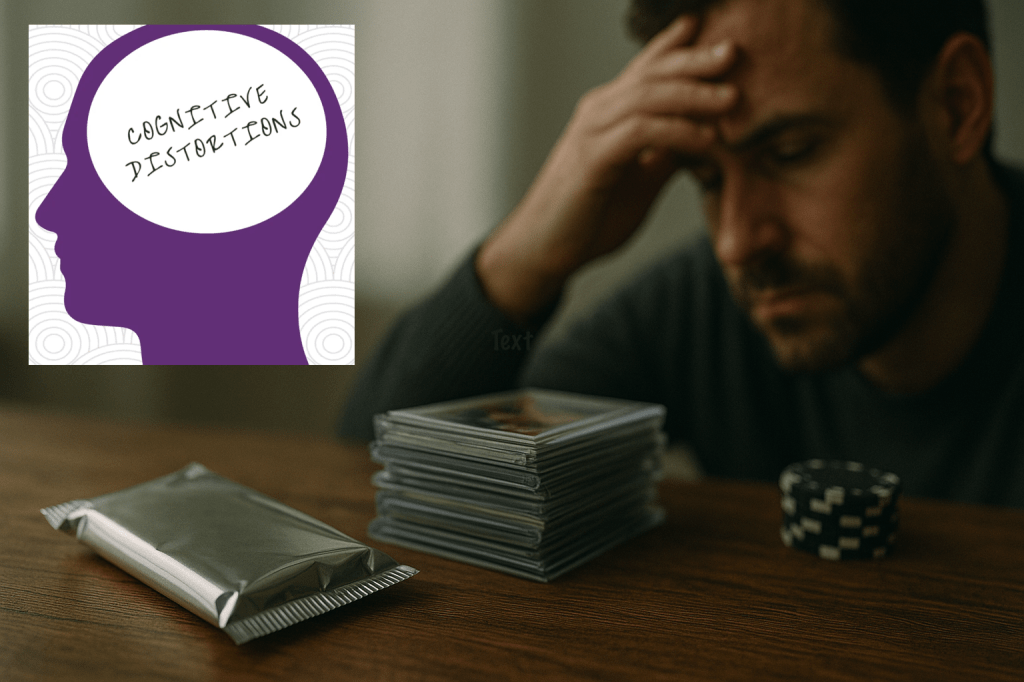
When we learn to challenge our thoughts, we begin to change our habits—and the hobby changes with us.
Follow us on Instagram: @collectorsmd
Subscribe to our Newsletter & Support Group
Join The Conversation On Mantel
Read More Daily Reflections