Presented By All Touch Case

Lately, I’ve needed to remind myself that not every card in my personal collection needs to be graded, and not every grading decision needs to be tied to profit.
The hobby often encourages us to view every card through the lens of monetary value, population reports, and potential returns. It’s easy to become consumed by questions like: “What’s this worth?” “Should I grade it?” “How much can I make if it gems?” Somewhere along the way, grading shifted from being a way to preserve meaningful cards to becoming a financial strategy for maximizing profit.
Recently, PSA announced that it would be discontinuing ‘Value’ and ‘Value Bulk’ submissions indefinitely. While there are many reasons behind the decision, it also serves as a reminder of how much grading activity has become tied to speculation. For years, collectors have been sending cards by the thousands in hopes of generating a return on investment.
Let’s start with an important caveat: there is nothing inherently wrong with grading cards for resale. Many people enjoy that side of the hobby. Problems emerge, however, when the pursuit of profit overshadows the reasons many of us started collecting in the first place. Not every grading submission needs an exit strategy. Some cards deserve protection simply because they’re part of our story.
Maybe it’s a card of your favorite player growing up. Maybe it’s the first big card you pulled with your child, parent, or sibling. Maybe it’s a card tied to a memory, a milestone, or a chapter of your life that you want to preserve forever.
When grading is driven by meaning rather than money, the experience fundamentally changes. Market fluctuations become less important. Population reports matter a little less. The card’s value is no longer determined solely by what someone else might pay for it tomorrow. Instead, the card becomes a reflection of what matters to you.
The rise of grading has undoubtedly changed the hobby. In many ways, it has created transparency, protection, and liquidity. At the same time, it has also fueled a mindset where collectors sometimes feel pressured to grade everything in sight.
Intentional collecting asks us to pause and ask questions before making that decision. Why am I grading this card? Am I preserving something meaningful, or am I chasing an outcome? Would I still want this card if its value never increased? Those questions don’t just apply to grading. They apply to the entire art of collecting.
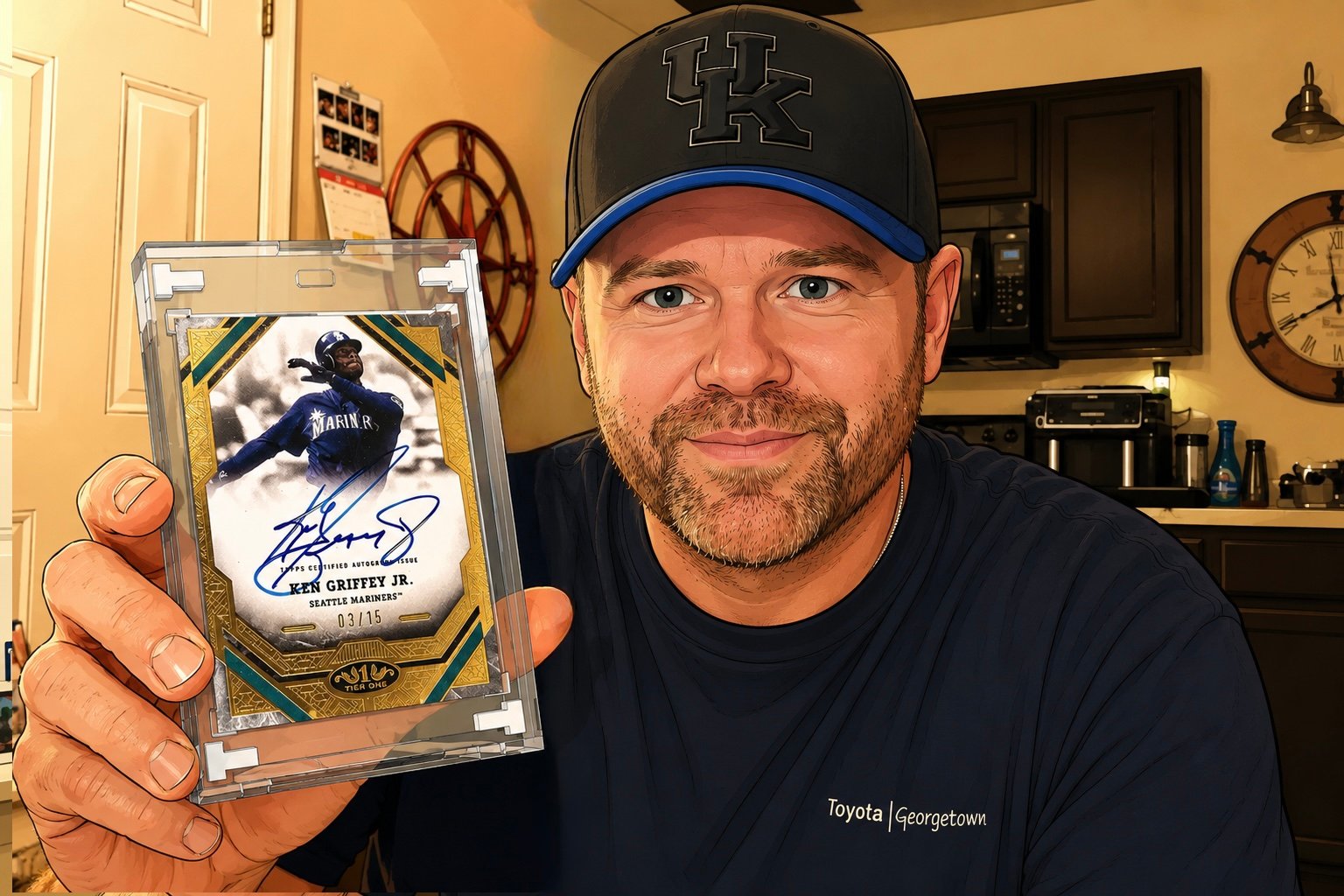
One alternative that has helped me rethink this entire process is displaying meaningful cards in an All Touch Case. Not every card needs a numerical grade or a third-party stamp of approval to be worthy of showcasing. Sometimes the cards that mean the most to us aren’t the most expensive or the most likely to earn a Gem Mint 10. All Touch Cases allow collectors to beautifully display the cards they love in premium acrylic holders without tying that enjoyment to market value, population reports, or resale potential. Instead of asking, “What will everyone else think this card is worth?” we can ask a much more important question: “What does this card mean to me?” For many collectors, that’s a far healthier and more fulfilling way to celebrate the cards that matter most.
A healthy collection isn’t built by maximizing every transaction. It’s built by surrounding ourselves with items that bring us joy, connection, nostalgia, and meaning. Some of the most important cards in your collection may never be the most valuable. And that’s perfectly okay.
#CollectorsMD
Not every card needs a grade. The cards that do should tell a story worth preserving.
—
Follow Us On Social: @collectorsmd
Join Our Support Group
Join Us On Mantel
Read More Daily Reflections
This Daily Reflection is sponsored by All Touch Case, a premium display and protection solution designed to showcase your cards while keeping them safe. Use code COLLECTORSMD for 15% off your order. Collect. Protect. It’s a peace of mind.