A single post in the ‘HIGH END Sports Cards‘ public Facebook group—”I can’t go a day without ripping packs”—turned into a mirror for the hobby. And we’re seeing more and more of these—on Facebook, Reddit, X—anywhere people may turn to cry for help, often in sheer desperation or as a last resort. In the aforementioned thread you could see it all: the folks offering real help (“buy singles instead”, “set a budget”, “three months clean”), the sarcastic deflections (“better than crack”, “just cut off your hands”, “steal from self-checkout”), the enabling (“the next pack could be the one”, “rip more, you’ll eventually hit”), and the quiet confessions that land like bricks (“it’s ruining my finances”, “I blew through my savings”, “I’m in way too deep”). This is the modern collector’s chorus—part empathy, part comedy, part denial—and it’s exactly why awareness matters. Some suggestions were genuinely useful. Buying singles can short-circuit the chase. Digital ripping can be a lower-cost outlet—though the identical mechanics can act as a gateway back to physical breaks. Finding a new, less expensive, less volatile hobby can work too—like fishing, cooking, or running. Allowances, budgets, and selling from what you already own can create guardrails. Milestone check-ins (“three months clean”, “six months clean”) can build momentum. And for many, naming the problem out loud is the first real step forward. But the thread also revealed how easily the hobby minimizes harm. “It’s better than drugs”, “Are your bills paid? Then rip”, “Why can’t you just stop?”, “More packs is the answer”. These comments feel harmless in the moment; but they also normalize a gambling-coded system that preys on uncertainty, near-misses, and FOMO. The punchlines—about gluing packs back together to re-rip them, switching to “lines” (another form of social gambling), or deterring yourself by ripping blasters or junk wax—aren’t just jokes to someone who’s drowning. They’re invitations to keep swimming deeper. When the community laughs off compulsion, people who are struggling go silent. There were bright spots: collectors who admitted regret, shared what finally helped, or celebrated clean streaks. People who reframed the hobby around intention over impulse—curating older boxes or sets, moving unwanted inventory, saving for one meaningful PC piece instead of dozens of forgettable rips, taking a week off and proving to yourself you can. There were reminders that support beats willpower alone—weekly budgets, accountability buddies (or sponsors), group conversations, therapy, and yes, rooms where people can say “me too” without being mocked or judged. This is why we keep pushing awareness. Not to shame anyone who loves the hobby, but to tell the truth about what it has become for many: a relentless gambling machine dressed up as a nostalgic, childhood pastime. The jokes, trolling, and sarcasm will never go away. Neither will the manufacturers, platforms, and breakers egging you on to keep buying and chasing. What changes outcomes is a culture that answers back—calling out harmful myths, celebrating small wins, offering practical off-ramps, and pointing people to real support when the urge feels bigger than they are. If you’re reading threads like this and feeling seen, you’re not alone. If you’re rolling your eyes, ask yourself who benefits when we pretend the risk isn’t real. And if you’re one of the people offering steady, thoughtful responses—keep going. Awareness spreads one honest comment at a time. #CollectorsMD —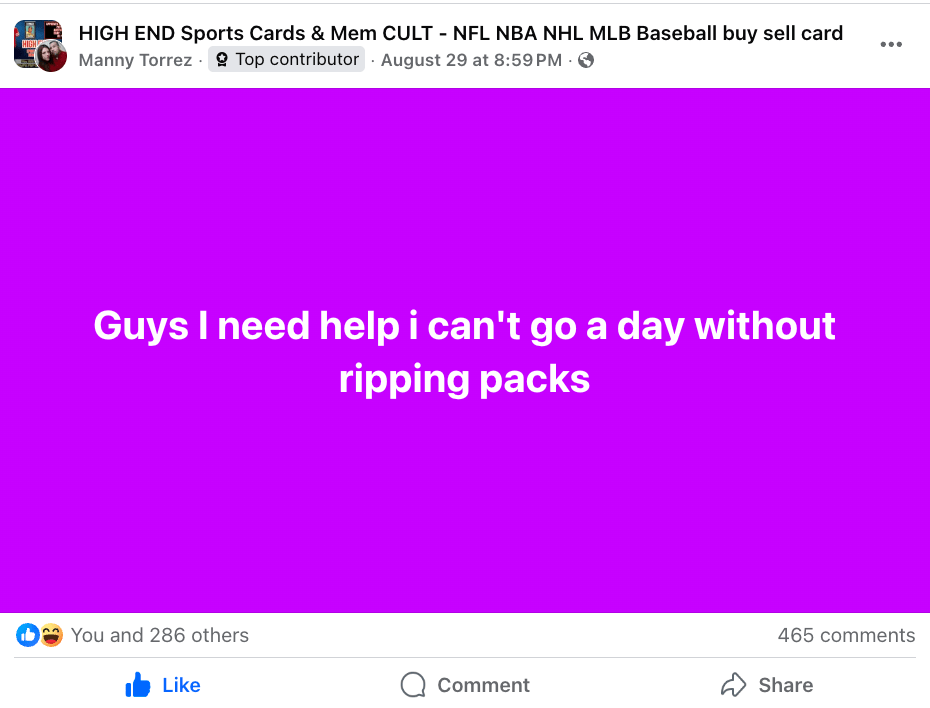
The hobby gets healthier when we do—name the problem, choose intention over impulse, and make space for each other to change.
Follow us on Instagram: @collectorsmd
Subscribe to our Newsletter & Support Group
Join The Conversation On Mantel
Read More Daily Reflections