Presented By Birches Health

One of the most difficult parts of stepping away from compulsive collecting isn’t always giving up the cards, the spending, or the excitement. Sometimes, it’s walking away from the community we’ve become part of.
Maybe you’ve spent months showing up in the same breaker’s livestream every night. You recognize the usernames, know the regulars, celebrate big hits together, and participate in conversations that have become part of your daily routine. Over time, those interactions begin to feel like genuine friendships. You feel recognized, appreciated, and connected to something bigger than yourself. And that’s a powerful thing.
Community is one of the most meaningful aspects of collecting. But when our sense of belonging becomes tied to spending money, the relationship between connection and consumption can become difficult to separate.
We may find ourselves purchasing spots in breaks we never intended to join, participating in auctions simply to support a familiar host, or spending money because we don’t want to disappoint someone who’s made us feel welcome. Eventually, we may not even be participating for the collectibles themselves anymore. We’re participating because we don’t want to lose the relationships we’ve developed. And when we finally recognize that our behavior has become unhealthy, stepping away can feel like abandoning an entire community.
We wonder whether the breaker will notice our absence. Whether the people in the chat will forget about us. Whether someone we’ve supported financially for months will think we’ve turned our back on them. But there’s an uncomfortable truth we need to acknowledge. Not every relationship that makes us feel valued is necessarily built around who we are. Sometimes, it’s built around what we spend.
That doesn’t mean every breaker is manipulative or that online friendships aren’t genuine. There are wonderful people throughout this hobby who care deeply about their communities. But there’s a difference between someone appreciating our friendship and someone depending on our financial participation.
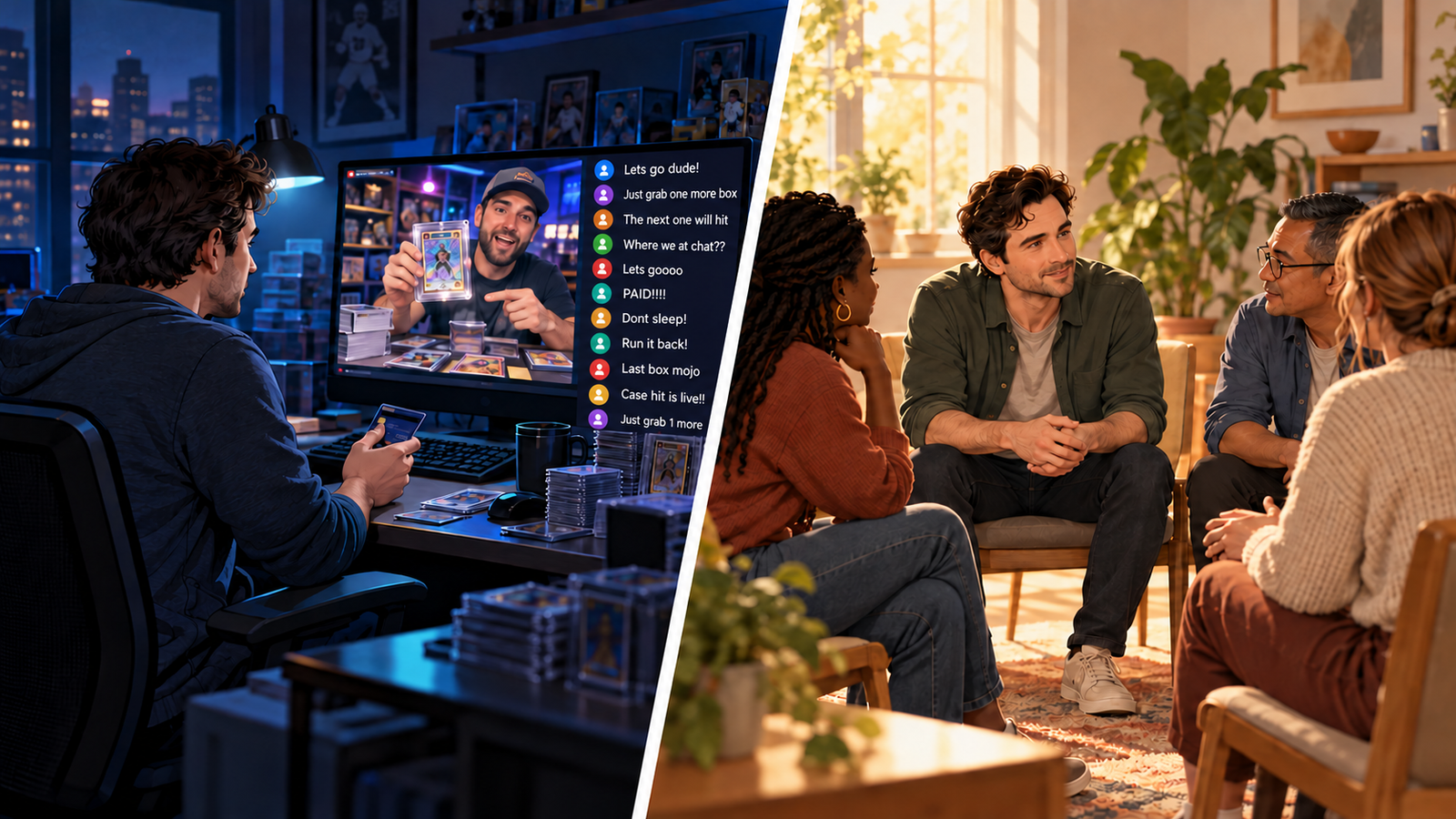
Sometimes, recognizing that difference requires us to ask difficult questions about the relationships we’ve developed. Would these people still reach out if we stopped purchasing? Would they respect our decision to step away? Could our friendships exist outside the livestream, the auctions, and the constant pressure to participate? And perhaps most importantly, would they support our well-being even if doing so meant losing us as a customer?
The answers may be uncomfortable. Some relationships may fade when the spending stops. Others may reveal themselves to be far more meaningful than we realized. But learning the difference is an important part of establishing healthier boundaries.
We don’t owe a breaker or a hobby shop our money because they’ve been kind to us. We don’t owe a seller our loyalty because they’ve remembered our name. And we certainly don’t owe anyone an explanation for prioritizing our financial stability, mental health, or recovery.
Sometimes, stepping away from an unhealthy environment means temporarily losing the connections we’ve associated with it. That can be painful, particularly when those interactions have provided comfort during periods of loneliness or isolation. But staying somewhere simply because we’re afraid of being forgotten isn’t the same as genuinely belonging.
At Collectors MD, we believe community should exist independently of financial participation. Whether someone chooses abstinence, intentional collecting, or simply needs support navigating difficult circumstances, their value has nothing to do with what they own or spend. You don’t have to purchase anything to belong here. You don’t have to prove your loyalty through financial decisions. And you don’t have to continue collecting to remain part of this community.
If you’ve been struggling to step away from an environment that’s affecting your well-being, ask yourself: Am I participating because I genuinely enjoy the experience, or because I’m afraid of losing the relationships I’ve developed? Do I feel valued when I’m not spending money? Am I confusing financial participation with friendship? And would the people who truly care about me support my decision to walk away?
Real friendship shouldn’t come with a financial obligation. You don’t have to keep spending to be remembered, keep buying to be appreciated, or sacrifice your well-being to feel like you belong.
If you or someone you love is navigating compulsive collecting, gambling-related behaviors, overspending, or the challenges of stepping away from unhealthy environments, you don’t have to face it alone. Explore our tools and resources, connect with our community, or join a Collectors MD peer-support meeting. If you or someone you know needs immediate support, visit our Help Now page.
#CollectorsMD
Real belonging should never come with a price tag.
—
Follow Us On Social: @collectorsmd
Join Our Support Group
Join Us On Mantel
Read More Daily Reflections
Support The CMD Foundation
This Daily Reflection is sponsored by Birches Health, a leading provider of virtual, insurance-covered counseling for individuals struggling with gambling, compulsive spending, and other behavioral addictions. Through our partnership, collectors and their loved ones can access confidential, judgment-free professional support tailored to their needs. Learn more and explore treatment options through our dedicated Collectors MD resource page.