Presented By All Touch Case

One of the greatest strengths of the collecting community is the trust that exists between collectors. Every day, thousands of transactions take place between people who have never met. Most collectors will complete countless transactions without a problem. But one dishonest interaction can undermine years of trust.
As the hobby has grown, so have the opportunities for bad actors to take advantage of collectors – particularly those who are younger, newer to the hobby, or simply unfamiliar with how these marketplaces operate. Fake cards, counterfeit autographs, altered slabs, phishing attempts, fake giveaways, payment scams, ghosting after payment, and outright theft have become increasingly common. In many cases, scammers aren’t relying on sophisticated tactics. They’re relying on excitement, urgency, and inexperience.
For someone opening their first few packs or making their first purchase through Instagram, Discord, Facebook, Whatnot, or countless other marketplaces that are used in the hobby, it’s easy to assume everyone has good intentions. Most people do. But it only takes one dishonest seller or buyer to turn what should have been an exciting experience into an expensive lesson.
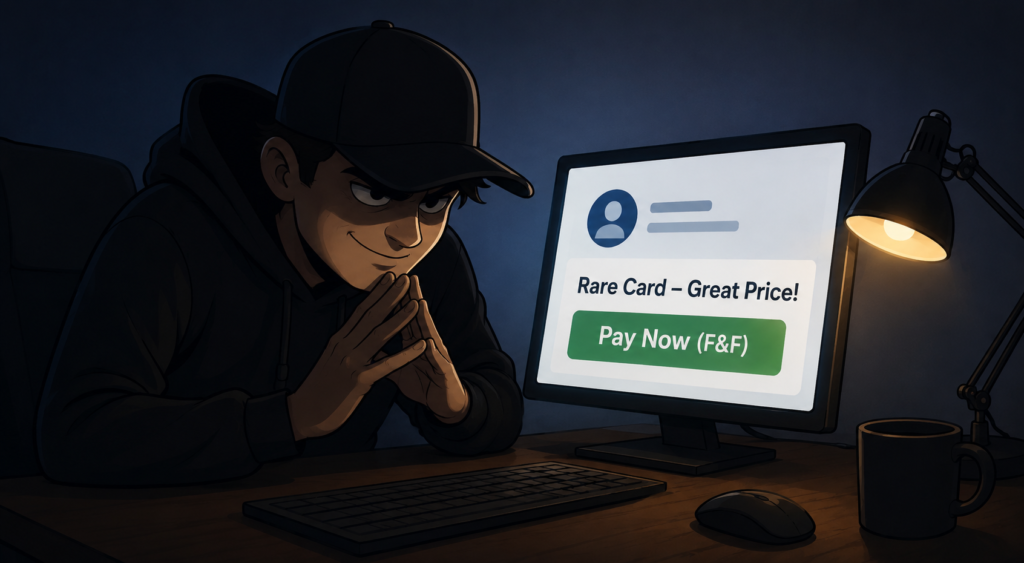
One of the biggest red flags is urgency. “Only one left.” “You have to pay right now.” “Someone else is about to buy it.” “Friends & Family only.”
Scammers often create pressure because they don’t want you to slow down long enough to think. They know excitement and fear of missing out can cloud judgment. The moment you feel rushed is often the moment you should pause.
It’s also important to remember that popularity isn’t the same as credibility. A large following, flashy livestream, expensive collection, or stack of positive comments doesn’t automatically make someone trustworthy. Followers can be purchased. Reviews can be manipulated. Even established accounts can be compromised. Trust should be earned through consistency, transparency, and a proven reputation – not simply because someone appears successful online.
Perhaps the most vulnerable group in today’s hobby is young collectors. Many children and teenagers are buying, trading, and participating in livestreams and in-person card shows before they’ve developed the experience to recognize warning signs. They’re often interacting directly with adults they don’t know, sending money through payment apps, or making trades without fully understanding the risks involved. Parents may not realize how much of today’s collecting experience happens online or how quickly a seemingly harmless interaction can go wrong.
That doesn’t mean we should become cynical or stop trusting people altogether. The overwhelming majority of collectors genuinely want to help one another and make this hobby welcoming.
It does, however, mean we should slow down and approach every transaction with a healthy dose of caution. Ask questions. Verify identities. Research sellers. Use payment methods that offer buyer protection whenever possible. Be skeptical of deals that seem too good to be true. If something feels off, trust that instinct. Walking away from a deal is almost always better than trying to recover from a scam after the fact.
The goal isn’t to make collectors fearful. It’s to make them informed. A little patience can save a tremendous amount of money, frustration, and heartache.
#CollectorsMD
The best scam prevention tool isn’t experience – it’s awareness. Slow down, ask questions, trust your instincts, and remember: protecting your collection starts long before it arrives in the mail.
—
Follow Us On Social: @collectorsmd
Join Our Support Group
Join Us On Mantel
Read More Daily Reflections
Support The CMD Foundation
This Daily Reflection is sponsored by All Touch Case, a premium display and protection solution designed to showcase your cards while keeping them safe. Use code COLLECTORSMD for 15% off your order. Collect. Protect. It’s a peace of mind.