Presented By All Touch Case

One of the hardest lessons for new collectors to learn is also one of the simplest: a card is only worth what someone is willing to pay for it. That sounds obvious, but in today’s card market, determining what someone is actually willing to pay can be far more complicated than it appears.
The modern card market moves incredibly fast. Nowhere is that more apparent than with new releases. A product drops, breakers start ripping, social media fills with hits and highlights, and suddenly the first copies of a highly anticipated card begin selling for enormous amounts. There is excitement, scarcity, and a limited amount of sales data available. Then more boxes get opened. More copies surface. More cards get listed. The next release arrives, attention shifts, and prices that seemed established only weeks earlier can change dramatically.
Experienced collectors generally understand this cycle. New collectors may not. Someone entering the hobby can look at the first few sales of a card and reasonably assume those prices represent its value. They may spend $500 because comparable sales suggest a card is “worth” $500, without realizing those comps were established during the most volatile period of that card’s existence. A month later, the same card may be selling for $300, $200, or considerably less. Nobody necessarily did anything wrong. The market simply changed.
Grading introduces another layer of uncertainty. A collector can pull a card, look at current sales, decide it makes financial sense to grade it, pay the grading and shipping costs, and wait for it to return. By the time the card comes back, the market that informed that original decision may no longer exist. A card that commanded a significant premium shortly after release may have declined substantially while it was sitting at the grading company.
That doesn’t mean grading is bad, nor does it mean buying new releases is inherently irresponsible. It means collectors need to understand that a comp is a snapshot of a transaction at a particular moment – not a guarantee of what a card will be worth tomorrow.
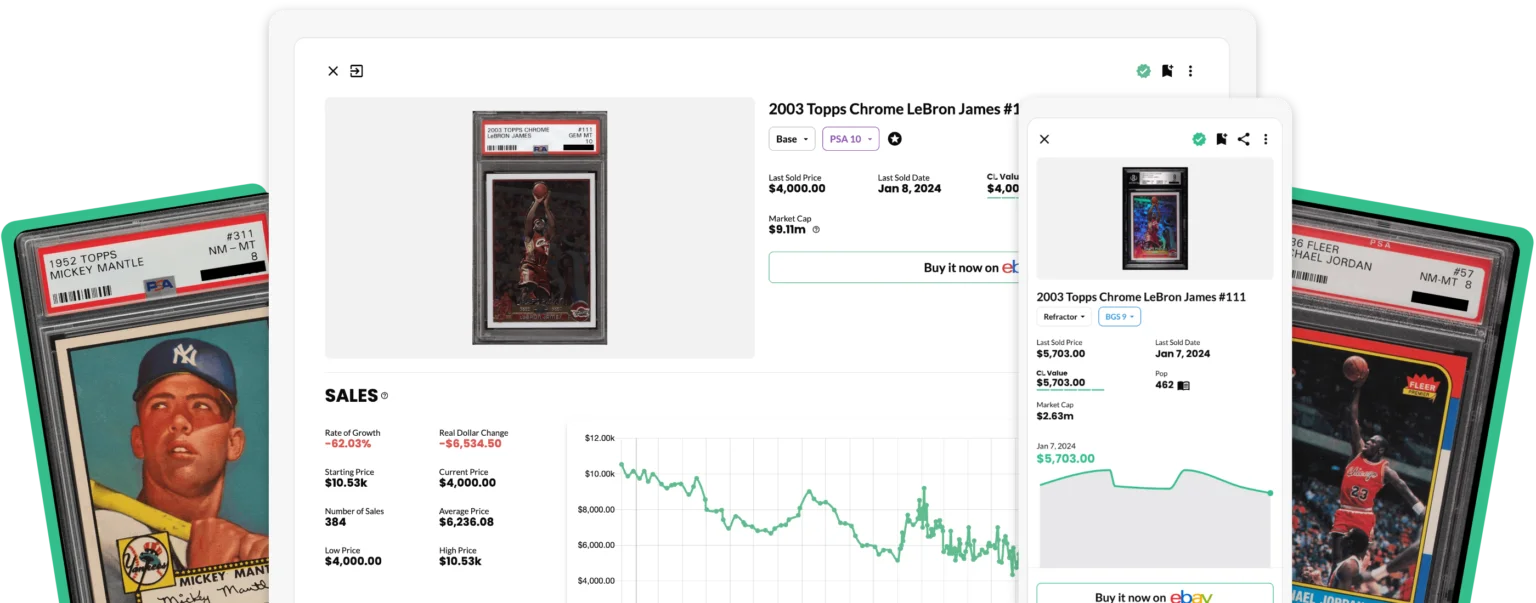
Even finding accurate comps can be surprisingly complicated. There is a reason platforms such as Card Ladder, Market Movers, and 130 Point exist. Collectors are trying to piece together sales across different marketplaces, parallels, grades, years, players, print runs, and time periods to answer a question that sounds incredibly straightforward: What is my card worth?
Hobby tools can make that process considerably easier. HobbyScan is a great example of lowering that barrier for collectors, particularly newcomers. Rather than requiring someone to navigate multiple searches and figure out exactly how to describe a card, HobbyScan allows collectors to scan a card using their phone camera and quickly check relevant comps. Making market information easier to access can help collectors slow down, gather information, and make a more informed decision before buying, selling, or trading.
But even the best pricing tools cannot eliminate the subjectivity of the collectibles market. What is the perfect comp for a one-of-one when, by definition, another copy does not exist? How do you value a rare card that hasn’t sold publicly in three years? Is a sale from the peak of a player’s popularity still relevant today? How much should you adjust for a different parallel, grade, autograph, patch, serial number, or condition?
Sometimes there simply isn’t a perfect answer.
Oversaturation can make the process even more complicated. Modern products can contain dozens of parallels, variations, inserts, short prints, autographs, and numbered cards that look similar while carrying very different values. Two cards can appear nearly identical to a new collector while having dramatically different scarcity. Conversely, two cards with different serial numbers or colors may actually trade within a relatively similar range. A comp is useful evidence, but it still requires context.
Even completed sales can require a closer look. eBay remains one of the hobby’s most important sources for pricing information, but ‘Best Offer’ transactions can create confusion because the originally listed price may still appear in certain views rather than clearly displaying the actual amount accepted by the seller. A crossed-out $500 offer accepted does not necessarily mean somebody paid $500.
Most experienced collectors understand this distinction, but someone new to the hobby may not. And because incomplete or misunderstood sales information can occasionally be presented as evidence of a higher valuation, collectors should be careful about relying on a single screenshot, listing, or comp when making a meaningful purchase or trade. That isn’t an indictment of sellers or marketplaces. It is simply another reason education matters.
This is also why we created our Intentional Collector’s Guide for newcomers and beginners. Learning the nuances of the hobby shouldn’t only mean understanding brands, sets, parallels, rookie cards, and grades. It should also mean learning how to research purchases, evaluate pricing information, recognize volatility, establish a budget, and understand the difference between enjoying the excitement surrounding a card and making a decision based solely on that excitement.

There is nothing wrong with paying a premium for a card you love. Collecting has never been purely mathematical. Sometimes a card completes a set. Sometimes it reminds you of your childhood. Sometimes it features your favorite player, represents an unforgettable season, or is simply something you want in your collection. Personal value doesn’t need to match market value.
The problem arises when we convince ourselves that a subjective market price is objective simply because we found a comp that supports it.
A $1,000 sale tells us that one buyer was willing to pay $1,000 at one particular moment. It doesn’t guarantee the next buyer will. Five sales around the same price provide more information. Fifty provide even more. But markets change, players cool off, populations increase, new products release, attention moves elsewhere, and collectors change what they are willing to spend.
That uncertainty is part of collecting. It’s also part of what makes education so important.
Before chasing the newest release, submitting a card because of today’s prices, or making a significant purchase based on a comp, take the extra few minutes to understand what you’re actually looking at. Ask questions. Check multiple sales. Look at dates. Consider whether the product just released. Pay attention to population and scarcity. Make sure you’re comparing the correct parallel and grade. Understand whether a Best Offer was involved. Most importantly, decide what the card is worth to you before allowing someone else’s purchase to make that decision for you.
Comps are tools. They aren’t promises.
The sports card market will continue moving quickly. New releases will continue generating excitement. Prices will rise and fall, grading will remain part of the ecosystem, and collectors will continue debating what certain cards are “really worth”.
Maybe the healthiest answer is recognizing that there often isn’t one definitive number. There is information. There is context. There is supply and demand. And ultimately, there is a buyer and a seller deciding what a card is worth to them at that particular moment.
For collectors – especially those just entering the hobby – understanding that distinction can be the difference between chasing yesterday’s price and building a collection they can actually enjoy tomorrow.
#CollectorsMD
A comp can tell you what someone paid yesterday. It cannot tell you what someone will pay tomorrow. In a market built on scarcity, excitement, timing, and personal preference, informed collecting means understanding the numbers without becoming beholden to them. Do your research, understand the market, and collect with intention.
—
Follow Us On Social: @collectorsmd
Join Our Support Group
Join Us On Mantel
Read More Daily Reflections
Support The CMD Foundation
This Daily Reflection is sponsored by All Touch Case, a premium display and protection solution designed to showcase your cards while keeping them safe. Use code COLLECTORSMD for 15% off your order. Collect. Protect. It’s a peace of mind.