Presented By All Touch Case
For a long time, the collectibles industry and the recovery space have largely existed in separate worlds. One is deeply rooted in culture, excitement, products, communities, and behaviors that drive collecting. The other understands addiction, compulsive behavior, prevention, harm reduction, treatment, recovery, and the consequences that can develop when a behavior becomes difficult to control.
Collectors MD was created, in part, to serve as a bridge between the two. And that bridge extends far beyond trading cards. Cards may be where much of our work began, but collecting culture is enormous. Sports cards, trading card games, sneakers, memorabilia, comics, coins, watches, toys, luxury goods, digital collectibles, e-gaming, and countless other categories can generate the same feelings of excitement, nostalgia, identity, community, scarcity, competition, and pursuit.
For the overwhelming majority of participants, those experiences can remain exactly what they are supposed to be: a hobby. But for some people, the relationship can become more complicated. Spending can begin exceeding intentions. The chase can become more important than the item or activity itself. Purchases can become harder to control. Financial consequences can accumulate. Secrecy can develop. Collecting can become an escape from stress, anxiety, depression, loneliness, or other problems.
And increasingly, certain collecting environments can incorporate mechanics and experiences that may feel familiar to professionals working in gambling prevention and recovery: randomized outcomes, variable rewards, scarcity, countdowns, live commerce, auctions, card breaks, pack openings, mystery products, social media-driven hype, and frictionless purchasing environments that make it easier than ever to spend, participate, and immediately chase the next hit.
All of this does not mean collecting is inherently gambling. Collecting in its purest form is about passion, connection, nostalgia, discovery, and the enjoyment of building something meaningful to you. It also does not mean we should ignore the gambling-like mechanics and experiences that have increasingly become embedded within modern collecting environments. One of the challenges is that the individuals who understand collecting culture best may not always understand addiction and recovery, while the individuals who understand addiction and recovery may not always understand modern collecting culture.
That disconnect matters. A treatment professional can understand compulsive behavior exceptionally well while having no idea what a ‘card break’ is, why someone is chasing a ‘case hit’, how live shopping platforms work, what a ‘one-of-one’ means, why a collector is willing to pay the additional cost to have a card professionally graded, or how and why someone could spend hours moving between livestreams, auctions, marketplaces, and product releases. At the same time, someone immersed in the collectibles industry may understand those behaviors perfectly while having little exposure to concepts such as loss of control, chasing, financial harm, triggers, relapse, self-exclusion, peer support, harm reduction, or pathways to professional treatment.
The result is a double blind spot: two worlds looking at the same behavior through entirely different lenses, each seeing something the other cannot. Neither perspective tells the whole story. Bridging the two is where meaningful change begins.
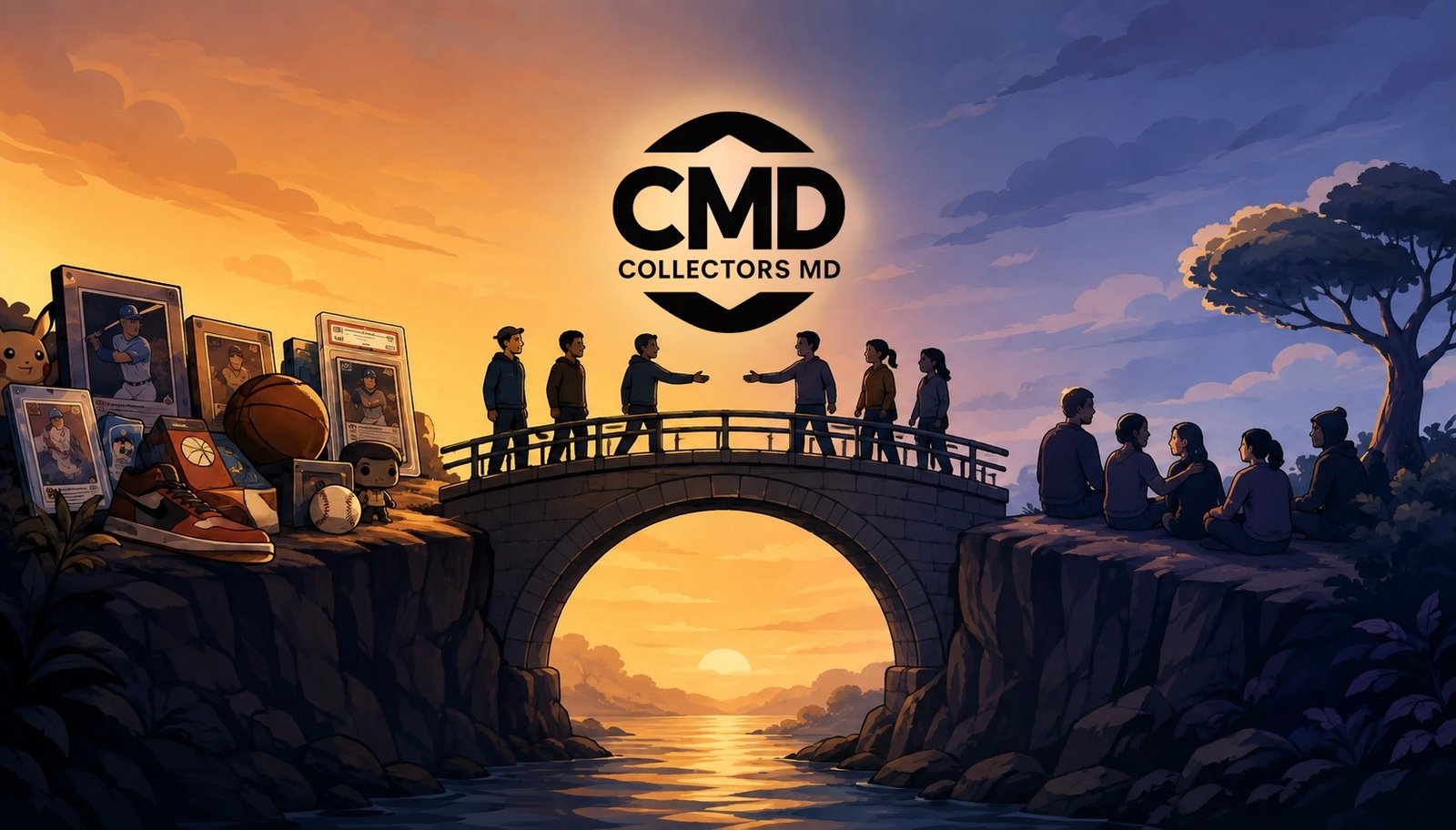
Collectors MD is not trying to turn the collectibles industry into the recovery industry, nor are we trying to convince the recovery community that collecting itself is inherently harmful. We are actively bridging two worlds that have spent too long speaking completely different languages – helping each understand what the other sees, what the other may miss, and where working together can make a meaningful difference.
For the collectibles industry, that means introducing conversations around responsible engagement, consumer education, warning signs, intentional spending, support resources, and what can happen when someone’s relationship with collecting begins negatively affecting their life. It means giving hobby shops, breakers, live shopping platforms, marketplaces, manufacturers, grading companies, influencers, content creators, auction houses, and other organizations an opportunity to participate in building a healthier collecting ecosystem without asking them to condemn the hobby that their businesses and communities were built around.
Responsible collecting is not anti-collecting or anti-hobby. It’s about making sure the hobby remains something people can enjoy without losing themselves in it.
For the recovery and behavioral health community, the bridge works in the opposite direction. Professionals cannot effectively address emerging behaviors if they do not understand the environments in which those behaviors are occurring. Someone seeking help may not walk into a therapist’s office and say, “I have a compulsive collecting problem”. They may say they spent thousands of dollars chasing a card. They may be hiding purchases from their spouse. They may be buying into breaks every night. They may be repeatedly selling pieces of their collection to fund new purchases. They may describe the rush of opening packs, winning an auction, hitting a rare item, or watching a wheel land on their spot. They may insist they are investing even as their finances continue deteriorating. Or they may have already recognized that their behavior needs to change but have no idea where to find someone who understands what they are experiencing.
If the individual on the other side of that conversation doesn’t understand the culture, language, and mechanics surrounding the behavior, an important part of the story can be missed.
That is why the bridge matters. Over the past year and a half, our work has increasingly brought us into conversations with people on both sides of it.
Collectors have joined our community and support meetings. Families have reached out looking for guidance. Treatment providers and prevention professionals have asked questions about emerging collecting behaviors. Industry organizations have begun incorporating #RipResponsibly and healthier collecting messaging into their ecosystems. Through The CMD Framework, we are beginning to give that work a shared structure – connecting education, prevention, responsible collecting, peer support, and pathways to professional help across both sides of the conversation. Councils, clinicians, recovery organizations, hobby businesses, marketplaces, manufacturers, shops, breakers, creators, and collectors are no longer operating entirely in separate worlds. They are beginning to become part of the same ecosystem.
Those groups do not need to agree on every issue to recognize that education, prevention, support, and clearer pathways to help are worthwhile. The goal isn’t to wait until someone’s collecting has caused catastrophic consequences before introducing those resources.
A bridge can work in both directions, but it can also exist at multiple points along someone’s journey. Education can help someone who is just entering a collecting community understand the environment before spending their first dollar. Responsible collecting tools can help someone recognize that their behavior is beginning to change. Peer support can give someone a place to speak openly with people who understand. Recovery resources can help someone who has decided they need to make a significant change. Professional treatment can be available when the problem extends beyond what a hobby community or peer-support meeting can address.
The stronger those connections become, the less likely someone is to find themselves wondering where they belong or where they can turn for help.
There is also a much larger opportunity here. The collectibles industry is not standing still. Technology is making purchasing easier. Livestreaming is making commerce more interactive. Marketplaces operate around the clock. New collecting categories continue emerging. Gamification, entertainment, social interaction, and commerce are becoming increasingly intertwined.
At the same time, prevention and recovery are evolving too. That makes communication between these worlds more important, not less.
The collectibles industry should have access to people who understand prevention, behavioral health, and recovery. The recovery community should have access to people who understand collectibles, modern hobby culture, and the environments in which these behaviors are actually taking place. Collectors and families should have access to both.
That is the role Collectors MD is working to fill. Not as an opponent of collecting. Not as a replacement for treatment. Not exclusively as a sports card organization. But as a place where collectors, industry stakeholders, prevention professionals, treatment providers, recovery organizations, families, and people with lived experience can begin speaking the same language.
Meaningful change rarely happens when two sides operate entirely independently of one another. As industries mature, so does the responsibility to recognize new challenges, learn from outside perspectives, and build better systems around the people they serve. Sometimes progress simply requires someone willing to build the bridge.
#CollectorsMD
The collectibles industry understands collecting. The recovery space understands addiction, prevention, and treatment. Collectors MD exists to bridge the two – creating education, support, and pathways to help while protecting what makes collecting meaningful. Collect with intention. Not compulsion.
—
Follow Us On Social: @collectorsmd
Join Our Support Group
Join Us On Mantel
Read More Daily Reflections
Support The CMD Foundation
This Daily Reflection is sponsored by All Touch Case, a premium display and protection solution designed to showcase your cards while keeping them safe. Use code COLLECTORSMD for 15% off your order. Collect. Protect. It’s a peace of mind.