Presented By All Touch Case

One of the most painful realities of addiction is that the damage we cause to our relationships can happen far more quickly than the healing that follows. Trust that took years to build can be shattered by a single lie, a broken promise, a hidden purchase, or one more decision to put our compulsive behavior ahead of the people who love us.
And while those moments may happen in an instant, rebuilding what was lost can take months, years, or sometimes an entire lifetime.
That imbalance is one of the hardest things to accept in recovery. When we think about the consequences of addiction, we often focus on the financial losses, the time wasted, the opportunities missed, or the emotional toll on ourselves. But addiction rarely affects just one person. It reaches into our marriages, families, friendships, and professional relationships. It changes how people see us, how they communicate with us, and whether they feel safe believing what we say.
When it comes to compulsive collecting, gambling, and overspending, the damage often begins long before anyone realizes the full extent of what is happening. We might hide purchases, minimize how much we’ve spent, make promises about stopping, or convince ourselves that one more sale, one more hit, or one more opportunity will somehow make everything right.
Eventually, the people closest to us begin noticing inconsistencies. A charge that doesn’t make sense. A package we didn’t mention. Money that is suddenly missing. An explanation that changes depending on the question. A commitment we’ve made before but failed to keep. And with every inconsistency, another small piece of trust disappears.
What makes this especially difficult is that the person struggling with addiction and the person affected by it are often experiencing two completely different realities. For the person in recovery, deciding to change can feel monumental. We finally acknowledge the problem, stop the behavior, begin attending meetings, seek support, and start taking accountability. We may feel an enormous sense of relief and hope because, for the first time in a long time, we’re genuinely moving in the right direction.
But the people we’ve hurt may not feel that same relief. They’ve heard promises before. They’ve seen periods of improvement followed by setbacks. They’ve experienced disappointment, uncertainty, fear, and sometimes years of being told that everything was fine when it wasn’t.
We may be ready to move forward long before the people we’ve hurt feel safe moving forward with us. That doesn’t mean our progress isn’t real. It means trust operates on a different timeline than our intentions.
We cannot expect someone to believe we’ve changed simply because we’ve finally decided to change. We have to give them the opportunity to experience that change consistently, over time, without demanding immediate recognition or forgiveness.
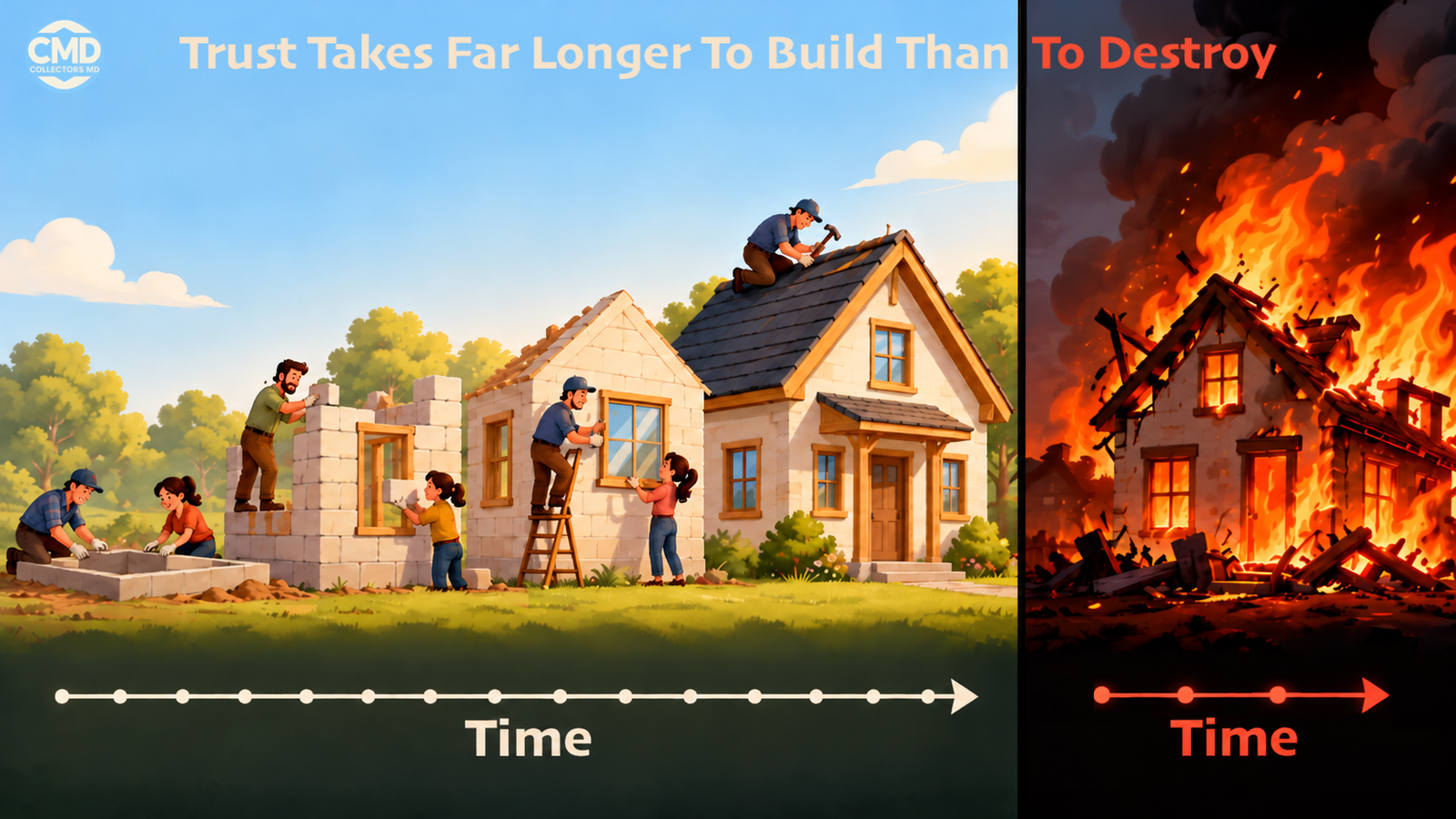
There’s a reason rebuilding trust can feel exponentially harder than destroying it. A single dishonest action can cause someone to question not just that moment, but countless moments that came before it. Suddenly, they may wonder what else they didn’t know, what other promises weren’t genuine, and whether the foundation of the relationship was ever as secure as they believed.
One betrayal can create a hundred questions. And answering those questions isn’t always enough to make the uncertainty disappear.
This is where recovery requires something much deeper than simply abstaining from a behavior. It requires us to become trustworthy, not just to ask to be trusted.
There’s an important difference. Being trustworthy means telling the truth even when it’s uncomfortable. Following through on commitments even when nobody is checking. Being transparent about finances, struggles, and setbacks. Respecting boundaries. Taking responsibility without becoming defensive. And understanding that someone else’s hesitation to trust us is not necessarily an attack on the progress we’ve made. It’s often a reflection of the pain they’ve experienced.
One of the most difficult things we can do is accept that the people we’ve hurt are entitled to their own healing process. We don’t get to decide how long it should take. We don’t get to set a deadline for forgiveness. We don’t get to tell someone that because we’ve been doing well for three months, six months, or a year, they should finally stop worrying.
Recovery does not erase the past. It gives us the opportunity to create a different future.
This is why Steps 8 and 9 of The CMD Recovery Guide are so meaningful. We identify those we’ve harmed, become willing to make amends, and take responsibility where possible. But making amends isn’t simply apologizing for what happened. It’s demonstrating through our behavior that we understand the impact of our actions and are committed to doing things differently.
Sometimes that means financial restitution. Sometimes it means increased transparency. Sometimes it means learning to communicate without defensiveness. Sometimes it means recognizing that our loved ones may need their own support, boundaries, or space to process what they’ve experienced. And sometimes it means accepting that a relationship may never fully return to what it once was.
That’s a difficult truth, but it’s an important one. Not every relationship can be repaired. Not every person will forgive us. And even when forgiveness happens, trust may need to be rebuilt in an entirely different way than it was originally established. But that doesn’t mean the effort is meaningless.
Every honest conversation matters. Every promise kept matters. Every difficult moment handled differently matters. Every time we choose accountability over avoidance, transparency over secrecy, and patience over frustration, we’re helping create the conditions in which trust might grow again.
It may happen slowly. So slowly that we barely notice it. Until one day, a conversation feels easier. A financial discussion no longer ends in an argument. Someone stops questioning every decision. A loved one begins to feel less anxious about what might be happening behind the scenes.
Those moments aren’t guaranteed. But when they happen, they’re worth far more than the instant gratification we once spent so much time chasing.
At Collectors MD, we often emphasize that recovery is not just about changing our relationship with collecting, spending, or gambling. It’s about changing our relationship with ourselves and the people around us.
We cannot undo the damage of yesterday, but we can choose how we show up today.
If you’re working to rebuild trust in a relationship affected by addiction or compulsive behavior, ask yourself: Am I focused on genuinely becoming more trustworthy, or am I focused on convincing someone to trust me? Am I allowing the people I’ve hurt to heal at their own pace? Am I practicing transparency when it’s uncomfortable? Am I demonstrating change through consistent actions rather than repeated promises? And am I willing to keep doing the work even when the recognition or forgiveness I’m hoping for hasn’t arrived?
The foundation of a relationship can be damaged in moments, but rebuilding it may require thousands of small, intentional decisions.
Trust is not rebuilt by the promise that things will be different. It’s rebuilt by the experience of things consistently being different. And while we may never control how quickly someone learns to trust us again, we can control whether our actions give them a reason to try.
If you or someone you love is navigating addiction, compulsive collecting, gambling-related harm, financial stress, or relationship challenges, you don’t have to face it alone. Explore our tools and resources, connect with our community, or join a Collectors MD peer-support meeting. If you or someone you know needs immediate support, visit our Help Now page.
#CollectorsMD
Trust can take years to build and moments to destroy. Addiction doesn’t just damage our finances or our peace of mind. It can fracture the relationships that matter most. Recovery gives us the opportunity to rebuild, but that process requires patience, accountability, transparency, and consistent action. We cannot demand forgiveness or put a timeline on someone else’s healing. We can only continue showing up differently, one decision at a time.
—
Follow Us On Social: @collectorsmd
Join Our Support Group
Join Us On Mantel
Read More Daily Reflections
Support The CMD Foundation
This Daily Reflection is sponsored by All Touch Case, a premium display and protection solution designed to showcase your cards while keeping them safe. Use code COLLECTORSMD for 15% off your order. Collect. Protect. It’s a peace of mind.