
Dating back to when I was in the thick of my gambling addiction, I’d subconsciously allow binges to dictate everything—my day, my mood, even where I physically went. When I’d start to feel “the itch”, that devil on my shoulder didn’t just whisper—it grabbed the wheel.
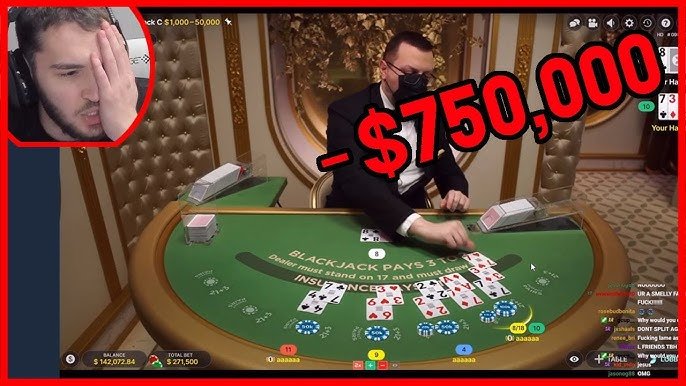
I’d mindlessly slip away to a bathroom or a self-designated “safe space” in the middle of the work day, moving like a zombie, consumed by the need to gamble. I’d sit down and fire up live blackjack on one of the many casino apps, starting small—$50, maybe $100—with a simple goal: just get up $200 on the day (or hour).
But then came what always felt like scams: the bad splits, the double downs gone wrong, the dealer magically turning a 6 into a 7-card 21—and suddenly I’d be $1K in the hole. Then $5K. Then $10K. Sometimes much more—lost in just minutes. It’d always happen so incredibly fast.
Once things started to get ugly, like clockwork, I’d begin [physically] pacing the room while [virtually] sitting at all seven seats—thousands on each hand, hundreds on every side bet. From there, it was always the same downward spiral: hours of chasing losses, no end in sight to how far I’d go trying to climb my way back to even.
There were times I’d cancel plans mid-tilt, too consumed to show up for anyone else—my whole world hinging on the next turn of a card—only to remake them at the last minute, riding high after clawing my way back from the dead.
I can still remember the physical toll: my body overheating, sweat dripping down my face—even in a perfectly cool room. It was an unbearable feeling I eventually grew numb to, because I was subjecting my body and mind to it almost every single day.
In the GA Combo Book it states, “Some of us have come to believe that we gamble not so much to win money as to punish ourselves”. Was I punishing myself? Was I manufacturing disaster just to feel the high of the comeback?
Because when I did make the comeback—when I fought my way out of a $10K+ hole and maybe even finished a session up a measly $50—it always felt like pure bliss. Not the joy of a “win”, but the relief that the torture—the nightmare—had finally ended. And that feeling of relief always outweighed any other kind of victory. Even if I had sat down and run pure from the start—up thousands without ever dipping—it never compared to the feeling of getting back to even after being buried tens of thousands deep.
At the end of the day, the dollar amount is arbitrary. For some, losing $100 can feel like their whole world is crumbing around them. For others, it takes tens of thousands—maybe hundreds of thousands—or even millions. But ultimately, it’s not just about the financial toll—but rather the mental and emotional fallout.
Here’s the part that ties directly back to the hobby: I’ve felt that exact same cycle with sports cards. The $1K+ hobby box—one after another, sometimes full 12-box cases at a time—chasing losses, convincing myself the next “big hit” would at least temporarily relieve the suffering, like a bandaid over a deep wound. And whether it did or not, the pain always reset the next day, and I’d find myself chasing again—with no end in sight.
And in the hobby—particularly in break culture and pack chasing—it’s even scarier. When your focus is only on the money, the odds are stacked brutally against you. In the world of gambling, a sports bet or blackjack hand at least carries the illusion of a 50/50 shot. In this hobby, there is no such thing. Every pack, every box, every case, every break is the equivalent of a 10-leg parlay—the odds of “hictting” or profiting are astronomically low. That doesn’t make gambling any safer, but it does highlight just how unforgiving this ecosystem is when the chase becomes purely financial.
This is where so many collectors are stuck—endlessly chasing in an industry with zero guardrails, zero acknowledgment, and zero protection. While the powers that be—Fanatics, Whatnot, Panini, breakers, and every other corporate player—keep raking in cash hand over fist, the human cost doesn’t even register. No warnings. No “responsible ripping” messaging. Just an endless machine turning consumers into slaves of the chase, engineering addiction without offering any antidote for the endless pain and suffering so many of us have endured.
The hobby as it exists today is being built on the churn—the endless turnover of money, product, and people. And unless we keep speaking out, raising awareness, and pushing for real reform, it will only grow more ruthless and traitorous, swallowing anyone caught in its relentless path forward.
#CollectorsMD
The suffering is real, even if the industry pretends it isn’t. That silence is what allows the machine to keep steaming forward, no matter how many lives it mows down.
—
Follow us on Instagram: @collectorsmd
Subscribe to our Newsletter & Support Group
Join The Conversation On Mantel
Read More Daily Reflections