
Saving Someone From Drowning
Presented By All Touch Case Earlier this year, an individual signed up for our Weekly Peer Support Meetings. Like everyone else, they received a welcome email, were added to our weekly meeting invitations, and began receiving weekly reminders about upcoming support groups. Months went by. No responses. No meetings. No engagement. Then one evening my phone buzzed with a text message: “STOP”. Most organizations probably would’ve removed the number and moved on. Instead, I responded.
The Justification Trap
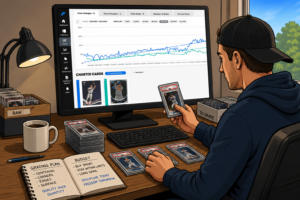
Presented By All Touch Case How many times did I tell myself I was done buying sports cards? More importantly, why did I keep going back even after promising myself I would stop? The deeper I fell into compulsive collecting, the easier it became to justify every purchase. It didn’t matter if I had money to spend or not. It didn’t matter if I had already told myself “this is the last one”. My brain
Finding The Path That Fits Your Recovery Journey
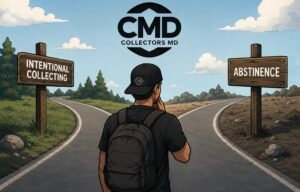
Presented By All Touch Case Earlier this year, we explored how intentional collecting can become a slippery slope when we aren’t fully honest with ourselves about what’s happening underneath the surface. We discussed triggers, dopamine cycles, rationalization, and how quickly boundaries can erode inside an environment specifically designed to weaken self-regulation. But there’s another layer to this discussion that may be even more important: How do people actually know which path is right for them
Radical Acceptance
Presented By All Touch Case Pain, disappointment, uncertainty, frustration, loss, urges, regret – none of these things are avoidable parts of life. As much as we try to outrun them, numb them, distract ourselves from them, or control them, difficult emotions eventually catch up to all of us. A lot of suffering comes not just from the pain itself, but from exhausting ourselves fighting reality and refusing to accept what already exists. That’s where radical
Bigger Than The Hobby
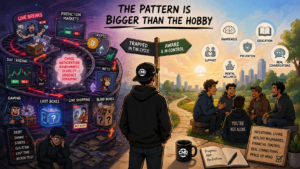
Presented By All Touch Case A lot of people still hear the name “Collectors MD” and assume this work only applies to sports cards or collectibles. On the surface, that makes sense. That’s where the conversation started and the world many of us came from. But the deeper we’ve gotten into this work, the clearer it’s become that this was never just about cards. At its core, it’s about patterns. More specifically, it’s about environments

Rock Bottom Isn’t What You Think
Presented By All Touch Case The first Gamblers Anonymous meeting I ever attended was in November of 2022. I walked in, sat down with a group of complete strangers, and for the first time in my life, I told the truth about what was really going on. It was intimidating, but also strangely therapeutic. I’ve always been a strong communicator, so I leaned into that. I told my story with conviction, with emotion, with detail.

Secondhand Gambling
Presented By All Touch Case In the early stages of recovery, we tend to overlook the people standing just outside the blast radius. Everyone understands the dangers of secondhand smoking. You don’t have to be the one holding the cigarette to feel the effects. You don’t have to inhale directly to carry the consequences. The damage spreads anyway – quietly, indirectly, and often without consent. The same dynamic plays out in other forms of addiction.
What’s In The Box?
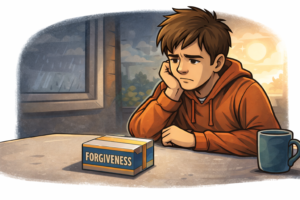
Presented By All Touch Case Not forgiving ourselves can feel like protection. We hold onto the past like a warning sign, convinced that letting it go might mean forgetting what it cost us. Underneath that is a deeper belief that forgiveness equals erasure. So instead of processing the pain, we preserve it. We carry it forward as if holding onto it is what keeps us from repeating the behavior. We tell ourselves guilt is useful.

Complacency In Recovery
Presented By All Touch Case One of the most dangerous parts of recovery is that complacency rarely feels dangerous when it creeps in. There’s no dramatic crash or obvious warning sign. It builds through small shifts in mindset, routine, and honesty. A few things start to slip. Structure loosens. And the more disciplined version of you begins to fade before you even realize it. Progress in recovery can create comfort, and comfort can blur awareness.

Self-Forgiveness
Why is self-forgiveness so difficult? And how can we expect others to forgive us if we cannot forgive ourselves? These are questions that have been sitting heavily on my mind lately. I am a little over a year removed from finally coming to terms with my addiction to sports cards. Over that time, the damage became painfully clear. I lost my wife, my house, my car, my savings, my retirement, and much of the credibility
Problem Gambling Awareness Month
Every March, Problem Gambling Awareness Month (PGAM) invites us to pause and take a closer look at behaviors that often hide in plain sight. The goal isn’t to shame people or cancel activities that bring joy. It’s to raise awareness about the risks, the warning signs, and the support systems that exist for those who need them. The 2026 theme, “Caring Communities, Stronger Futures”, reminds us that awareness and accountability don’t happen in isolation. They happen when communities are willing
The Slippery Slope Of “Intentional Collecting”
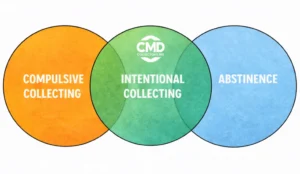
The concept of intentional collecting has become a central pillar of the work we’re doing at Collectors MD, offering collectors a healthier framework for engaging with the hobby. Seeing more people talk openly about setting limits, collecting mindfully, and prioritizing enjoyment over endless chasing makes me genuinely optimistic about where things are headed within our community. Intentional collecting is our version of harm reduction, the same framework often discussed in traditional recovery communities. Harm reduction has helped tens of millions