Breaking Under Pressure
There’s a pattern many of us don’t always notice at first. We start buying more—ripping, browsing, bidding, spending—during the moments when we’re most vulnerable—when everything else feels out of control. Not because we’re feeling joyful or intentional, but because we’re stressed, overwhelmed or agitated. The collecting becomes a release valve. A way to escape the noise, the expectations, the pressure. When we’re outside, busy, or surrounded by structure, we might have healthier outlets—exercise, active hobbies
Relapse Isn’t The End
Relapse is one of the hardest parts of recovery—because it makes you question everything. You start wondering if any of your progress was real. If all the work you’ve done has been undone in one impulsive decision. If you’re just destined to keep slipping. But here’s the truth: relapse is a part of recovery. It’s not ideal. It’s not something to ignore or downplay. But it also doesn’t mean you’ve failed. Recovery isn’t about being
Do I Have A Problem?
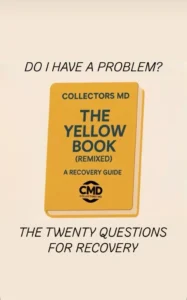
It’s a simple question. But if you’re being honest with yourself… it might not be so easy to answer. “Do I have a problem?” That’s the question behind the 20 self-check questions in The Collectors MD Recovery Guide. These questions aren’t here to label you. They’re not here to diagnose you. They’re here to help you pause, reflect, and take honest, personal inventory. Because whether you’re ripping wax daily or just easing back into the
The Three MD’s Of Recovery: Meaningful Decisions
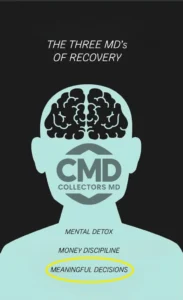
At Collectors MD, we talk a lot about the three pillars of sustainable change and recovery: Mental Detox. Money Discipline. Meaningful Decisions. We’ve explored how to clear the noise via Mental Detox and take back control of your spending via Money Discipline. But the last piece of the puzzle—and maybe the most important—is learning how to make Meaningful Decisions. Because once your mind is quiet and your finances are steady, you’re left with the real
The Three MD’s Of Recovery: Money Discipline
At Collectors MD, we talk a lot about the three pillars of sustainable change and recovery: Mental Detox. Money Discipline. Meaningful Decisions. We already explored the importance of clearing the noise with Mental Detox. But once your headspace is calm, the next challenge shows up fast: how to stop bleeding money. Let’s be honest—this hobby has a way of making you feel like you always need to buy something. If you’re not ripping, you’re falling
The Three MD’s Of Recovery: Mental Detox
At Collectors MD, we talk a lot about the three pillars of sustainable change and recovery: Mental Detox. Money Discipline. Meaningful Decisions. But today, let’s focus on the one that often gets overlooked—Mental Detox. Because before you can fix your spending, you have to fix your headspace. This is where real recovery begins. In a hobby that bombards you with updates, drops, new releases, comps, grails, pulls, drama, and “what’s hot”—your mind never gets a
The Background Browser Tab
You ever have too many browser tabs open—and you don’t even remember what half of them are? There’s that one tab that keeps playing music or a video you can’t find. Another that keeps slowing everything down. But you don’t close them… Just in case. That’s what collecting can feel like sometimes. Even when you’re not browsing eBay or watching a break, the hobby’s still running in the background. You’re doing laundry or out with
The House Always Wins, Unless You Walk Away
A few weeks ago, I got paid—and something inside me snapped. Not in celebration, but in compulsion. I opened Whatnot, joined a few lives, and started bidding. Didn’t matter if it was sports, Pokémon, singles, packs—I was chasing. And when that wasn’t enough, I went deeper. Facebook Marketplace. My dealer. A Prismatic Special Collection box I swore I’d keep sealed… but told myself maybe, just maybe, this was my time to hit something big. Of course, it
The Forgotten Pile
You ever find something in your collection you completely forgot you owned? It could be a slab. A sealed box. A pair of sneakers still in the shipping box. Maybe a watch you thought you’d wear every day, or a figure that’s never been taken out of the bubble wrap. And when you find it, there’s this weird moment of disconnection: “Wait—when did I buy this?” “What was I thinking?” “Why did I even want
The Illusion Of Control
In the world of collecting—especially when fueled by compulsive behaviors—there’s a pervasive belief: that we’re in control. We tell ourselves that selecting the next break, choosing the right pack, or timing a purchase perfectly is a testament to our mastery. But beneath that polished surface lies a deeper truth. The rituals we develop—tracking releases, setting alarms for drops, meticulously organizing our collections—offer a semblance of order. They make us feel proactive, deliberate, in charge. Yet
Same Rush, Different Wrapper
A lot of people assume that pivoting from gambling to trading cards is a step in the right direction. And on the surface, it feels that way. You’re not sitting in a casino—or glued to a digital one on your phone. You’re not placing bets. You’re buying cards—tangible items you can hold, trade, cherish. It feels like progress. But here’s the truth: for those of us with addictive or obsessive tendencies, that shift isn’t always
The Value of A Dollar
When you’re deep in it—the gambling apps, the late-night breaks, the endless chases—money stops feeling real. You’re moving fast, clicking faster, watching balances rise and vanish in seconds. And somewhere along the way, real money starts to feel like Monopoly money. Just numbers on a screen. Nothing tangible. Nothing that sticks. It’s not just the spending. It’s the detachment. The adrenaline. The way your brain rewires itself to chase outcomes, not weigh consequences. That $50