The Gap Between Systems & People
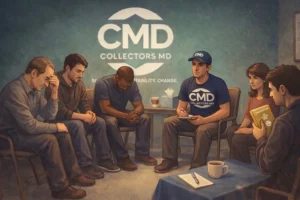
Yesterday’s Daily Reflection focused on a hard truth: the law hasn’t caught up to the speed, scale, and sophistication of modern hobby systems. Today’s conversation goes one step further—because while regulation lags, people are already living inside the consequences of that gap. In Episode #27 ofThe Collector’s Compass, we unpacked something that can no longer be ignored. When environments are designed around urgency, chance-based rewards, and constant escalation, harm doesn’t arrive as a hypothetical future
The Dopamine Economy & The Rise Of Engineered Compulsion
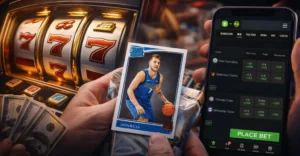
Modern society is built around instant gratification. Marketing, technology, science, and medicine have converged to remove friction from consumption. Goods, services, and experiences are now available immediately and continuously, requiring little effort and even less patience. At the center of this system is dopamine, the brain’s reward chemical. Contemporary commerce no longer focuses on satisfying needs, but on repeatedly stimulating reward pathways. Dopamine spikes are engineered to be frequent and reinforcing, accelerating desire rather than
The Art Of Letting Go
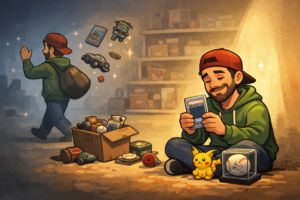
Sometimes in life, the healthiest thing we can do is let go. Not because something is bad, but because holding on has quietly become heavy. Letting go can be physical, mental, emotional, or spiritual—and often it’s all four at once. It’s rarely easy, and it almost never feels clean. But growth rarely asks for comfort first. In the collecting journey, this can be especially painful. The things we consider letting go of aren’t just objects.

End of Year Reflections: Looking Back With Compassion
I say this every year, but I can’t believe another year is coming to an end. Every year holds so much, and yet time feels both fast and blurry. Time can feel strange—the last few months of the year feel clear, but the beginning of the year often feels like a haze. I’ve noticed this same sentiment come up again and again with many of the people I work with. Recently, I had a session
Cognitive Dissonance
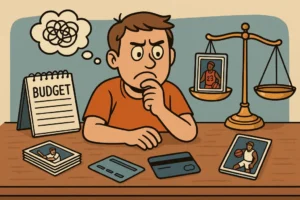
Cognitive dissonance is the quiet tension that forms when what we believe about ourselves doesn’t match what we’re actually doing. In our collecting journeys, it often shows up disguised as “growth”, “discipline”, or “being more intentional”—even while the spending stays the same or silently increases. We tell ourselves the story that we’ve changed, while our behavior tells a different one. Many collectors reach a moment where they tell themselves, “I’m done chasing”. No more random
That Pit In Your Stomach
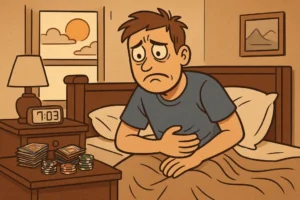
There’s a feeling most of us recognize instantly, even if we struggle to describe it. It settles deep in your stomach—heavy, hollow, unmistakable. You feel it after a breakup, after a tragedy, after losing someone you love. You feel it when you lose a job, fail a test, or sit with the dread of sharing bad news. You feel it when you’re hiding something, lying by omission, or carrying shame you don’t want anyone else
A New Addiction Crisis
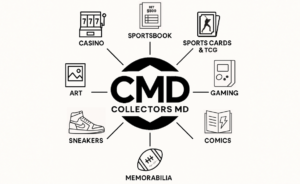
Over the past year, I’ve sat in dozens of calls and meetings with councils, coalitions, recovery organizations, treatment centers, technology platforms, and national helplines—1-800-GAMBLER, Gamblers Anonymous, PGCC, NCPG, Right Choice Recovery, Birches Health, OpenRecovery, Evive, Gamban, GamFin, and many more. Across all of them, one pattern keeps surfacing with increasing urgency. More and more people are reaching out for help because of gambling-related harm—but not from traditional casinos or sports betting alone. The stories sound

Closure Without Permission
There’s a hard truth many of us eventually face in recovery: not every wound we caused will be forgiven. Not every person we hurt will want to reopen the door. Not every apology will be accepted—no matter how sincere, how overdue, or how desperately we wish we could rewrite the past. It’s one of the most painful parts of healing. During addiction—or any period of compulsion—we can act in ways that don’t reflect who we
Advanced Insanity
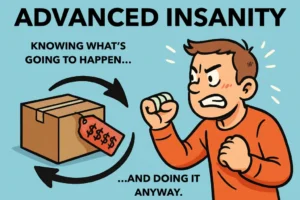
At Right Choice Recovery, the facility I work at part-time where I lead gambling-addiction groups several nights a week, ‘advanced insanity’ is a phrase we use often—it describes that moment when someone knows exactly how the story will end, yet still feels pulled to repeat the behavior. It describes the moment you know exactly what’s going to happen, you know the ending to the story, you know the pain waiting on the other side—and you

The Silver Lining Of Recovery
Recovery is often framed as the dark hallway you’re forced to walk through after things fall apart. But the truth—the part we rarely talk about—is that recovery has silver linings that can transform your life in ways the struggle never could. Recovery gives us clarity, connection, community, and a sense of belonging that many of us never felt even when we were “deep in the hobby”. It’s not bleak, and it’s not punishment. It’s not
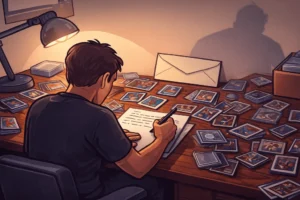
An Open Letter To Addiction
Dear Addiction, There are moments when we think of you like a toxic ex—the one who made us feel alive and powerful, like we finally mattered, all while steadily dismantling our peace, stability, self-trust, and the parts of us that once knew better. You didn’t arrive as destruction. You arrived as comfort. As excitement. As escape. You whispered promises of control, certainty, and belonging. And in vulnerable moments, we believed you. We chose you. Again
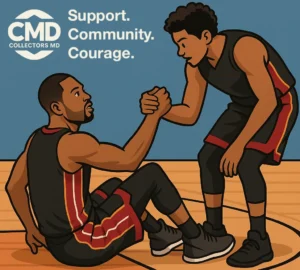
The Comeback Is Stronger Than The Setback
There is a quiet lie that lives inside setback. It tells you the mistake defines you. That the relapse erased the progress. That the stumble somehow invalidated the strength it took to stand in the first place. But in reality, every setback carries information, and every moment of collapse holds the blueprint for the comeback. In the world of collecting—and in recovery—the comeback is never about perfection. It’s about visibility—finally seeing the patterns that once