
Presented By All Touch Case

One of the harder lessons in recovery is realizing that not every relationship is meant to come with us into every chapter of our lives. Recovery teaches us a lot about relationships because, for many of us, relationships were affected long before we were ready to admit there was a problem. Addiction and compulsive behavior can strain friendships, marriages, families, professional relationships, and the relationship we have with ourselves. We may have lied, disappeared, become defensive, broken promises, manipulated situations, borrowed money, withdrawn emotionally, or simply become someone the people closest to us no longer recognized.
That is part of why Steps 8 and 9 are so important in The CMD Recovery Guide. We identified the people our behavior may have hurt, including ourselves. We made amends where we could – with compassion and accountability. Those steps ask us to look backward honestly, but recovery eventually asks something equally difficult of us: learning how to move forward when a relationship changes despite the work we have done.
Sometimes we apologize sincerely and the relationship still ends. Sometimes we change and another person does not trust that change yet. Sometimes two people simply begin seeing the world differently. Sometimes someone we thought would remain part of our life chooses another direction. And sometimes there is no dramatic ending at all. There is simply distance.
That can be incredibly difficult to accept. I know this personally because one of my own flaws is hypersensitivity. I can often take things personally. If someone suddenly becomes distant, changes their tone, stops responding the way they once did, disagrees with me, or appears to prioritize another relationship or opportunity, my instinct can be to ask myself what I did wrong. Did I offend them? Did something change? Was the relationship ever what I thought it was? Should I reach out again? Should I explain myself? That kind of thinking can become its own emotional spiral.
Recovery has forced me to recognize something uncomfortable: not every change in another person’s behavior requires a reaction from me. Sometimes the healthiest thing we can do is accept what is happening without understanding every reason behind it. That is where radical acceptance becomes so important.
Radical acceptance does not mean approving of everything that happens. It does not mean pretending something does not hurt. It does not mean becoming indifferent or allowing people to treat us poorly. It means acknowledging reality as it exists instead of exhausting ourselves fighting against the reality we wish existed.
Someone may change. A friendship may fade. A professional relationship may end. Someone who once acted like one of our strongest supporters may pursue another opportunity, develop a different perspective, or decide that the relationship no longer serves them. We cannot control that. We cannot control another person’s motives. We cannot control whether someone understands our intentions, agrees with us, stays in our life, or tells themselves a particular story about us. What we can control is how we respond.
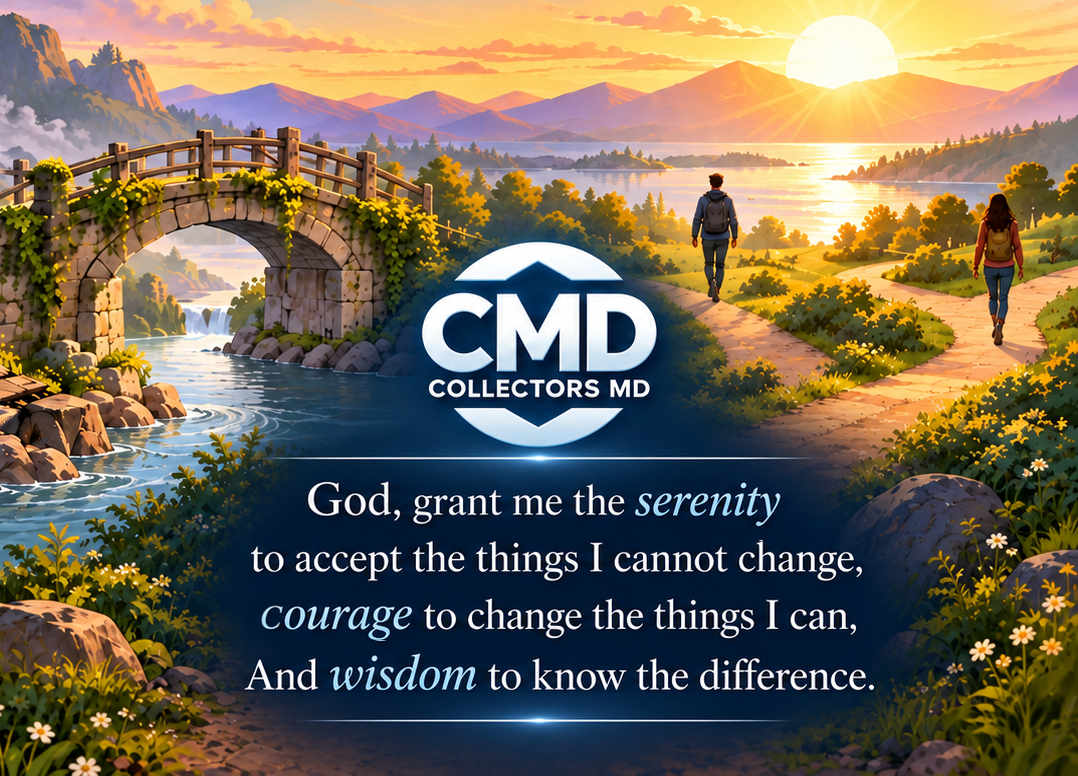
In many recovery meetings, we hear and recite the Serenity Prayer: “God, grant me the serenity to accept the things I cannot change, courage to change the things I can, and wisdom to know the difference.”
There is a reason those words resonate so deeply in recovery. So much of addiction involves trying to control things that are fundamentally outside our control: outcomes, money already lost, another person’s reaction, the past, whether someone forgives us, or whether something turns out the way we desperately want it to. Recovery asks us to gradually surrender that illusion of control.
Steps 8 and 9 are a perfect example. We identify where our behavior caused harm. We become willing to make things right. We apologize where appropriate. We repay what can be repaid. We acknowledge what happened. We demonstrate change through our actions. But nowhere in that process are we promised forgiveness. We are not guaranteed reconciliation. We are not guaranteed closure. We are not guaranteed another chance.
Making amends means taking responsibility for our side of the street. It does not give us control over what happens on someone else’s side. In addiction, many of us burned bridges with some of the people closest to us. Some bridges can be rebuilt. Others may take years. Some relationships may eventually become stronger than they were before. And some bridges simply will not reopen.
That can be painful, particularly when we believe we have changed. We may think, But I’m different now. We may desperately want someone to see the work we have done. We may want one final conversation that makes everything feel resolved. But sometimes closure does not arrive through another person’s words. Sometimes closure is accepting that we may never receive the conversation, explanation, apology, forgiveness, or reconciliation we hoped for. Our recovery cannot depend on receiving it.
The same principle applies to relationships that begin during recovery. Recovery does not suddenly make every friendship permanent or every professional relationship uncomplicated. As our lives expand, we meet new people. We build friendships. We collaborate. We become part of communities. Some people become incredibly meaningful to us. But circumstances change. Perspectives change. Priorities change. Opportunities change. People change.
When you are trying to build something around a mission or a greater purpose, relationships can become especially complicated. People may be deeply supportive during one chapter and move in another direction during the next. Someone may feel like a close friend one day and become distant when another opportunity appears. Two people may genuinely respect one another and still discover that they see an issue differently.
That does not necessarily mean someone betrayed us. It does not always mean the friendship was fake. It does not automatically mean there was some hidden motive. Sometimes relationships are simply seasonal. They mattered. They served a purpose. There were real conversations, real memories, real support, and real lessons. And then the relationship changed.
One of the dangers for someone like me is allowing that change to consume too much emotional energy. When I take something personally, I can replay conversations, wonder what I could have done differently, and become overly focused on understanding another person’s motivation. But every hour spent obsessing over something outside my control is an hour of attention being pulled away from the things that actually need me: my recovery, my mental health, my emotional health, my family, my responsibilities, the people who continue showing up, and the mission I believe in.
Protecting those things has to take priority over chasing answers from people or situations I cannot control. That does not mean we avoid accountability. In fact, recovery asks the opposite. If I handled something poorly, I should own it. If I hurt someone, I should apologize. If my expectations were unrealistic, I should examine them. If I crossed a boundary, I should correct it. If someone offers feedback that makes me uncomfortable but is legitimate, I should be willing to hear it.
Radical acceptance is not an excuse to avoid self-reflection. But there is a difference between healthy self-reflection and endlessly assuming that every changing relationship must somehow be our fault. Sometimes we did something wrong. Sometimes they did. Sometimes both people contributed. And sometimes nobody did anything wrong at all. Two people simply reached different points in their lives.
Recovery gives us permission to hold all of those possibilities without needing to force one particular explanation. It also teaches us that protecting our recovery may occasionally require letting relationships change. There may be friendships that repeatedly bring us back toward unhealthy behaviors. There may be people who do not respect new boundaries. There may be environments where the version of ourselves we are trying to leave behind is constantly being invited back into the room.
Walking away from those relationships can feel cruel at first, particularly if we spent years believing that loyalty meant remaining available regardless of the consequences. But boundaries are not punishment. Choosing recovery is not rejection. Prioritizing mental and emotional stability is not selfishness. Sometimes it is survival. And sometimes the most loving decision we can make, for ourselves and for another person, is to stop forcing a relationship that no longer functions in a healthy way.
The challenge is learning how to do that without resentment consuming us. We can appreciate what someone meant to us without requiring them to remain part of our future. We can disagree with someone without making them an enemy. We can be disappointed without becoming bitter. We can acknowledge that something hurt without allowing that hurt to become the center of our attention. And we can release a relationship without rewriting every good moment that came before it.
Not every person who leaves our lives was using us. Not every person who disagrees with us has betrayed us. Not every relationship that ends was meaningless. Sometimes the healthiest response is simply to acknowledge, I wish this had gone differently. I learned something from it. I am going to keep moving forward.
That is serenity. The courage portion comes next. What can I change? I can change how much energy I give something. I can change how I communicate. I can change my boundaries. I can change how quickly I react when I feel hurt. I can apologize when I am wrong. I can stop seeking validation from people who are no longer giving it. I can invest more deeply in the relationships that are healthy and reciprocal. And I can keep showing up for the larger purpose that mattered before the relationship changed.
Recovery does not promise that we will never feel abandoned, disappointed, misunderstood, rejected, or hurt again. It gives us tools for responding differently when those things happen. We do not have to numb it. We do not have to chase it. We do not have to retaliate. We do not have to force closure. We can feel it, learn from it, accept it, and then return our attention to what matters.
At Collectors MD, we often talk about recovery as something much larger than simply stopping a behavior. Recovery is learning how to live when life does not cooperate with our expectations. Relationships may change. People may leave. Some bridges may never be rebuilt. Some apologies may never receive a response. Some people may misunderstand us no matter how carefully we explain ourselves. And sometimes the wisdom we are searching for is simply recognizing that our peace cannot depend on changing someone else’s mind.
We can take accountability for our past. We can make amends where we can. We can continue becoming better people. And then we can release the outcome. Our responsibility is not to control every relationship around us. Our responsibility is to protect our recovery, remain aligned with our values, and keep moving toward the person we are trying to become.
Sometimes that means repairing a bridge. Sometimes it means leaving the door open. And sometimes it means accepting that a chapter has ended and continuing forward without carrying resentment into the next one. The goal isn’t to stop caring. It’s to learn the difference between caring deeply and allowing something outside our control to control us.
If a changing relationship is affecting your recovery, mental health, or emotional well-being, take a moment to ask yourself: Is there something I genuinely need to take accountability for? Have I made an appropriate amends where possible? Am I trying to control someone else’s response to me? Am I seeking closure that another person may never be able or willing to provide? Is this relationship supporting the person I am trying to become? And what would it look like to accept what I cannot change while taking responsibility for what I can?
Sometimes the answer is reconciliation. Sometimes it is a boundary. Sometimes it is an apology. Sometimes it is forgiveness. And sometimes it is simply letting go. The wisdom is learning the difference.
If you’re struggling with relationships, compulsive behaviors, gambling-related harm, overspending, or the emotional challenges that can come with recovery, you don’t have to navigate it alone. Explore our tools and resources, connect with our community, or join a Collectors MD peer-support meeting. If you or someone you know is in crisis or needs immediate support, visit our Help Now page.
#CollectorsMD
Some relationships can be repaired. Some relationships change. Some relationships end. Recovery teaches us to take responsibility for our part without believing we can control someone else’s response. Protect your recovery, protect your peace, and keep moving toward the things that matter most.
—
Follow Us On Social: @collectorsmd
Join Our Support Group
Join Us On Mantel
Read More Daily Reflections
Support The CMD Foundation
This Daily Reflection is sponsored by All Touch Case, a premium display and protection solution designed to showcase your cards while keeping them safe. Use code COLLECTORSMD for 15% off your order. Collect. Protect. It’s a peace of mind.